Shop by
The Air Quality Index (AQI) measures how polluted the air is and how it may affect your health.
0–50 (Good): Air quality is satisfactory.
51–100 (Moderate): Acceptable, but some pollutants may pose minor concerns.
101–150 (Unhealthy for Sensitive Groups)
151–200 (Unhealthy)
201–300 (Very Unhealthy)
301+ (Hazardous)
Still okay for most, but if you have asthma or allergies, take it easy and avoid long outdoor workouts.
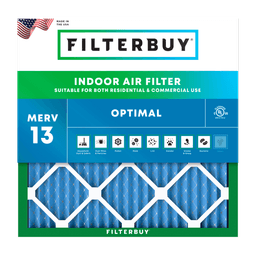
Shop MERV 11 filters→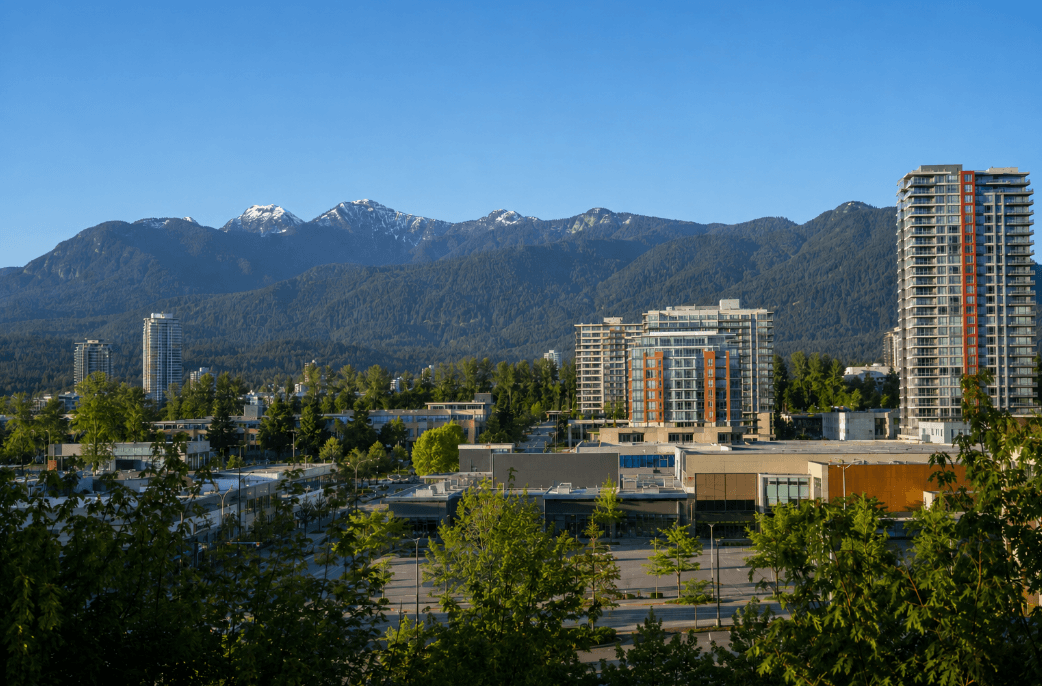
By Michelle Wan · Reviewed by David Clark, Licensed HVAC Technician · Published 18 August 2026 · Updated 18 August 2026
Coquitlam's live air quality is reported as an Air Quality Health Index (AQHI) value from 1 to 10+, not the 0 to 500 AQI scale used in the United States. Coquitlam sits in the Metro Vancouver – NE reporting zone, and the nearest government monitor is the Coquitlam station. Check the live reading on Metro Vancouver's AirMap or Environment and Climate Change Canada's AQHI page for Metro Vancouver – NE, then use the indoor action table below to decide what to do at home.
Coquitlam's official number is an AQHI from 1 to 10+, produced by Environment and Climate Change Canada from ground-level ozone, fine particulate matter (PM2.5), and nitrogen dioxide.
Coquitlam is in the Metro Vancouver – NE AQHI reporting zone, shared with the rest of the Tri-Cities.
AQHI 1–3 is low risk, 4–6 moderate, 7–10 high, and above 10 is very high risk — a smaller number is better, which is the reverse of how many people read US AQI figures.
A reading of "82" on an app is a US AQI value, not an AQHI. The two scales are not interchangeable and cannot be converted with a formula.
Coquitlam's two main air quality events are summer wildfire smoke and summer ground-level ozone, which tends to concentrate in the eastern half of Metro Vancouver.
A furnace filter cleans indoor air only, and only while the blower is running — it does nothing to outdoor conditions.
Two sources carry the reading you need. Metro Vancouver's AirMap shows hourly data from the Coquitlam station, part of the Lower Fraser Valley Air Quality Monitoring Network, and Environment and Climate Change Canada publishes the AQHI alongside a two-day forecast for Metro Vancouver – NE. Third-party apps help you spot trends between stations, but Metro Vancouver bases its air quality warnings on the official readings.
Third-party sensor readings are not used for official air quality warnings.
We link these sources rather than republishing their numbers, because real-time readings are unvalidated and get revised. If you would rather be told than remember to check, Metro Vancouver sends air quality alerts by email.
We check Coquitlam’s numbers the same way you do, and we kept hitting the same wall. Nearly every live air quality page for this city publishes a US-style 0 to 500 AQI figure for a city that does not officially use one. Coquitlam reports an AQHI. So we put the official reading first, then the part we can speak to: the air inside your house.
If one app says Coquitlam is "82, Moderate" and another says "2, Low Risk", neither is broken. The US AQI runs 0 to 500 and reports the single worst pollutant. Canada’s AQHI runs 1 to 10+, and estimates combined health risk from ozone, PM2.5 and nitrogen dioxide. There is no conversion formula between them.
For anything official in Coquitlam, use the AQHI.
Coquitlam’s air is generally clean. What changes is the season.
Summer wildfire smoke. Smoke from fires elsewhere in BC can lift PM2.5 across the Lower Fraser Valley within hours, and it is the most common reason the AQHI climbs here. During a smoke event, the index is calculated from PM2.5 alone, which is why the number can swing across a single afternoon.
Summer ground-level ozone. Ozone needs sunlight to form and drifts inland as it does, so eastern Metro Vancouver reads higher than the coast. Coquitlam has been named in past ozone warnings alongside New Westminster and Maple Ridge.
Traffic and winter inversions. Highway 1, the Lougheed and the Barnet push NO2 up close to the road. In winter, cold still air settles into the Coquitlam River valley and holds particulates near the ground.
The AQHI gives separate advice to the general public and to people at higher risk, a group Health Canada defines as those with heart or lung conditions, older adults, children and pregnant people.
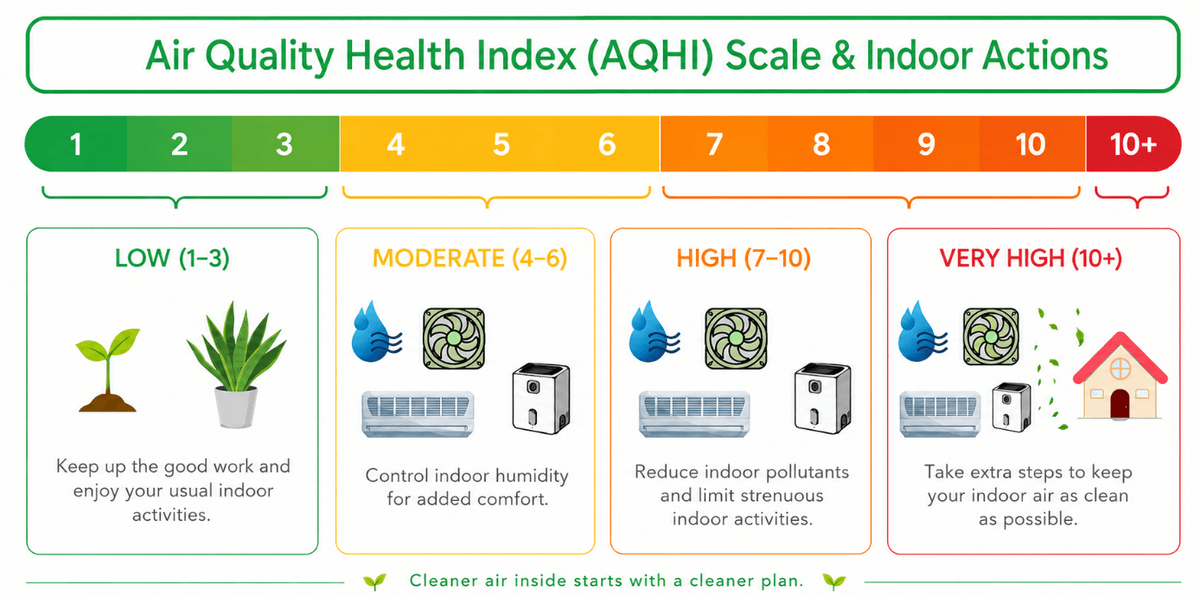
Reviewed by David Clark, Licensed HVAC Technician. General guidance only. Follow Metro Vancouver air quality warnings and your physician's advice.
Two caveats sit behind that table, and we would rather name them than sell past them. A filter only works on the air passing through it, so the blower has to be running for any of this to help. And a denser filter restricts airflow: on an older system or a one-inch return, a MERV 13 can strain the blower, so ask a technician first. For a single room, the BCCDC fact sheet on portable air cleaners pairs well with whole-home filtration.
Three habits cost people more than they realise once smoke arrives. All three come from a 2026 Canadian evidence review by the National Collaborating Centre for Environmental Health, hosted by the BC CDC.
1. Running the range hood or bathroom fan. An exhaust fan pushes air out, and that air has to be replaced. It comes back unfiltered, through every gap in the building. On a smoke day, the fan works against you.
2. Assuming closed windows are enough. Closing the windows cut indoor PM2.5 by a median of 32% across the studies reviewed. Real, but still not clean air. Filtration covers the rest.
3. Ignoring the age of the house. Homes built after 1975 let in noticeably less smoke, so an older Coquitlam home has to lean harder on filtration than a new build does.
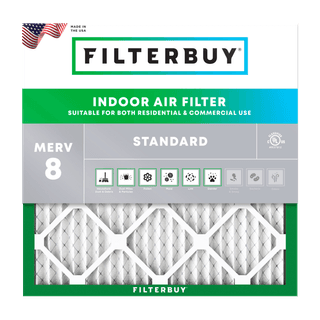
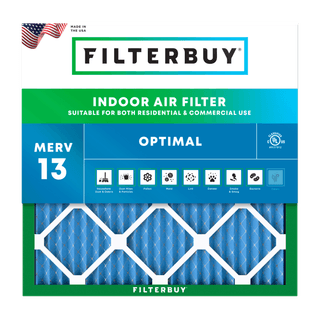
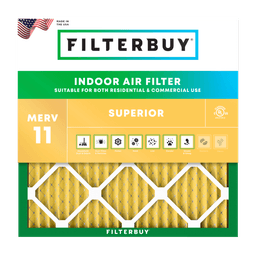
We make every Filterbuy filter in our own facilities and ship directly to Canada, in over 600 sizes including custom sizes. Because we control the media and the frame rather than reselling someone else’s, we can also say when a filter is the wrong answer. Our guide to what MERV ratings mean explains that trade-off. The Filterbuy colour-coding keeps the choice simple:
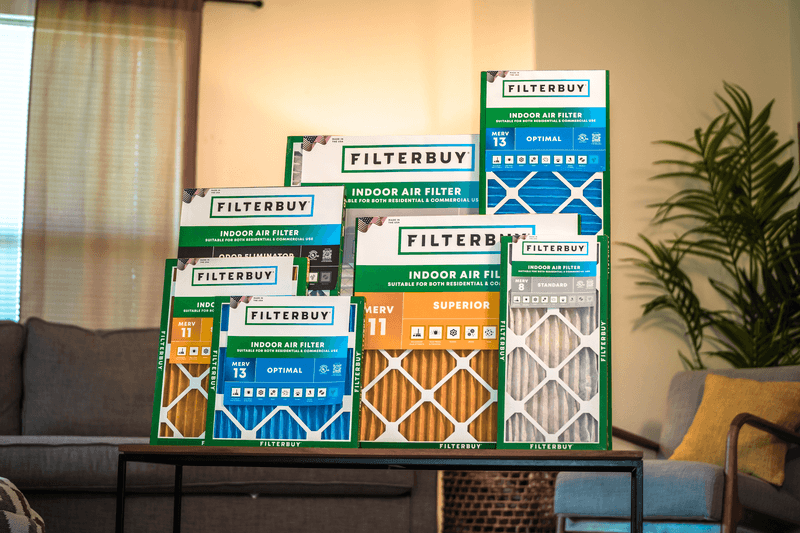
Free shipping to Canada on every order, no minimum. Prices shown in CAD.
Subscribe and save to have Filterbuy filters arrive before smoke season, on a schedule you can edit, skip or cancel anytime. Our step-by-step guide to replacing an air filter covers the swap, and 20x25x1 is the most common size in Canadian furnaces.
Find Your Size“During smoke season I pull filters at 30 days that look like they have been in for six months. If your furnace is running through August, the interval printed on the box stops being the number that matters.”
David Clark, Licensed HVAC Technician
Three findings from US research back the guidance above, drawn from the Environmental Protection Agency, its wildfire smoke course and the American Lung Association.
Sources: U.S. Environmental Protection Agency and the American Lung Association. These are US figures. The filtration findings apply to any forced-air system.
Check the current AQHI for Metro Vancouver – NE on AirMap or the ECCC page above. Outside smoke and ozone episodes, air pollution in Coquitlam today is usually low, with the index in the 1 to 3 band.
The live air quality map on AirMap publishes hourly PM2.5 for the Coquitlam station, as both a one-hour and a 24-hour average.
At 1 to 3, normal activity is fine for most people. At 4 to 6, at-risk groups should ease up outdoors. At 7 and above, everyone should reduce outdoor exertion.
These are now called air quality warnings. Metro Vancouver issues them for the whole Lower Fraser Valley airshed, which includes Coquitlam: yellow for high risk, orange for very high.
It helps with the air inside your home while the system runs. A MERV 13 captures fine smoke particles, and public health agencies recommend pairing that with closed windows and a HEPA unit in one room.
AQHI (Air Quality Health Index). Canada's 1 to 10+ scale from Environment and Climate Change Canada, estimating short-term health risk from ozone, PM2.5 and nitrogen dioxide.
AQI (Air Quality Index). The 0 to 500 US scale, based on the single highest pollutant. Not official in Canada.
PM2.5. Fine particulate matter under 2.5 micrometres, small enough to reach deep into the lungs. The main pollutant in wildfire smoke.
Ground-level ozone (O3). Formed when sunlight reacts with vehicle and industrial emissions.
NO2 (nitrogen dioxide). Traffic-related gas, highest near busy roads.
MERV. The North American rating for how much a filter captures. Filterbuy labels these Standard, Superior and Optimal.
Air quality warning (formerly an advisory). A Metro Vancouver notice when pollution is, or is expected to become, unhealthy.
Data comes from Environment and Climate Change Canada, Metro Vancouver and the BC Ministry of Environment and Parks. Filterbuy does not operate monitoring equipment. Readings are unvalidated. General information, not medical advice.
Related: MERV rating guide · MERV 13 Optimal filters · Air filter subscription · Custom filter sizes · Brand-compatible filters · Vancouver, Burnaby and Port Coquitlam air quality