
Burnaby Real-Time AQI Tracker
What's Actually In Burnaby Air Today?
What High AQI Means for Your Lungs in Burnaby
How to Read AQI
The Air Quality Index (AQI) measures how polluted the air is and how it may affect your health.
0–50 (Good): Air quality is satisfactory.
51–100 (Moderate): Acceptable, but some pollutants may pose minor concerns.
101–150 (Unhealthy for Sensitive Groups)
151–200 (Unhealthy)
201–300 (Very Unhealthy)
301+ (Hazardous)
Moderate
Still okay for most, but if you have asthma or allergies, take it easy and avoid long outdoor workouts.
Shop MERV 11 filters→What's the Right Filter for Your AQI Level?



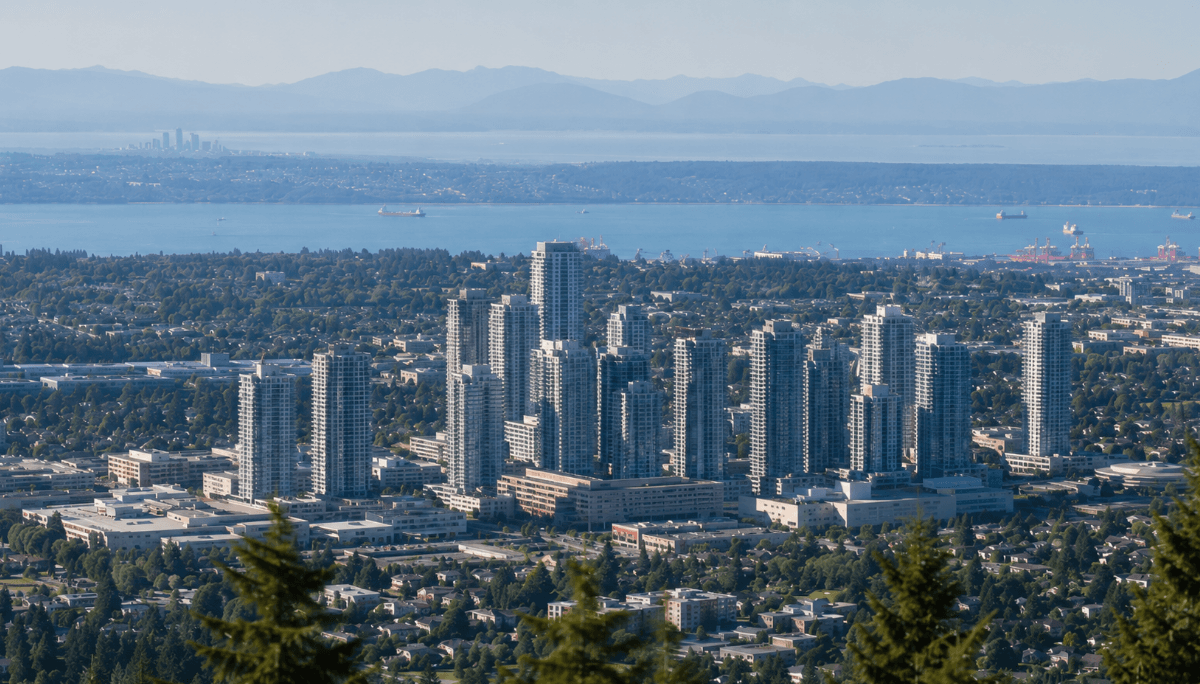
Check Today's Live Real Time Air Quality Index AQI Map in Burnaby, BC Now
TL;DR
British Columbia reports Burnaby’s live air quality on the Air Quality Health Index (AQHI), a 1-to-10+ health-risk scale, not the 0-to-500 AQI most apps display. Metro Vancouver publishes hourly readings from six stations inside Burnaby, so two neighbourhoods can differ at the same hour. When the AQHI reaches 7 or higher, close your windows, run your furnace fan continuously and fit a MERV 13 filter.
Burnaby Air Quality Map: Live Readings
Before you continue, check the live air quality map above to see the latest conditions near you.
What is the air quality in Burnaby today? Burnaby’s air quality is published hourly as an Air Quality Health Index value from 1 to 10+: 1 to 3 is low health risk, 4 to 6 moderate, 7 to 10 high and above 10 very high. Check the map above for the station nearest you, or open Metro Vancouver’s AirMap for station data, or the B.C. Air Quality Health Index table for the zone forecast. Conditions change hour to hour in this city, so a reading taken at breakfast is not the one that matters at six.
Key Takeaways
Burnaby is measured on the AQHI, not the AQI. The AQHI runs 1 to 10+ and combines three pollutants; the U.S. AQI runs 0 to 500 and reports only the worst.
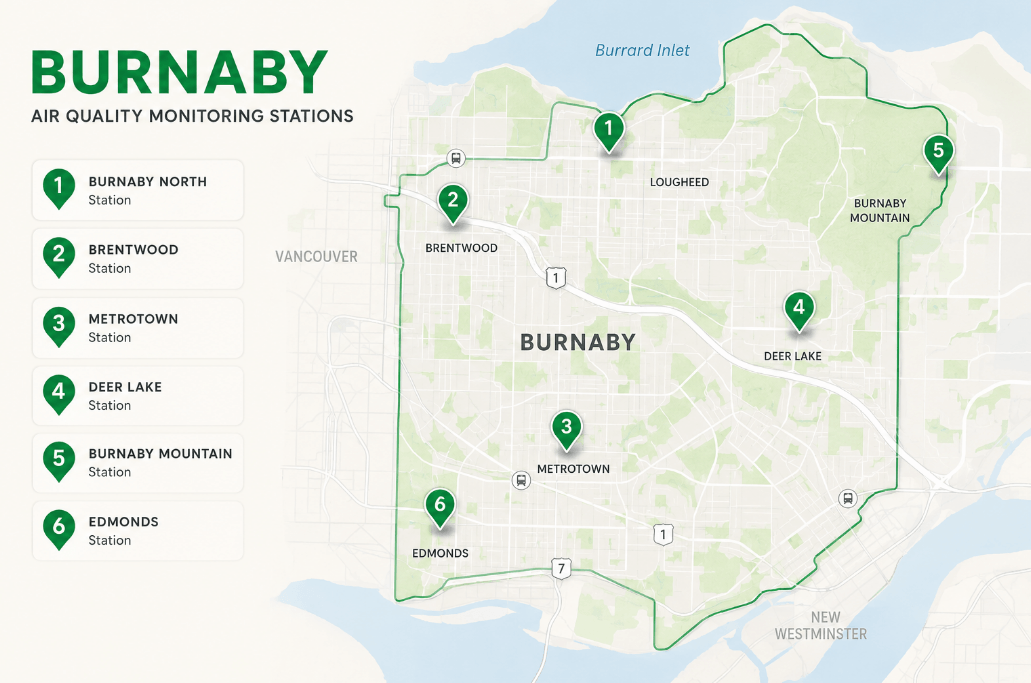
Six Metro Vancouver stations sit inside Burnaby: Burmount, Capitol Hill, Kensington Park, Burnaby Mountain, Burnaby North and Burnaby South.
The Province does not publish an AQHI for "Burnaby" by name. B.C. reports four Metro Vancouver zones; Metro Vancouver publishes station-level readings.
"Air quality advisory" is out of date. B.C. renamed advisories and Smoky Skies Bulletins to Air Quality Warnings, now issued as yellow (high risk) or orange (very high risk).
AQHI Or AQI: Why Burnaby’s Number Looks Different
We could have built this page around an AQI number, because that is what people search for. We lead with the AQHI instead, because that is the number Burnaby actually runs on. If you searched for the Burnaby AQI and found a value like 8, you were reading a health-risk index, not a pollution index. Environment and Climate Change Canada, the B.C. Ministry of Environment and Parks and Metro Vancouver all report the Air Quality Health Index. The AQHI combines the health risk from ground-level ozone, nitrogen dioxide and PM2.5, and forecasts it 48 hours ahead. The older AQI reports whichever single pollutant is worst at that moment. The two scales are not convertible.
Source: B.C. Ministry of Environment and Parks and Environment and Climate Change Canada. The two indices measure different things and cannot be converted into one another.
B.C. also runs an amended version. During smoke the standard formula under-reported health risk, so when PM2.5 runs high it alone can set the index. The Province piloted AQHI-Plus in May 2018 and adopted it in March 2021 after two peer-reviewed studies. Every AQHI value for Burnaby today uses that formula, year-round.
Six Stations, One City: Why Your Burnaby Postal Code Matters
Most air quality pages give Burnaby one number. That is the thing we think they get most wrong about this city. Metro Vancouver operates six stations inside Burnaby, and readings differ between them because of elevation, traffic and nearby industry. The Province publishes its AQHI forecast by Metro Vancouver zone (North East, North West, South East and South West), so for street-level detail, use the station nearest your home.
Station names from Metro Vancouver’s AirMap. Neighbourhoods are approximate guides to which station sits closest to you.
What Changes Burnaby’s Air Quality Through The Year
Burnaby’s air quality is generally good, and the reasons it degrades are seasonal. Know the pattern and you can plan filter changes rather than react to them.
Metro Vancouver issues air quality warnings for the Lower Fraser Valley airshed when pollution levels are unhealthy or expected to become unhealthy, colour-coded yellow for high health risk and orange for very high health risk. The Province lists active notifications on its B.C. air quality warnings page.
Is The Air Quality Bad In Burnaby Today? What To Do At Each Level
Match your reading to the row below. These are the health messages published by Environment and Climate Change Canada for each AQHI band. If unsure which group you fall into, ECCC sets out who is most at risk from air pollution.
Health messages adapted from Environment and Climate Change Canada’s Air Quality Health Index. People at higher risk include those with heart or breathing conditions. General information only, not medical advice.
What The AQHI Does Not Measure
The index is built from three pollutants: ozone, nitrogen dioxide and PM2.5. The gaps matter, and knowing them is the difference between trusting the number and using it well.
Pollen is not in it. A Burnaby spring morning can read AQHI 2 and still be miserable if you react to pollen. Low reading, bad day.
Indoor air is not in it. Every reading here is outdoor air. Cooking, wood stoves and a loaded filter are invisible to it.
Very local events get averaged away. A neighbour’s wood stove or an odour event in north Burnaby can affect a few blocks without moving the nearest station.
That last gap has an answer. Metro Vancouver takes air quality complaints about odour, smoke and dust from residents, and those complaints help enforcement officers decide where to look. If your street smells wrong and the map says fine, the map is not the last word.
Keeping Indoor Air Clean In A Burnaby Home
Indoor air is the part you control. When the AQHI climbs, close the windows, set the thermostat fan to "on", and fit a higher-efficiency filter. The U.S. Environmental Protection Agency recommends MERV 13 or higher during smoky season, and notes that most residential systems can handle it provided the filter is replaced more frequently than usual.
Filterbuy manufactures every filter we sell, which is why we can state capture rates by rating rather than by marketing tier. How the Filterbuy range maps to Burnaby:
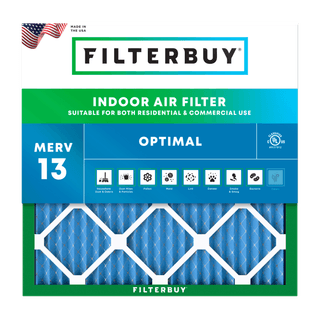
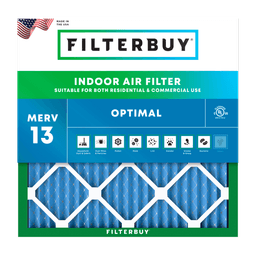
MERV 13 (Optimal) captures 98% of airborne particles, including fine smoke, bacteria and allergens. This is the filter for smoke season and for households with asthma or heart conditions.
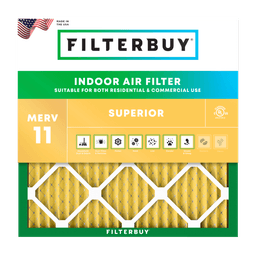
MERV 11 (Superior) captures 95% of airborne particles, including pet dander, dust mites and mould spores. The practical choice if an older furnace cannot handle MERV 13’s airflow resistance.
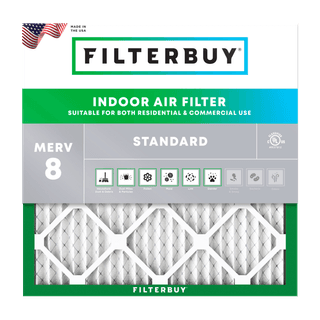
MERV 8 (Standard) captures 90% of airborne particles: dust, lint and pollen.
Odour Eliminator is carbon-infused and tackles smoke, cooking and pet odours, useful when Burnaby windows stay shut.
See our guide to MERV ratings explained.
During an active smoke event, inspect a 1-inch filter every couple of weeks rather than waiting for the calendar, since a loaded filter restricts airflow. Filterbuy sells furnace filters, so it is worth saying plainly: a large share of Burnaby lives in apartments and condominiums with baseboard heating and no ductwork. If that is your home, no filter we make will help you. A portable HEPA air cleaner sized to your main room is the honest answer.
Unsure whether your furnace can take a MERV 13? Check the manufacturer’s specifications or ask a licensed technician. Our Filterbuy Canada customer service team can help confirm sizing.
Most of the furnaces I work on in the Lower Mainland take a MERV 13 without complaint. The ones that struggle are usually older units with undersized return ducts, and a static pressure reading tells you that in about ten minutes.
— David Clark, Licensed HVAC Technician
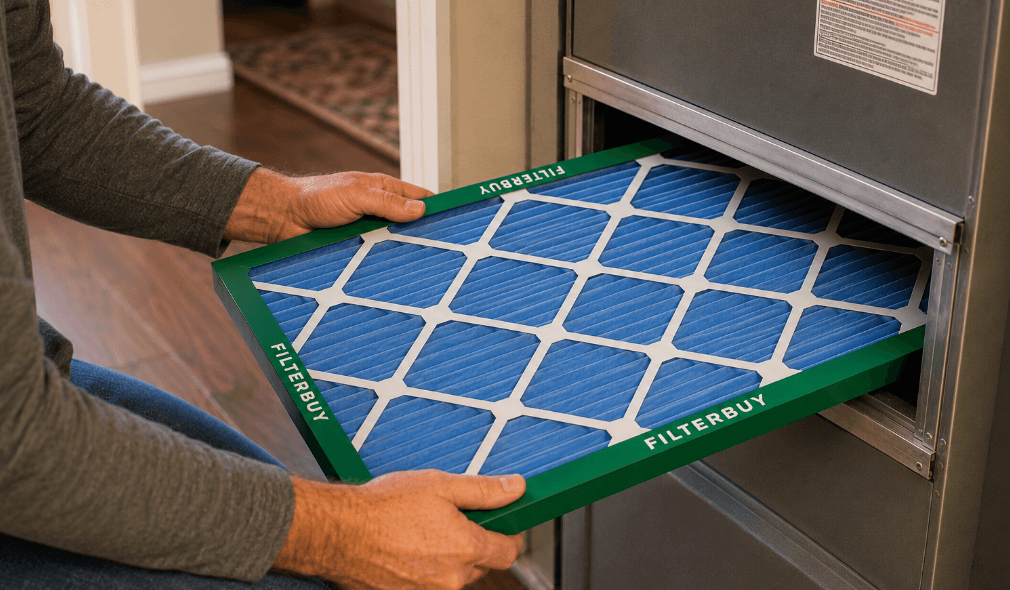
Filterbuy carries more than 600 sizes, including custom air filter sizes. Sizes such as 20x25x1 MERV 13 ship free to Canada, no minimum. An air filter subscription sends replacements on your schedule; edit, skip or cancel anytime. Prices in CAD, backed by over 85,000 five-star reviews.
Supporting Statistics
Three U.S. federal findings support the advice above.
1. People spend about 90% of their time indoors
Figure: Some pollutants run two to five times higher indoors than outdoors.
Why it matters: Your furnace filter matters as much as the AQHI outside.
2. Closed windows still let most of the smoke in
Figure: Indoor PM2.5 sits at 55–60% of outdoor levels during smoke events, 30% to 100% by home.
Why it matters: Shutting windows helps. On its own it does not clear the air.
3. A high-efficiency filter cuts indoor PM2.5 by about half
Figure: About 50% reduction when the system fan runs continuously.
Why it matters: This is the evidence behind the MERV 13 and fan-on advice.
Essential Resources For Tracking Burnaby Air Quality
Seven sources covering what today’s reading cannot tell you: what is coming, whether a warning is active, and what to do.
See hourly readings from all six Burnaby stations
The regional district’s official map of the Lower Fraser Valley network. Reports PM2.5, ozone and nitrogen dioxide hourly at each Burnaby station.
Check whether tomorrow’s air will be worse than today’s
B.C. Air Quality Health Index table
The B.C. Ministry of Environment and Parks publishes current AQHI and forecast maximum by zone. Use it to move outdoor plans rather than cancel them.
Find out if an official warning is in effect right now
Warnings replaced the former advisories and Smoky Skies Bulletins. Each names the areas covered, the cause and expected duration.
See where wildfire smoke is heading over the next 48 hours
FireSmoke Canada (BlueSky Canada)
A modelled smoke forecast from the University of British Columbia, showing PM2.5 plumes crossing the province. The earliest signal to stock up.
Get health guidance from Burnaby’s own health authority
Fraser Health, not Vancouver Coastal, serves Burnaby. Covers cleaner-air spaces, DIY air cleaners and when symptoms need medical attention.
Find out whether you are in the higher-risk group
Environment and Climate Change Canada: Health risks
The AQHI gives separate advice to people at higher risk. This page defines that group.
Set up a cleaner-air room before smoke arrives
U.S. EPA: Preparing for smoke and heat
Source of the MERV 13 recommendation for smoky periods, plus how to build a cleaner-air room.
Frequently Asked Questions
Glossary
| Term | Definition |
|---|---|
| AQHI (Air Quality Health Index) | Canada’s official air quality scale, 1 to 10 then 10+, showing combined short-term health risk from ozone, nitrogen dioxide and PM2.5. |
| AQHI-Plus | B.C.’s amended AQHI formula, letting PM2.5 set the index during smoke. Adopted 2021. |
| AQI (Air Quality Index) | A separate 0-to-500 scale, mainly American, reporting the single worst pollutant. |
| Air Quality Warning | The current B.C. term for advisories and Smoky Skies Bulletins. Yellow is high risk, orange very high. |
| MERV (Minimum Efficiency Reporting Value) | How much fine particulate a filter captures. Filterbuy labels MERV 8 Standard, MERV 11 Superior and MERV 13 Optimal. |
| PM2.5 | Fine particulate matter 2.5 micrometres or smaller, the health-relevant part of wildfire and wood smoke. |
| Metro Vancouver | The federation of 21 municipalities and two other members regulating Lower Fraser Valley air quality. |
About This Page
Michelle Wan writes on indoor air quality for Filterbuy. Reviewed by David Clark, licensed HVAC technician. Figures come from the sources above and from B.C. current air quality data. Not medical advice.