
Port Coquitlam Real-Time AQI Tracker
What's Actually In Port Coquitlam Air Today?
What High AQI Means for Your Lungs in Port Coquitlam
How to Read AQI
The Air Quality Index (AQI) measures how polluted the air is and how it may affect your health.
0–50 (Good): Air quality is satisfactory.
51–100 (Moderate): Acceptable, but some pollutants may pose minor concerns.
101–150 (Unhealthy for Sensitive Groups)
151–200 (Unhealthy)
201–300 (Very Unhealthy)
301+ (Hazardous)
Moderate
Still okay for most, but if you have asthma or allergies, take it easy and avoid long outdoor workouts.
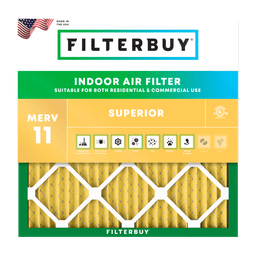
Shop MERV 11 filters→What's the Right Filter for Your AQI Level?



Live Air Quality Index AQI Map Port Coquitlam, BC Today
TL;DR
Port Coquitlam's live air quality is reported on the Air Quality Health Index (AQHI), Canada's hourly 1 to 10+ health risk scale. With no dedicated monitoring station, its reading is the Metro Vancouver Northeast zone value, shared with Coquitlam, Port Moody, Pitt Meadows and Maple Ridge. Check the live map above for the current value, then act on the risk band it falls in.
Key Takeaways
The Air Quality Health Index (AQHI) is Canada's primary air quality scale. It refreshes hourly and sorts conditions into low (1–3), moderate (4–6), high (7–10) and very high (above 10) health risk.
Port Coquitlam's AQHI is published under the zone name Metro Vancouver Northeast. Environment and Climate Change Canada warning bulletins define that zone as the Tri-Cities, Pitt Meadows and Maple Ridge.
None of the 31 stations listed on Metro Vancouver's AirMap carries Port Coquitlam's name.
In July 2024, only the Pitt Meadows and Maple Ridge stations recorded ground-level ozone above Metro Vancouver's one-hour objective of 82 parts per billion. Pitt Meadows sits across the Pitt River.
Port Coquitlam's last three summers each brought an air quality warning: ozone in 2024, ozone and wildfire smoke in 2025, and ozone plus smoke in July 2026.
How to Check Port Coquitlam Air Quality Today
The fastest way to check Port Coquitlam air quality today is the live Port Coquitlam air quality map above, which shows the current AQHI for the Metro Vancouver Northeast zone. Environment and Climate Change Canada (ECCC) publishes that zone's AQHI as one observed value each hour, plus forecast maximums.
Read both numbers. The observed value shows the air now; the forecast maximum is what to plan a Traboulay PoCo Trail ride or soccer practice around.
For station-level detail, Metro Vancouver's AirMap shows hourly readings of PM2.5 (fine particles from smoke and exhaust), ozone and nitrogen dioxide at every monitoring site. AirMap also shows the current residential indoor wood burning status.
Many apps show a Port Coquitlam AQI on the U.S. 0 to 500 scale instead. Filterbuy Canada puts the AQHI first because Canadian health messaging uses it; treat the AQI as secondary.
Port Coquitlam Has No Dedicated Air Quality Station
Port Coquitlam is a city of 61,498 people (2021 census) covering about 29 square kilometres, bounded by Coquitlam to the north and west, the Pitt River to the east and the Fraser River to the south.
When the Filterbuy Canada team checked Metro Vancouver's AirMap, none of its 31 stations carried Port Coquitlam's name. The surrounding stations are named for its neighbours: the provincial station list calls them Coquitlam Douglas College, Port Moody Rocky Point Park and Pitt Meadow Meadowlands School.
Metro Vancouver's data points to Pitt Meadows as the neighbour to watch in summer. It sits directly east across the Pitt River, in the part of the region where Metro Vancouver measures its highest ozone.
Filterbuy's rule of thumb: treat the Metro Vancouver Northeast AQHI as a zone signal, not a measurement of your street. Use the band to decide how careful to be. If you smell smoke near Hyde Creek while the zone reads moderate, go by the smoke and check AirMap's station readings.
“When I mapped Port Coquitlam against Metro Vancouver's station list, what stood out was that no station carries the city's name. The number on your phone is a regional reading. On hot July afternoons, I'd check the Pitt Meadows station on AirMap first, since it sits just across the river and has logged some of the region's highest ozone.”
- Michelle Wan
How to Read the AQHI Scale
The AQHI groups hourly readings into four health risk bands, each with separate guidance for the general population and for people at higher risk.
Source: Environment and Climate Change Canada, AQHI health messages for British Columbia.
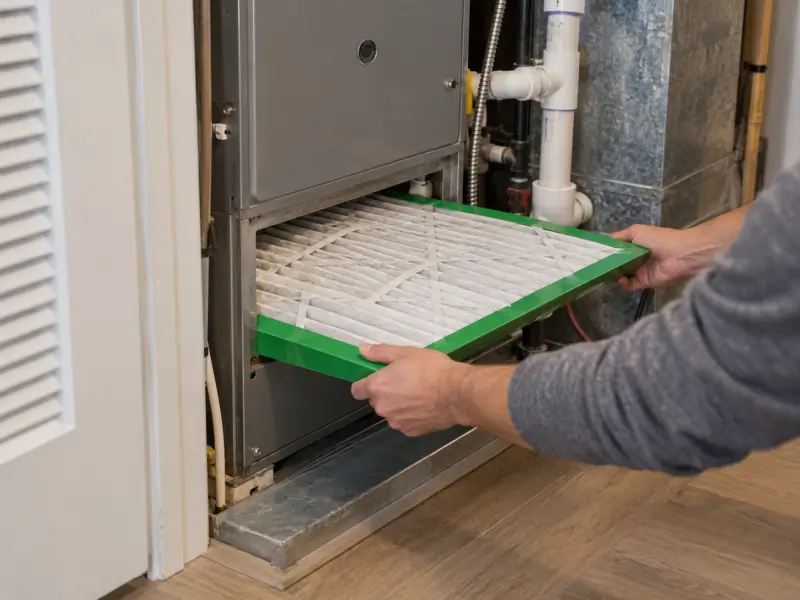
During heavy smoke, readings above 10 show as 10+. Metro Vancouver warning bulletins identify people with lung, heart or other chronic conditions, pregnant people, infants, children, older adults and outdoor workers as at higher risk.
Smog or Smoke: What Causes a Bad Air Day in Port Coquitlam
When Port Coquitlam air pollution today is high, it is usually ground-level ozone (smog) or fine particulate matter (PM2.5), the two pollutants Metro Vancouver says most often trigger warnings. Port Coquitlam sits on the western edge of the eastern band where ozone runs highest.
Sources: Metro Vancouver 2024 Annual Air Quality Summary; Metro Vancouver Ambient Air Quality Objectives (November 2024).
To check Port Coquitlam PM2.5 today, open AirMap and select the PM2.5 one-hour layer, then compare the Coquitlam and Pitt Meadows stations. If both are elevated, the cause is regional. If only one is, the cause is more likely local.
Metro Vancouver reports that regional average ozone has edged up over the past decade even as the pollutants that form it declined. Its 2024 summary adds that wildfire smoke can speed up ozone formation, which helps explain July 2026's back-to-back ozone and smoke warnings.
Port Coquitlam's Recent Air Quality Warnings
When we lined up the warnings for Port Coquitlam's zone from 2024 to 2026, one pattern stood out: ground-level ozone appeared every summer, and smoke joined it in two. Filterbuy's take: in Port Coquitlam, summer smog deserves as much attention as wildfire smoke.
July 2024. Metro Vancouver issued one air quality warning all year: a three-day ground-level ozone warning in early July for eastern Metro Vancouver and the Fraser Valley. That month, ozone at the Pitt Meadows and Maple Ridge stations exceeded the one-hour objective of 82 parts per billion.
August and September 2025. On 24 August 2025, a smog warning covered Metro Vancouver Northeast and Southeast plus the Central and Eastern Fraser Valley. Wildfire smoke from fires near Hope and Whistler, in the Cariboo and in Washington State then triggered a region-wide fine particulate warning from 3 to 7 September 2025, lasting four days in Metro Vancouver.
July 2026. On 21 July 2026, ECCC posted Metro Vancouver's yellow warning for ground-level ozone in the Northeast zone. By 22 July 2026, smoke from B.C. wildfires, including the Brunswick Complex near Boston Bar, had added elevated PM2.5 across the Northeast zone.
Metro Vancouver aims for zero warning days caused by local emissions. Over the five years to 2025, the region averaged 3.8 such days a year.
What Most Air Quality Pages Leave Out
We found three official details that change how to read the number.
Official alerts start at high risk. ECCC's special air quality advisories go out when the AQHI reaches 7. In the WeatherCAN app, you can set a personal alert from 3 to 10+, and ECCC suggests the moderate band (4–6) for people sensitive to air pollution. Metro Vancouver also emails its warnings.
In smoke, the formula changes. During wildfire smoke, ECCC calculates the AQHI from PM2.5 alone, hour by hour, so the reading can climb fast.
A furnace filter catches smoke particles, not smog. Home furnace filters are usually designed to filter particles. Ozone is a gas, so on smog days the AQHI activity advice matters more than the filter.
Supporting Statistics: What U.S. Research Shows
1. Most Breathing Happens Indoors
Americans spend about 90 percent of their time indoors.
Some pollutants are often 2 to 5 times higher indoors than outdoors.
What it means here: on a warning day, indoor air is the exposure you control most.
Source: U.S. EPA Report on the Environment: Indoor Air Quality
2. Better Filtration Cuts Indoor Particles
A MERV 13 to 16 central filter: up to 95 percent fewer indoor particles.
A high efficiency portable air cleaner: up to 85 percent fewer.
The thermostat fan set to On instead of Auto: up to 24 percent fewer.
Source: U.S. EPA Indoor Air Filtration fact sheet
3. Ozone Now Affects More People
152.3 million Americans (44 percent) live in places with failing grades for ozone or particle pollution.
Nearly 4 million more people breathe unhealthy ozone than a year earlier.
What it means here: the report ties the trend to heat and wildfire smoke, the same mix behind Port Coquitlam's July 2026 warnings.
Source: American Lung Association, State of the Air 2026 Key Findings
How to Keep Indoor Air Clean on a Poor Air Quality Day
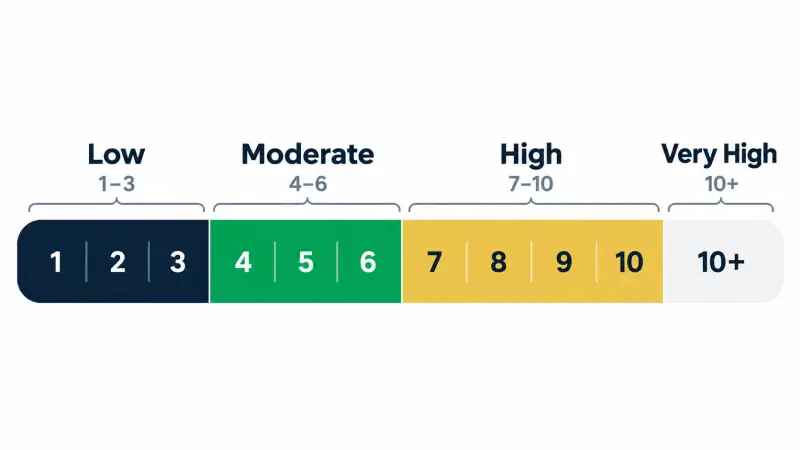
During a warning, follow Metro Vancouver's guidance and any local instructions first. These steps support it in a Port Coquitlam home, townhouse or condo:
Close windows and exterior doors, and keep them closed while filtration runs.
With a fresh air intake or heat recovery ventilator, follow the maker's smoke guidance or close the outdoor intake damper.
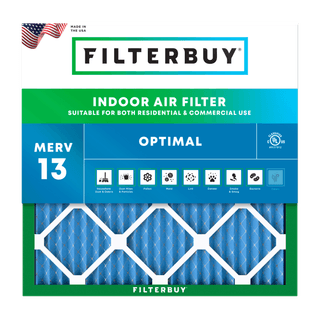
Run a MERV 13 filter in the furnace. The EPA advises at least MERV 13 when upgrading, and says most systems can use one without equipment problems if the filter is replaced frequently.
Switch the thermostat fan from Auto to On so the system filters continuously.
Run a portable HEPA air cleaner in each occupied room, bedrooms first. By the EPA's sizing chart, its smoke CADR should be about two-thirds of the floor area in square feet: at least 195 for a 28 square metre (300 sq ft) bedroom. Skip models that produce ozone.
Skip candles, frying, wood stove use and vacuuming without a HEPA vacuum.
Check the filter during smoke and replace it when it looks dirty, which can be well before the usual interval. Keep spares on hand.
No central system? In an apartment or a home heated by baseboards, portable HEPA air cleaners are your main defence rather than a backup.
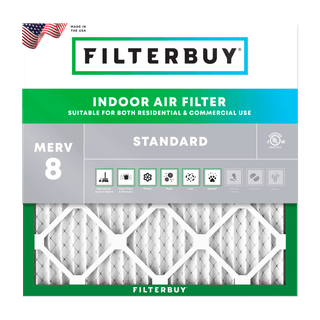
Filterbuy Canada carries green-framed pleated filters in over 600 sizes, including hard-to-find ones, with free shipping across Canada. The colour-coded range: MERV 8 Standard for everyday filtration, MERV 11 Superior for homes with pets or seasonal allergies, MERV 13 Optimal for wildfire smoke season, and the Odour Eliminator for cooking odours when the windows stay shut. Our guide to MERV ratings compares all four.
Glossary
AQHI (Air Quality Health Index). Canada's hourly 1 to 10+ scale for the health risk of outdoor air.
AQI (Air Quality Index). The U.S. 0 to 500 scale common in apps; not the basis of Canadian health guidance.
Metro Vancouver Northeast. The AQHI reporting zone covering the Tri-Cities (Coquitlam, Port Coquitlam and Port Moody), Pitt Meadows and Maple Ridge.
PM2.5. Fine particulate matter 2.5 micrometres in diameter or smaller. The main pollutant of concern in wildfire smoke.
Ground-level ozone. A gas formed when nitrogen oxides and volatile organic compounds react in hot, sunny weather. The main ingredient in smog.
Air quality warning. Metro Vancouver's current term for an air quality advisory.
MERV (Minimum Efficiency Reporting Value). The industry scale for filter efficiency. Higher numbers capture more small particles. Filterbuy Canada carries MERV 8, 11 and 13.
ppb (parts per billion). The unit for gases such as ozone.
Frequently Asked Questions
Is the air quality bad in Port Coquitlam today?
Check the live map above. An AQHI of 1 to 3 is low risk, 4 to 6 moderate and 7 or above high. At 7 or above, people at higher risk should reduce or reschedule strenuous outdoor activity; others should consider it if symptoms appear.
Does Port Coquitlam have an air quality monitoring station?
No. Its AQHI is the Metro Vancouver Northeast zone value, drawn from a network whose neighbouring stations sit in Coquitlam, Port Moody and Pitt Meadows.
Why does my app show a different Port Coquitlam air quality number?
Most apps show the U.S. AQI on a 0 to 500 scale, and some blend in low-cost sensors or estimates. Canadian health guidance is written for ECCC's AQHI.
Is Port Coquitlam's air quality different from Coquitlam's?
The published AQHI is the same, since both cities share the Northeast zone. Street-level conditions can differ, so check AirMap's stations during a warning.
Port Coquitlam Air Quality Resources
Metro Vancouver AirMap. Hourly station readings.
B.C. Air Quality Health Index forecasts. Values and forecasts for every B.C. zone.
Pitt Meadows air quality today. Filterbuy.ca's neighbouring city page.
Live air quality across Canada. Filterbuy.ca city and provincial pages.