Shop by
July 17, 2026
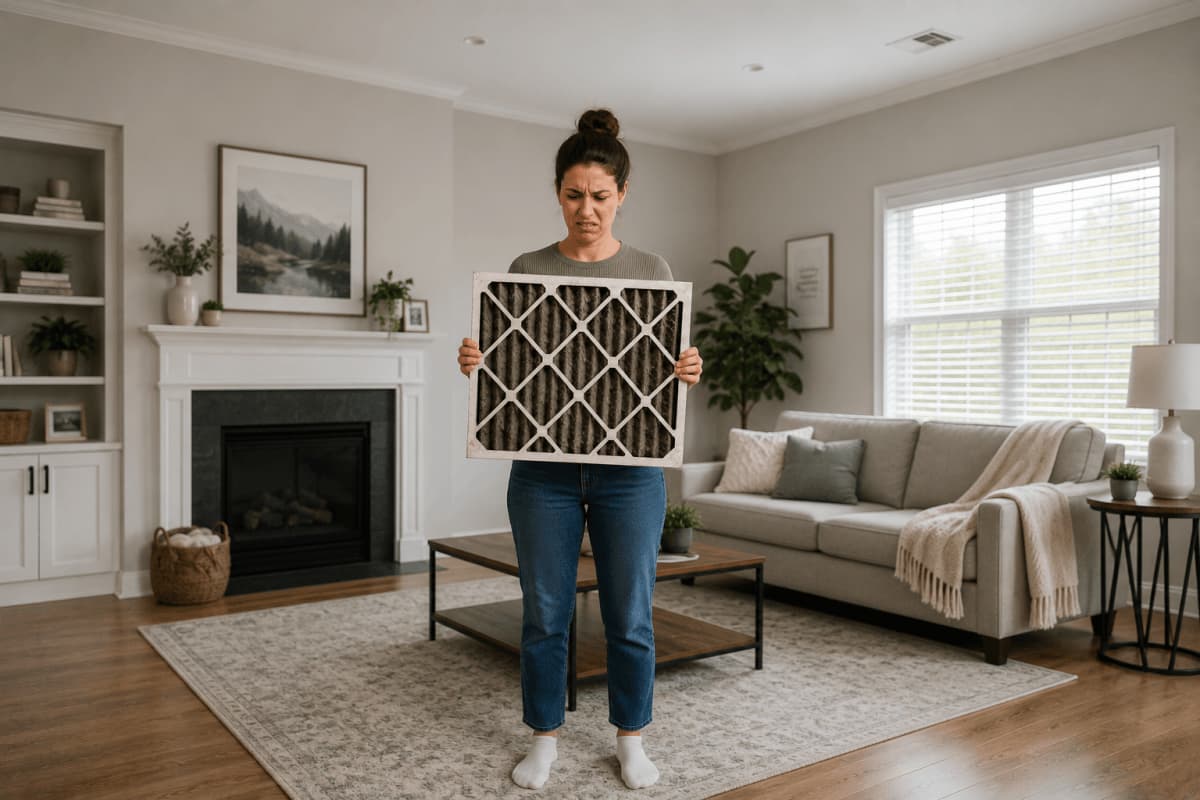
Your air purifier is running. But why does the air still feel dusty, stale, or a little irritating?
Maybe the airflow seems weak. Maybe the filter light won’t turn off. Maybe the whole unit smells musty. Before you assume your purifier is broken, take a breath. In many cases, the problem isn’t the machine at all. It’s the filter inside it.
Your air purifier can only work as well as the filter inside it. Once that filter fills up with dust, pet hair, pollen, smoke particles, and other airborne debris, the unit has to work harder to move air and keep your space fresh. The good news? A fresh Filterbuy replacement filter can often bring back cleaner airflow without you replacing the entire purifier.
It helps to know what your filter is actually doing. HEPA filters are common in portable air cleaners. According to the EPA, a true HEPA filter can theoretically remove at least 99.97% of dust, pollen, mold, bacteria, and other airborne particles down to 0.3 microns. That’s powerful, but only when the filter is clean enough to do its job.
A clean air filter is crucial for maintaining optimal air quality in your space.
HEPA filters are highly effective, capable of removing 99.97% of airborne particles as small as 0.3 microns when functioning properly.
Regularly assess the condition of your air filter and replace it when necessary for the best results.
Look for signs like reduced airflow or visible dirt on the filter to determine when a replacement is needed.
Timely filter replacement ensures not only cleaner air but also improved performance of your air purification system.
Here are 10 signs it’s time for a fresh one.
A clogged filter makes it harder for air to pass through your purifier. When the filter is packed with dust, lint, and pet hair, less air gets through. So the air coming out feels weaker than it used to.
Want a quick test? Put your hand near the air outlet on your usual fan setting. If the airflow feels weak or uneven, unplug the unit and check the filter.
Weak airflow is one of the clearest signs it may be time to replace the filter with a fresh Filterbuy replacement.
Notice more sneezing, coughing, itchy eyes, or sinus congestion while the purifier runs? Your filter may no longer be capturing enough airborne irritants.
A fresh filter may help reduce common airborne triggers like pollen and pet dander, but it isn’t a cure for allergies or asthma.
Here’s the simple version. If your purifier used to make your home feel fresher during pollen season or pet-shedding season, but now your symptoms are creeping back, the filter should be one of the first things you check.
Your purifier should make the room smell better, not worse. Musty, stale, sour, or smoky odors often mean the filter is saturated, exposed to moisture, or no longer absorbing smells.
Many units use an activated carbon filter to trap odors and gases. But carbon doesn’t last forever. Once it’s saturated, it stops doing much for smells at all.
If odors are coming from the unit itself, replace the filter before you keep running it. This is especially common in humid climates, where moisture around the filter can lead to that musty smell faster.
Sometimes the easiest test is a visual one. Unplug the unit, remove the filter, and take a look.
Some color change is normal. But thick buildup, heavy discoloration, matted dust, or packed pet hair usually means the filter is overdue.
One important note: a gray filter isn’t always a dead filter. Color can change quickly depending on your air quality. Visible clogging and debris buildup are stronger signals than color alone.
If the filter surface looks fuzzy, packed, or blocked, it’s time to replace it.
Lots of air purifiers have a filter-change light or app alert. Some track run time. Others use sensors. Either way, it’s your unit telling you maintenance is due.
Here’s where people slip up. They reset the light and move on. But resetting the reminder doesn’t fix anything. The old filter is still clogged.
Filter change light on? Replace the old filter with a fresh Filterbuy replacement before resetting the reminder. Then reset the indicator according to your purifier’s manual.
A clogged filter forces the fan to work harder. You might hear humming, rattling, whining, or the fan kicking up to a higher speed than normal.
If your purifier used to hum quietly in the background but now sounds strained, the filter may be blocking airflow. A fresh filter often quiets things back down.
Do your shelves, electronics, and tables look dusty again soon after you clean them? Your purifier may not be moving and filtering enough air.
You shouldn’t feel like you’re dusting constantly while your air purifier runs all day.
A fresh filter may help the unit capture more airborne dust before it has a chance to settle on your furniture.
Got a smart air purifier? The air quality light or app should usually improve after the unit runs for a while. If it stays red, orange, or “poor,” the filter may be clogged or the purifier may be overwhelmed.
That said, the filter isn’t always the culprit. Other causes include:
Cooking smoke or candles
Open windows or high outdoor pollution
A room that’s too large for the purifier
A filter that isn’t seated correctly
An air purifier that stays red may need a new filter. But it can also mean the room has an active pollution source, or the purifier is simply too small for the space.
Filterbuy Tip: If your air purifier is running but your home still feels dusty or stale, check the filter before assuming the whole unit needs to be replaced. A fresh, properly fitted filter is often the simplest fix.
Be honest. When did you last change the filter?
If you can’t remember, that’s usually a sign to check it today. Replacement timelines vary a lot. They depend on your purifier model, filter type, daily use, pets, dust, smoke, and your indoor and outdoor air quality.
As a general guide, many HEPA filters get replaced every 6 to 12 months. Carbon filters may need replacing sooner if they deal with heavy odors. Real life plays a big role here, too:
Homes in high-pollen areas may need more frequent changes
Homes affected by wildfire smoke can clog filters faster
Urban homes near heavy traffic deal with more fine particles
Homes with pets or daily purifier use go through filters quicker
Make filter changes easier by keeping replacement filters on hand from Filterbuy.
Some pre-filters are washable or vacuum-friendly. But many HEPA filters are not designed to be washed and reused unless the manufacturer specifically says so.
Always check your owner’s manual first. Washing a HEPA filter that isn’t built for it can damage the material and hurt performance.
If you clean the pre-filter and the purifier still has weak airflow, bad smells, or poor performance, the main filter likely needs to be replaced.
Running a clogged filter doesn’t just lower performance. It can quietly create a few problems around your home.
A clogged filter restricts airflow. That makes it harder for the purifier to clean the room the way it should.
When the filter is full, it can’t capture new particles or smells as well. So dust and odors stick around longer.
The fan has to work harder to pull air through a blocked filter. That extra effort often means more noise.
This is the big one. People assume the unit has failed when, in many cases, the fix is as simple as a new filter.
Before you replace the entire air purifier, check whether a fresh Filterbuy replacement filter can get your unit back on track.
Ready for a new filter? Here’s how to pick the right one. Filterbuy helps homeowners find filters by size, type, and filtration need, so you don’t have to guess.
Start here. Look on the back, the bottom, or inside the filter compartment. You can also find the model number in your owner’s manual. This is the key to matching a compatible filter.
Different filters do different jobs. Here’s a quick breakdown:
HEPA or HEPA-style filters: Best for fine airborne particles like dust, pollen, and mold spores
Activated carbon filters: Great for odors from pets, cooking, smoke, and everyday household smells
Pre-filters: Catch larger debris like hair, lint, and visible dust before it reaches the main filter
A filter should sit securely inside your purifier. If it’s the wrong size or installed incorrectly, air can sneak around the filter instead of going through it. That means less filtration, even with a brand-new filter.
Think about what your home deals with most. Pets? Allergies? Smoke, dust, or strong odors? Live somewhere with wildfire season or heavy city pollution? Those factors all affect which filter is the best fit for you.
Not sure which filter you need? Check your purifier model number, then find a compatible Filterbuy replacement filter.
Your air purifier handles one room at a time. For whole-home filtration, your HVAC system matters too.
Filterbuy offers HVAC and furnace filters by size and MERV rating, including MERV 8, MERV 11, MERV 13, and Odor Eliminator options. MERV stands for Minimum Efficiency Reporting Value. A higher MERV rating captures more particles, but it still needs to match your HVAC system so airflow stays efficient.
Your air purifier can only perform as well as the filter inside it.
If you’re noticing weak airflow, more dust, strange smells, louder operation, or a filter light that won’t go away, your filter may be past due. The fix is usually simpler and cheaper than buying a whole new unit.
Filterbuy makes it easy to find replacement filters that fit your home’s air quality needs, so you can get cleaner air moving again.
Keep your air purifier working the way it should. Shop Filterbuy replacement filters today.
Replace it when airflow is weak, the filter looks clogged, the purifier smells bad, the filter light turns on, dust builds up faster, or the unit no longer seems to improve the room’s air.
Many HEPA filters are commonly replaced every 6 to 12 months. But the exact timing depends on the purifier, filter type, usage, pets, smoke, dust, and indoor air quality. Always check your owner’s manual.
Some pre-filters can be cleaned. But many HEPA filters should not be washed unless the manufacturer says they’re washable. If cleaning the pre-filter doesn’t restore performance, replace the main filter.
The filter may be saturated with odors, clogged with dust, or exposed to moisture. Replace the filter and check the unit for trapped debris or dampness.
Weak airflow is often caused by a clogged filter. Unplug the unit, inspect the filter, and replace it if it looks packed with dust or debris.
It may only need a new filter. Before replacing the entire unit, check for common filter problems like weak airflow, odors, visible dirt, or a filter-change alert.
