
Air Filter Myths During Cold and Flu Season: What's True, What's Not
October 21, 2026
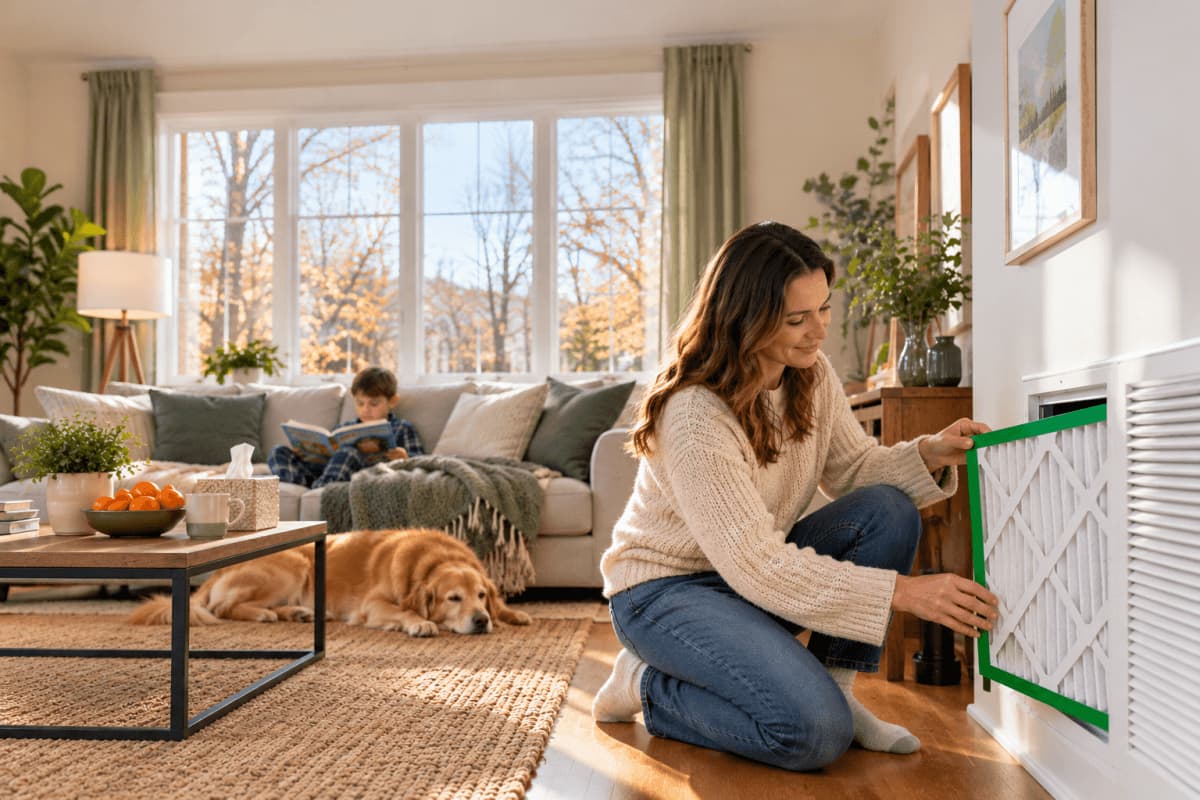
No. An HVAC air filter can’t prevent colds or flu on its own. It can capture some particles that may carry respiratory viruses, along with dust, pollen, and pet dander.
Think of your filter as one layer of protection for your air, not a shield. It works best alongside ventilation, hand hygiene, vaccination, and staying home when sick.
The right filter for your system, changed on schedule, keeps that layer doing its job. Take the quick match quiz below to find yours.
Find your filter match
Answer a few quick questions and we’ll match you to the right filter for your system.
Already know your size? Shop air filters at Filterbuy
HVAC filters can capture some particles that carry respiratory viruses, but they cannot prevent colds or flu on their own. Filtration works best as one part of a broader strategy that includes ventilation, hand hygiene, vaccination, and staying home when sick. Choosing the right filter and replacing it on schedule helps your HVAC system work as intended, but no filter guarantees protection from illness.
Cold and flu season brings a wave of advice about air quality, and not all of it holds up. Some claims oversell what a furnace filter can do. Others dismiss filtration entirely as useless against viruses. Neither extreme is accurate.
What Can an HVAC Filter Actually Do During Cold and Flu Season?
Before diving into the myths, here's a quick summary.
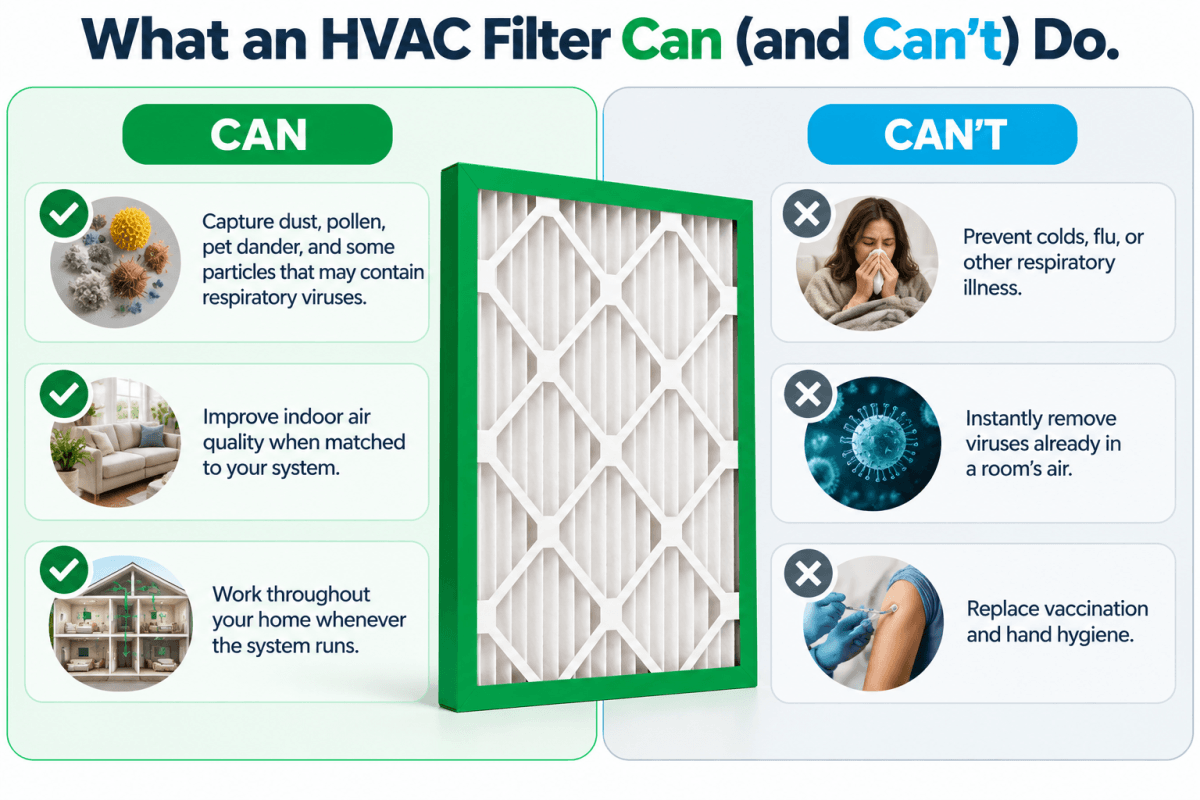
What a filter can do:
Capture dust, pollen, pet dander, and some particles that may contain respiratory viruses
Improve indoor air quality when matched correctly to your HVAC system
Work throughout your home whenever the system is running
What a filter cannot do:
Prevent colds, flu, or other respiratory illness
Instantly remove viruses that are already circulating in a room's air
Replace other prevention steps like vaccination and hand hygiene
Myth 1: All Air Filters Are the Same
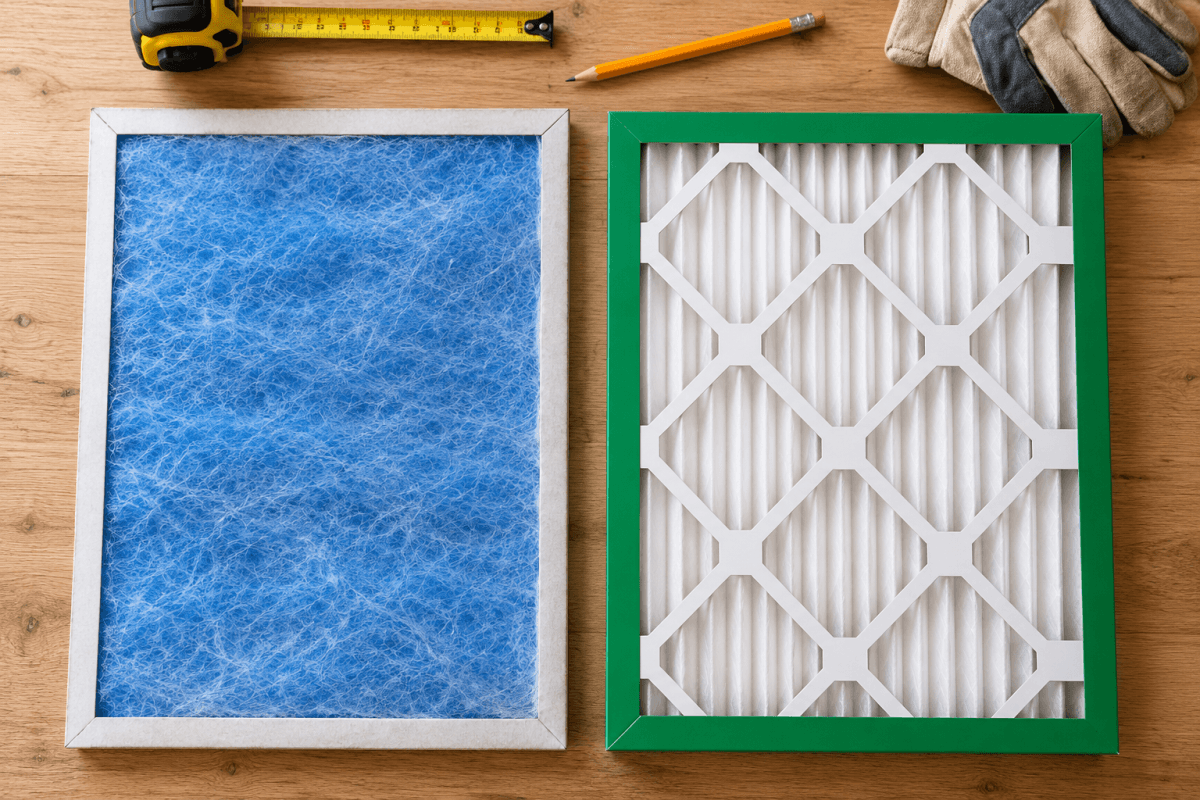
Not all filters perform the same job. Basic fiberglass filters mainly protect your HVAC equipment from large debris and do little to improve indoor air quality. Pleated filters, made from tightly woven synthetic fibers, capture a wider range of particles, including dust, pollen, and smaller airborne matter.
Filters are rated using the Minimum Efficiency Reporting Value (MERV) scale, which runs from 1 to 16 for filters tested on particles between 0.3 and 10 microns. A higher MERV rating generally means the filter captures a greater share of smaller particles. Filterbuy offers filters across this range, including MERV 8, MERV 11, and MERV 13 options, so homeowners can choose a filter that matches their system and air quality goals.
Myth 2: Higher MERV Always Means Better Health Protection
A higher MERV rating does not automatically mean better protection for your household. System compatibility matters just as much as filtration efficiency.
The right rating depends on your household. MERV 8 is a strong fit for most homes, MERV 11 suits homes with pets or allergies, and MERV 13 is the step up for smoke and fine-particle concerns. If you decide to upgrade, the EPA recommends choosing at least a MERV 13 filter, or as high a rating as your system fan and filter slot can accommodate. But not every system is built to handle high-MERV filters. A filter that's too restrictive for your equipment can reduce airflow and strain the system. Always check your HVAC manufacturer's guidance before upgrading to a higher MERV rating.
Myth 3: Air Filters Can Prevent Colds and Flu
This is one of the most important myths to correct: air filters cannot prevent colds or flu. According to the CDC, flu viruses spread mainly through droplets made when infected people cough, sneeze, or talk, which can land in the mouths or noses of people nearby. Less often, people get sick by touching a contaminated surface and then their own face. Much of that exposure happens up close, before the air ever reaches your HVAC filter.
The CDC's core prevention strategies for respiratory viruses take a layered approach that includes vaccination, hygiene, cleaner air, and staying home when sick. The EPA likewise describes filtration as a supplement to source control and ventilation, not a replacement for them. Filtration is a supporting measure, not a standalone solution.
Myth 4: Viruses Are Too Small for HVAC Filters to Capture
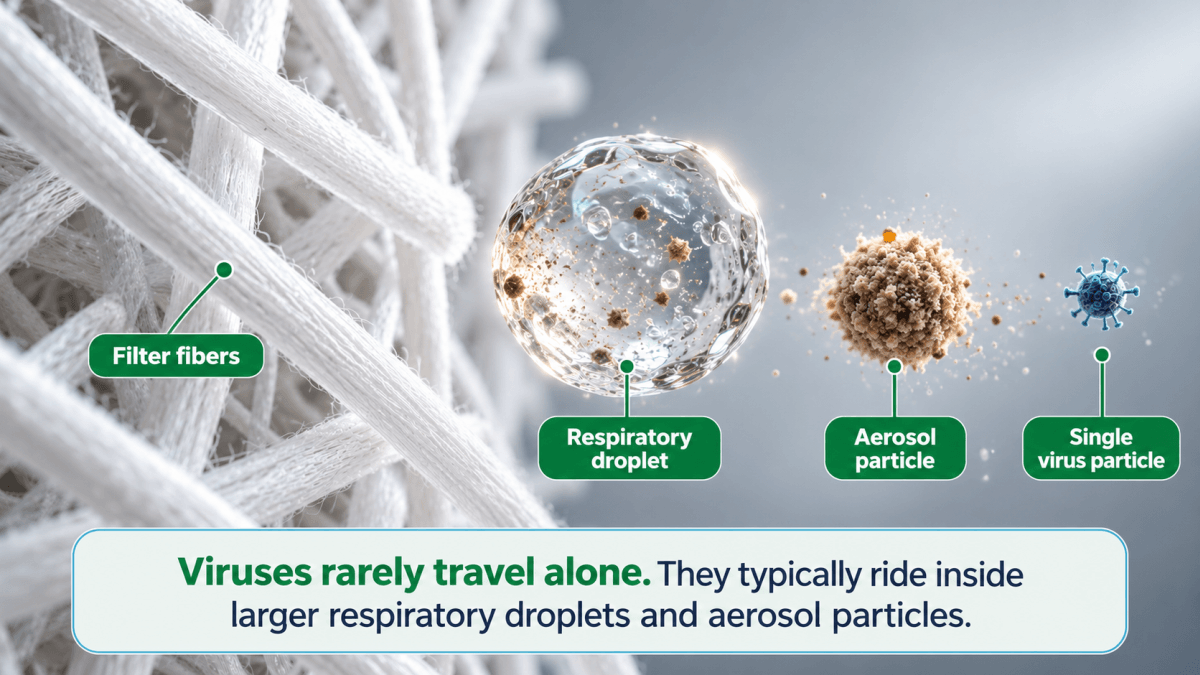
It's true that individual virus particles are extremely small, often smaller than the gaps in standard filter media. But viruses rarely travel alone. They typically ride inside larger respiratory droplets and aerosol particles released when someone coughs, sneezes, talks, or breathes.
Because these droplets and aerosols are larger than a single virus particle, HVAC filters, especially higher-MERV filters, may capture some particles that contain respiratory viruses. This doesn't mean a filter removes the risk of exposure. It means filtration can play a small role in reducing certain airborne particles over time.
Myth 5: Pleated Filters Damage HVAC Systems
Pleated filters themselves aren't the problem. Damage or reduced performance usually comes from a mismatched MERV rating, incorrect size, or poor installation, not from pleated filters as a category.
Several factors affect how well a filter performs within your system: MERV rating, size, thickness, available surface area, your HVAC system's design, and how snugly the filter fits. A pleated filter sized and rated correctly for your system should not cause damage. When in doubt, consult your manufacturer's specifications or reach out to an HVAC professional.
Myth 6: You Should Replace Your Filter Every 90 Days, No Exceptions
A fixed 90-day rule doesn't account for real household differences. Filter lifespan depends on filter type, how often your system runs, whether you have pets, how many people live in your home, and local particle load, like dust, nearby construction, or wildfire smoke.
A better approach is to check your filter visually once a month and replace it according to the manufacturer's guidance for your specific filter and system. Homes with pets or higher occupancy often need more frequent changes, while lightly used systems may go longer between replacements.
Myth 7: A Dirty Filter Will Make You Sick
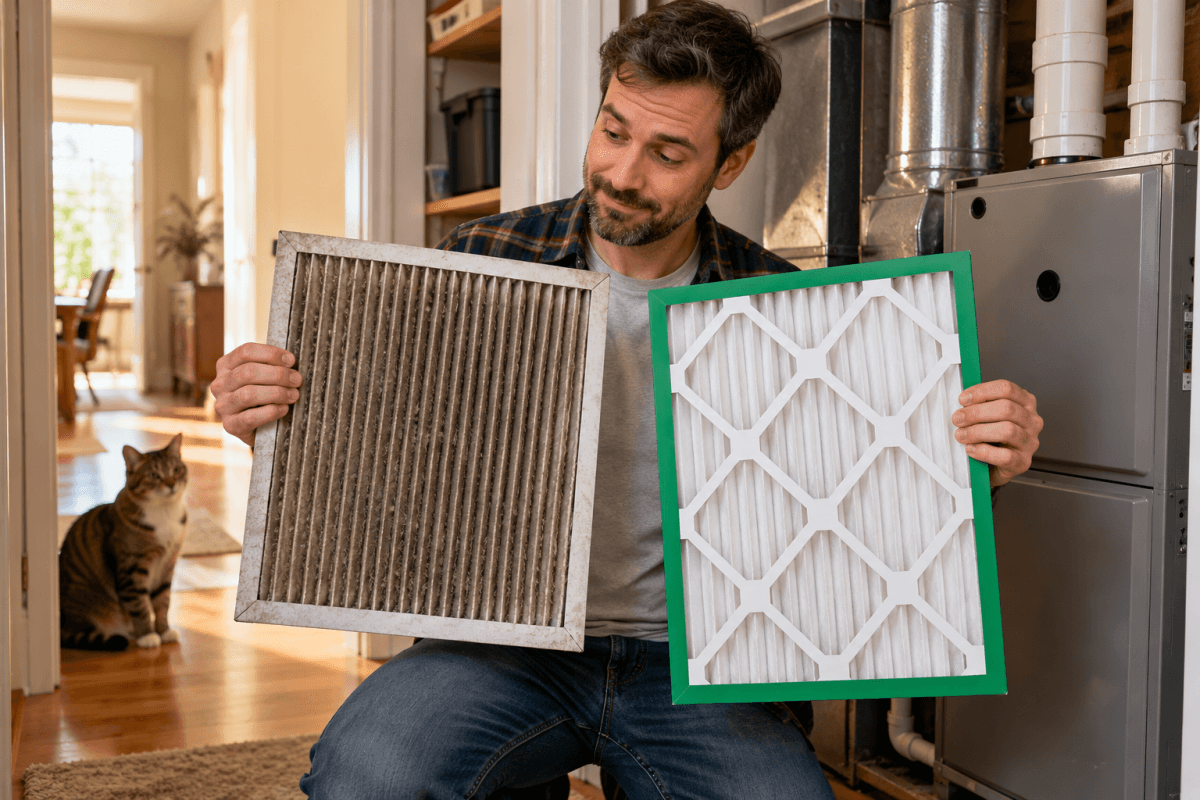
A loaded, dirty filter doesn't directly cause illness, but it does stop doing its job well. The EPA notes that a dirty, overloaded filter won't work well, and a clogged filter can also restrict airflow, making your HVAC system work harder.
The fix isn't fear; it's maintenance. Keeping an eye on your filter and replacing it on a reasonable schedule helps your system function as designed.
Myth 8: HVAC Filters and Portable Air Cleaners Do the Same Thing
These two tools serve different purposes. An HVAC filter works throughout your entire home, but only when the system is actively running. A portable air cleaner works continuously in a single room, independent of your HVAC system's cycle.
According to the EPA, portable air cleaners can help reduce airborne particles in specific spaces, such as bedrooms or living rooms, and they often reach a high Clean Air Delivery Rate (CADR) by using HEPA filters. When choosing one, look for a CADR matched to the size of the room. Avoid air cleaners that generate ozone; the EPA notes that no federal agency has approved ozone generators for use in occupied spaces.
What the Evidence Actually Says About Filtration and Respiratory Viruses
Both the EPA and CDC frame filtration as part of a layered strategy for reducing airborne particles indoors, alongside source control, ventilation, and good hygiene practices. No single measure, filtration included, is presented as a way to prevent infection on its own.
If reducing airborne particles matters to your household, whether for general air quality, allergies, or peace of mind during respiratory virus season, combining a properly matched HVAC filter with good ventilation habits is a reasonable, evidence-based approach.

How to Choose the Right Filter for Cold and Flu Season
| MERV Rating | What It Typically Captures | Best For |
|---|---|---|
| MERV 8 | Dust, lint, pollen | Most homes with average airflow needs |
| MERV 11 | Finer dust, pet dander, some mold spores | Homes with pets or mild allergy concerns |
| MERV 13 | Smaller particles, including some bacteria and particles that may carry viruses | Households wanting higher filtration, if the HVAC system supports it |
Before upgrading, confirm your system can handle the airflow restriction of a higher MERV filter. Check that the filter fits snugly in its slot, since gaps around the edges let unfiltered air bypass the filter entirely. Also confirm the airflow-direction arrow on the filter frame matches your system's airflow, since an incorrectly installed filter won't perform as intended.
Filterbuy's MERV 8, MERV 11, and MERV 13 filters come in standard and custom sizes, and a filter subscription service can help households stay on a consistent replacement schedule without having to remember each time.
Portable Air Cleaners as a Supplement to HVAC Filtration
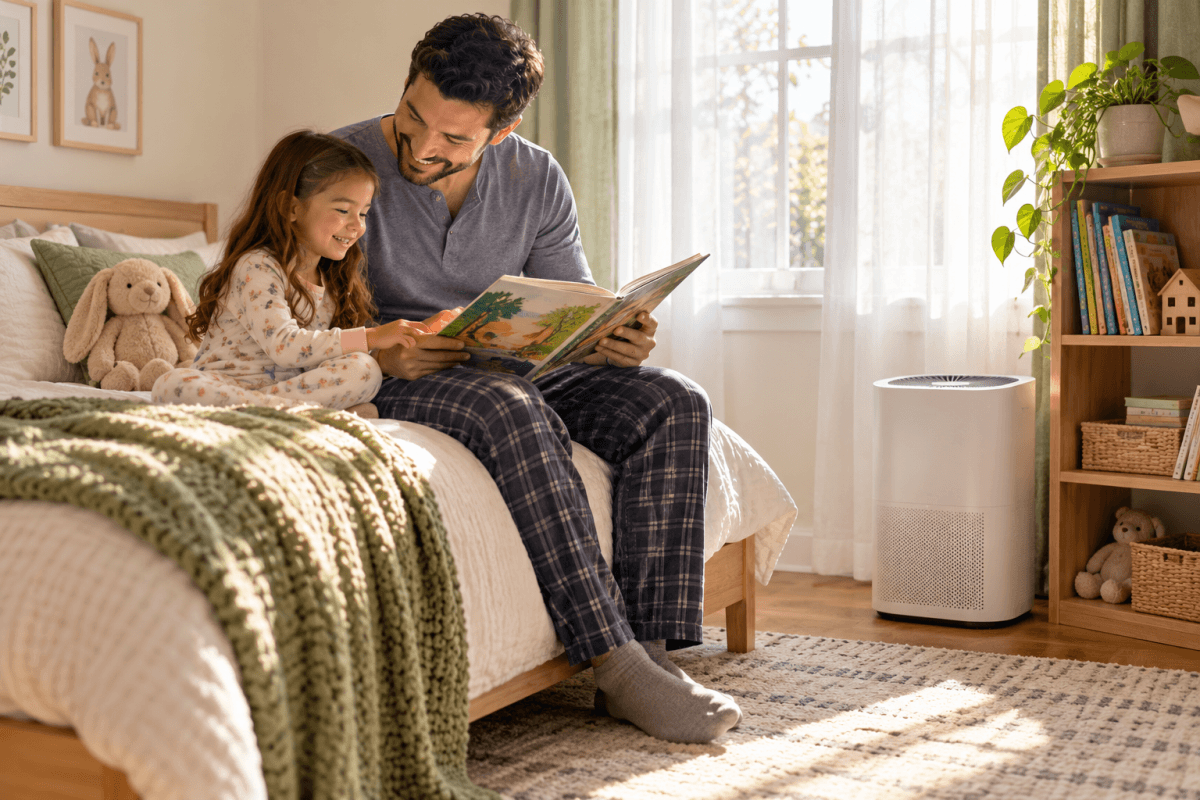
For rooms that need extra attention, like a bedroom, nursery, or home office, a portable air cleaner can supplement whole-home filtration. Look for a HEPA filter model with a CADR rating suited to your room's square footage, and avoid devices marketed as ozone generators.
Portable air cleaners won't replace your HVAC filter, but they can add a layer of filtration in the specific spaces where you spend the most time.
Other Steps That Matter Alongside Filtration
Filtration works best as part of a broader set of habits:
Ventilation: Open windows when weather and outdoor air quality allow, or use exhaust fans to bring in fresh air.
Hand hygiene: Regular handwashing remains one of the most effective ways to reduce the spread of respiratory illness.
Vaccination: The CDC lists staying up to date on recommended vaccines, including the annual flu vaccine, as a core prevention strategy.
Humidity control: The EPA recommends keeping indoor relative humidity between 30% and 50% to support comfort and help limit mold and dust mites.
Exhaust fans: Use kitchen and bathroom exhaust fans to help remove pollutants and excess moisture.
None of these steps alone eliminates the risk of getting sick, but together they form a more complete approach to indoor air quality.
Breathing Easier Through Flu Season
Air filters are a useful part of maintaining indoor air quality, but they work best when you understand their real role. A properly matched filter, whether that's a Filterbuy MERV 8, MERV 11, or MERV 13, can help capture particles that may carry respiratory viruses while supporting your HVAC system's performance. Pairing it with ventilation, hygiene, and other everyday habits gives your household a more complete approach to cleaner air this season.
Frequently Asked Questions
Can Air Filters Stop Viruses?
Air filters cannot stop or prevent viral infection. Higher-efficiency filters may capture some particles that contain respiratory viruses, but filtration alone does not prevent illness.
What MERV Rating Is Best For Flu Season?
It depends on your household and your system. MERV 8 works for most homes, MERV 11 suits homes with pets or allergies, and MERV 13 offers stronger fine-particle filtration if your system can accommodate it. Check your system's specifications before upgrading, since not all systems support higher-MERV filters.
Should I Change My Filter If Someone In My Home Gets Sick?
There's no special rule requiring a filter change after an illness. Continue following the manufacturer's recommended replacement schedule and monthly visual checks.
Are Pleated Filters Safe For My HVAC System?
Yes, when sized and rated correctly for your system. Issues typically come from a mismatched MERV rating or poor fit, not from pleated filters themselves.
What Is The Difference Between An HVAC Filter And A Portable Air Purifier?
An HVAC filter cleans air throughout your home whenever the system runs. A portable air cleaner works continuously in a single room and can supplement whole-home filtration.
Can A Dirty Filter Make Me Sick?
A dirty filter doesn't directly cause illness, but it loses effectiveness and can restrict airflow. Replace filters according to manufacturer guidance to keep your system working properly.
How Often Should I Change My Filter During Flu Season?
Replacement frequency depends on filter type, household size, pets, and system runtime. Check your filter monthly and follow the manufacturer's recommended schedule rather than a fixed timeline.