
Can Your HVAC Filter Help With Colds, Flu & RSV?
October 20, 2026
Partly. A higher-efficiency HVAC filter can capture some of the airborne droplets that carry cold, flu, and RSV viruses, but it can’t prevent illness on its own.
EPA recommends MERV 13, or the highest-efficiency filter your system can handle. The filter only works while air moves through your system. Pair it with ventilation, hand washing, and vaccination.
- MERV 8: larger debris, dust, and dust mites
- MERV 11: finer particles like pet dander and mold spores
- MERV 13: microscopic particles, EPA’s recommended target
Not sure what your system can take? Use the quick quiz below to find your match.
Viruses ride on larger droplets
That’s what an HVAC filter can capture.
- 1 Droplets spreadBreathing, talking, and coughing release them into the air.
- 2 Air flows inThe fan pulls room air to the return vent.
- 3 Filter capturesHigher MERV filters catch more of them.
It only works while the fan is running.
Filters capture particles. They don’t kill viruses.
Answer a few quick questions and we’ll match you to the right filter.
Already know your filter size?
Shop Filterbuy filtersA properly selected HVAC filter can help reduce concentrations of airborne particles, including those that may contain respiratory viruses such as influenza and RSV. But it cannot prevent colds, flu, or RSV on its own.
Higher-efficiency filters, such as those rated MERV 13 or above, can capture some virus-containing particles as air passes through the system. However, filtration only works while air is actively moving through the system, and no filter eliminates all transmission risk.
EPA and CDC recommend higher-efficiency filtration as part of a broader cleaner-air strategy that also includes ventilation, hand hygiene, vaccination, and other everyday precautions.
How HVAC Filters Capture Respiratory-Virus Particles
When air circulates back through your HVAC system, it passes through the filter before being redistributed through your home. The filter traps particles in the airstream, including dust, pollen, pet dander, and some airborne particles that may contain respiratory viruses.
The process looks like this: a person in the home releases respiratory particles by breathing, talking, coughing, or sneezing. Those particles become airborne, circulate through the space, and eventually get drawn into the return air path of the HVAC system. A higher-efficiency filter captures more of those particles than a basic fiberglass filter would.
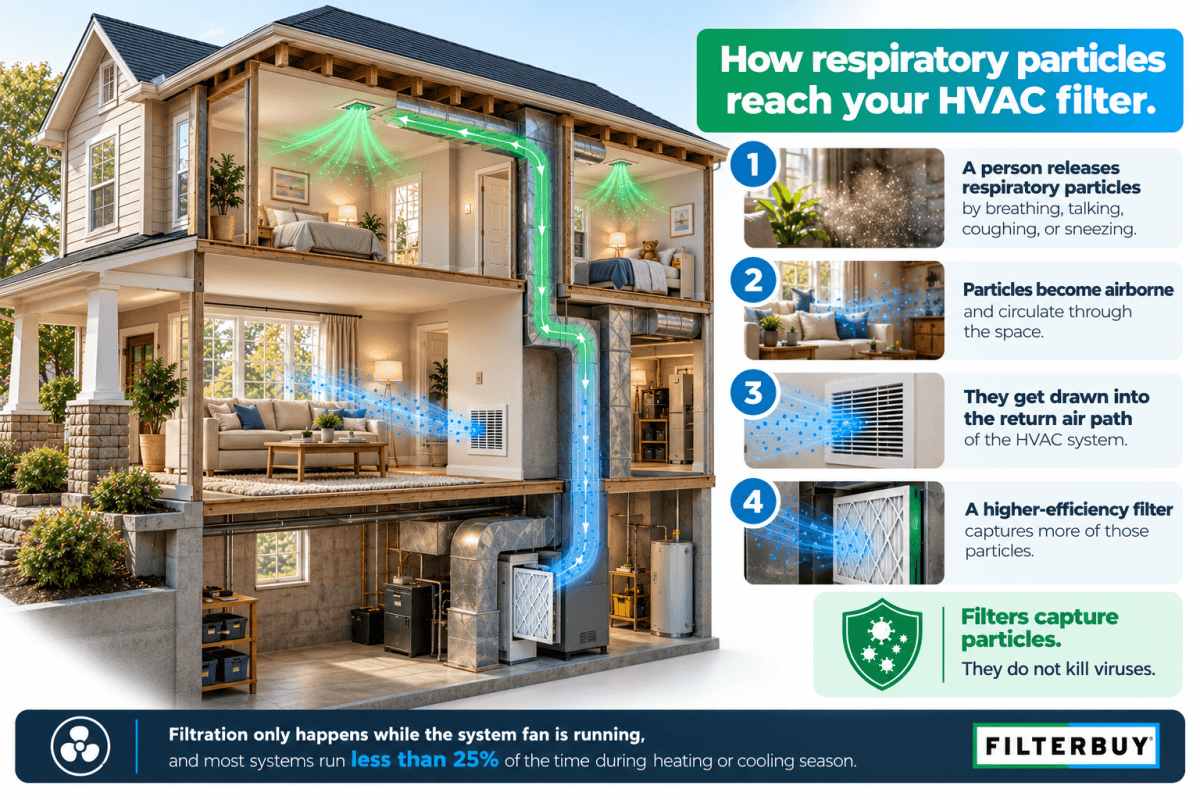
One key limit: HVAC filtration only occurs while the system fan is operating. In most homes, the system runs less than 25% of the time during the heating or cooling season. Particles that are not drawn into the return air path will not reach the filter at all.
Filters capture particles. They do not kill viruses.
Aren't Viruses Too Small For HVAC Filters?
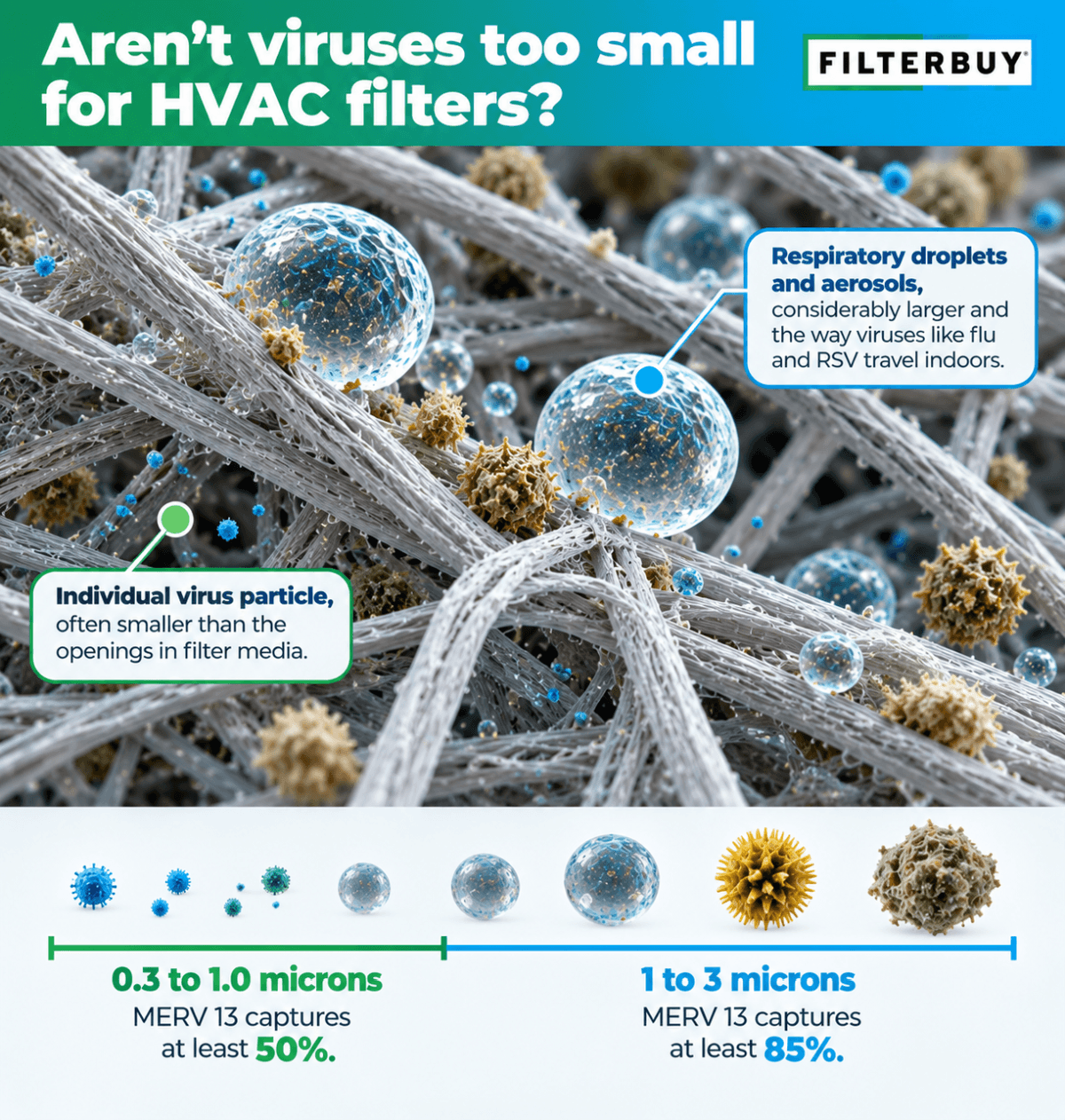
This is a common and reasonable question. Individual virus particles are extremely small, often smaller than the openings in filter media. However, respiratory viruses generally do not travel through indoor air as isolated particles.
According to the CDC, viruses such as influenza and RSV are carried in respiratory droplets and aerosols released when people breathe, talk, sing, cough, or sneeze. These droplets and aerosols are considerably larger than isolated virus particles, and higher-efficiency HVAC filters can capture many of them as air passes through the system.
So while a filter cannot capture free-floating individual virus particles with high reliability, it can reduce concentrations of virus-containing aerosols that pass through the HVAC system over time.
What MERV Rating Is Best For Cold, Flu, And RSV Season?
EPA recommends using a MERV 13 filter, or the highest-efficiency filter your HVAC system's fan and filter slot can accommodate. CDC guidance supports higher-efficiency filtration as a way to reduce airborne respiratory-particle concentrations. A MERV 13 filter must demonstrate at least 50% efficiency at capturing particles in the 0.3 to 1.0 micron range and at least 85% efficiency for particles in the 1 to 3 micron range, which is where many virus-carrying aerosols fall.
MERV 8 vs. MERV 11 vs. MERV 13
How fine-particle filtration changes as the rating goes up.
| MERV rating | Particle filtration | Context |
|---|---|---|
| MERV 8 | Captures larger household particles such as dust, lint, and pollen | Useful baseline filtration; not the preferred target for enhanced fine-particle capture |
| MERV 11 | Greater efficiency for smaller particles than MERV 8 | Intermediate step when MERV 13 is not compatible |
| MERV 13 EPA/CDC preferred | Substantially better fine-particle filtration | EPA/CDC preferred target when the HVAC system can accommodate it |
Bars show relative fine-particle capture. Confirm your system’s compatibility before upgrading.
MERV 8, 11, and 13 do not provide equivalent fine-particle filtration. Choosing between them should be based on what your HVAC system can support, not simply on selecting the highest available number.
Can Your HVAC System Handle MERV 13?
Many residential systems can accommodate MERV 13, but not all. Before upgrading, check your HVAC manufacturer's manual for filter specifications, confirm that the filter dimensions and thickness match your filter slot, and make sure the filter fits snugly without bending or crushing it. EPA notes that air leaking around a poorly fitted filter bypasses filtration entirely, regardless of the MERV rating.
If you're not sure what your system can handle, an HVAC technician can confirm the highest-efficiency filter appropriate for your equipment. Higher-efficiency filters generally create more airflow resistance than lower-efficiency ones, and the right choice depends on your specific blower, ductwork, and system design, not just the MERV number.
MERV 13 vs. HEPA for colds, flu, and RSV
These two options serve different purposes and are not direct replacements for each other.
MERV 13 HVAC filter vs. portable HEPA air cleaner
Two tools, two jobs. Here’s how they compare.
| Feature | CentralMERV 13 HVAC filter | Room-levelPortable HEPA air cleaner |
|---|---|---|
| Where it works | Central HVAC system | Individual room |
| When it filters | Only when HVAC airflow is operating | Whenever the unit is running |
| Primary metric | MERV rating | HEPA designation + CADR |
| Coverage | Multiple rooms served by the HVAC system | Primarily the room it is placed in |
| Best use | Central filtration throughout the home | Supplemental filtration in a specific space |
Bottom line: Using both, when appropriate, can provide more air cleaning than either approach alone.
Neither option is universally "better." A MERV 13 filter improves filtration in the central system but only works when air is circulating. A properly sized portable HEPA air cleaner adds continuous filtration in a specific room. Using both, when appropriate, can provide more air cleaning than either approach alone.
Should You Use Both An Hvac Filter And An Air Purifier?
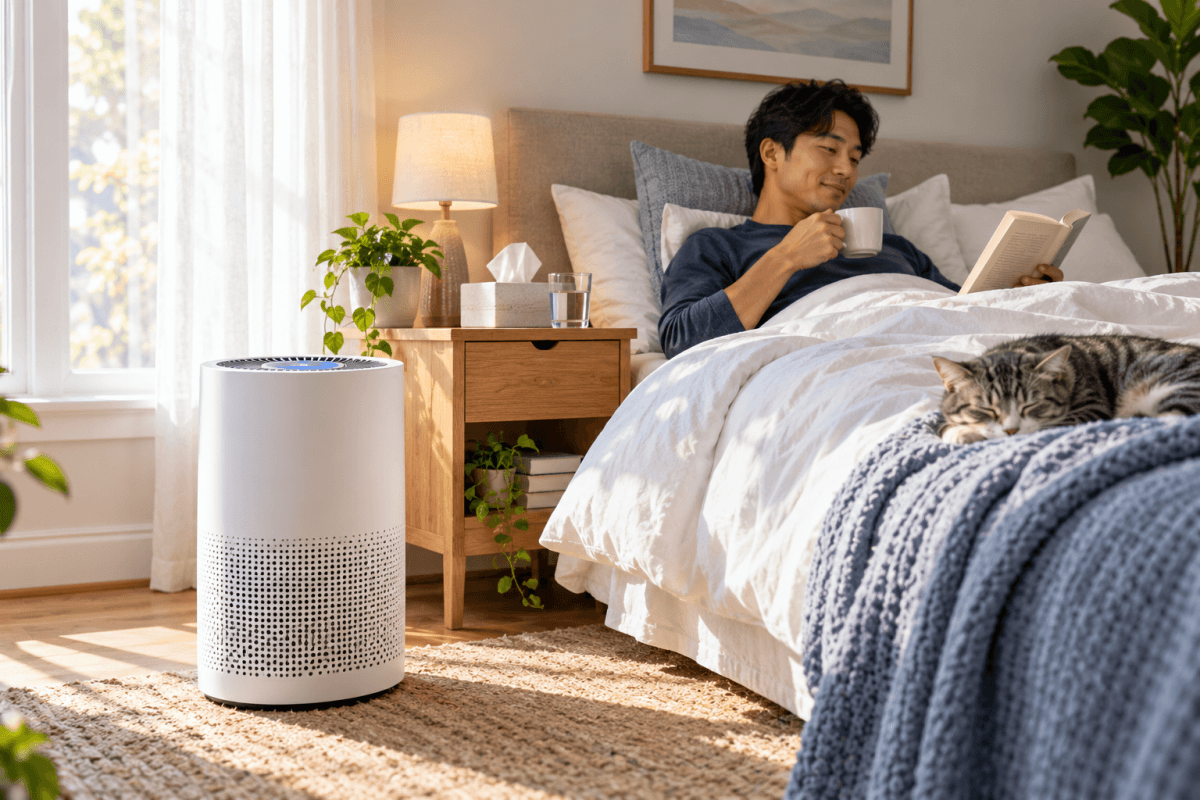
In some situations, pairing a central HVAC filter with a portable air cleaner makes sense. EPA specifically recommends portable air cleaners as a supplement when the central system cannot accommodate a higher-efficiency filter, or when additional room-level filtration is useful.
Situations where adding a portable air cleaner may be worth considering:
Someone in the household is sick and spending time in a specific room
The HVAC system cannot support MERV 13
Additional filtration is wanted in a bedroom, nursery, or home office
The HVAC system does not run frequently enough for central filtration to be effective
When choosing a portable air cleaner, match the unit's clean air delivery rate (CADR) to the size of the room. Look for units with a HEPA filter designation. Avoid devices marketed as ozone generators, as EPA identifies ozone as a lung irritant.
How To Get More From Your HVAC Filter During Respiratory-Virus Season
Use the highest-efficiency filter your system can accommodate. EPA recommends MERV 13 or the highest compatible rating. Confirm compatibility before upgrading.
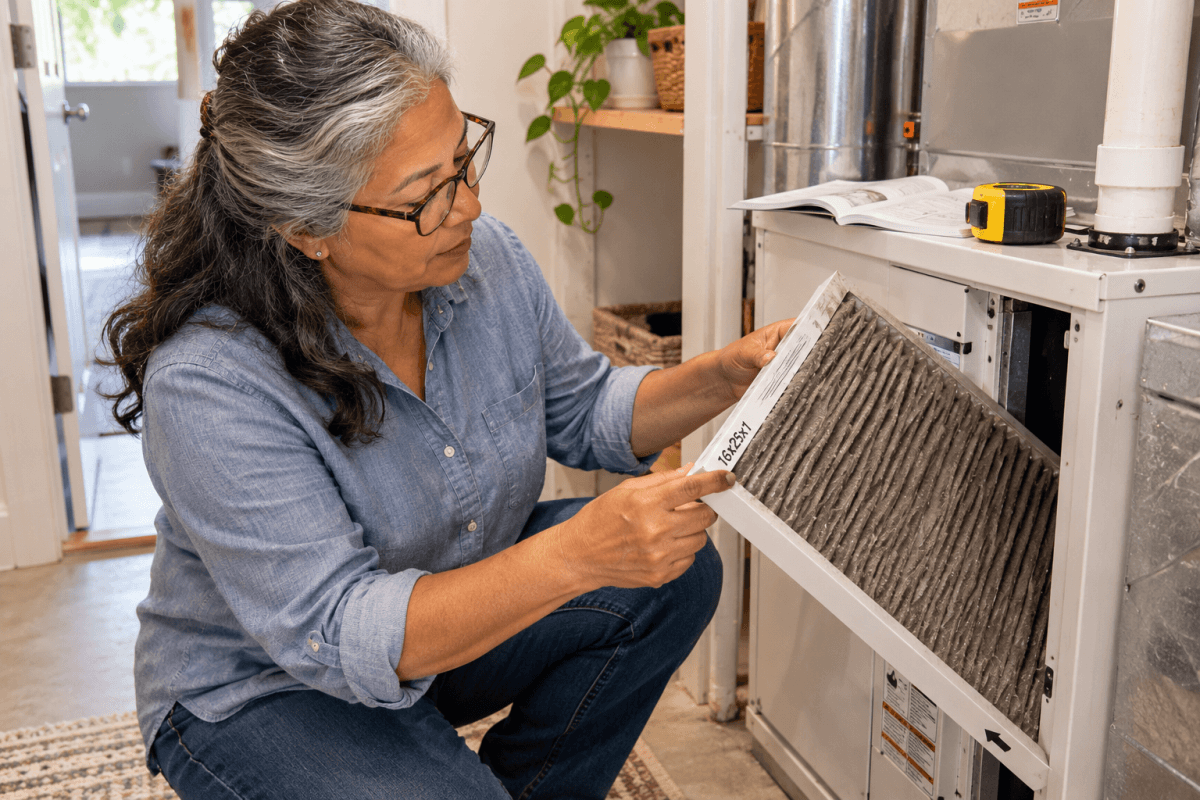
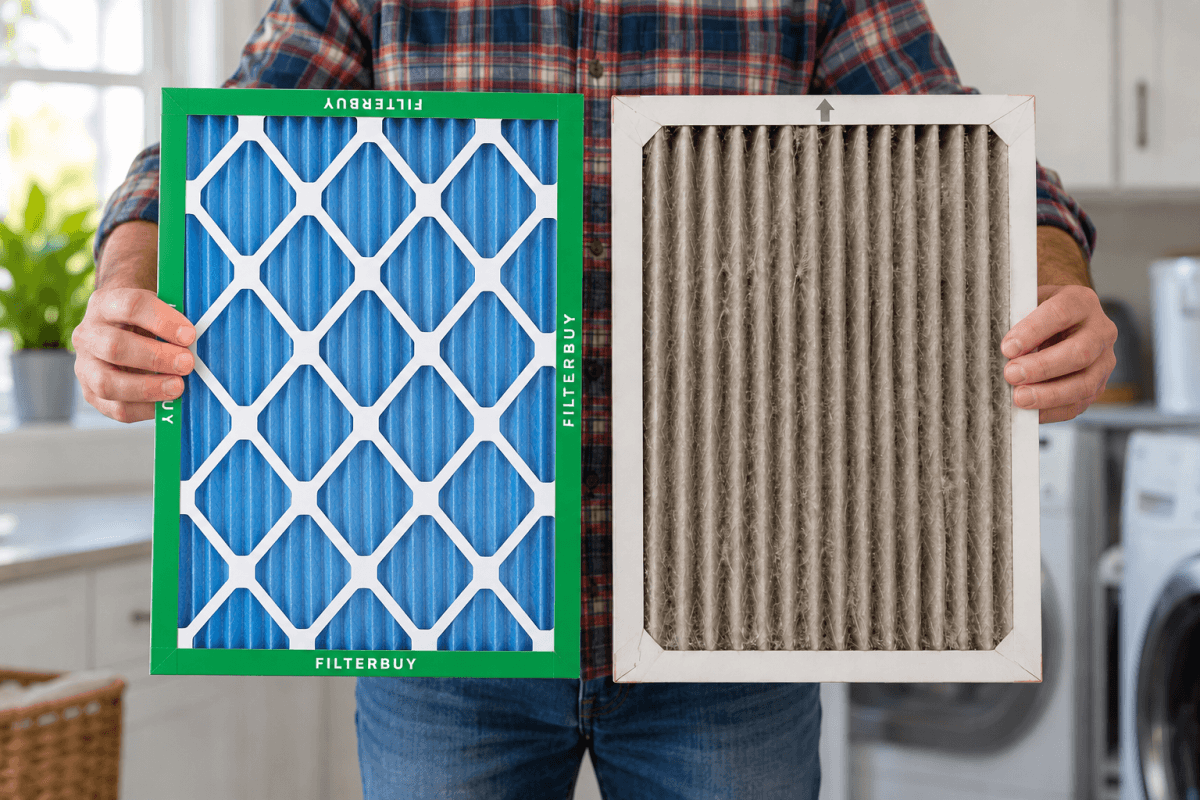
Make sure the filter fits correctly. A snug fit matters. Gaps around the edges allow unfiltered air to bypass the filter. Check the airflow direction arrow on the filter frame and install it as marked.
Inspect the filter regularly and replace it when needed. Check it monthly and replace it according to the filter and HVAC manufacturer's guidance. Replacement timing varies by filter type, system runtime, number of occupants, pets, and local air conditions. There is no single flu-season replacement interval that applies to every household.
Run the fan longer when additional filtration is useful. EPA notes that running the system fan for extended periods can increase the amount of air filtered. Be aware that longer fan operation uses more electricity.
Ventilate when conditions allow. Opening windows or using exhaust fans to bring in outdoor air reduces indoor pollutant concentrations. This works best when outdoor air quality is acceptable and weather permits. EPA frames ventilation and filtration as complementary, not competing, strategies.
Add a portable air cleaner for rooms that need it. A properly sized HEPA unit provides room-level filtration independent of the HVAC system's operating cycle.
What An HVAC Filter Cannot Do
Understanding the limits of filtration is just as important as knowing what it can do.
An HVAC filter cannot:
Guarantee that no one in the household gets sick
Filter air when no air is moving through the system
Capture respiratory particles that never reach the return air path
Replace hand hygiene, vaccination, ventilation, or other recommended health precautions
Turn an HVAC system into one designed for hospital-level filtration
Eliminate all forms of respiratory-virus transmission
Choosing A Filterbuy Filter For Cold And Flu Season
Once you have confirmed your system's filter requirements, choosing the right Filterbuy filter is straightforward.
Filterbuy MERV 8 is a solid starting point for systems that require lower airflow resistance or for households with standard filtration needs.
Filterbuy MERV 11 provides greater fine-particle capture than MERV 8 and suits homes with pets or households that want an intermediate step before MERV 13.
Filterbuy MERV 13 is the preferred option for enhanced fine-particle filtration when your HVAC system can accommodate it. It aligns with EPA's recommended target for residential filtration.
All Filterbuy filters are American-made and available in standard sizes as well as custom dimensions. A filter subscription can help households stay on a consistent replacement schedule based on their specific situation.
Frequently Asked Questions
Can HVAC Filters Help Reduce Cold, Flu, And RSV Particles?
Yes. Higher-efficiency HVAC filters can capture some airborne particles that may contain respiratory viruses as air passes through the system. They reduce concentrations of those particles over time but do not eliminate all transmission risk.
Can HVAC Filters Prevent Colds Or Flu?
No. An HVAC filter cannot prevent respiratory illness. Filtration is one part of a broader strategy that also includes vaccination, hand hygiene, ventilation, and staying home when sick.
Can HVAC Filters Capture Rsv Particles?
Higher-efficiency filters, particularly MERV 13, can capture some aerosol particles that may contain RSV as air moves through the HVAC system. Filtration reduces concentrations of those particles but cannot guarantee protection from RSV.
What MERV Rating Is Best For Respiratory Viruses?
EPA recommends MERV 13 or the highest-efficiency filter your HVAC system can accommodate. Confirm compatibility with your equipment before upgrading.
Does MERV 13 Capture Virus-Containing Particles?
Yes, to a degree. MERV 13 filters must demonstrate at least 50% efficiency for 0.3 to 1.0 micron particles and at least 85% efficiency for 1 to 3 micron particles, which covers the size range where many virus-carrying aerosols fall.
Can My HVAC System Handle MERV 13?
Many residential systems can, but not all. Check your manufacturer's specifications, confirm the filter fits properly, and consult an HVAC technician if you are unsure.
Is MERV 13 Better Than MERV 8 For Viruses?
For fine-particle filtration, yes. MERV 13 captures a much higher proportion of smaller particles than MERV 8. MERV 8, 11, and 13 are not equivalent.
Is HEPA Better Than MERV 13?
They serve different purposes. MERV 13 improves central HVAC filtration throughout the home. A portable HEPA air cleaner provides continuous filtration in a specific room. Each has its place, and they can complement each other.
Should I Use An Air Purifier When Someone Is Sick?
A properly sized HEPA air cleaner in the room where the sick person is spending time can supplement central HVAC filtration. Match the unit's CADR to the room size and avoid ozone-generating devices.
How Often Should I Replace My HVAC Filter During Cold And Flu Season?
Inspect your filter monthly and replace it based on the filter manufacturer's guidance, your HVAC equipment requirements, and actual household conditions. There is no universal flu-season interval that applies to every home. A heavily loaded filter should be replaced sooner.
Should I Run My HVAC Fan Continuously?
Running the fan longer increases the amount of air filtered, which can be useful when additional filtration is a priority. It also uses more electricity. Consider your system and energy costs when deciding how long to run the fan.
Can Filtration Replace Ventilation?
No. Filtration and ventilation are complementary strategies. EPA specifically recommends using both together as part of a layered approach to cleaner indoor air.