
Chilliwack Real-Time AQI Tracker
What's Actually In Chilliwack Air Today?
What High AQI Means for Your Lungs in Chilliwack
How to Read AQI
The Air Quality Index (AQI) measures how polluted the air is and how it may affect your health.
0–50 (Good): Air quality is satisfactory.
51–100 (Moderate): Acceptable, but some pollutants may pose minor concerns.
101–150 (Unhealthy for Sensitive Groups)
151–200 (Unhealthy)
201–300 (Very Unhealthy)
301+ (Hazardous)
Moderate
Still okay for most, but if you have asthma or allergies, take it easy and avoid long outdoor workouts.
Shop MERV 11 filters→What's the Right Filter for Your AQI Level?



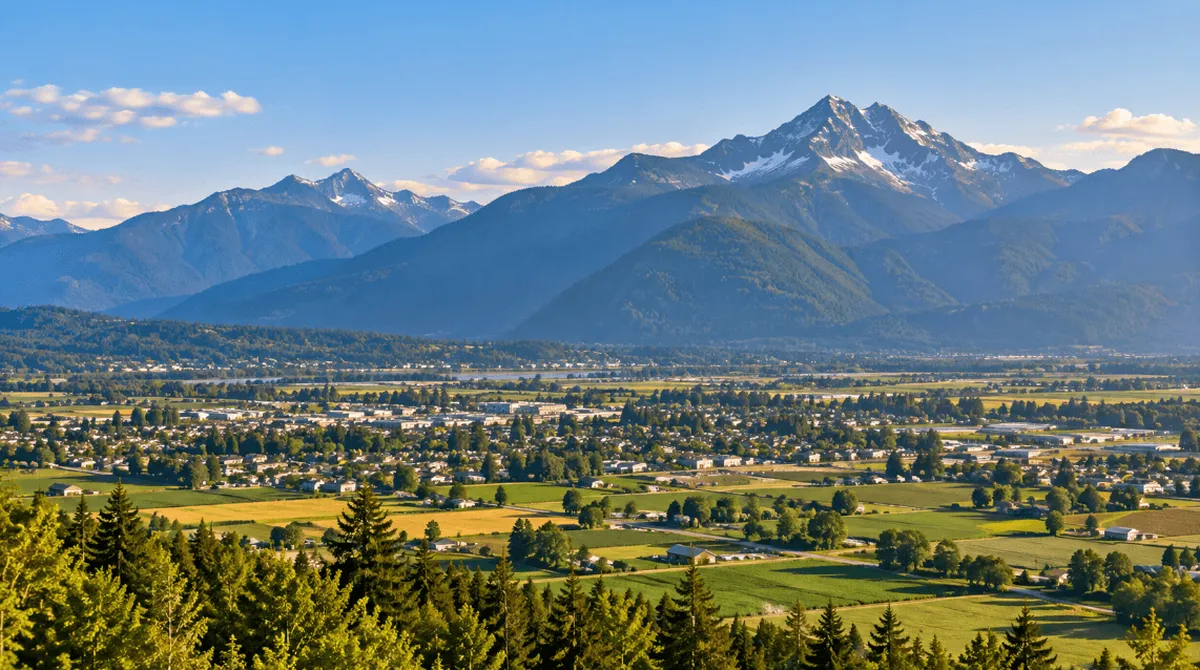
Check Today's Live Real Time Air Quality Index AQI Map in Chilliwack, BC Now
TL;DR
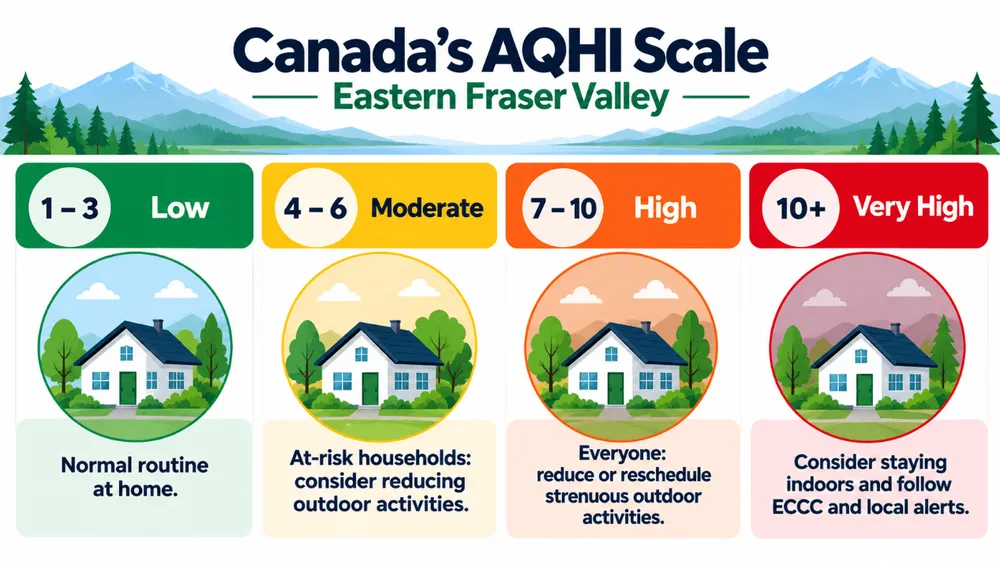
Check the live map above for current conditions in Chilliwack. Canada's official measure is the Air Quality Health Index (AQHI), reported here for the Eastern Fraser Valley on a 1 to 10+ scale: 1–3 is low risk, 4–6 moderate, 7–10 high and 10+ very high. Wildfire smoke causes most high readings and can arrive within hours. When it does, close your windows and doors, run the furnace fan through a MERV 13 filter if your system allows, and use a portable HEPA air cleaner in the rooms you use most.
Key Takeaways
Chilliwack's official reading is the Eastern Fraser Valley AQHI. Start your indoor smoke steps as soon as smoke or an air quality warning arrives.
The west wind that clears smoke can bring ozone on hot days, so check which pollutant the map shows before you open up.
On 4 August 2026, Metro Vancouver raised its warning for Chilliwack, Agassiz and Hope to orange, meaning very high health risk.
How to Read the Live Chilliwack Air Quality Map
The map above shows current conditions and, where it's listed, the pollutant behind them. PM2.5 (fine particles 2.5 micrometres or smaller) on a hazy day usually means smoke. Ozone (O3) on a hot, sunny afternoon usually means smog drifting up the valley from the west. For the official Canadian reading, use Environment Canada's Eastern Fraser Valley AQHI. For station-by-station readings, including the Chilliwack station, use Metro Vancouver's AirMap.
Use the closest reading. While smoke moves through, Sardis or the Chilliwack River Valley can read differently from downtown.
Know why it jumps. During smoke events, Environment Canada calculates the AQHI hourly from PM2.5 alone. That helps explain how the Eastern Fraser Valley went from 2 to 10+ in about a day in August 2026.
Look ahead. AQHI forecasts are issued at 6 a.m. and 5 p.m. and cover the next 72 hours. The WeatherCAN app can alert you when conditions change.
To compare nearby conditions, see Filterbuy's live air quality map for Canada, the Vancouver air quality map or the Surrey air quality map.
What We Found When We Traced Chilliwack's Reading
Before writing this page, the Filterbuy Canada team traced Chilliwack's official reading back to its source. Two findings shape the advice that follows.
The monitor is close to home. Unlike many cities we cover, Chilliwack has a government station inside city limits: Chilliwack Airport (provincial ID E220891), which has been running since May 1994. The province publishes its coordinates, and by our calculation it sits about 1.8 km from the former City Hall and 6.5 km from Vedder Crossing.
Abbotsford's number isn't yours. Chilliwack shares its AQHI region, the Eastern Fraser Valley, with Agassiz and Hope. On 21 August 2026, that region read 10+ while Abbotsford and Mission read 3, Fraser Valley Today reported.
Filterbuy's takeaway: go by the Eastern Fraser Valley reading rather than a regional average, and treat a smoky forecast as your cue to act.
What Chilliwack's AQHI Levels Mean for Your Plans
Health messages: Environment and Climate Change Canada AQHI. At-risk: heart or lung conditions, older adults, children, pregnant people. Many apps show the U.S. 0–500 AQI; the scales are not interchangeable.
What to Do When Smoke Reaches Chilliwack
Start with official guidance. If Metro Vancouver's air quality warnings or Environment Canada's Eastern Fraser Valley AQHI tell you to stay indoors or relocate, follow them. Then, as soon as smoke arrives or a warning is issued, work through these four steps in order:
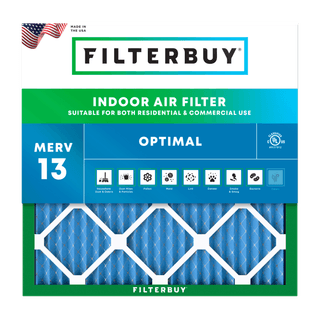
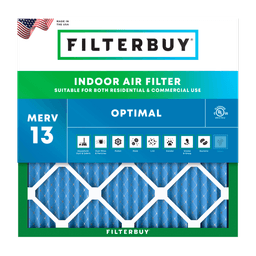
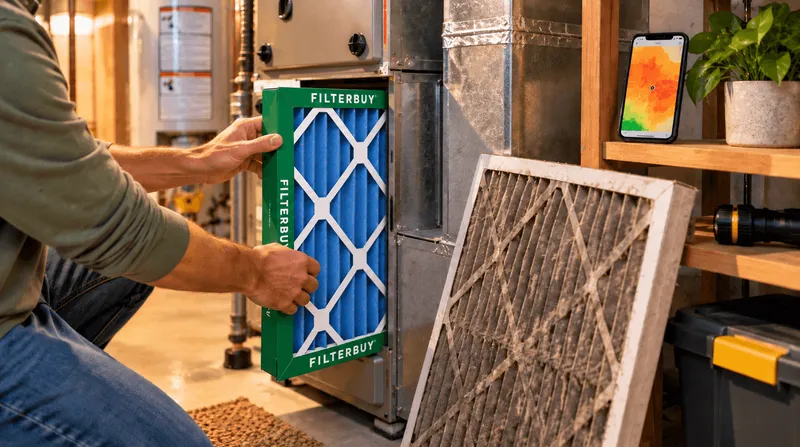
Put a MERV 13 filter in your HVAC. If your system runs MERV 8 or MERV 11, switch. Your central system moves far more air than any portable unit, so this is your whole-home layer.
Set the thermostat fan to On. On Auto, the system filters only while it heats or cools. On keeps air moving through the filter all day.
Run a portable HEPA air cleaner in each occupied room, bedrooms first. It cleans that room harder than the central system can, and the two layers work together.
Close the house up. Shut windows and doors, and while smoke is in, skip candles, frying, smoking and vacuuming without a sealed unit.
Health Canada recommends keeping windows and doors closed as much as possible during wildfire smoke and using filtration and portable air cleaners to reduce smoke indoors. In an older or draftier home, where more outside air leaks in, lean harder on the HEPA layer.
Filterbuy’s advice is to act early, before the AQHI reaches high risk, because smoke here can arrive overnight. Health Canada also recommends using the highest-quality filter your ventilation system can handle, following the manufacturer’s recommendations, so check your HVAC system manual for the rating yours takes.
The question Filterbuy’s support team hears most in smoke season is when to replace the filter. Check it during a smoke event and swap it once it looks dark brown or black, which can be well before the usual interval. Keep a spare on hand.
Keep in mind that a pleated filter captures particles, not gases such as ozone, and that HEPA belongs in a portable unit, never in a furnace slot.
Why Apps Don't Always Match Chilliwack's AQHI
Environment Canada's AQHI is the official Canadian reading. It runs from 1 to 10+ and blends ozone, NO2 and PM2.5 into a single health-risk number. Many apps show the U.S. AQI instead, a 0 to 500 scale set by whichever pollutant is worst.
The two drift further apart because of different averaging windows, spread-out monitors (the Fraser Valley Regional District has six stations) and provisional live data.
Filterbuy's rule: treat the AQHI as the official reading, and if an app shows worse conditions, take the more cautious view.
Is Chilliwack's Air Safe to Breathe Today?
Whether it's safe today depends on the current Eastern Fraser Valley AQHI and the health messages in the table above. At 7 or higher, people at higher risk should reduce strenuous outdoor activity. Above 10, everyone should.
Metro Vancouver issues its air quality warnings in two colours: yellow for high health risk and orange for very high.
When to Open the Windows in Chilliwack
The right time depends on which pollutant the map shows:
Ozone days (hot and clear, O3 on the map): Air out in the morning and close up by mid-afternoon, when ozone peaks.
Smoke days (hazy, PM2.5 on the map): Keep the windows shut and the fan on, and trust the map or a home PM2.5 monitor over the sky. On 4 August 2026, smoke drifting overhead mixed down to ground level overnight.
After the smoke lifts: Check the pollutant again before opening up, since the west wind that clears smoke can bring ozone on hot days.
What's Actually in the Air Over Chilliwack?
Ozone (O3). Sea breezes carry ozone-forming pollutants up the valley from Metro Vancouver, and sunshine does the rest. Levels peak from mid-afternoon to early evening, so on hot days, run in the morning.
PM2.5 from farm ammonia. Agriculture, mostly livestock, is the valley's main ammonia source. When nitrogen and sulphur oxides from the city drift over the farmland, they form ammonium nitrate and sulphate particles that raise local PM2.5.
Winter wood smoke. On still winter evenings, inversions trap home-heating smoke near the ground. Residential wood burning produced 32% of the valley's fine particulate emissions in Metro Vancouver's 2015 inventory, so check the wood burning status on Metro Vancouver's AirMap before lighting a fire. If smoke smell lingers indoors, Filterbuy's Odour Eliminator filters add a layer of activated carbon.
How Wildfire Smoke Hits the Eastern Fraser Valley
Wildfire smoke, most common from July to October, is behind Chilliwack's worst air days. The Fraser Canyon funnels it in, and the surrounding mountains hold it there.
October 2022. Smoke from B.C. and Washington fires pushed Chilliwack's AQHI to 10+ on day 96 of a drought.
August 2026. Outflow winds drove wildfire smoke into the eastern valley, and the Eastern Fraser Valley hit AQHI 10+ on 4, 13 and 21 August.
When fires are burning in the Fraser Canyon or Southern Interior, you can track them on Filterbuy's live wildfire and smoke map for Canada.
No Central HVAC? What Works in a Chilliwack Home Without Ducts
Without ducts, there's no furnace filter to upgrade, so portable HEPA air cleaners become your main defence rather than a backup.
Size it right. Health Canada's rule of thumb is a tobacco smoke CADR of at least two-thirds of the room's floor area in square feet, so a 28 m² (300 sq ft) bedroom needs a CADR of about 200.
Skip ozone makers. Health Canada advises avoiding devices that produce ozone, because ozone can harm your health, so leave ozone generators and other ozone-producing devices off your list.
Try a DIY box-fan cleaner. If you don't have a ventilation system or portable air cleaner, Health Canada says a DIY air cleaner can be an effective option in short-term emergencies. Use a clean, certified box fan made in 2012 or later with a safety fuse, change the filter regularly during smoke events, and never leave it unattended or running while you sleep. Filterbuy Canada carries the 20x20x1 MERV 13 size that fits a standard box fan.
Treat Chilliwack's Summer as Two Different Problems
At Filterbuy, we carry particle filters, so we're blunt about what they can't do. The most common mistake we see is using one fix for two different problems. Smoke is PM2.5, which MERV 13 and HEPA filters are built to capture. Ozone is a gas that no particle filter catches, so on high-ozone afternoons, close up and stay cool instead. Some days bring both: on 6 July 2023, the FVRD warned that heat and smoke together were raising ozone levels in Chilliwack.
In the Eastern Fraser Valley, where smoke can roll in overnight, it pays to keep a spare MERV 13 on the shelf before July. Filterbuy's guide to the best MERV filter for wildfire smoke covers the full routine.
"I don't want anyone to feel like they need an HVAC license just to pick the right filter. My job is to give you the straight answer, explain why it matters, and let you get back to your day."
Michelle Wan, Brand Manager and Air Quality Writer, Filterbuy
Filterbuy Canada carries filters in 600+ sizes, including custom sizes, and ships free to Canada. Shop MERV 13 filters in your size, or use the filter size finder if you're unsure. An air filter subscription keeps a fresh spare arriving before the next smoke season.
Supporting Statistics: What the Research Says
Asthma emergency visits ran 17% above expected on 19 days of Canadian wildfire smoke in the U.S. in 2023. Source: CDC, MMWR (2023)
A high-efficiency HVAC filter can cut indoor PM2.5 by about 50% with the fan running continuously. Closing up alone leaves indoor levels at 55%–60% of outdoor. Source: U.S. EPA
People spend about 90% of their time indoors, where some pollutants run 2 to 5 times higher than outdoors. Source: U.S. EPA
Frequently Asked Questions
What MERV rating do I need for wildfire smoke in Chilliwack?
MERV 13 in your filter size, if your system can take it. Filterbuy recommends switching as soon as smoke arrives or a warning is issued, and pairing it with a portable HEPA air cleaner in each occupied room. Neither layer removes ozone.
What is the air quality in Chilliwack today?
The live map above shows current conditions in Chilliwack. For the official Canadian rating, check Environment Canada's Eastern Fraser Valley AQHI, where 1–3 is low risk, 4–6 moderate, 7–10 high and 10+ very high.
Is the air quality bad in Chilliwack today?
Check the Eastern Fraser Valley AQHI. At 7 or higher, people with heart or lung conditions, older adults and children should cut back on strenuous outdoor activity. Above 10, everyone should reduce or reschedule it.
Can I put a HEPA filter in my furnace?
No. HEPA belongs in a portable air cleaner; for smoke, your furnace takes a MERV 13 filter. The two layers work together, as our MERV 13 vs. HEPA guide explains.
What does Chilliwack's PM2.5 reading mean today?
The live map lists PM2.5 whenever it's driving the reading. For context, British Columbia's air quality objective for PM2.5 is 25 µg/m³ averaged over 24 hours, as shown on the Chilliwack Airport station page.
Glossary
AQHI (Air Quality Health Index): Canada's official 1–10+ health-risk scale, combining ozone, NO2 and PM2.5.
AQI (Air Quality Index): The U.S. 0–500 scale many apps show; not Canada's official index.
PM2.5: Particles 2.5 micrometres or smaller; the main harmful part of wildfire smoke.
Ground-level ozone (O3): A gas formed when nitrogen oxides and VOCs react in sunlight; the main ingredient in smog.
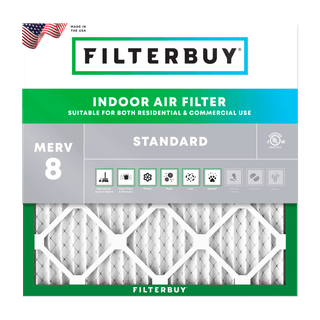
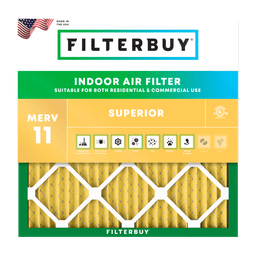
MERV: Minimum Efficiency Reporting Value, a rating of how well an HVAC filter captures particles. Filterbuy labels MERV 8 Standard, MERV 11 Superior and MERV 13 Optimal.
HEPA and CADR: HEPA is high-efficiency filtration for portable air cleaners; CADR (clean air delivery rate) measures how much filtered air one delivers.