
RSV Vs. A Cold: Differences, High-Risk Groups, And How It Spreads
November 9, 2026
RSV (respiratory syncytial virus) and the common cold usually start the same way, with a runny nose, sneezing, and a cough. In most healthy adults and older kids, RSV stays mild and fades like any cold. The two part ways in babies and older adults, where RSV can reach the lungs and cause wheezing and breathing trouble a cold rarely brings.
At Filterbuy, we make HVAC filters, so we look at RSV from inside the home: where the virus lands and which everyday habits keep it from spreading. We also show where a filter helps and where it falls short.
TL;DR
RSV and a cold look nearly identical at first, and only a test can tell them apart. The real difference is who gets hit hardest, since RSV is more likely to cause wheezing and serious illness in infants, adults 75 and older, and people with heart or lung conditions. Flu tends to come on faster and harder. RSV spreads through coughs and sneezes, hands, and hard surfaces.
Key Takeaways
In most healthy adults RSV feels like a cold, yet it is a leading cause of hospitalization for US infants.
A cold rarely causes wheezing or labored breathing, but RSV can, especially in babies under 6 months.
Flu usually starts suddenly, while RSV and colds tend to build over a few days.
CDC recommends an RSV vaccine for everyone 75 and older and for adults 50 to 74 at increased risk.
What Is The Difference Between RSV And A Cold?
The biggest difference between RSV and a cold is how deep the infection can go. A cold usually stays in the nose and throat. RSV starts there too, but as the Mayo Clinic overview of RSV symptoms and causes explains, it can spread into the lower respiratory tract and cause bronchiolitis or pneumonia.
The causes differ, too. More than 200 viruses can cause a cold, and the Cleveland Clinic guide to the common cold notes that rhinoviruses are behind up to half of them. RSV is a single virus that peaks in fall and winter. According to the MedlinePlus overview of RSV infections, its symptoms usually show up about 4 to 6 days after infection.
RSV Vs. Cold Vs. Flu Symptoms Side By Side
Flu is usually the easiest to spot because it arrives suddenly with fever and strong body aches. RSV and colds look alike early on, so wheezing is often the first clue.
Sources: CDC, MedlinePlus, UCSF Health.
For more on flu, see UCSF Health's comparison of cold and flu symptoms and the Filterbuy guide on how long the flu stays contagious.
RSV Or A Cold In A Toddler Or Baby: What To Watch For
For most healthy toddlers, RSV plays out like a cold. Babies under 6 months are harder to read and may show only irritability, less activity, and breathing difficulties, often with no fever. Breathing changes are what separate a worrying RSV case from an ordinary cold.
The American Academy of Pediatrics advises calling your pediatrician right away if your baby or toddler shows any of these signs:
Pauses in breathing or difficulty breathing
Fast breathing, wheezing, or skin pulling in between the ribs with each breath
Much less activity or alertness than usual
Pale, gray, or blue skin, lips, or nail beds
Fewer than 1 wet diaper every 8 hours
A rectal temperature of 100.4°F or higher in a baby younger than 3 months
If a child is struggling to breathe or turning blue, call 911. For prevention, the Centers for Disease Control and Prevention (CDC) recommends one of two options for babies: an RSV vaccine during pregnancy or an RSV antibody for the infant. Most babies need only one, and your OB-GYN or pediatrician can help you choose.
RSV In Adults Vs. A Cold: Who Faces Higher Risk?
Most healthy adults shake off RSV within a week or two. Risk climbs for adults 75 and older, people with chronic heart or lung disease or weakened immune systems, and nursing home residents, all of whom CDC ranks as highest risk.
In these groups, RSV can lead to pneumonia or make asthma, COPD, and heart failure worse. That is why CDC recommends an RSV vaccine for everyone 75 and older and for adults 50 to 74 at increased risk. Seek care for trouble breathing, poor fluid intake, or symptoms that keep getting worse.
A grandparent or older sibling with a "simple cold" can pass RSV to a newborn, so anyone with symptoms should keep their distance from young infants until they recover.
How RSV Spreads Through A Home
In our view, RSV travels through a home three ways: in droplets from coughs and sneezes, through direct contact such as kissing a sick child's face, and on hands that touch a contaminated surface, then the face.
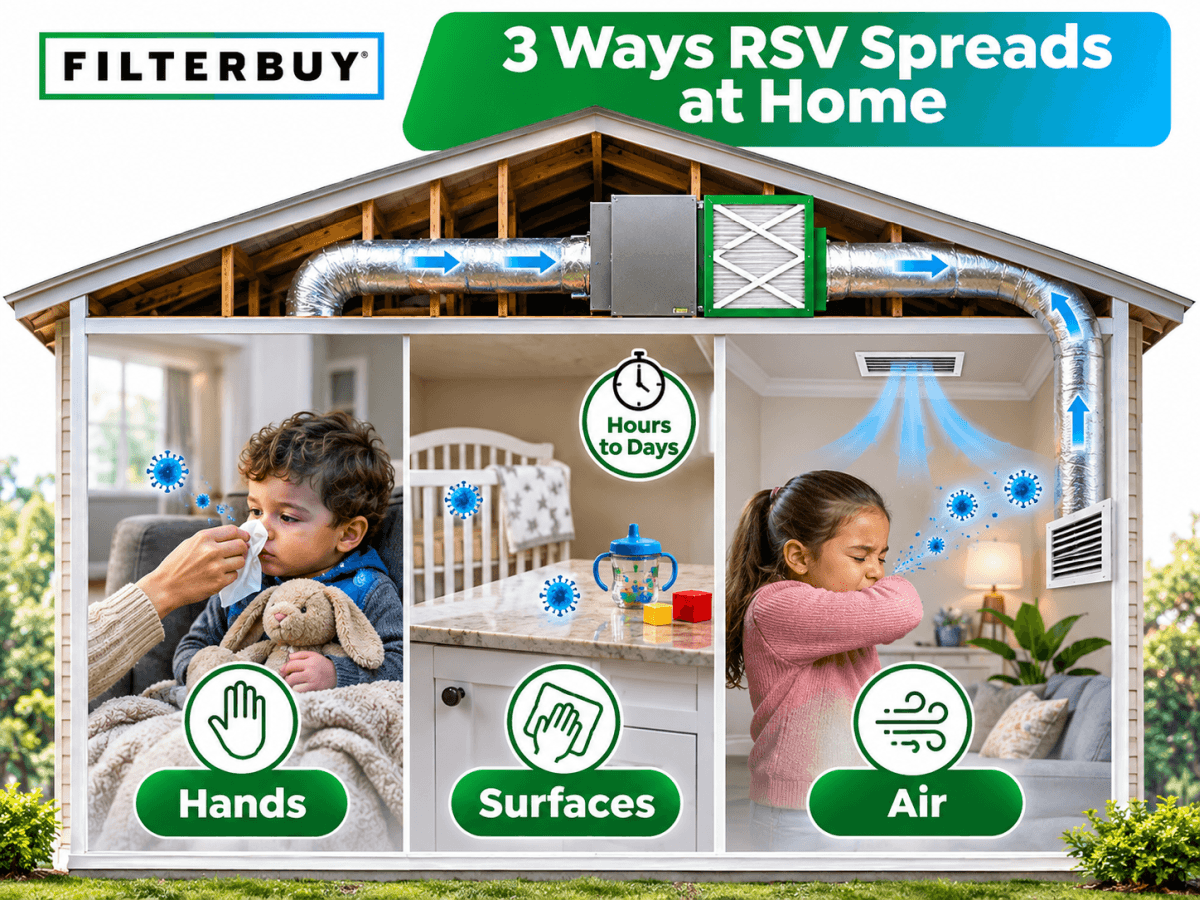
According to the CDC guidance on how RSV spreads, the virus can survive for many hours on hard surfaces such as tables and crib rails. The air route matters more in winter, when sealed homes recirculate the same air, as Filterbuy explains in why winter indoor air quality is worse.
Source: CDC.
The RSV Timeline: What To Watch Day By Day
The virus starts spreading before anyone feels sick, and babies usually have their hardest stretch on days 3 through 5. Filterbuy pulled CDC, MedlinePlus, and AAP guidance into one view:
Sources: CDC, MedlinePlus, AAP.
How To Lower The Risk Of RSV Spreading At Home
We ranked this list on purpose. Handwashing and surface cleaning come first because they block the contact routes CDC describes, and filtration comes last on Filterbuy's list because the U.S. Environmental Protection Agency (EPA) says filtration alone is not enough.
Wash hands with soap and water for at least 20 seconds, especially before holding a baby.
Disinfect crib rails, toys, counters, and doorknobs daily while someone is sick.
Cover coughs and sneezes, then wash your hands.
Skip sharing cups, utensils, and towels until everyone is well.
Where Your HVAC Filter Fits
Filtration still has a supporting role. The EPA guidance on air cleaners, HVAC filters, and respiratory viruses says HVAC filters and air cleaners can help reduce airborne contaminants, including viruses, in the air that passes through them. Here is how the Filterbuy team would set up a forced-air home during a sick week:
Upgrade to MERV 13 if your HVAC manual allows it, since it captures more fine particles than MERV 8 or MERV 11. Confirm with our guide on which MERV rating to use.
Set the thermostat fan to "On." On "Auto," the blower can sit idle between heating cycles, and still air never reaches the filter.
Keep return grilles clear of furniture and toys so the system can pull in room air.
Change a dirty filter before sick season peaks. If you swap one during an illness, wear gloves, slide the old filter out without shaking it, bag it, and wash your hands.
For the nursery or sick room, add a portable HEPA air purifier. MERV 13 does not meet the HEPA standard, as our explainer on what HEPA ratings actually mean covers.
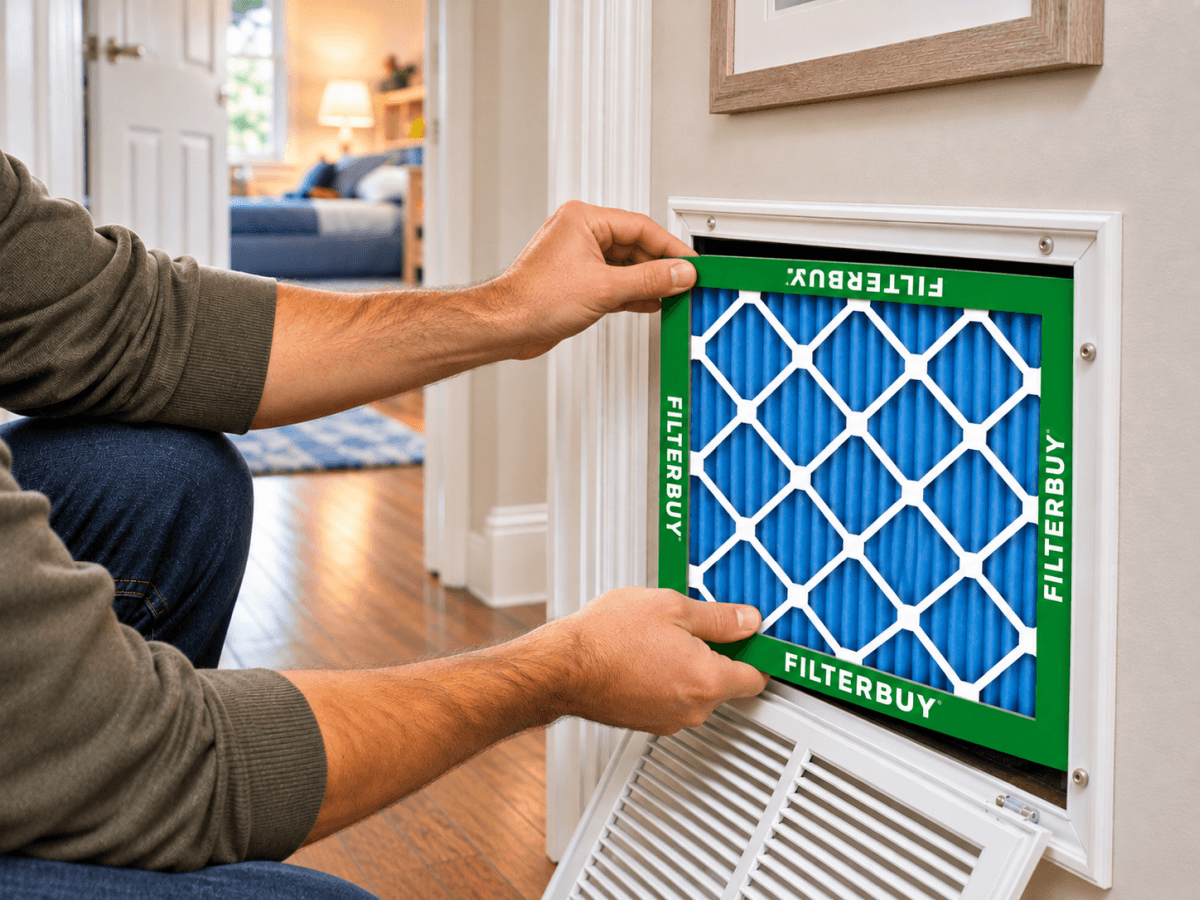
We make air filters, and our advice for RSV season still starts with soap and a disinfecting wipe on the crib rails. A clean MERV 13 filter is the backup.
Supporting Statistics
110,000–180,000 Adults 50+ Hospitalized Each Year
6,000–10,000 die from RSV each year.
Takeaway: What feels like a cold in younger adults can hospitalize older ones.
Risk At 50 Can Match Risk At 75
Applies to adults 50–59 with certain chronic conditions.
Drawn from data presented to the CDC vaccine advisory committee (ACIP).
Takeaway: Chronic conditions can raise risk as much as age does.
Source: RSV for Healthcare Providers
RSV Is The Top Cause Of Hospitalization Before Age 1
Almost all children catch RSV by age 2.
Frequently Asked Questions
Is RSV Worse Than The Flu?
It depends on who is sick. Flu usually makes healthy adults feel sicker, while RSV poses a bigger threat to young infants because it can inflame the small airways in their lungs.
Can You Get RSV More Than Once?
Yes. People can catch RSV again, sometimes in the same season. Repeat infections are usually milder, though they can still be serious for older adults and people with heart or lung disease.
Can You Tell RSV From A Cold Without A Test?
Not reliably. Wheezing and trouble feeding in a baby point toward RSV, but only a nasal swab test can confirm it.
How Is RSV Treated At Home?
Most RSV cases clear on their own, and CDC does not routinely recommend antivirals. Home care focuses on fluids and fever reducers such as acetaminophen or ibuprofen, never aspirin for children. Check with your pediatrician before giving a baby any medicine.
Can An Air Filter Stop RSV?
No. EPA says filtration can help reduce airborne contaminants but is not enough by itself. Handwashing and keeping sick people away from infants come first, and a compatible MERV 13 filter works best as backup.
Breathe Easier This RSV Season
To strengthen that backup layer, Filterbuy makes MERV 13 air filters in hundreds of standard and custom sizes, with fast and free 2-day delivery to most US states.
Shop MERV 13 Air Filters →Glossary
- RSV (Respiratory Syncytial Virus)
- A common virus that usually causes cold-like symptoms but can seriously infect the lungs of infants and older adults.
- Common Cold
- A mild nose and throat infection caused by many viruses.
- Influenza (Flu)
- A respiratory illness from influenza A and B viruses that often starts suddenly.
- Pneumonia
- An infection that inflames the air sacs in one or both lungs.
- Bronchiolitis
- Inflammation of the small airways in the lungs, most common in infants and often caused by RSV.
- RSV Antibody
- A preventive shot that gives infants ready-made antibodies against RSV.
- MERV (Minimum Efficiency Reporting Value)
- A 1 to 16 rating of how well an HVAC filter captures airborne particles.
- HEPA (High-Efficiency Particulate Air)
- A filter benchmark of at least 99.97% capture of 0.3-micron particles, common in portable air purifiers.