
How Long Is The Flu Contagious? Before, During, And After Symptoms
November 9, 2026
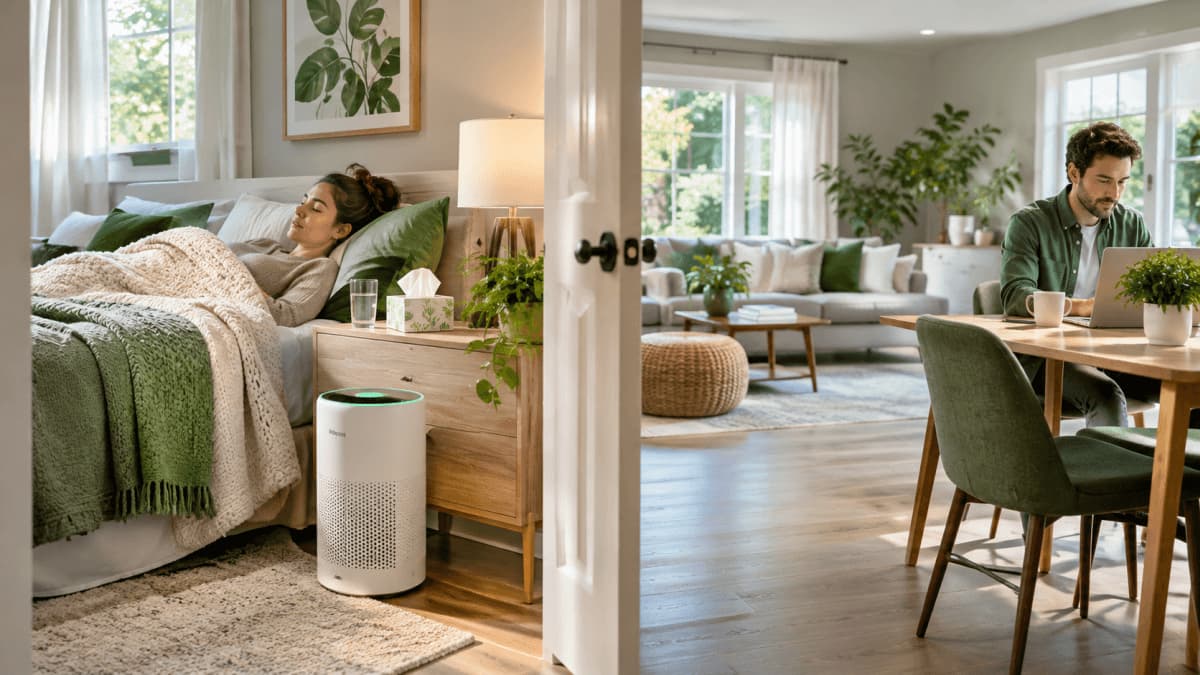
Most healthy adults can spread the flu from about a day before symptoms appear until five to seven days after they get sick, and the first three days of illness carry the highest risk. Young children and people with weakened immune systems can stay contagious longer. Because Filterbuy makes air filters, we look at the flu through the air your household shares, so this guide pairs each contagious day with a step you can take at home.
TL;DR
The flu becomes contagious roughly a day before you feel sick and stays that way for five to seven days, peaking in the first three. Stay home until you have gone 24 hours without a fever or fever reducers and feel better, then keep taking precautions for five more days. Meanwhile, keeping the sick person apart and the air moving helps lower virus levels in shared rooms.
Key Takeaways
Influenza is contagious from about one day before symptoms until five to seven days after illness begins, and it peaks in the first three days.
Symptoms usually start about two days after infection, so people often spread the flu before they know they have it.
Centers for Disease Control and Prevention (CDC) guidance says to stay home until symptoms improve and you have gone 24 hours fever-free without medicine, then take precautions for five more days.
An HVAC filter only captures particles from air passing through it while the fan runs, so pair it with isolation and handwashing.
How Long Is The Flu Contagious?
In a typical healthy adult, the flu stays contagious for about a week. According to the CDC explanation of how flu spreads, that window opens one day before symptoms and runs five to seven days after becoming sick. The CDC names the first three days of illness as the most contagious stretch.
Is The Flu Contagious Before Symptoms?
Yes. Someone with influenza can pass the virus on about a day before the first symptom appears. Symptoms usually show up about two days after infection, though the range runs from one to four days, and shedding can begin during the last day of that incubation period.
Exposed At Home? Your Watch Window
When someone in your home has the flu, watch your own health for one to four days after your last close contact, with day two the most likely. You could be contagious a day before you feel sick, so keep that window quiet. Postpone visits with newborns or older relatives, and if you are at higher risk, ask a doctor whether antiviral medicine makes sense.
The Flu Contagious Period, Day By Day
The table below pairs each stage of the influenza contagious period with a step for a shared home. Day 1 is the first day of symptoms.
Timeline based on CDC guidance for otherwise healthy adults. Day 1 is the first day of symptoms.
Filterbuy's Take
The riskiest day for a household is the one nobody notices, the day before symptoms start. By the time a fever shows up, everyone has already been breathing the same air for a day.
That is why our plan front-loads separation and air steps into the first 72 hours.
When Is The Flu No Longer Contagious?
For most healthy adults, the flu stops being contagious after about five to seven days of illness. No home test marks the end point, so guidance relies on symptoms. Under CDC respiratory virus guidance, you can resume normal activities once you have gone at least 24 hours with symptoms getting better and no fever, without fever-reducing medicine.
Even then, the same guidance asks for five more days of added precautions, such as a well-fitted mask and cleaner indoor air, because some people still spread the virus after they feel well.
From First Symptoms to Recovery
Here's how the timeline might look when symptoms begin on a Monday morning.
Possible Early Spread
You may already be contagious before symptoms appear.
Before SymptomsSymptoms & Peak Spread
Symptoms begin Monday morning. This is the likely peak period for spreading the illness.
Higher Transmission RiskRecovery Milestone
Your fever breaks without medication, and your symptoms are improving.
Monitor RecoveryReturn to Normal Activities
If you've been fever-free for at least 24 hours without fever-reducing medicine and your symptoms are improving, you can resume normal activities.
Resume ActivitiesFive Days of Extra Precautions
Wear a well-fitting mask, improve indoor ventilation, and keep the air moving to help protect others.
Additional PrecautionsFilterbuy's Take: Feeling better doesn't necessarily mean transmission risk has disappeared. Continue taking extra precautions for five days after returning to normal activities.
Why A Lingering Cough Is A Poor Signal
A flu cough can hang on for weeks after the contagious period ends, so fever is the better marker. If a fever or cough improves and then comes back or gets worse, call a doctor, since CDC lists that as a complication warning sign.
How Long To Stay Home With The Flu
Most people should plan on four to seven days at home. Adults and kids follow the same rule, which Nemours KidsHealth outlines for returning to school: stay home until you have been fever-free for 24 hours without fever reducers and your symptoms are clearly improving.
For parents, Cincinnati Children's flu guidance defines a fever as an oral temperature of 100.4°F (37.8°C) or higher and recommends keeping kids home from school or daycare for at least 24 hours after it is gone.
Who Stays Contagious Longer
The Mayo Clinic influenza overview notes that children and people with weakened immune systems may stay contagious a bit beyond the usual five to seven days. Adults 65 and older, pregnant people, and anyone with a chronic condition such as asthma also face a higher risk of complications. The American Lung Association guide to diagnosing and treating flu notes that antiviral medicines help most when started within a day or two of getting sick, so call a doctor early.
How To Limit Flu Spread Inside A Shared Home
To limit flu spread at home, separate the sick person and keep shared air moving through a clean filter, especially during the first three days. CDC cleaner-air guidance notes that fresh air and cleaner indoor air help lower germs and viruses in the rooms you share.
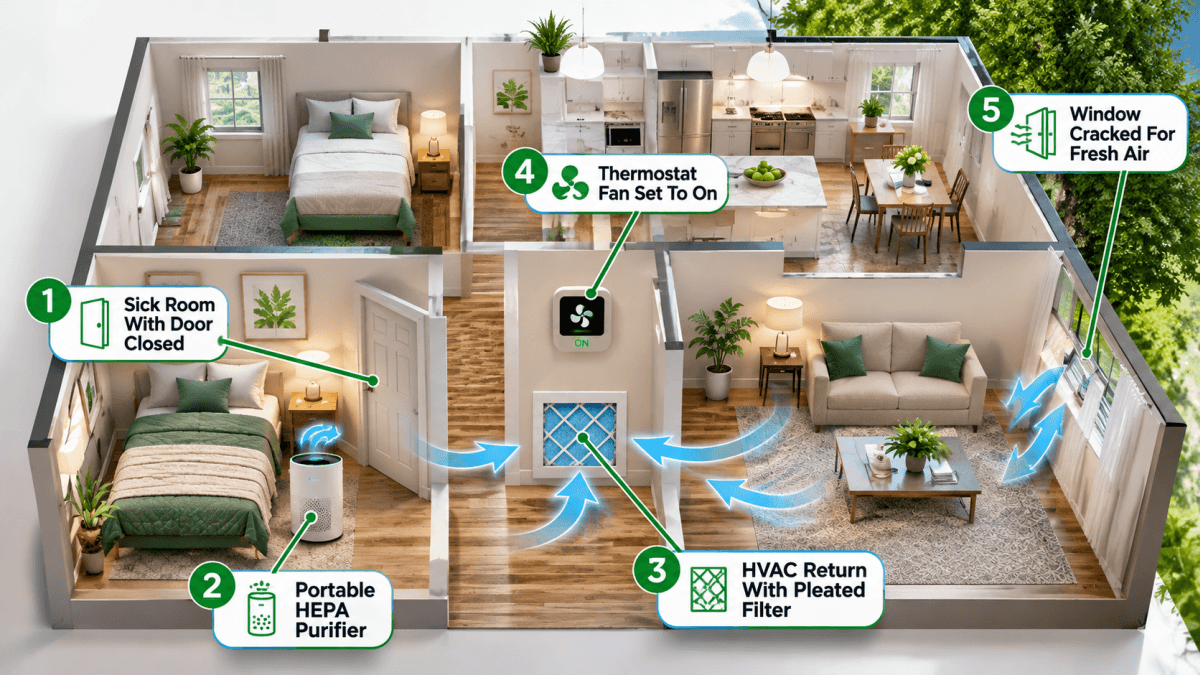
Choose a sick room. Keep the sick person in one bedroom with the door closed, ideally with their own bathroom. Pick one caregiver who is not at higher risk.
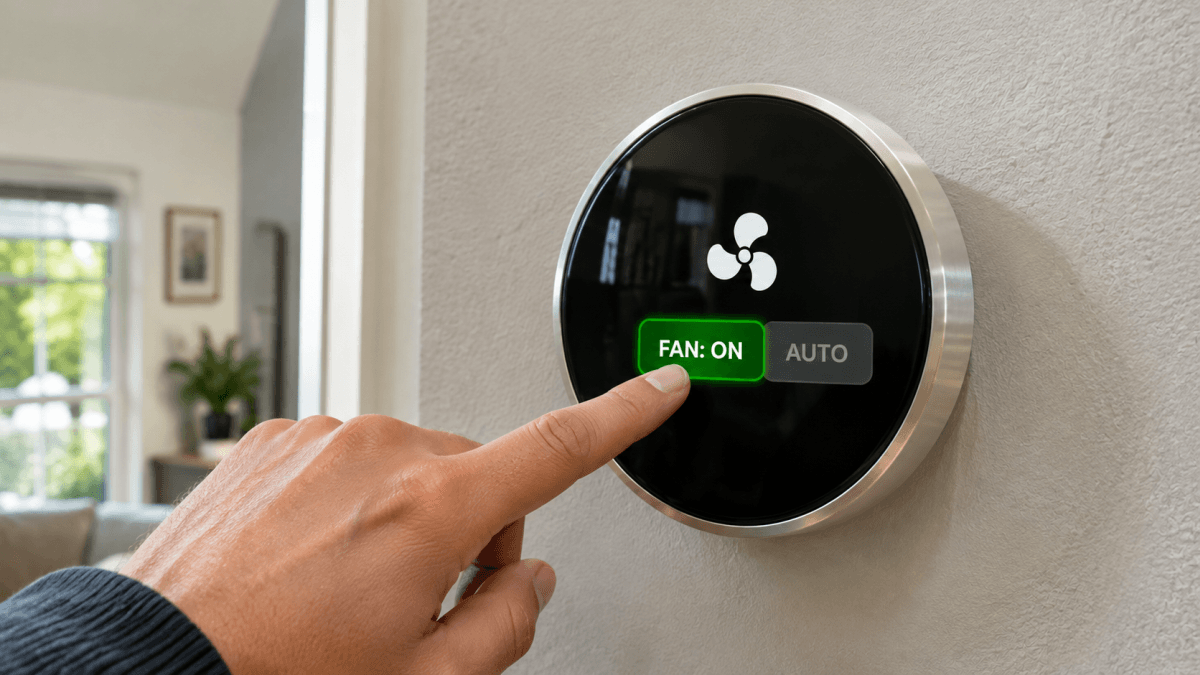
Set the HVAC fan to On. Move the thermostat fan from Auto to On so air keeps flowing through your filter even when the system is not heating or cooling. CDC suggests this setting when visitors are in the home, and the same reasoning holds while someone is sick.
Check your HVAC filter. Swap it out if it looks dirty or is due on your air filter replacement schedule. If your system's manual allows it, consider a MERV 13 pleated filter.
Add a portable HEPA air purifier to the sick room. Let it run continuously, and keep its air purifier replacement filters on schedule.
Bring in outside air. Crack a window when the weather allows, or run exhaust fans.
Clean high-touch surfaces daily. Wipe down doorknobs, faucet handles, remotes, and phones.
Mask and wash. The sick person wears a mask in shared spaces, and everyone washes with soap for at least 20 seconds.
Filterbuy Pro Tip
Stick with the plan through the five-day precaution period. Because the On setting pushes more air through your filter than Auto, the filter loads faster.
So write the date on its frame when symptoms start and check it once everyone is well.
What Your HVAC Filter Can And Cannot Do
At Filterbuy, we make HVAC filters, so we want to be straight with you. A filter captures airborne particles only from the air that passes through it, and only while the blower fan runs. It cannot keep anyone from catching the flu, and it does nothing about droplets that settle on surfaces or pass between people face to face.
Higher-efficiency pleated filters capture a larger share of fine airborne particles than basic ones. Filterbuy's guide on whether your HVAC filter can help with colds, flu, and RSV explains where filtration fits, and our roundup of the best MERV 13 air filters for virus season walks through how to choose one. Before you upgrade, confirm in your system's manual or with an HVAC technician that your equipment accepts MERV 13.
Supporting Statistics
50% of household contacts caught the flu within 7 days
Vanderbilt University Medical Center and CDC study of the 2021–22 season.
Up from 20% in the two seasons before the pandemic.
Takeaway: Start separation and cleaner-air steps on day one.
Source: Risk of household flu spread skyrocketed during pandemic
Americans spend about 90% of their time indoors
Some indoor pollutants run 2 to 5 times higher than outdoor levels.
Takeaway: The air steps in this guide cover the place your family spends the most time.
Flu fever lasts 3 to 4 days, but a cough can last weeks
Fever may run up to 8 days.
Other symptoms improve in 7 to 14 days.
Takeaway: Base the 24-hour return rule on fever.
Frequently Asked Questions
How Long Are You Contagious With The Flu?
Most healthy adults are contagious from about a day before symptoms start until five to seven days after getting sick, with the highest risk in the first three days.
Is The Flu Contagious Before Symptoms Show?
Yes. Influenza can spread about a day before symptoms appear, which is a big part of why it moves so easily through a family.
Can I Go Back To Work After 24 Hours Without A Fever?
Yes, under CDC guidance, as long as the fever stayed away without medicine and your symptoms are improving. Mask around others for five more days.
Does An Air Purifier Stop The Flu From Spreading At Home?
Not on its own. A portable HEPA air purifier captures airborne particles in the room where it runs, so use it in the sick room alongside a closed door and handwashing. See Filterbuy's breakdown of how air filters and air purifiers differ.
Keep Fresh Air Moving All Flu Season
Filterbuy manufactures pleated air filters in MERV 8, MERV 11, and MERV 13 across hundreds of sizes, with fast and free 2-day delivery to most US states. If your HVAC system's manual confirms it accepts MERV 13, shop MERV 13 air filters and set up auto-delivery so the next filter arrives before you need it.
Glossary
Understand the key terms related to flu transmission, indoor air quality, and home air filtration.
- Influenza (Flu)
- A contagious respiratory illness caused by influenza viruses, mainly types A and B.
- Contagious Period
- The window when an infected person can pass a virus to others.
- Incubation Period
- The time between infection and the first symptoms, about two days for flu.
- Viral Shedding
- The release of virus particles from an infected person.
- Secondary Infection Risk
- The share of exposed household members or contacts who become infected.
- HVAC
- Heating, ventilation, and air conditioning, the system that moves air through a home.
- MERV
- Minimum Efficiency Reporting Value, a filter rating scale where higher numbers capture more fine particles.
- HEPA
- High-efficiency particulate air, a filter standard used in portable air purifiers.