
Winter Furnace Filter Guide: When and How to Replace It
September 23, 2026
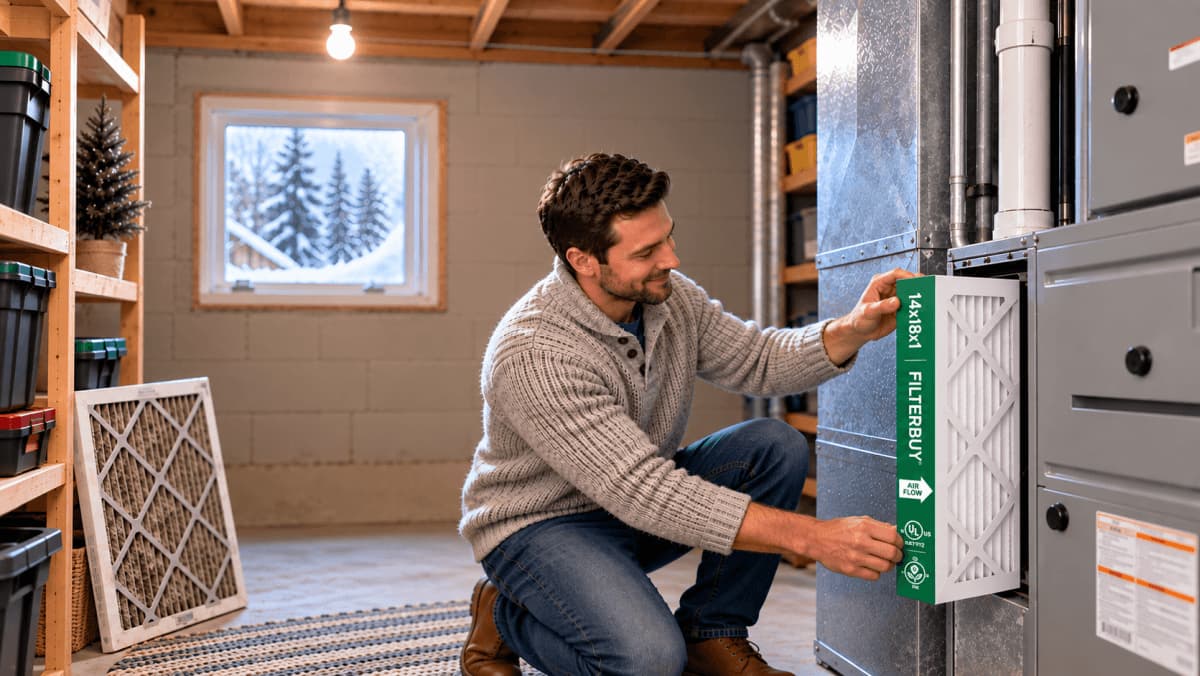
Replace your furnace filter every 30 to 90 days in winter, depending on your household. Your furnace runs harder in cold weather, so your filter fills up faster.
Every 30–45 days: homes with pets, allergies, or 3+ people
Every 60 days: average households
Every 90 days: low-demand homes with no pets and no allergies
Check your filter monthly, and swap it right away if it looks gray or matted. Not sure which filter fits your home? Take the quick quiz below.
Shop Your Filter Size Over 600 sizes, including custom dimensions.
Find your filter match
Answer a few quick questions and we'll match you to the right filter for your home.
Replace your furnace filter before the winter heating season begins if it's dirty, damaged, incorrectly fitted, or past the manufacturer's recommended interval. Once the season starts, inspect the filter monthly, since higher furnace runtime can load it faster than in milder months. A 30- to 90-day window is a helpful planning range, not a fixed rule. This guide covers when to replace, how to choose the right filter, and how to install it correctly.
Should You Replace Your Furnace Filter Before Winter?
Yes, if your current filter is dirty, damaged, incorrectly fitted, or overdue according to the manufacturer's guidance. Starting the heating season with a clean, correctly sized filter is a sensible baseline step, since your furnace may run more often once temperatures drop and demand increases. Depending on your climate and equipment, additional runtime can mean the filter accumulates dust and debris more quickly than it did earlier in the year.
The filter's main job is to protect the blower and indoor coil from dust, debris, and larger particles as air moves through your system. That protection only happens while the system is actually running. A furnace filter is not a substitute for source control (like reducing dust and pollutants at the source) or ventilation, both of which the U.S. EPA identifies as more effective ways to improve indoor air quality (EPA, Guide to Air Cleaners in the Home, 2022). Filtration is a helpful supplement to those practices, not a replacement for them.
Replace before winter if:
The filter looks visibly loaded with dust, hair, or debris
It's damaged, damp, warped, or doesn't sit flush in its slot
It's past the date you last recorded or the manufacturer's suggested interval
You're not sure when it was last changed
How Often Should You Change a Furnace Filter in Winter?
Inspect your filter monthly during the heating season, and replace it based on its condition and the manufacturer's guidance for your specific filter and system. The ENERGY STAR maintenance checklist recommends inspecting, cleaning, or changing air filters once a month in your furnace, air conditioner, or heat pump (ENERGY STAR, Maintenance Checklist). How quickly a filter actually needs replacing depends on several household-specific factors.
| Factor | What it means for winter checks |
|---|---|
| 1-inch disposable filter | Typically loads faster than deeper media; check monthly without exception |
| Deeper media filter (4-5 inch) | May have more surface area, which can extend time between replacements, but this varies by product |
| Multiple pets in the home | Pet hair and dander can accelerate loading; check more frequently |
| Household members with allergies or asthma | Consider more frequent inspection to help maintain consistent filtration; a furnace filter does not treat or prevent allergy or asthma symptoms |
| Wildfire smoke, renovation, or heavy dust nearby | Inspect more often, since these conditions can load a filter quickly |
| High furnace runtime (cold climate, larger home) | More air moving through the filter can mean faster accumulation |
| Vacation home or low-occupancy use | Runtime is lower, so the filter may last closer to the higher end of the manufacturer's range |
A note on the 30/60/90-day range: You'll often see 30, 60, or 90 days cited as general planning windows. Treat these as starting points for scheduling a check, not as a guarantee of when a filter needs replacing. The manufacturer's instructions for your specific filter, along with what you see during a visual inspection, should guide the final decision.
7 Signs Your Furnace Filter May Need Replacement
It's visibly loaded with dust or debris. Hold it up to a light. If little light passes through, or the surface looks gray and matted, it's likely time for a replacement.
It's damaged, damp, warped, or poorly fitted. A filter that doesn't sit flush in its slot can allow unfiltered air to bypass it entirely.
Airflow feels weak at multiple supply vents. This can point to a restricted filter, though other issues can cause the same symptom.
Your furnace runs longer, or comfort feels uneven room to room. Extended cycle times can be one indicator of restricted airflow.
Dust reappears quickly around registers after cleaning.
Energy use rises without an obvious explanation, such as a colder stretch of weather or a thermostat change.
You've reached the manufacturer's recommended replacement interval for your filter type.
These signs suggest the filter may be a contributing factor, but they don't confirm it's the only issue. If airflow problems, uneven heating, or rising energy use continue after you've installed a fresh, correctly sized filter, a professional diagnosis can help identify other potential causes, such as duct leaks, blower issues, or thermostat problems.
How to Choose the Right Furnace Filter for Winter
Match the Exact Size
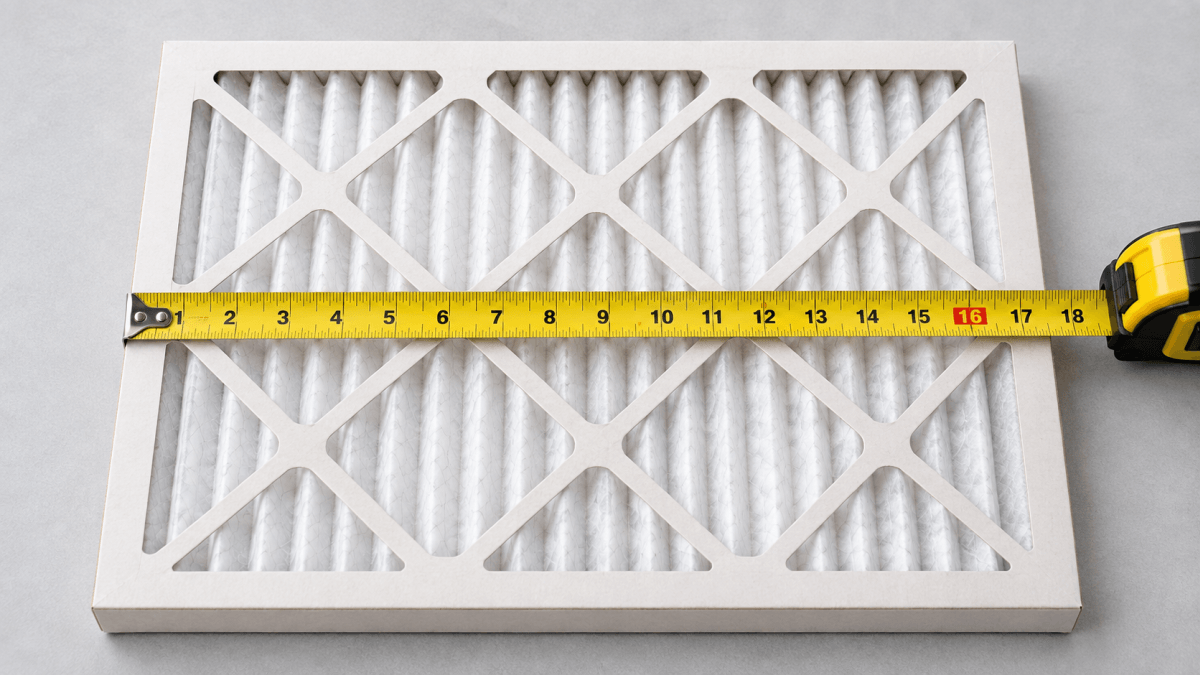
Start by checking the size printed on the frame of your current filter, formatted as width by length by depth (for example, 16x25x1). When shopping for a replacement, keep two things in mind:
Nominal versus actual dimensions. The size printed on a filter, such as 16x25x1, is the nominal size, rounded to a standard measurement. The actual dimensions are usually slightly smaller (often by about a quarter to a half inch) to allow the filter to fit into its slot without binding. This is a detail many buying guides skip, but it explains why a filter that measures slightly different from the printed size can still be correct for your system.
A filter that fits securely, without gaps around the edges or the need to bend or force it into place, will do its job more effectively than one that's loose or crushed. If you're unsure of your size, you can measure your air filter directly at the filter slot, or check common furnace filter sizes and custom-size air filters if your system uses a less standard dimension.
Choose a Compatible MERV Rating
MERV stands for Minimum Efficiency Reporting Value, a rating system based on a test method developed by ASHRAE (American Society of Heating, Refrigerating, and Air-Conditioning Engineers), specifically ASHRAE Standard 52.2 (U.S. EPA, What Is a MERV Rating?). The scale generally runs from 1 to 16 for residential and light commercial filters, and a higher MERV rating means a filter is more effective at capturing smaller particles.
The EPA advises choosing a filter with at least a MERV 13 rating, or as high a rating as your system's fan and filter slot can accommodate (EPA, Guide to Air Cleaners in the Home, 2022). That said, whether a specific filter is compatible with your system depends on more than the MERV number alone. It depends on the filter's overall design, including its depth and pleat count, and how that design affects airflow resistance, or pressure drop, across your particular system (DOE Building America Solution Center, High-MERV Filters). A higher MERV filter with more surface area (from deeper pleats, for instance) can sometimes have a lower pressure drop than a lower-MERV filter with a flatter design. Because system compatibility varies, check your furnace or HVAC manual, or ask a qualified technician, before upgrading to a higher-rated filter.
| MERV Rating | Typical Use |
|---|---|
| MERV 8 | Everyday dust and larger airborne particles; a common baseline for many residential systems |
| MERV 11 | Finer particles, useful in homes with pets or common allergens, if the system supports it |
| MERV 13 | Fine-particle capture, only if your specific furnace and ductwork are confirmed to support it |
Explore MERV 8, MERV 11, and MERV 13 options once you've confirmed which rating your system can handle, or read our guide to choosing the right MERV rating for more detail.
Select the Construction and Depth
Furnace filters commonly come in two main styles:
Flat fiberglass filters are typically thin and inexpensive, with limited surface area.
Pleated filters fold the filter media into ridges, which can increase the surface area available to capture particles within the same frame size.
More pleated media and greater depth can mean more surface area, though actual performance varies by product and manufacturer, so it's worth checking the specifications for the filter you're considering. It's also worth noting that standard furnace filters are not HEPA filters. HEPA (High-Efficiency Particulate Air) filters follow a separate testing and performance standard and are typically used in portable air cleaners or specialized systems, not standard residential furnace filter slots (EPA, What Is a MERV Rating?).
How to Replace a Furnace Filter in 6 Steps
Turn the system off at the thermostat. This prevents the blower from running while the filter slot is open.
Find the filter. Depending on your system, it may be located at a return air grille, in the return duct, or inside the blower cabinet near the furnace. Some homes have more than one return filter, so check each location.
Remove the old filter carefully. Note its printed size and the direction of the airflow arrow on the frame before you set it aside.
Confirm the new filter's exact fit and compatibility. Double-check the size and MERV rating against what your system supports.
Insert the new filter with the airflow arrow pointing toward the blower or furnace. This ensures the filter is oriented correctly to capture particles as air moves through the system.
Close the panel, restore power, and record the date. Noting the installation date, either on the filter frame or in a phone note, makes it easier to track your next inspection.
What a Clean Filter Can and Cannot Fix
A filter replacement is a straightforward, low-cost maintenance step, but it isn't a fix for every heating issue.
Safety note: If a carbon monoxide alarm sounds, or you suspect a gas leak, leave the home immediately and follow your local emergency services or utility company's guidance before doing anything else.
Pre-Winter Furnace Filter Checklist
Inspect the current filter for dust, damage, or wear
Confirm the size, depth, and airflow direction needed for your system
Confirm the filter specification (including MERV rating) your furnace supports
Install a replacement if the filter is dirty or due for a change
Keep supply vents and return grilles unobstructed by furniture or curtains
Test smoke and carbon monoxide alarms according to manufacturer instructions
Schedule a heating-system inspection if one is due
Set a reminder to check your filter monthly through the season
Keep a correctly sized replacement filter on hand, or set up filter delivery in advance
Start Winter With a System That's Ready
Getting ahead of winter heating season doesn't require a complicated routine. Check your filter now, and replace it if it's dirty, damaged, or overdue. Once the season is underway, inspect it monthly, and replace it based on its condition, your filter's specifications, and the manufacturer's instructions for your system. Confirming the correct size and a compatible MERV rating up front helps make sure the replacement you choose fits and functions the way it's designed to.
Find Your Furnace Filter Size to confirm the correct dimensions for your system, or set up filter delivery so your next replacement arrives before you need it.
Frequently Asked Questions
How Often Should I Change My Furnace Filter In Winter?
Inspect it monthly during the heating season and replace it when it looks dirty, damaged, or has reached the manufacturer's recommended interval. Factors like pets, household size, filter depth, and furnace runtime all affect how quickly a filter loads, so treat 30 to 90 days as a planning range rather than a fixed schedule.
Should I Change The Filter Before Turning On The Furnace For The First Time?
If the current filter is dirty, damaged, or you're unsure how long it's been in place, replacing it before your first heating cycle is a reasonable step. Starting the season with a clean, correctly fitted filter helps establish a good baseline for airflow and filtration.
Why Does My Furnace Filter Get Dirty Faster In Winter?
In many climates, furnaces run more often during colder months, which pulls more air (and the particles within it) through the filter. This can vary depending on your specific climate, home, and equipment, so actual loading time differs from household to household.
Which Way Should The Arrow Point On A Furnace Filter?
The airflow arrow printed on the filter frame should point toward the blower or furnace, in the direction air travels through the system. Installing a filter backward can reduce its effectiveness.
What MERV Rating Should I Use In Winter?
The right rating depends on your specific furnace and ductwork, not a single universal number. The EPA suggests using at least a MERV 13 filter, or as high a rating as your system's fan and filter slot can accommodate. Check your HVAC manual or ask a technician to confirm what your system supports.
Can A Dirty Furnace Filter Cause No Heat Or Short Cycling?
A severely clogged filter can restrict airflow enough to affect furnace performance. However, if you replace the filter and still have no heat or experience repeated short cycling, those symptoms point to a separate issue that needs professional diagnosis.
Is A Furnace Filter The Same As An Hvac Or Air-Conditioner Filter?
In most forced-air systems, yes. The furnace filter, HVAC filter, and air filter typically refer to the same return-air filter, since heating and cooling share the same air handler, ductwork, and filter slot.
Does A Thicker Furnace Filter Last Longer?
Not necessarily. Deeper filters with more pleated media can offer more surface area, which may extend time between changes, but this varies by product and manufacturer. Check the specific filter's guidance and inspect it visually rather than assuming based on thickness alone.
See More
Get a quick overview of how to prepare your furnace filter for colder weather and why replacing it before temperatures drop can help support better airflow and indoor air quality.
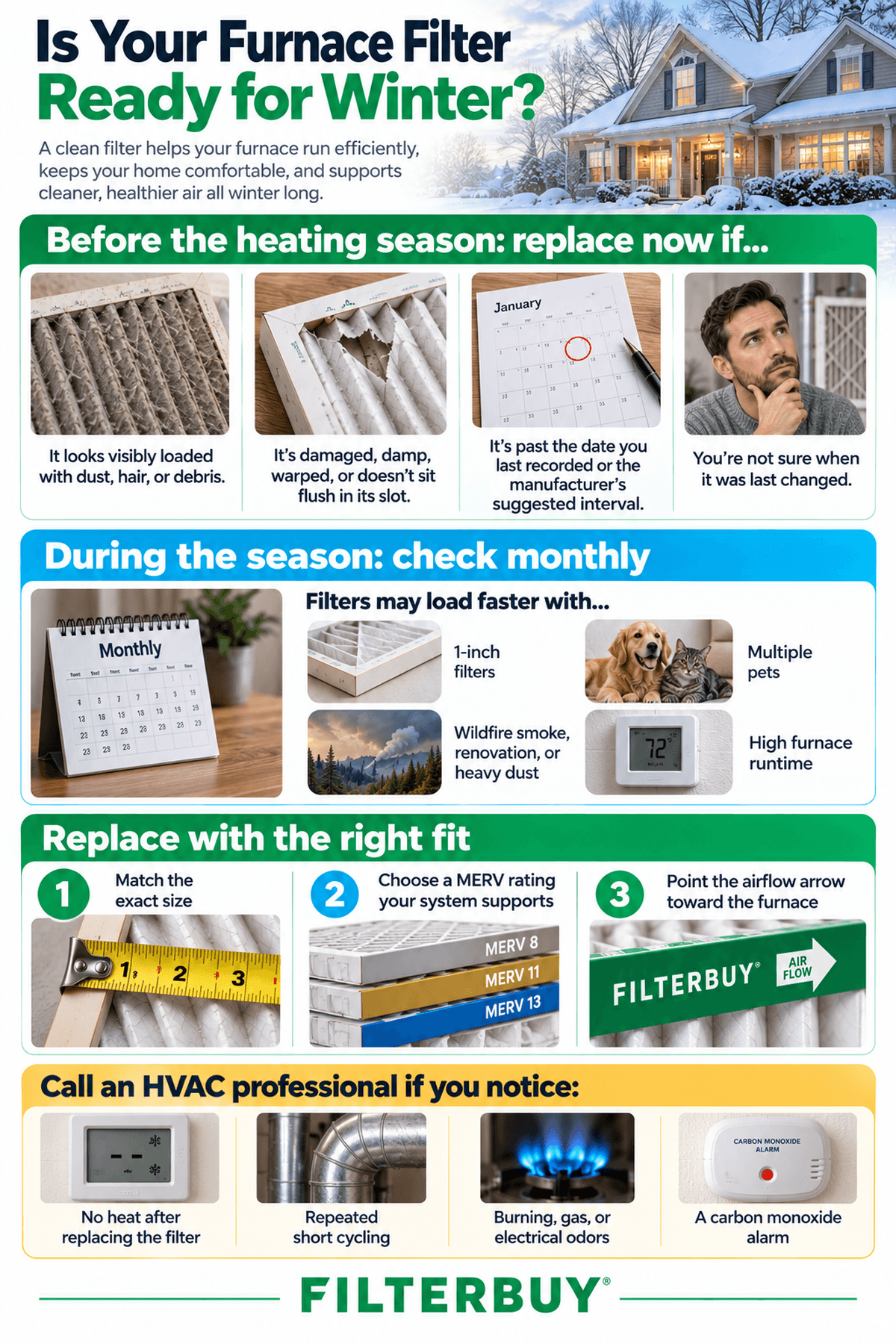
Follow a visual overview of winter furnace filter maintenance, with key points presented in an easy-to-scan format for preparing your HVAC system for the heating season.
See the winter filter guidance in action with a helpful video covering what homeowners should know before colder temperatures put increased demand on their heating system.