
How Often Should You Change Your Furnace Filter in Winter?
November 4, 2026
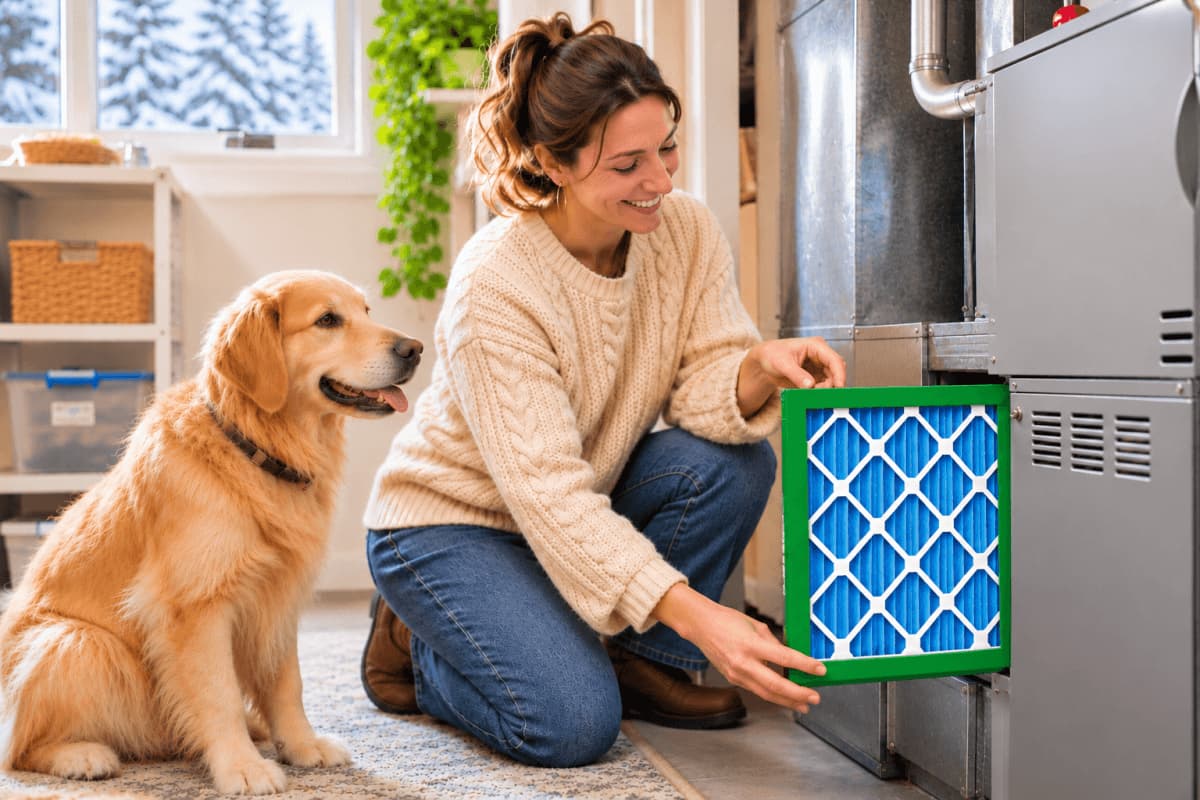
In winter, plan on a new 1‑inch furnace filter every 1 to 2 months.
Thicker filters last longer. A 4-inch filter typically goes 3 to 6 months. Whatever size you have, check it monthly while the heat is running.
Find your next change date
Your filter thicknessReplace by 1 to 2 months from your last change
Your window is 1 to 2 months. Check it monthly in between.
Add reminder to my calendarNever miss a change: auto-delivery saves 5% on every order. Edit, skip, or cancel anytime. Set it up at Filterbuy.com (opens in a new tab)
- 4.9/5 on Google
- 85,000+ customer reviews
- Made in the USA
- Free shipping, no minimum
How long one filter lasts in winter
Bars show months of winter use. Thinner filters fill up faster when the heat runs all day.
Pets, a smoker, or a full houseLow-dust home, at most
Whatever the size, check it monthly while the heat is on.
A mini split can heat a single room on its own. Answer a few quick questions to find a system that fits your space.
Ready for a fresh filter before the next cold snap? Shop American-made air filters at Filterbuy.com (opens in a new tab)
Most homeowners should change a 1-inch furnace filter every 1 to 2 months during winter, since furnaces run more often and pull in more particles. Thicker filters, like 4-inch models, typically last 3 to 6 months. Check filters monthly and replace sooner if airflow weakens, rooms heat unevenly, or you notice visible dust buildup.
Key Takeaways
Winter heating cycles run more frequently than summer cooling, which means furnace filters collect dust and debris faster.
A standard 1-inch filter usually needs replacing every 1 to 2 months in winter, while thicker 4-inch or 5-inch filters can last 3 to 6 months.
Visible dust, weaker airflow, uneven room temperatures, and rising heating bills are all signs your filter needs attention.
A clogged filter forces your furnace to work harder, which can increase energy use and strain on the system.
MERV ratings between 8 and 13 offer a good balance of filtration and airflow for most winter heating systems.
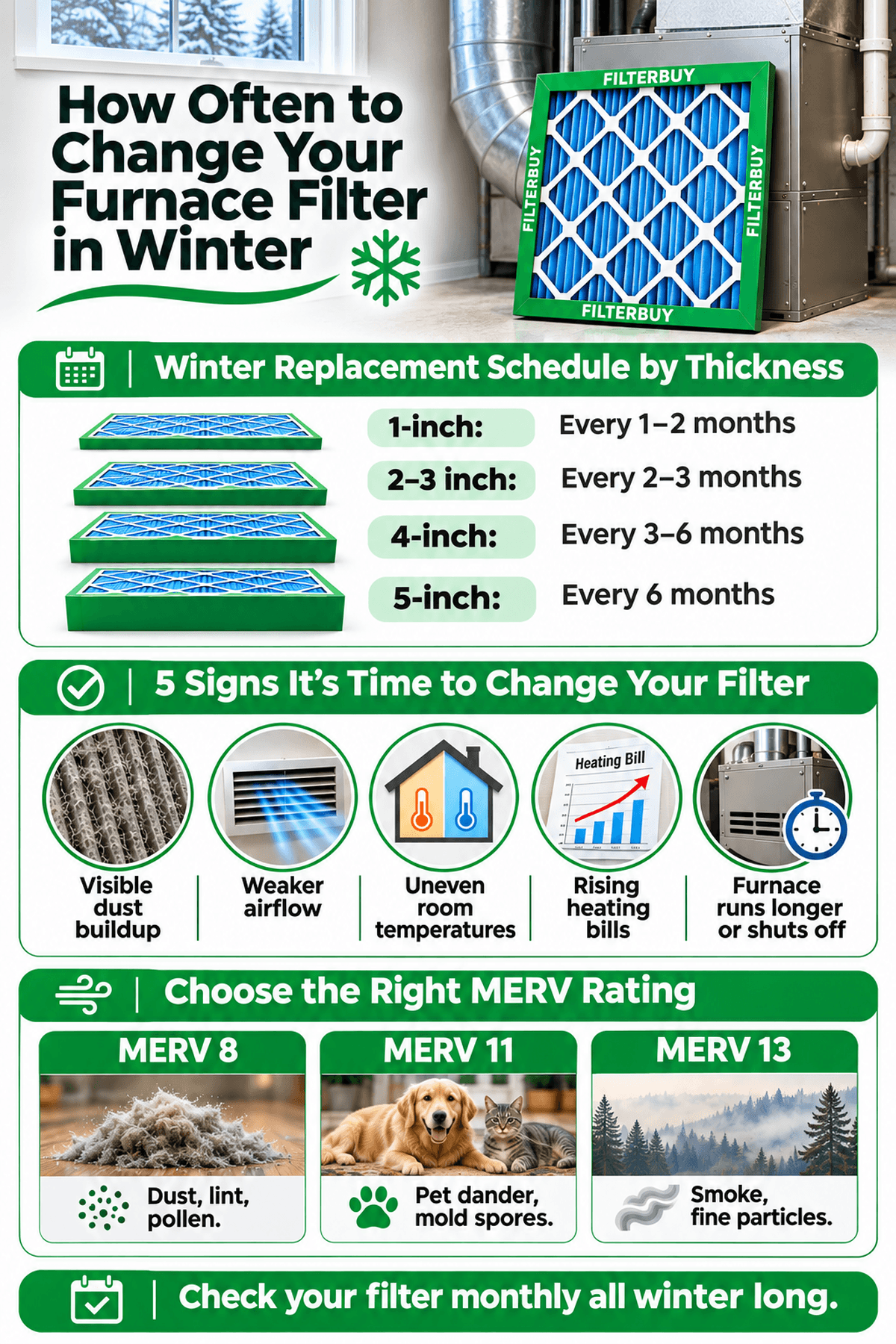
How Often Should You Change a Furnace Filter in Winter?
Furnace filter replacement frequency in winter depends mainly on filter thickness, household conditions, and how often your system runs. Homes with pets, smokers, or multiple occupants typically need more frequent changes than homes without these factors.
Winter Furnace Filter Replacement Schedule by Thickness
| Filter Thickness | Recommended Replacement Frequency (Winter) |
|---|---|
| 1 inch | Every 1 to 2 months |
| 2 to 3 inches | Every 2 to 3 months |
| 4 inches | Every 3 to 6 months |
| 5 inches | Every 6 months |
How Often Should You Change a 1-Inch Furnace Filter in Winter?
A 1-inch furnace filter is the most common size in U.S. homes, and it has the least surface area for trapping particles. Because winter heating cycles run longer and more often, a 1-inch filter can load up with dust and debris faster than it would during milder months. Most manufacturers recommend changing a 1-inch filter every 1 to 2 months in winter, though homes with pets or higher indoor dust levels may need monthly replacements.
How Often Should You Change a 4-Inch Furnace Filter in Winter?
Thicker filters, like 4-inch models, have significantly more surface area, which allows them to hold more debris before airflow becomes restricted. A 4-inch furnace filter typically lasts 3 to 6 months in winter, depending on household conditions and system usage. Checking the filter monthly still helps you catch any early buildup, even though replacement intervals are longer.
Why Do Furnace Filters Get Dirty Faster in Winter?
1. Your Furnace Runs More Frequently
Cold weather means your furnace cycles on more often to maintain your desired indoor temperature. Each cycle pulls air, and the particles in it, through the filter. The more your system runs, the faster the filter accumulates dust, pollen, and other debris.
2. Your Home Has More Indoor Particle Sources
Winter often means closed windows and less fresh air circulation, which traps dust, pet dander, and other particles indoors. With less natural ventilation, these particles recirculate through your HVAC system repeatedly, adding to filter loading.
3. Pets and Household Activities Add to Filter Loading
Shedding pets, cooking, candle burning, and everyday foot traffic all contribute particles that your furnace filter has to capture. Households with these factors may need to replace filters more often than the standard schedule suggests.
5 Signs You Need to Change Your Furnace Filter
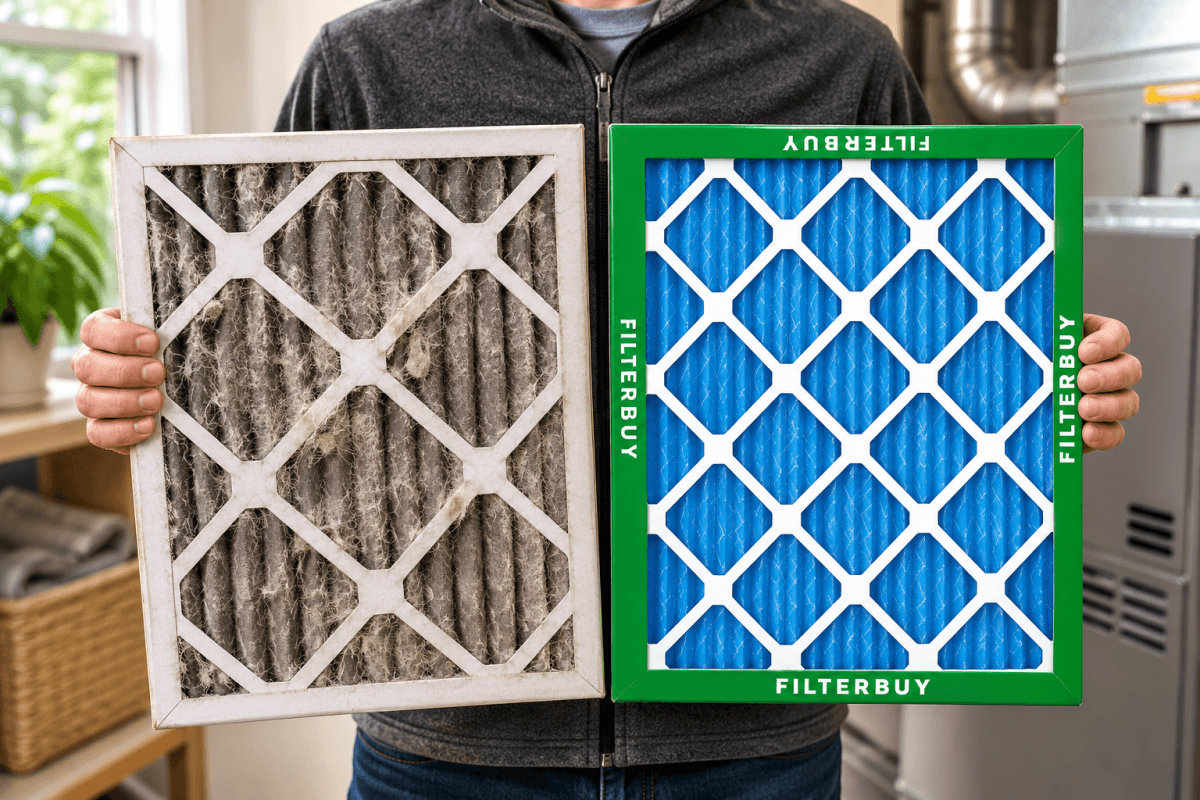
1. Your Filter Has Visible Dust Buildup
If you hold your filter up to a light and can't see light passing through it, it's likely due for replacement regardless of how much time has passed since your last change.
2. Airflow From Your Vents Feels Weaker
A clogged filter restricts airflow throughout your home. If vents that once felt strong now feel weak, a dirty filter could be the cause.
3. Some Rooms Feel Colder Than Others
Uneven heating can indicate that restricted airflow isn't reaching every room effectively. While this can stem from other HVAC issues, a dirty filter is one of the simplest things to check first.
4. Your Heating Bills Increase Unexpectedly
According to the U.S. Environmental Protection Agency (EPA), a dirty filter can make your HVAC system work harder, which may increase energy use. If your heating bill rises without an obvious cause, your filter is worth inspecting.
5. Your Furnace Runs Longer or Shuts Off Unexpectedly
A furnace working against restricted airflow may run for longer cycles to reach your set temperature, or it may shut off due to overheating safety mechanisms. If your system repeatedly shuts down or displays fault codes, contact a qualified HVAC technician, since this can indicate issues beyond the filter.
What Happens if You Don't Change Your Furnace Filter in Winter?
Restricted Airflow and Increased System Strain
A clogged filter blocks the airflow your furnace needs to operate efficiently. Over time, this added strain can shorten the lifespan of system components.
Uneven Heating and Reduced Comfort
When airflow is restricted, some rooms may not receive adequate heating, leading to inconsistent comfort throughout your home.
Possible Energy Waste
The ENERGY STAR program notes that regularly replacing furnace filters is one of the simplest ways to help maintain HVAC efficiency. A dirty filter forces your system to use more energy to push air through it, which can translate to higher operating costs over time.
Increased Risk of Heating System Problems
Neglected filters can contribute to dust buildup inside the furnace itself, potentially affecting components like the blower motor. If your furnace is showing warning signs beyond reduced airflow, such as repeated shutdowns, it's best to have a qualified HVAC technician inspect the system.
Which MERV Rating Is Best for Winter Furnace Filters?
MERV (Minimum Efficiency Reporting Value) measures how effectively a filter captures particles. Higher MERV ratings capture smaller particles but can also restrict airflow more, so it's important to choose a rating your system can handle.
MERV 8: Everyday Household Filtration
MERV 8 filters capture common household particles like dust, lint, and pollen. They're a solid choice for most homes without specific air quality concerns.
MERV 11: Enhanced Particle Filtration
MERV 11 filters capture smaller particles, including some pet dander and mold spores, making them a good fit for homes with pets or mild allergy concerns.
MERV 13: Higher-Efficiency Filtration
MERV 13 filters capture even finer particles, such as smoke and some bacteria. Choose MERV 13 if your household includes members with respiratory sensitivities, as long as your furnace is rated to handle the airflow restriction.
Are Pleated Furnace Filters Better for Winter?
Pleated filters offer more surface area than flat filters, which generally allows them to capture more particles while maintaining airflow. For winter months, when your furnace runs frequently, pleated filters can be a practical choice for balancing filtration and system performance.
How to Check and Replace Your Furnace Filter in Winter
Step 1: Turn Off Your HVAC System
Switch off your furnace before removing the filter to avoid pulling loose debris into your ductwork.
Step 2: Locate the Furnace Filter
Furnace filters are typically located in a slot near the air return duct or inside the furnace unit itself. Check your owner's manual if you're unsure of the exact location.
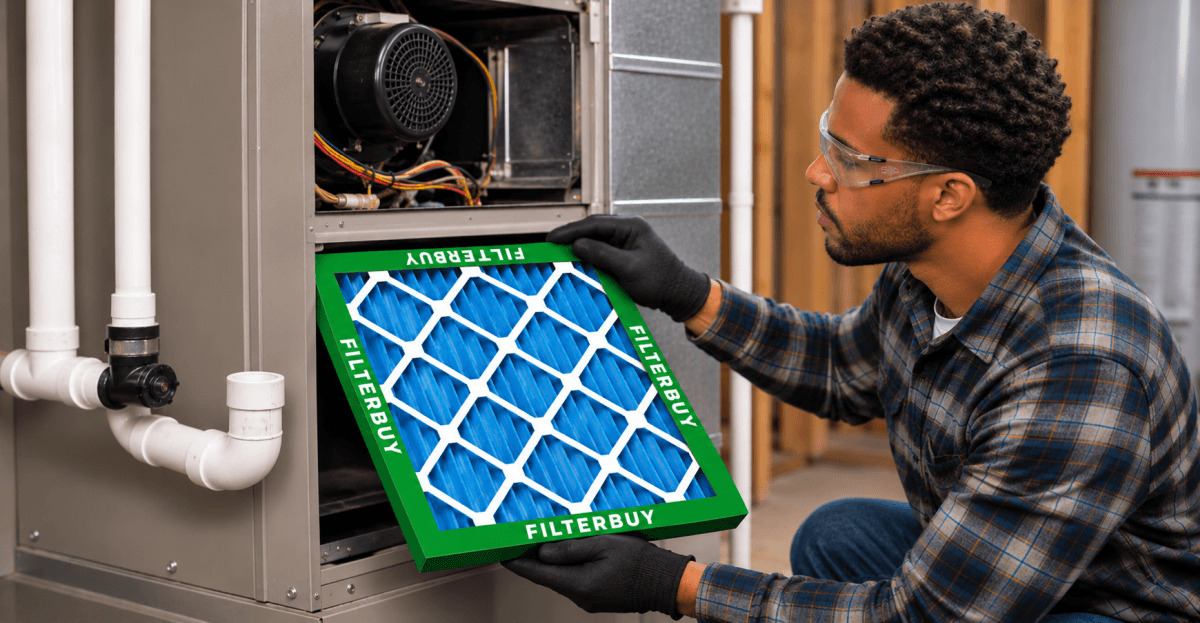
Step 3: Remove and Inspect the Existing Filter
Slide out the old filter and hold it up to the light. If it's visibly clogged or discolored, it's time for a replacement.
Step 4: Confirm the Correct Filter Size
Check the sizing printed on the frame of your old filter to ensure you purchase the correct replacement size.
Step 5: Install the New Filter in the Correct Direction
Most filters have an airflow arrow printed on the frame. Install the new filter with the arrow pointing toward the furnace to ensure proper airflow direction.
Step 6: Record the Replacement Date
Write the installation date on the filter frame or set a reminder on your phone to help you stay on schedule for your next replacement.
How to Keep Your Furnace Filter Working Throughout Winter
Checking your filter monthly, even if your replacement schedule is longer, helps you catch unexpected buildup early. Keeping pets groomed, vacuuming regularly, and minimizing indoor dust sources can also extend the time between replacements. Pair filter maintenance with routine HVAC inspections to help keep your heating system running smoothly through the colder months.
Why Choose Filterbuy for Winter Furnace Filters?
Filterbuy offers a range of furnace filter sizes and MERV ratings designed to fit different household needs and furnace systems. Whether you're looking for a standard 1-inch filter or a higher-capacity 4-inch option, Filterbuy makes it simple to find a filter that matches your HVAC system's specifications. Explore Filterbuy's furnace filter selection to find the right fit for your home this winter.
Keep Your Furnace Running Efficiently This Winter
Staying on top of your furnace filter replacement schedule is one of the easiest ways to support your heating system's performance through the colder months. Check your filter monthly, watch for the signs of buildup covered above, and choose a MERV rating that fits your household's needs. When in doubt, a qualified HVAC technician can help you confirm the right filter and maintenance schedule for your specific system.
Frequently Asked Questions
How Often Should I Change My Furnace Filter In Winter?
Most 1-inch furnace filters should be changed every 1 to 2 months in winter, while thicker 4-inch filters can typically last 3 to 6 months, depending on household conditions.
What Happens If I Don't Change My Furnace Filter?
A dirty filter restricts airflow, which can strain your furnace, reduce heating efficiency, and contribute to uneven temperatures throughout your home.
Are Thicker Furnace Filters Better For Winter?
Thicker filters, like 4-inch or 5-inch models, have more surface area and generally last longer between replacements, which can be convenient during winter's heavier furnace use.
What MERV Rating Should I Use In Winter?
MERV 8 works well for general household filtration, while MERV 11 or MERV 13 may be better if you have pets, allergies, or respiratory sensitivities in your household, as long as your furnace can handle the airflow restriction.
What Should I Do If My Furnace Keeps Shutting Off?
If your furnace repeatedly shuts down or displays fault codes even after a filter change, contact a qualified HVAC technician to diagnose the issue, since this can indicate a problem beyond the filter.
See More
Listen to helpful tips on when to replace your furnace filter during the winter months.
Explore a visual guide to winter furnace filter replacement schedules and maintenance tips.