
Furnace Smells Like Gas? Carbon Monoxide Warning Signs and What to Do Now
October 8, 2026
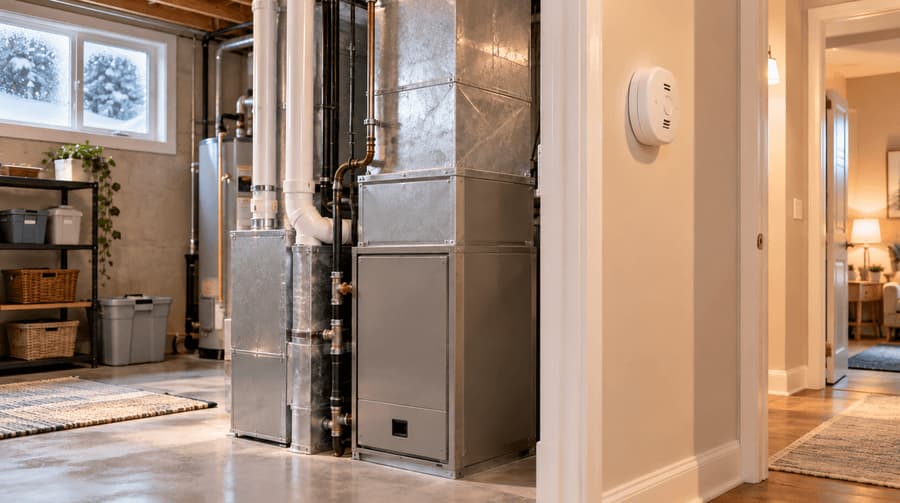
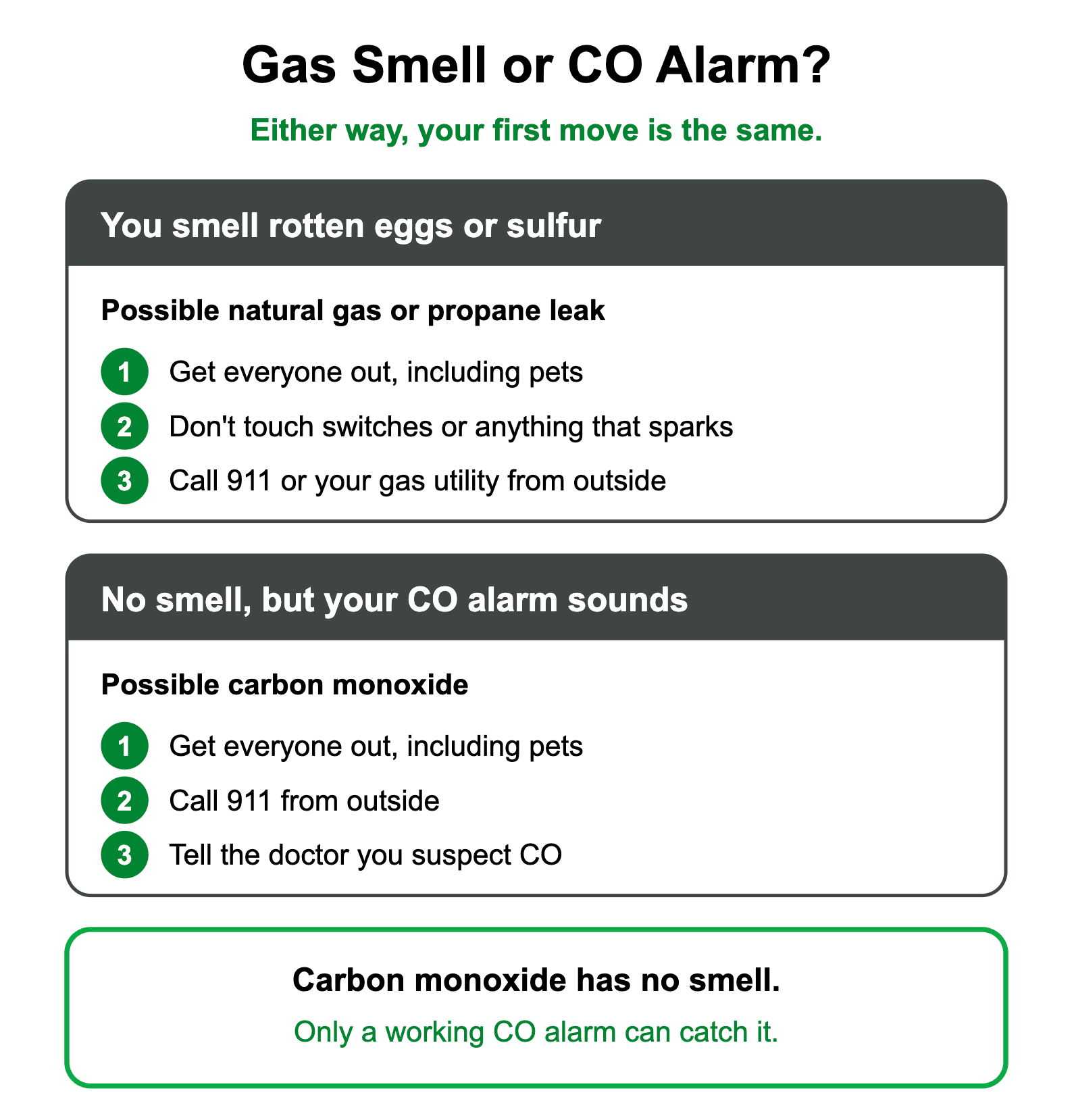
If your furnace smells like rotten eggs, get everyone out and call 911 or your gas utility from outside. Don't touch light switches, thermostats, or anything that could spark on your way out. Carbon monoxide has no smell, so only a working CO alarm can catch it. Once everyone is safe, use the quick quiz below to find your filter match.
Find Your Filter Match
A filter can't remove gas or carbon monoxide, but every filter change is a good moment to check your furnace. Answer a few quick questions and we'll match you to the right filter.
TL;DR
If your furnace smells like rotten eggs, treat it as a natural gas leak: get everyone out without touching any switches, then call 911 or your gas utility from outside. Carbon monoxide has no smell, so only a working CO alarm can catch it. Headaches, nausea, or dizziness that ease when you leave home are a classic carbon monoxide warning sign.
Key Takeaways
A rotten-egg or sulfur smell near a gas furnace signals a possible natural gas leak; leave first and call from outside.
Carbon monoxide (CO) is colorless and odorless, so only a CO alarm can warn you of a CO leak.
A gas, propane, or oil furnace can leak carbon monoxide, most often through a cracked heat exchanger or a blocked vent.
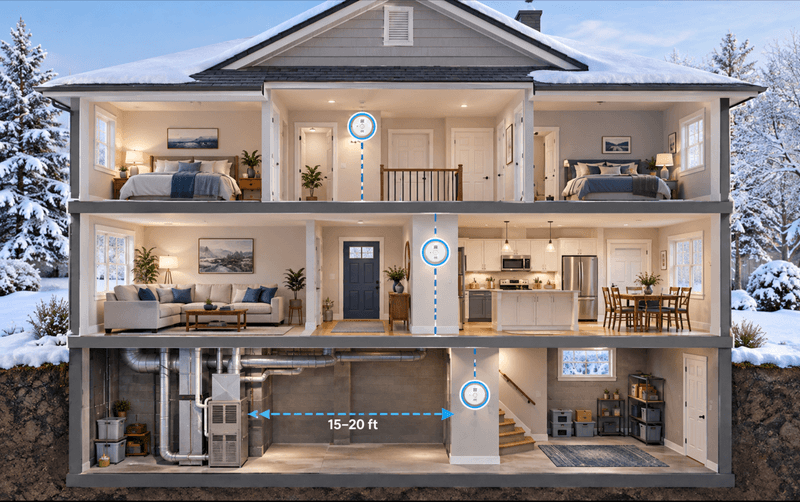
CO alarms belong outside every sleeping area and on every level, 15 to 20 feet from the furnace per most alarm manuals.
No air filter removes gas or CO, but a monthly filter change is a natural moment to check your furnace.
At Filterbuy, we've manufactured pleated HVAC filters in Talladega, Alabama, for more than a decade and shipped millions of them to homes like yours. We know what a filter can and can't do, and we'd rather you hear the limits from us.
What Should You Do If Your Furnace Smells Like Gas?
If your furnace smells like gas, get everyone out, including pets, without touching switches or anything that could spark. Call 911 or your gas utility from outside, and stay out until responders say it's safe.
Get out now. Don't stop to find the source or shut off the furnace. Leave doors and windows as they are, as gas utility National Grid advises.
Avoid every spark. Leave light switches, thermostats, doorbells, appliances, and lighters alone. Don't start a car in an attached garage.
Call from outside. Use your cell phone once you're outside. Many utilities respond to suspected leaks at no charge (Connecticut utility regulators).
Get the furnace inspected before restarting it. A licensed HVAC technician should check the gas connection and venting.
If your CO alarm sounds, the steps are the same: leave and call 911 from outside, as the CPSC advises, and tell the doctor you suspect CO.
Is It Gas, Carbon Monoxide, or Something Else?
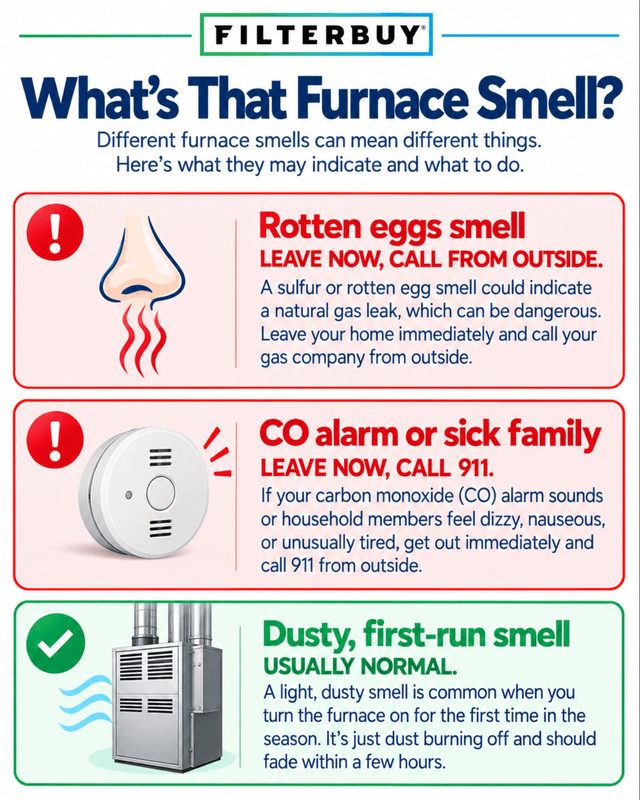
A rotten-egg smell means possible gas and is always an emergency. Natural gas is naturally odorless, so utilities add mercaptan to make leaks smell like sulfur. Carbon monoxide has no smell at all, so a CO alarm or unexplained illness is the signal.
Not sure which row fits? Treat it as an emergency: leave the house and call from outside.
What Are the Symptoms of Carbon Monoxide Poisoning From a Furnace?
Carbon monoxide poisoning from a furnace causes headache, dizziness, weakness, upset stomach, vomiting, chest pain, and confusion, according to the CDC's carbon monoxide poisoning basics. These flu-like symptoms are easy to miss, and sleeping people can die before noticing anything.
More than 400 Americans die from unintentional carbon monoxide poisoning each year, more than 100,000 visit an emergency room, and more than 14,000 are hospitalized. (CDC, updated January 2026)
These patterns point to carbon monoxide rather than the flu:
Symptoms fade when you leave home and return when you come back.
Several people feel sick at once, even pets.
There's no fever, which a true flu usually brings.
Infants, older adults, and people with chronic heart disease, anemia, or breathing problems are more likely to get sick from CO (CDC).
Can a Furnace Leak Carbon Monoxide?
Yes, a furnace can leak carbon monoxide. Any furnace that burns natural gas, propane, or oil produces CO as a combustion byproduct (CDC furnace safety fact sheet). A sealed heat exchanger keeps those gases out of your air, and a flue vents them outdoors. If either fails, CO can spread through your ductwork. All-electric furnaces and heat pumps burn no fuel, so they don't produce CO.
The most common furnace CO leaks come from:
A cracked heat exchanger, which lets combustion gases mix with the air your blower sends to every room (Ferguson HVAC trade guide).
A blocked or disconnected vent, from snow, ice, nests, or a loose flue pipe.
Poor combustion from dirty burners or incorrect gas pressure.
A cracked heat exchanger can't be safely patched, so a confirmed crack usually means a new heat exchanger or furnace (Ferguson).
Where Should a Carbon Monoxide Detector Go Near a Furnace?
A carbon monoxide detector should go outside every sleeping area and on every level of your home, as the NFPA recommends, but not right beside the furnace. Most alarm makers specify 15 to 20 feet from a furnace or other fuel-burning appliance to prevent false alarms. The CPSC calls for basement alarms only when someone sleeps there, so check your local code. Per alarm maker First Alert's manual:
Sources: NFPA placement guidance, CPSC, and the First Alert CO5-B10D manual. Local codes may require more.
A CO alarm does not detect natural gas or propane. Add a separate explosive gas detector or a combination unit listed for both. That matters most with propane: federal regulators warn its odorant can fade, especially in new or recently cleaned tanks, so a leak may not smell (federal pipeline safety alert).
What your CO alarm's sounds mean (per First Alert's manual; brands differ):
Four beeps, a pause, repeating: CO detected. Get everyone outside and call 911.
Five chirps a minute: End of life. Replace the alarm.
Three chirps a minute: Malfunction. Replace it now.
If your alarm stores a peak CO reading, don't clear it before responders arrive; that reading guides them to the source.
Does a Furnace Filter Affect Gas or Carbon Monoxide Safety?
No furnace filter removes natural gas or carbon monoxide. Filters capture particles, not gases, and as a filter maker we won't pretend otherwise. That includes Filterbuy's activated carbon Odor Eliminator filters: carbon traps many odors, but CO binds to it far too weakly to be removed, as our guide to why no air filter removes carbon monoxide explains.
A filter does matter for airflow: a clogged one traps heat around the heat exchanger, and HVAC trade guidance names that overheating as a leading cause of heat exchanger cracks (Ferguson). Filterbuy makes MERV 8, 11, and 13 filters in more than 600 sizes; choose the rating your system is designed for and check how often to change your furnace filter in winter. Filterbuy's air filter size chart and air filter auto-delivery make replacements easy.
The filter door matters too. The CPSC's latest CO death report lists unsealed or missing filter doors among furnace conditions investigators found; the filter usually sits where the blower pulls air in, so a gap can draw furnace-room air into your ducts.
We make filters, and a better filter doesn't solve everything. What a filter change does is put you in front of your furnace every month, so take one more minute to check the flame and test your alarm.
Michelle Wan, Filterbuy
Supporting Statistics: What the Research Shows
Three U.S. findings show why fast action matters, especially as indoor air quality worsens in winter.
Sources: PSE Healthy Energy, Energy Policy (2024); NFPA carbon monoxide alarm fact sheet (via CPSC); CPSC Non-Fire Carbon Monoxide Deaths, 2021 Annual Estimates (February 2025).
Sources: PSE gas leak study, NFPA CO fact sheet, and the CPSC 2021 CO death report.
Winter Furnace Safety Checklist
Every Filter Change: Filterbuy's 60-Second Safety Check
Our routine draws on warning signs from the CDC, CPSC, and alarm makers:
Seat the new filter with its airflow arrow pointing toward the furnace, then close and latch the filter door.
Check the flame if your furnace has a viewing window. Steady blue is normal; yellow means incomplete combustion and a technician visit (First Alert manual).
Scan for soot, rust, or scorch marks on the cabinet and vent pipe.
Notice any smell. Rotten eggs means leave now and call from outside.
Press the test button on your nearest CO alarm, a monthly test the CPSC recommends.
Once a year: book a professional furnace inspection, as the CDC and CPSC urge, and clear snow and nests from outdoor vent pipes. Never run a generator indoors.
Frequently Asked Questions
Can a Furnace Leak Carbon Monoxide When It's Off?
A furnace makes carbon monoxide only while burning fuel. If your CO alarm sounds while the furnace is off, the source may be a water heater, fireplace, generator, or car in an attached garage. Either way, leave and call 911.
What If the Gas Company Finds No Leak, But It Still Smells Like Rotten Eggs?
A rarely used basement floor drain, often near the furnace, can lose the water in its trap and let in sewer gas, which also smells like rotten eggs. Pour about a quart of water into it to restore the seal (City of Kerrville utility guide). Only troubleshoot after the utility clears the house.
Glossary
Carbon monoxide (CO): A colorless, odorless, poisonous gas produced when fuels burn incompletely.
Natural gas: A methane-based fuel piped to homes; odorless and lighter than air.
Propane (LP gas): A tank-stored fuel that is heavier than air.
Mercaptan: A sulfur-based odorant added to natural gas so leaks smell like rotten eggs.
Heat exchanger: The sealed metal chamber in a furnace that heats air while keeping combustion gases separate.
Flue: The vent pipe that carries furnace exhaust, including CO, outdoors.
Odor fade: Loss of a fuel gas's added odorant, which can make a propane leak hard to smell.
HVAC: Heating, ventilation, and air conditioning.
MERV (Minimum Efficiency Reporting Value): A 1–16 rating of how well an HVAC filter captures particles.
CDC: U.S. Centers for Disease Control and Prevention.
CPSC: U.S. Consumer Product Safety Commission.
NFPA: National Fire Protection Association, which writes U.S. fire codes.