
Heat Pump Installation Near Me: How to Find Heat Pump Installers, Best Installation Companies, and DIY Tips Where Allowed
November 23, 2026
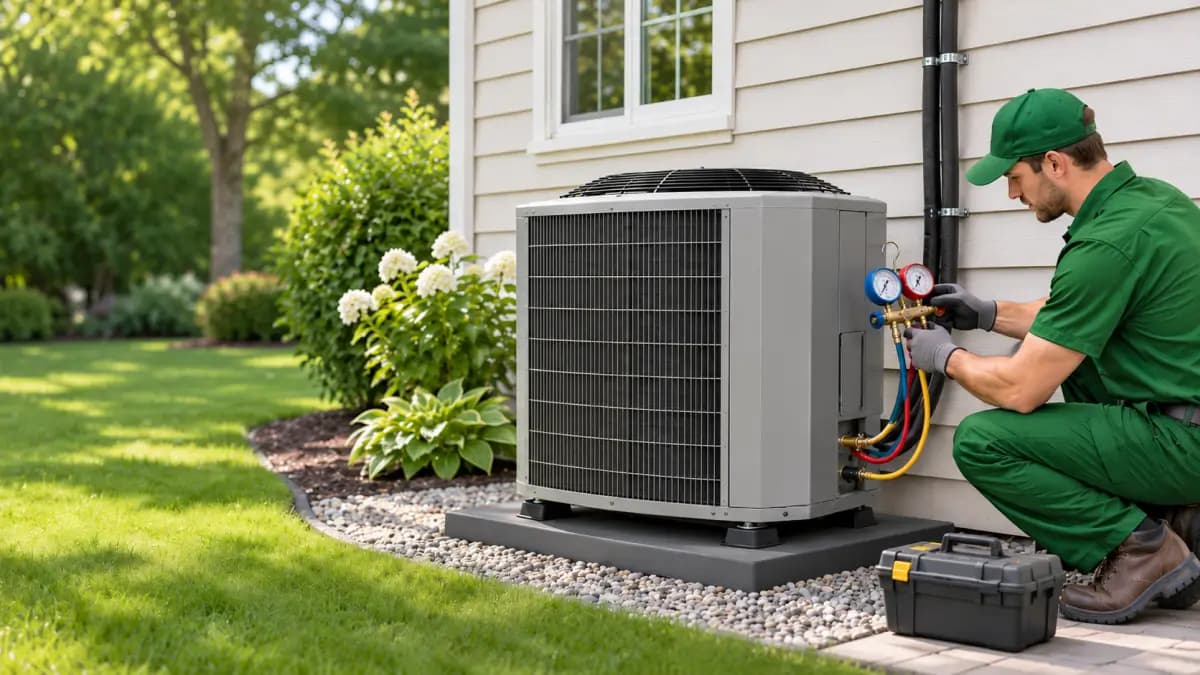
Heat pump installation near me comes down to who you trust to size and commission the system. The right one runs a load calculation, uses EPA Section 608 certified technicians, pulls the permit, and tests before leaving. Filterbuy builds HVAC air filters in our own U.S. plants and sells ductless mini splits, so our work starts where the installer's ends: at the filter slot. This guide explains how to vet installers and where the legal DIY line sits.
TL;DR
To find heat pump installers near you, collect three itemized bids from licensed, insured contractors who perform a Manual J load calculation and commission the system with measured tests. DIY heat pump installation covers prep work and filter setup, plus mounting where the manual allows, because federal rules require an EPA Section 608 certified technician for any refrigerant connection, including pre-charged lines.
Key Takeaways
A qualified heat pump installer holds a state contractor license where required and carries insurance. The crew should include an EPA Section 608 certified technician.
The best heat pump installation companies size equipment with an ACCA Manual J load calculation, not square footage or the size of the old unit.
A new heat pump installation should end with nitrogen pressure and vacuum tests, then a verified refrigerant charge.
EPA states that connecting or disconnecting pre-charged lines on a mini-split requires Section 608 certification.
Before the crew leaves, collect the startup report, load calculation, permit sign-off, warranty registration, and filter size.
How Filterbuy Built This Guide
In November 2026, the Filterbuy team reviewed the top-ranking installer directories and guides, then checked each legal claim against federal sources. Two gaps shaped this page: directories rarely explain how to vet installers, and several DIY retail guides contradict EPA on pre-charged kits.
How Do You Find Qualified Heat Pump Installers Near You?
Build a short list of qualified heat pump installers near you from three sources: manufacturer dealer locators, your utility's participating contractor list, and neighbors who own heat pumps. Then verify each name before booking a visit.
Build The List. Many rebates pay only when a utility-listed contractor does the work.
Check License And Insurance. Look the company up on your state licensing board and ask for proof of liability and workers' compensation coverage. ENERGY STAR puts this first in its tips for hiring a heating and cooling contractor.
Confirm Certifications. Ask whether the crew includes an EPA Section 608 certified technician. NATE certification is not legally required in most areas, but it shows a technician passed industry exams.
Get Three Itemized Bids. Compare model numbers, efficiency, warranty, and line items, then call two recent customers of your top pick.
Still choosing between ducted and ductless? Start with how heat pump HVAC systems work.
What Should You Have Ready Before Installers Visit?
Bids are only comparable when every installer works from the same facts. Hand every installer the same five items.
Current equipment labels. Model numbers and age from the outdoor unit and the furnace or air handler.
Problem rooms. Note which rooms run too hot or too cold.
Twelve months of utility bills. They show whether a proposed size makes sense.
A photo of your electrical panel. A heat pump may need breaker space or a panel upgrade, and the photo surfaces that cost early.
Your filter size and location. The size is printed on the frame of the filter in your system now.
What Separates the Best Heat Pump Installation Companies?
The best heat pump installation companies document their work. They size the system with a room-by-room load calculation, check the ductwork, pull permits, and commission the equipment with measured tests. Filterbuy built this scorecard from Department of Energy commissioning tests and ENERGY STAR hiring guidance, then added the one check a filter maker cares about most: filter access.
Filterbuy Heat Pump Installer Scorecard: Good Sign Vs Red Flag
What Happens During a New Heat Pump Installation?
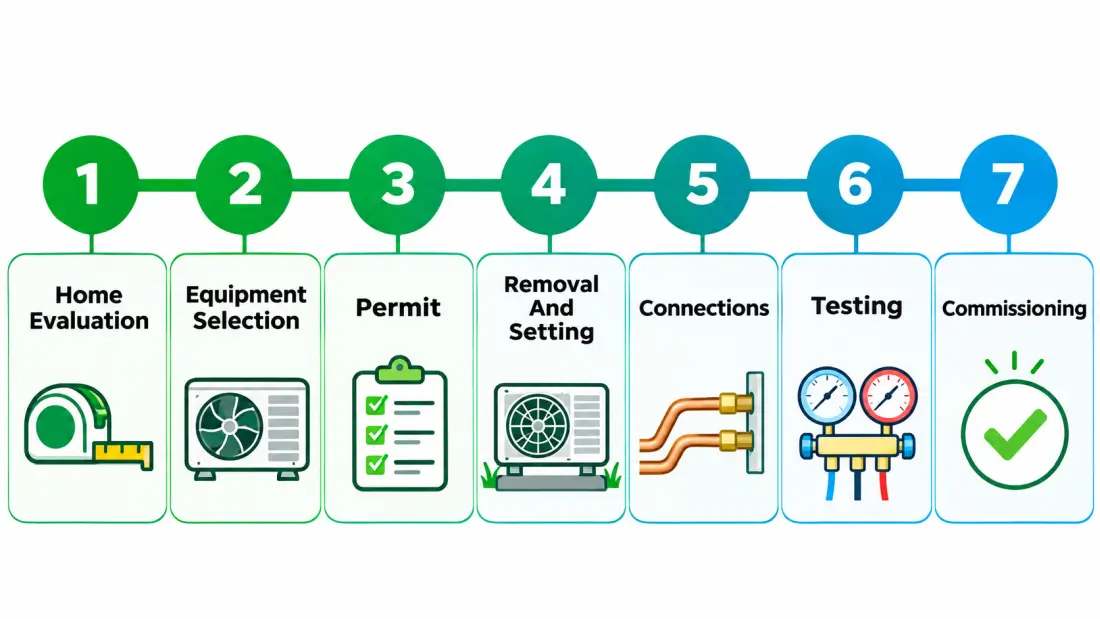
A new heat pump installation follows the same sequence whether the system is ducted or ductless: the installer evaluates the home, sizes the equipment, permits the job, sets the units, connects refrigerant and power, then tests and commissions the system. Shortcuts usually hide in testing.
Home Evaluation. The installer measures the house and its ducts.
Equipment Selection. Capacity is matched to the heating and cooling load.
Permit. The contractor files required permits.
Removal And Setting. Old refrigerant is recovered and the new outdoor unit set with clearance for airflow and snow.
Connections. The technician runs the line set, control wire, condensate drain, and a dedicated circuit.
Testing. The line set is pressure tested with nitrogen and evacuated to a measured vacuum before refrigerant is released.
Commissioning And Handoff. Charge and airflow are verified, and you see the filter location.
What to Collect Before the Crew Leaves
The startup report with refrigerant charge and airflow readings.
The load calculation report.
The permit number and final inspection date.
Proof of warranty registration, since many manufacturers set a registration deadline.
The filter size and approved MERV range, written on the startup report.
File these with your warranty papers. The readings become your baseline if performance slips later.
For ductless systems, Filterbuy's mini split installation guide covers mounting heights and line set routing in more detail.
Can You Do a DIY Heat Pump Installation?
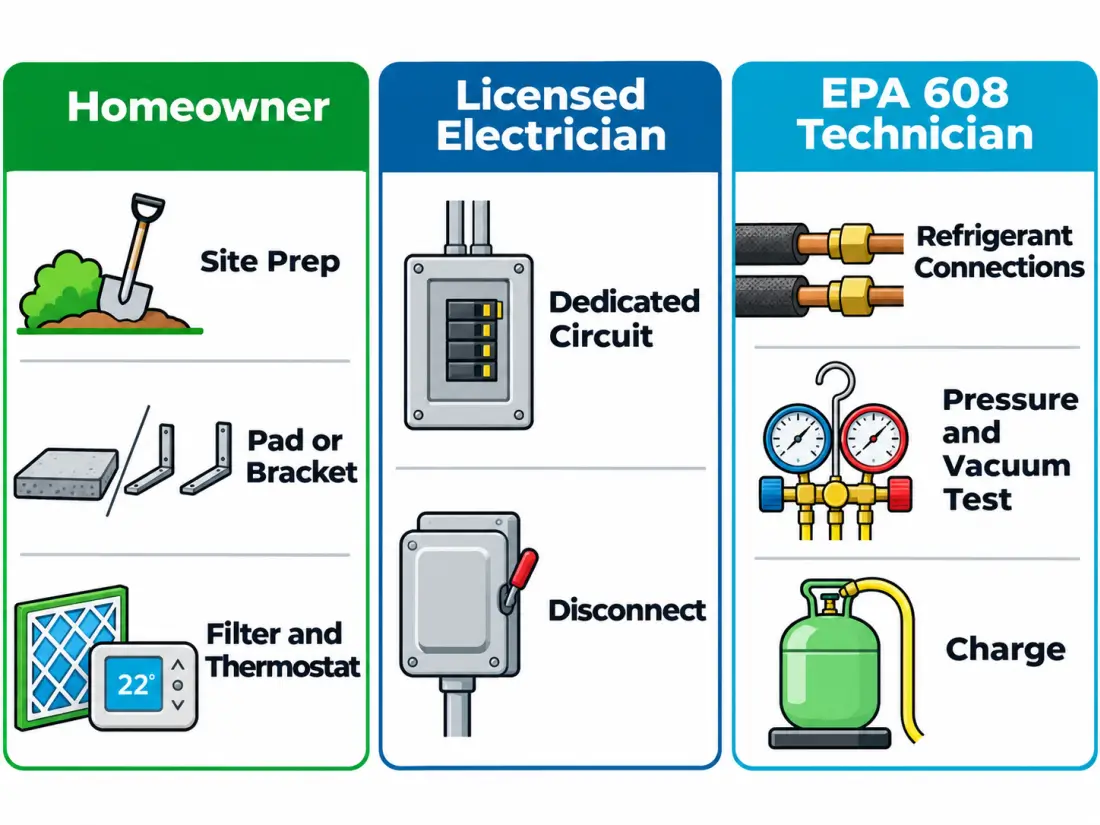
A full DIY heat pump installation is not an option for most homeowners. Federal rules require an EPA Section 608 certified technician for any work that could open the refrigerant circuit, and EPA's guidance says connecting or disconnecting pre-charged lines on a mini-split counts.
The Filterbuy team checked EPA's Section 608 technician questions and answers on November 22, 2026. It lists attaching hoses and gauges, adding or removing refrigerant, and cutting a refrigerant line as work that breaks into the refrigerant circuit. Before buying a pre-charged kit, ask your building department what it requires.
DIY Vs Pro Heat Pump Installation By Task
Check your installation manual and local code first. Electrical work usually needs a permit and inspection.
How Does Installation Quality Affect Your Filter and Airflow?
A heat pump pulls air through the same filter in heating and cooling seasons, so fit and airflow matter all year. As a filter manufacturer, Filterbuy would add one check most installer checklists skip: match the size printed on the filter frame to the slot. A filter that leaves gaps lets air slip around it, which is why Filterbuy cuts hundreds of standard and custom sizes.
MERV 8 air filters are the standard choice for most homes. MERV 11 suits households with allergies or asthma, pets, or pollen, and MERV 13 is the pick for wildfire smoke. Check your HVAC system's manual to confirm which ratings it supports. Filterbuy's heat pump maintenance checklist covers change intervals after the first season.
Where Do Filterbuy Mini Splits Fit In?
Filterbuy mini splits carry a 7-year compressor and 3-year parts warranty, with single-zone units listed at $749 to $1,349. Filterbuy sells these units and still tells buyers that a Filterbuy ductless mini split system needs a licensed installer for the refrigerant and electrical connections.
How Do Cost and Rebates Factor Into Choosing an Installer?
The lowest bid often skips the load calculation or commissioning tests, so compare bids line by line. The federal Section 25C heat pump tax credit expired December 31, 2025, so state and utility programs now carry most of the savings.
Search programs by ZIP code in the DSIRE incentives database, then ask installers which they participate in. For price ranges by system type and labor, see Filterbuy's heat pump installation cost guide.
Expert Quote
"A heat pump installer decides how your home's air moves for years. Before you sign, ask who will run the load calculation and who will pull the vacuum. Then ask where the filter goes. Hire the company that puts those answers in writing."
Michelle Wan, Brand Manager and Air Quality Writer, Filterbuy
Supporting Statistics
70–90% of air conditioner and heat pump systems have at least one fault.
Data: 2018 Department of Energy research cited by Pacific Northwest National Laboratory.
Cause: improper installation or inadequate maintenance.
Filterbuy's take: ask every bidder how they verify charge and airflow.
Poor installation can add about 30% to heating and cooling energy use.
Data: a three-year National Institute of Standards and Technology (NIST) study.
Common faults: leaky ducts, improper refrigerant charge, oversized systems.
Filterbuy's take: the scorecard above checks for these exact faults.
Source: Underperforming? Energy Efficiency of HVAC Equipment Suffers Due to Poor Installation
A properly installed heat pump delivers up to 3 times more heat energy than the electricity it uses.
Filterbuy's take: put commissioning tests in the written bid.
Source: Air-Source Heat Pumps
Frequently Asked Questions
How Do I Find Heat Pump Installers Near Me?
Start with manufacturer dealer locators and your utility's contractor list, then add neighbor referrals. Verify credentials, then compare three itemized bids.
Is DIY Heat Pump Installation Legal?
Partly. Homeowners can handle prep and filters, plus brackets where the manual allows. Under EPA guidance, any refrigerant connection, including pre-charged mini-split lines, requires a Section 608 certified technician.
Will a DIY Install Void My Heat Pump Warranty?
It can. Many manufacturers require professional installation or registration for full warranty coverage.
Do I Need a Permit for a New Heat Pump Installation?
Most jurisdictions require permits for a new heat pump installation, and a reputable installer pulls them.
What Certifications Should a Heat Pump Installer Have?
EPA Section 608 certification is required for anyone handling refrigerant. Many states also require a contractor license.
Keep Your New Heat Pump Breathing Easy
Filterbuy builds pleated air filters in MERV 8, MERV 11, and MERV 13 across hundreds of standard and custom sizes, with fast and free 2-day delivery to most US states. Shop Filterbuy air filters by size and set up auto-delivery.
Glossary
Heat Pump: An electric system that heats and cools by moving heat with refrigerant.
Mini Split: A ductless heat pump with one outdoor unit and one or more indoor heads.
Air Handler: The indoor unit of a ducted system that holds the blower, coil, and usually the filter.
Line Set: The insulated copper refrigerant lines linking the outdoor and indoor units.
Pre-Charged Line Set: A line set sold sealed with refrigerant and quick-connect fittings.
EPA Section 608 Certification: The U.S. Environmental Protection Agency (EPA) credential required to handle refrigerant.
NATE: North American Technician Excellence, a nonprofit that certifies HVAC technicians.
Manual J: The Air Conditioning Contractors of America (ACCA) method for room-by-room heating and cooling loads.
Commissioning: Post-installation testing of refrigerant charge and airflow before handoff.
MERV: Minimum Efficiency Reporting Value, the 1 to 16 air filter rating scale.
DSIRE: The Database of State Incentives for Renewables and Efficiency.