
Stomach Flu Vs. Flu: Why They're Completely Different Illnesses
November 22, 2026
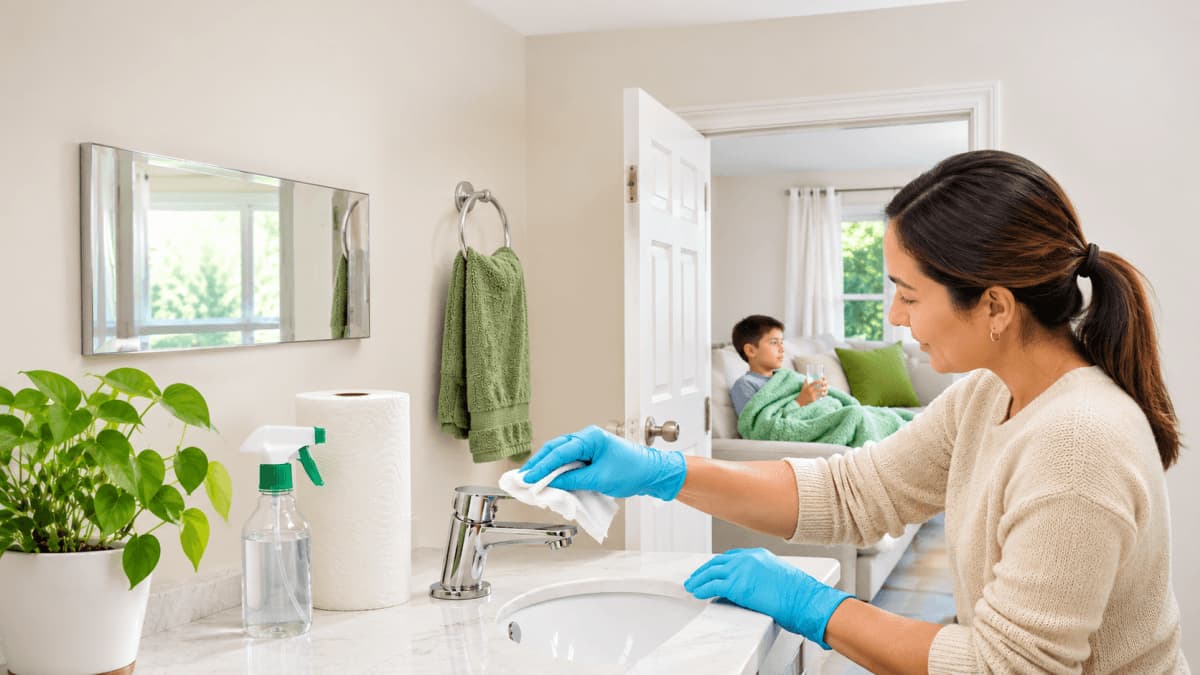
The "stomach flu" and the flu share a name, but not much else. Most stomach flu is norovirus, a gut infection behind sudden vomiting and diarrhea, not influenza. At Filterbuy, we spend our days on what moves through indoor air, and the stomach flu is the one illness where we tell families to reach for soap and bleach before they think about their filter.
TL;DR
The stomach flu is not the flu. It is usually norovirus, a gut infection, while the flu is influenza, a respiratory one. Norovirus spreads mostly through hands, surfaces, food, and tiny particles released during vomiting, and people can shed it for 2 weeks or more after they feel better. At home, handwashing and bleach stop it, as long as the sick person stays out of the kitchen.
Key Takeaways
"Stomach flu" is an everyday name for viral gastroenteritis, and norovirus is its leading cause in the United States.
Norovirus and influenza are unrelated viruses, so the flu vaccine does not protect against the stomach flu.
Norovirus symptoms show up 12 to 48 hours after exposure and clear in 1 to 3 days. Flu symptoms take 1 to 4 days to appear.
People with norovirus are most contagious while they are sick and for a few days afterward, and they can shed the virus for 2 weeks or more.
Vomiting can send norovirus particles into the air, so the whole area around an episode needs a bleach cleanup.
Is The Stomach Flu The Flu?
No. "Stomach flu" is an everyday name for viral gastroenteritis, an infection that inflames the stomach and intestines, and the Centers for Disease Control and Prevention (CDC) lists norovirus as its leading cause in the United States. The flu is influenza, a respiratory illness caused by influenza viruses that infects the nose, throat, and lungs.
At Filterbuy, we sort the two with one rule: follow the route. The flu travels on breath, so distance and cleaner air do the most good. Norovirus travels on hands and food, so soap and bleach do the most good. A flu shot or hand sanitizer treats a stomach bug like the flu and misses its route.
Norovirus Vs. Flu: Symptoms, Timing, And Spread
Norovirus starts in the gut, while the flu starts in the airways. Children with the flu sometimes vomit too, which explains much of the confusion. If cough and congestion lead, our cold vs. flu guide helps sort out respiratory symptoms.
Stomach Flu Or Flu? A Quick 4-Question Check
Filterbuy built this check from the patterns above.
Did it start with vomiting or diarrhea? Most likely the stomach flu.
Did it start with fever, cough, or body aches? The flu is more likely.
Did people who shared a meal or bathroom get sick 12 to 48 hours later? That points to norovirus.
Is it easing within 1 to 3 days? That fits norovirus. The flu usually hangs on longer.
Only a test can confirm the flu, so call a provider if vomiting comes with high fever, cough, or trouble breathing.
How Does Norovirus Spread?
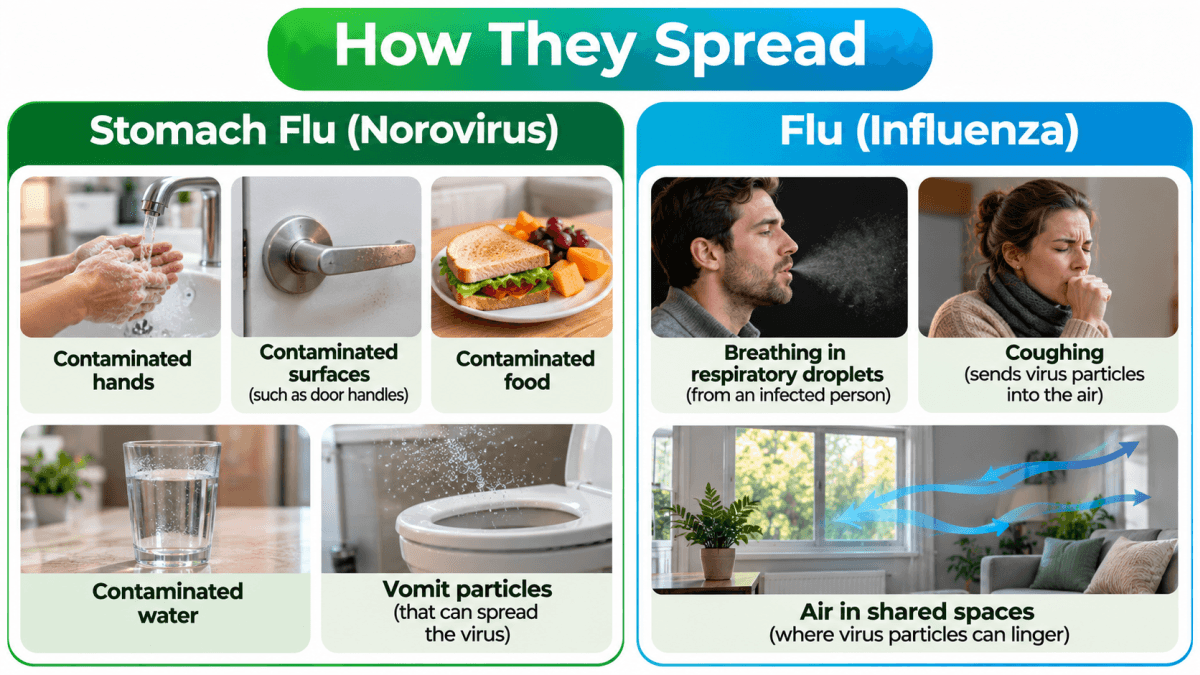
Norovirus spreads when tiny amounts of stool or vomit from a sick person reach someone else's mouth, whether through hands, surfaces, food, water, close care, or particles released during vomiting. CDC notes that only a few norovirus particles can make a person sick, which is how one case can sweep through a whole household. CDC data show norovirus outbreaks peak from November through April.
Norovirus is hardy. One touch of a contaminated faucet handle, followed by a hand to the mouth, can pass it on, and a sick person who cooks can spread it to everyone at the table. Surfaces matter for the flu too, as Filterbuy's guide to flu virus on surfaces explains, but for norovirus they are the main road.
Is Norovirus Airborne?
Norovirus is not airborne the way the flu is, but vomiting can put it into the air for a short time. Coughing and sneezing do not spread it, but forceful vomiting throws out droplets and fine particles that can drift onto nearby surfaces or reach someone close by.
In a simulated vomiting study, North Carolina State and Wake Forest researchers found that only a tiny fraction of the virus became airborne. That fraction could still mean thousands of particles, so the space around a vomiting episode deserves the same attention as the toilet. The flu behaves differently, as our guide to how the flu spreads through indoor air explains.
How Long Is The Stomach Flu Contagious?
The stomach flu becomes contagious with the first symptom. People are most contagious while vomiting and for the first few days after they feel better. Norovirus can stay in stool for 2 weeks or more, so someone who feels fine can still pass it on.
The flu contagious period works the other way, starting about a day before symptoms.
How To Stop Stomach Flu Spreading At Home
Soap and bleach stop the stomach flu at home, along with keeping the sick person out of the kitchen. The steps below follow CDC norovirus prevention guidance.
Wash hands with soap and water. Scrub for at least 20 seconds after using the toilet or caregiving, and again before eating.
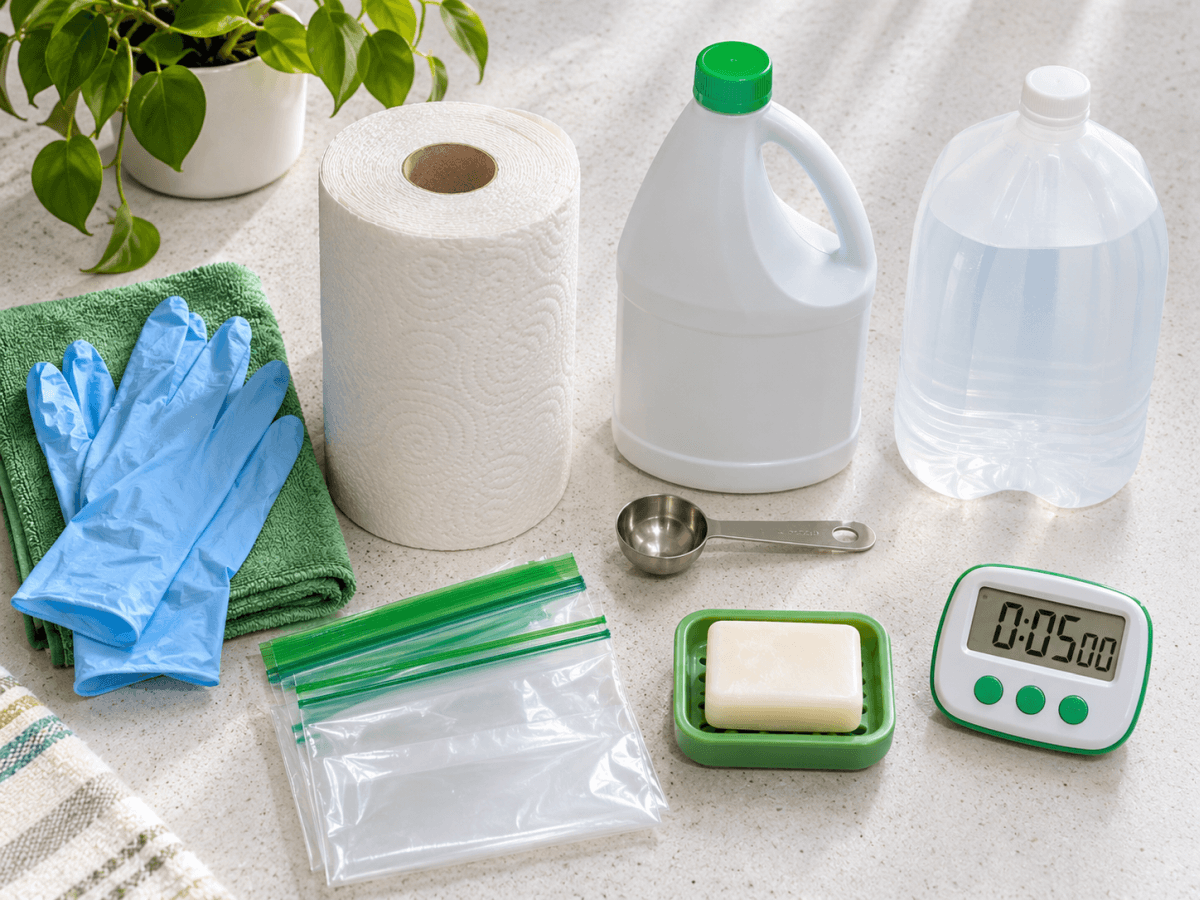
Clean up vomit quickly. Wear disposable gloves, wipe up with paper towels, and seal them in a bag. Wipe well past the visible spill, then finish with laundry, trash, and finally your own hands.
Disinfect with bleach. Mix 5 to 25 tablespoons of household bleach (5% to 8%) per gallon of water, or about 1/3 cup to 1 1/2 cups. Leave it on for at least 5 minutes, then wash with soap and hot water. A product on EPA List G also works if the surface stays wet for the contact time on its label.
Wash laundry on hot. Use gloves, do not shake soiled items, then wash on the longest hot cycle and dry on high heat.
Keep the sick person out of the kitchen. No cooking or serving food until 48 hours after symptoms stop.
Give them their own space. If they share a bathroom, disinfect the toilet and all handles after each use. A recovery room setup keeps supplies and trash in one place.
Air out the room after vomiting. The first 3 hours are the window that matters most. Open a window if weather allows and keep others out until the room is clean. Fresh air dilutes airborne particles, but it never replaces bleach.
For a full seasonal plan, the Filterbuy cold and flu home checklist covers sick-day supplies and HVAC upkeep.
Does Your Home's Air Matter For The Stomach Flu?
Filterbuy makes air filters, so here is our honest take: for the stomach flu, your home's air plays a supporting role. Handwashing and disinfection do the heavy lifting.
Your HVAC system pulls air through its filter, so a fresh, properly fitted filter belongs in any sick-season routine. Set the thermostat fan to On so air keeps moving through it. Still, no filter cleans hands or surfaces, and no filter prevents illness on its own.
Most homes run well on MERV 8 air filters, the standard choice. Wildfire smoke changes that. When the AQI is over 100, switch to EPA-recommended MERV 13 air filters if you have an HVAC system, and run HEPA air purifiers in each room. Check your HVAC manual first. See how to keep your home's air cleaner.
When Should You Call A Doctor For The Stomach Flu?
Dehydration is the main danger at home, so watch for a dry mouth, strong thirst, dark or scant urine, and dizziness. Adults should call a health care provider if they cannot keep liquids down for 24 hours, if symptoms last more than two days, or if there is blood in vomit or stool. The Mayo Clinic warning signs for viral gastroenteritis cover children and infants, who face higher risk along with adults 65 and older.
Supporting Statistics
About 1 in 15 people in the US gets norovirus each year.
That adds up to 19 to 21 million cases and about 109,000 hospitalizations.
At home: stock gloves and bleach before winter.
Source: Norovirus – NFID
64% of hospital air samples taken within 3 hours of vomiting held norovirus RNA.
Only 24% of all samples did, across 26 hospital patients.
At home: air out the room and keep others away during those first hours.
As few as 10 norovirus particles can cause infection.
Per a Yale Medicine infectious diseases expert.
At home: one missed faucet handle can carry enough, so use soap and bleach, not sanitizer.
Source: Norovirus (Stomach Flu) Cases Are Surging: 3 Things to Know
Frequently Asked Questions
Is It The Stomach Flu Or Food Poisoning?
It can be both. CDC reports that norovirus causes 58% of foodborne illnesses acquired in the United States, so sudden vomiting after a shared meal is frequently norovirus.
Does The Flu Shot Prevent The Stomach Flu?
No. The flu shot protects only against influenza, and there is no vaccine for norovirus. Handwashing and disinfection are your main protection.
When Can I Go Back To Work After The Stomach Flu?
Wait at least 48 hours after your symptoms stop before you prepare food or care for others, especially if you work in food service, child care, or health care. Keep washing your hands carefully for 2 weeks, since norovirus can still be in your stool.
Does Hand Sanitizer Kill Norovirus?
Not well. Washing with soap and running water for at least 20 seconds removes norovirus far better than sanitizer.
Can You Get Norovirus More Than Once?
Yes. There are many types of norovirus, and getting sick with one may not protect you from the others.
Breathe Easier Through Stomach Bug Season
Clean hands and surfaces stop the stomach flu, and clean air supports the rest of your sick-season routine. Filterbuy makes air filters in hundreds of sizes with fast and free 2-day delivery to most US states.
Shop Filterbuy Air FiltersGlossary
A highly contagious virus that inflames the stomach and intestines.
A respiratory infection caused by influenza viruses.
Inflammation of the stomach and intestines caused by a virus, most often norovirus, not influenza.
The U.S. Environmental Protection Agency list of disinfectants tested to kill norovirus.
How long a disinfectant must stay wet to work.
A shortage of body fluids.
The Air Quality Index, the EPA scale for outdoor air pollution.
High-efficiency particulate air, a filter standard used in air purifiers.
Minimum Efficiency Reporting Value, a 1 to 16 rating of how well an HVAC filter captures particles.
Heating, ventilation, and air conditioning.