
The Best Indoor Humidity For Cold And Flu Season
November 22, 2026
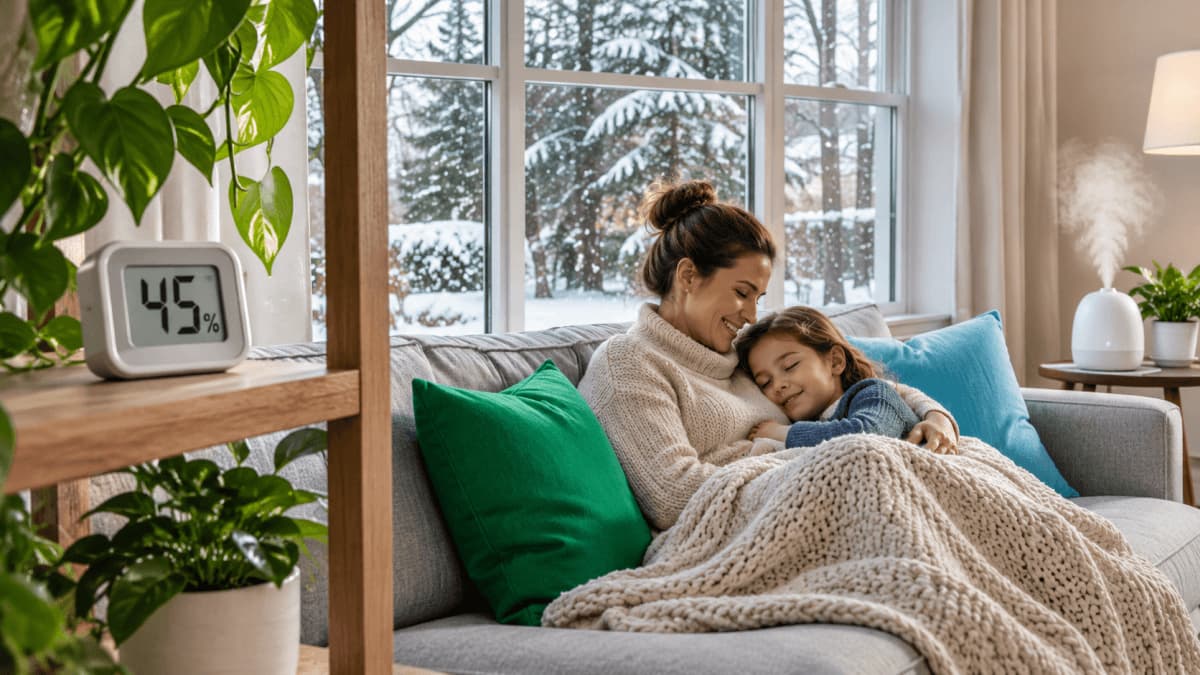
Filterbuy's answer is 40–50% indoor humidity for cold and flu season, set as high in that range as your windows allow without fogging. That range shortens how long airborne flu particles stay infectious without inviting mold. After more than a decade of making filters for home heating systems, we also know what most advice leaves out: on the coldest days, your windows set a lower ceiling.
TL;DR
Filterbuy recommends keeping indoor humidity at 40–50% through cold and flu season. Research ties that middle range to faster loss of flu virus infectivity and healthier airways, although humidity does not kill viruses. In very cold weather, let your windows set the limit.
Key Takeaways
The best flu season humidity is 40–50%, inside the EPA's 30–50% range for mold control.
In a NIOSH study, coughed flu particles kept 70–77% infectivity at 23% humidity or lower, versus about 15–22% at 43% or higher.
Humidity does not kill viruses, but it helps airborne flu particles lose infectivity faster.
At about 20°F outside, window condensation can limit safe indoor humidity to 35%.
When someone is sick, a clean cool-mist humidifier may ease a stuffy nose. Warm-mist units are a burn risk around children.
What Is The Best Humidity Level To Prevent The Flu?
The best humidity level for flu season is 40–50% relative humidity indoors. Flu research sets the 40% floor, where virus particles start losing infectivity faster. Mold and dust mites set the 50% ceiling, in line with EPA guidance.
ASHRAE guidance for commercial buildings, written during COVID-19, goes higher, at 40–60% where possible. Filterbuy keeps the home ceiling at 50% on purpose. Homes have colder windows and no engineer watching the humidistat, so the top of that range tends to bring condensation and mold.
What Does Research Say About Humidity And The Flu Virus?
Three widely cited studies point the same way. A NIOSH manikin study and a Virginia Tech droplet study found the flu virus does worse at moderate humidity than in dry air, and a Yale mouse study found dry air weakens airway defenses. None tested whether a home humidifier prevents flu in people.
What Humidity Research Found About The Flu Virus
Filterbuy summary of published research.
We read these studies together because each is easy to wave away alone. A manikin is not a person, mucus in a lab is not a nose, and a mouse is not a family. Together, though, they land on the same middle band, which is why Filterbuy treats 40% as the floor. For how long flu particles linger after a cough, see how long the flu virus stays in the air.
Does Humidity Kill Viruses?
No, and this is the most common misreading of the research. Humidity does not kill viruses the way a disinfectant does. Instead, mid-range humidity helps airborne flu particles lose infectivity faster and keeps your airway lining moist. Some virus survives at every humidity level, so a humidifier lowers the odds rather than removing them.
The CDC's healthy habits to prevent flu name a yearly flu vaccine as the single best way to lower your risk.
Why Does Indoor Humidity Drop In Cold And Flu Season?
Indoor humidity drops in winter because cold outdoor air holds very little water. When your furnace warms that air, it can hold more moisture but gains none, so relative humidity falls. Drafts make it worse.
For the bigger picture, read why flu season peaks in winter. Filterbuy's guide to dry air in the house in winter covers fixes, starting with sealing leaks.
How High Can Indoor Humidity Go Before Windows Sweat?
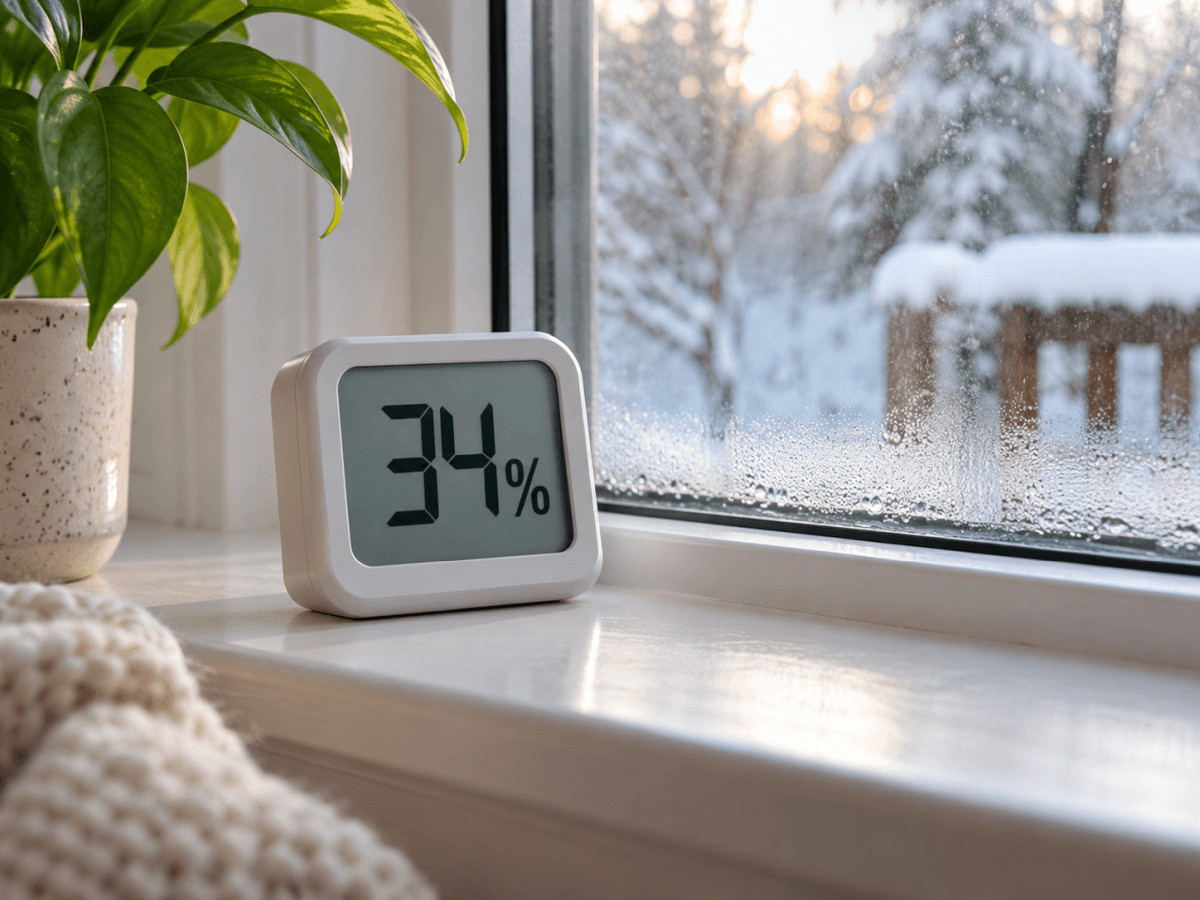
Your windows set the ceiling. Cold glass is the first place indoor moisture condenses, so recommended maximum indoor humidity drops as outdoor temperatures fall, from 35% at 20°F to 15% at -20°F.
Filterbuy Flu Season Humidity Planner
Ceilings follow EPA moisture guidance and Filterbuy's winter humidity chart.
The planner is based on EPA guidance on controlling moisture in your home. Filterbuy built it because the 40–60% advice repeated online rarely mentions windows. In the coldest weeks, many northern homes cannot hold 40% safely, so protect the house first and lean on the other layers below. For finer steps, see our ideal indoor humidity chart by outdoor temperature.
What Humidity Is Best When You're Sick?
When you are sick with a cold or the flu, keep the room between 30% and 50% humidity, leaning toward 40–50% if the windows stay clear. Mayo Clinic's humidifier guidance notes that cool-mist humidifiers may ease a stuffy nose during a cold, while heated mist does not seem to help as much. Moist air can ease symptoms, but it will not shorten the illness.
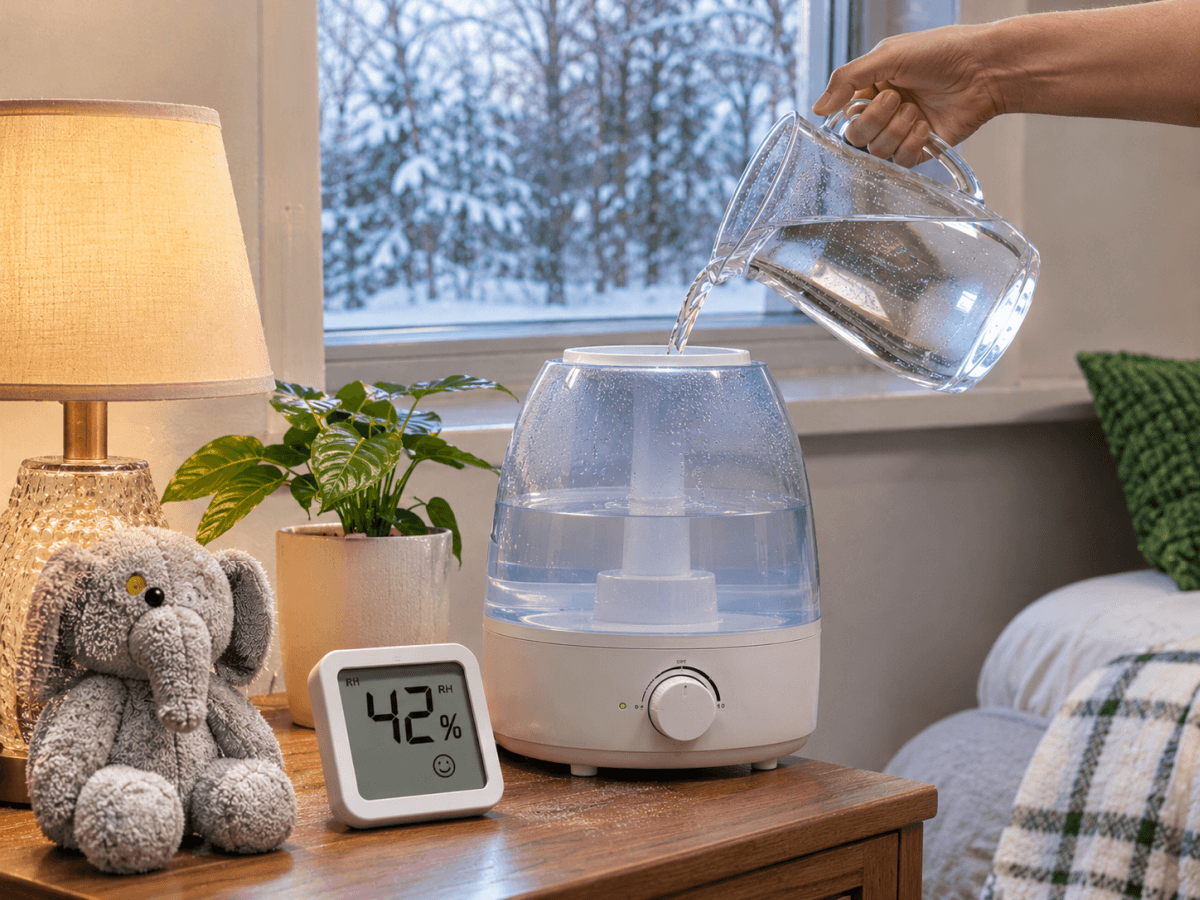
In homes with children, choose cool mist, since spilled steam vaporizer water can burn. Check the sick room daily, because a closed door can push a small room past 50% quickly. Then follow our steps for setting up a flu recovery room.
With only one humidifier, put it where people sleep, starting with anyone sick, very young, or older. Most of us spend our longest closed-door stretch there, and a small bedroom reaches 40% faster than an open floor plan.
How To Hold 40–50% Humidity At Home
Holding 40–50% humidity comes down to measuring accurately and adding moisture only as fast as your windows allow. Here is the Filterbuy team's routine.
Measure first. Place a hygrometer in two or three rooms, including one far from the furnace. Inexpensive meters can read several points off, which matters when your target is only 10 points wide. To check yours, seal it overnight in a bag with a little damp table salt. An accurate one reads about 75%.
Pick the right humidifier. A portable unit suits a single room. A whole-home humidifier mounts on the furnace and reaches every room. Ask an HVAC technician if your system can support one.
Keep it clean. Change the water daily and use distilled or demineralized water. Clean the tank every three days, because a dirty one can spread bacteria and mold.
Watch the windows. Fog or frost inside the glass means humidity is too high for that day's weather. Check first thing in the morning, since turning the thermostat down overnight pushes relative humidity up. If you see fog, turn the humidistat down 5 points.
Keep the air moving and filtered. As an air filter manufacturer, Filterbuy will say it plainly: air filters do not change humidity. A clean one does keep the furnace running as designed. MERV 8 air filters are the standard choice for most homes, and MERV 11 air filters suit households dealing with allergies, asthma, pets, or pollen. For smoke, when the Air Quality Index (AQI) is over 100, switch to EPA-recommended MERV 13 air filters if you have an HVAC system, and run HEPA air purifiers in each room. Check your HVAC manual for the highest MERV rating your system can handle.
Humidity Works Best As One Layer Of Flu Season Protection
Humidity is one layer of flu season protection, not the whole plan. It works best alongside a yearly flu vaccine, handwashing, fresh air, and a clean HVAC filter. Filterbuy's flu season HVAC checklist covers the heating-system side.
Because people can spread the flu about a day before symptoms appear, set your humidity before anyone gets sick. Then read how long the flu is contagious and how long the flu virus lives on surfaces.
“The best indoor humidity during cold and flu season is generally between 40% and 50%. This range can help create a less favorable environment for flu virus survival while keeping your home comfortable. But winter conditions matter. If your windows start fogging up, that's a sign to lower the humidity. Aim for the 40s when possible, keep your windows clear, and adjust as outdoor temperatures drop. ”
Supporting Statistics
70–77% Vs. 15–22% Infectivity
A NIOSH coughing manikin test found flu particles kept 70–77% of their infectivity at 23% humidity or lower, but only about 15–22% at 43% or higher.
Takeaway: Most of the benefit comes from getting above 40%.
Source: High Humidity Leads to Loss of Infectious Influenza Virus from Simulated Coughs
55–60% Of Flu Outbreaks Studied
In an NIH-supported analysis of 31 years of U.S. data, 55–60% of outbreaks followed a sharp drop in absolute humidity.
Takeaway: Set your humidity before flu season peaks.
Source: Dry Air May Spur Flu Outbreaks
Below 50% Humidity, Dust Mites Die Off
Dust mites prefer 75–80% humidity, according to the American College of Allergy, Asthma and Immunology.
Takeaway: Capping humidity at 50% avoids feeding a common allergy trigger.
Source: Dust Allergies
Frequently Asked Questions
Is 40 To 60 Percent Humidity Good For Preventing The Flu?
Lab studies support the 40–60% range. For homes, Filterbuy recommends 40–50%, which keeps most of that benefit while limiting mold and window condensation.
What Humidity Level Is Worst For Flu Viruses?
Flu viruses fare worst at roughly 40–60% humidity and survive longest in dry air below about 40%.
Should I Run A Humidifier All Night When I'm Sick?
Yes, if it is clean and the room stays at or below 50%. Use cool mist, and turn it down if the windows fog.
Can Too Much Humidity Make A Cold Or The Flu Worse?
It can. Above 50–60%, mold and dust mites thrive, and both can irritate airways while you recover.
Does A Furnace Dry Out The Air In Winter?
Not directly. Heating cold outdoor air lowers its relative humidity, so heated homes often need a humidifier to reach 40%.
Keep Your Home's Air In Balance This Flu Season
Once humidity is on target, check your furnace filter. Filterbuy makes pleated MERV 8, MERV 11, and MERV 13 filters in its own U.S. factories, with fast and free 2-day delivery to most US states. Shop Filterbuy air filters by size before the next cold snap.
Shop Filterbuy Air Filters by SizeGlossary
- Relative Humidity (RH):
- Water vapor in the air as a share of the most it could hold at that temperature.
- Absolute Humidity:
- The total water vapor in the air, regardless of temperature.
- Infectivity:
- A virus particle's ability to infect a living cell.
- Mucociliary Clearance:
- How airways move mucus and trapped particles out of the lungs.
- Hygrometer:
- A device that measures indoor humidity.
- Humidistat:
- A control that cycles a humidifier to hold a set humidity.
- Whole-Home Humidifier:
- A furnace-mounted humidifier that adds moisture to ducted air.
- Condensation:
- Water that forms when humid air meets a cold surface.
- AQI:
- Air Quality Index, the EPA's daily air pollution scale.
- HEPA:
- High-efficiency particulate air, a filter standard used in air purifiers.
- MERV:
- Minimum Efficiency Reporting Value, the ASHRAE scale for how well an HVAC filter captures particles.
- NIOSH:
- The National Institute for Occupational Safety and Health, part of the CDC.
- ASHRAE:
- The American Society of Heating, Refrigerating and Air-Conditioning Engineers.
- EPA:
- The U.S. Environmental Protection Agency.
- NIH:
- The U.S. National Institutes of Health.
- CDC:
- The U.S. Centers for Disease Control and Prevention.
- Filterbuy:
- An American maker of MERV 8, 11, and 13 HVAC air filters.