
Furnace Pilot Light: How to Relight, Why It Won't Stay Lit, Common Causes, and Troubleshooting
November 23, 2026
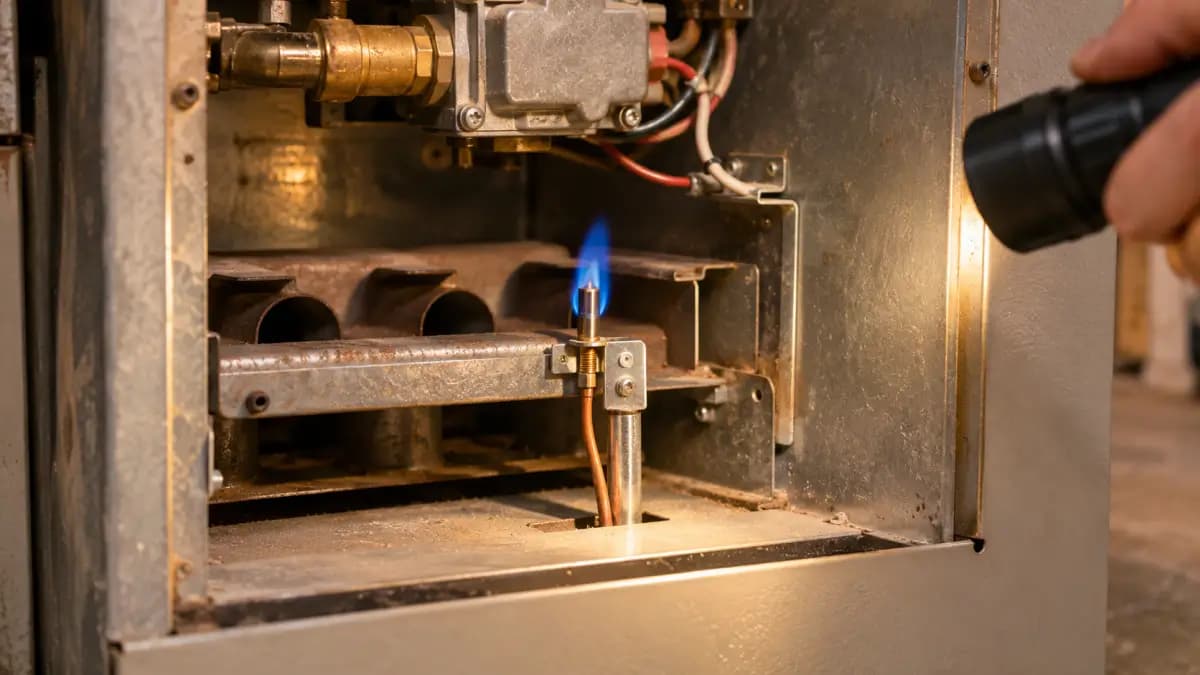
A pilot light that keeps dying usually points to one small part: the thermocouple. If the flame goes out the moment you let go of the knob, that safety probe isn't sensing the heat. If it burns for hours and then quits, look at drafts or the gas supply instead.
Smell gas? Don't relight anything. Leave the house and call your gas utility or 911 from outside.
What Your Pilot Light Is Telling You
Watch how long the flame lasts after you release the knob, then match it below.
Goes Out Right Away
Dies When You Let Go
Likely cause: a dirty, bent, or worn thermocouple.
Next step: call a licensed technician.
Goes Out Later
Lasts Hours, Then Quits
Likely cause: a draft, the gas supply, or venting.
Next step: close nearby openings, then call a technician.
Stays Lit
Pilot Holds, No Heat
Likely cause: the thermostat, a clogged filter, or the gas valve.
Next step: check the thermostat and your filter first.
Check Your Filter While The Door Is Open
A clogged filter can't blow out a pilot, but it can shut down the burners and leave you cold. Answer 3 quick questions and we'll match you to the right filter for your system.
More Winter Furnace Help
Furnace blowing cold air, clicking, or tripping the breaker? Filterbuy's winter library covers the fixes, plus filter tips for the heating season.
Browse Furnace Filters And Winter GuidesA furnace pilot light is a small, constant gas flame that lights the main burners in older gas furnaces. When the furnace pilot light is out, the furnace can't make heat. Most homeowners can relight it themselves. Filterbuy makes air filters, not furnaces, so this guide draws a firm line between what you can safely do and what belongs to a licensed technician.
TL;DR
To relight a furnace pilot light, turn the thermostat down, set the gas knob to OFF for five minutes, switch to PILOT, then press and hold the knob while you light the pilot. Keep holding for 30 to 60 seconds, then turn the knob to ON. If it won't stay lit after two or three tries, call a licensed HVAC technician. If you smell gas, leave the house and call from outside.
Key Takeaways
Standing pilots appear on older gas furnaces. Newer furnaces use electronic ignition instead.
A pilot that dies the moment you release the knob usually has a thermocouple problem.
A pilot that lasts hours or days before going out usually points to a draft or gas supply problem.
Never relight a pilot if you smell gas, a carbon monoxide alarm is sounding, or the flame burns mostly yellow.
A clogged filter can't blow out a pilot, but it can trip the limit switch, an overheat safety, and stop the burners.
Stop First: When Not To Relight A Furnace Pilot Light
Don't relight a furnace pilot light if you smell gas, hear hissing, hear a carbon monoxide alarm, or see scorch marks or fresh soot around the burner door. An igniter spark could make any of these worse.
If you smell the rotten egg odor added to natural gas, leave on foot without touching switches or phones, then call 911 or your gas utility from a safe distance. Federal pipeline leak guidance gives the same order. Propane is heavier than air, so on a propane furnace, sniff at floor level before you start.
What Is A Furnace Pilot Light And Does Your Furnace Have One?
A gas furnace pilot light is a small flame that burns continuously in a standing-pilot furnace and ignites the main burners when the thermostat calls for heat. A safety probe called a thermocouple sits in the flame and holds the gas valve open only while it senses heat.
Compare what you see at idle with this table.
ENERGY STAR notes that electronic ignition removes the need for a pilot burning all the time. If your furnace has no pilot, see Filterbuy's furnace ignitor replacement guide, the furnace flame sensor cleaning guide, or how a gas furnace works.
How To Light A Furnace Pilot Light Step By Step
To light a furnace pilot light, hold the gas knob down on PILOT, ignite the pilot, wait until it stays lit, then turn the knob to ON. Your furnace's lighting label wins wherever it differs.
Turn the thermostat to its lowest setting.
Remove the lower access panel and find the gas control valve, pilot assembly, and lighting label.
Turn the gas knob to OFF and wait at least five minutes so lingering gas can clear.
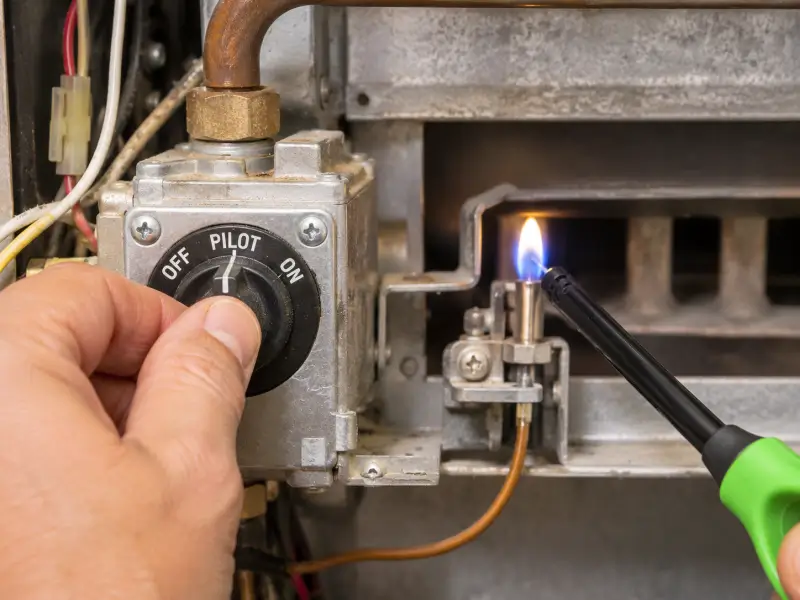
Turn the knob to PILOT and press it in to send gas to the pilot only.
Keep holding while you press the igniter button or hold a long lighter at the pilot opening.
After the pilot lights, keep holding for 30 to 60 seconds, then release slowly.
Turn the knob to ON, replace the panel, and raise the thermostat.
If the pilot goes out after two or three attempts, stop. Repeated tries add unburned gas to the burner area and rarely fix the fault.
Why Your Furnace Pilot Light Won't Stay Lit: Filterbuy's Hold-Time Test
When a furnace pilot light won't stay lit, how long it lasts tells you where to look. A pilot that dies the instant you release the knob usually has a thermocouple problem. A pilot that lasts hours or days usually points to a draft or venting fault. Filterbuy built this test because most pilot guides list causes without matching them to symptoms.
If the pilot holds but your home is still cold, work through Filterbuy's seven-check furnace troubleshooting guide.
Common Causes When A Furnace Pilot Light Keeps Going Out
The most common reason a furnace pilot light keeps going out is a dirty or failing thermocouple.
A Dirty, Bent, Or Worn-Out Thermocouple
A thermocouple produces a tiny electrical signal, measured in millivolts, that holds the pilot gas valve open. Soot, a tip bent out of the flame, a loose connection, or age weakens that signal until the gas shuts off.
A Clogged Pilot Orifice
Dust and summer spider webs can partly block the pilot orifice, the pinhole that feeds gas to the flame, leaving a weak flame that never fully heats the thermocouple. That's why a pilot often fails on the first cold night after sitting off all summer. Cleaning it is technician work.
Drafts, Gas Supply, And Venting
Open windows or a missing access panel can push the flame off the thermocouple. An empty propane tank or utility interruption also kills the pilot, so check your stove first. A blocked flue, the pipe that carries exhaust outside, raises carbon monoxide risk and is a technician job.
A Failing Gas Valve
If the thermocouple tests good and the pilot still won't hold, the gas control valve may be failing.
What To Tell An HVAC Technician About A Pilot That Won't Stay Lit
A short symptom report helps a technician arrive with the right parts. Before you call, write down:
How long the pilot lasts after you release the knob
Flame color, and whether it touches the thermocouple
Brand, model, and serial number from the rating plate, the metal label inside the furnace door
Whether your stove or water heater still lights
When you last changed the air filter
If repairs pile up, Filterbuy's furnace replacement guide helps you weigh repair against replacement.
What Color Should A Furnace Pilot Light Be?
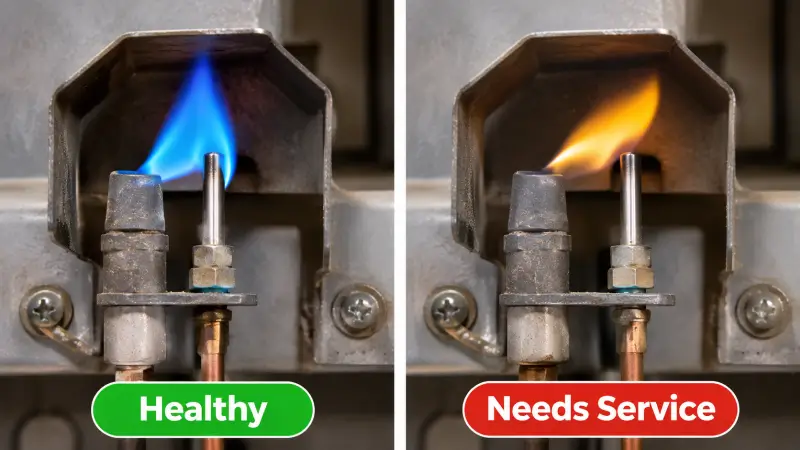
A healthy furnace pilot light burns steady and mostly blue and wraps around the top of the thermocouple. A mostly yellow or orange flame signals poor combustion, often from dirt or low gas pressure, and needs a technician.
Furnace Pilot Light Safety And Carbon Monoxide
Any gas furnace can produce carbon monoxide when combustion or venting goes wrong. Because carbon monoxide is odorless, keep a working CO alarm on every level. The EPA guidance on carbon monoxide indoors recommends a professional inspection of central heating every year. Filterbuy explains what a black furnace filter can mean for soot warning signs.
Can A Dirty Air Filter Cause Pilot Light Problems?
A dirty air filter doesn't blow out a pilot light. The pilot burns in the burner compartment, outside the airstream the filter cleans. A clogged filter can still leave you cold. Restricted airflow overheats the furnace, the limit switch shuts off the main burners, and the pilot keeps burning.
Check the signs of a clogged furnace filter on the same trip. Filterbuy MERV 8 air filters are the standard choice for most homes, MERV 11 filters are for allergies and asthma, plus pets and pollen, and MERV 13 filters are for smoke. Whichever you choose, check your HVAC manual for compatibility, the same way you'd confirm the size. Order by the size printed on the old filter's frame.
Filterbuy's Take On Pilot Lights
"We cut, pleat, and frame air filters to order in our own US plants, and no filter we make will relight a pilot. A clean one keeps the burners from shutting down on the limit switch, so check it whenever you open the furnace door, and leave gas-side repairs to a licensed technician."
The Filterbuy Team
Supporting Statistics
47% of U.S. homes heat with natural gas.
EIA data for 2024. Electricity followed at 42%.
Source: Electricity Use Is Becoming More Common for Residential Heating
3.3 carbon monoxide deaths per 1 million people each year.
National review of 2005 to 2018 data, archived by the CDC.
56.5 emergency visits per 1 million in 17 reporting states.
Cases peak in January and December.
Filterbuy's read: test your CO alarms when you relight the pilot.
Source: Morbidity and Mortality of Unintentional Carbon Monoxide Poisoning: United States 2005 to 2018
About 6 therms of gas a month per standing pilot. A therm is the unit on your gas bill.
HUD estimate. The pilot burns around the clock, heating or not.
Filterbuy's read: that steady draw is why upgrades move to electronic ignition.
Source: Convert to Electronic Ignition
Frequently Asked Questions
Can I Relight My Furnace Pilot Light Myself?
Yes, by following the lighting label on the furnace. Call a professional if you smell gas, a CO alarm is sounding, or two or three attempts have failed.
How Long Should I Hold The Pilot Knob Down?
Hold it 30 to 60 seconds after the pilot lights, or as long as your furnace label says.
Is It Dangerous When A Furnace Pilot Light Goes Out?
Not by itself, because the thermocouple lets the gas valve close when the flame disappears. The risk is relighting with gas built up, which is why you wait five minutes.
Why Is My Pilot Light On But My Furnace Won't Heat?
The usual causes are the thermostat setting, a clogged filter, or the gas valve. Confirm the thermostat is on HEAT above room temperature, then check the filter. If both check out, call a technician.
Should I Turn Off My Furnace Pilot Light In Summer?
You can. Some homeowners turn the pilot off for summer and relight in fall, a good time for Filterbuy's furnace maintenance before winter checklist.
Keep Your Furnace Running Clean All Winter
Finding your size is simple. Filterbuy air filters in MERV 8, 11, and 13 are cut, pleated, and framed to order in our own US plants, with fast and free 2-day delivery to most US states. If your size isn't listed, custom air filters are cut to the eighth of an inch. Set up filter auto-delivery for your next change.
Glossary
Furnace Pilot Light (Standing Pilot): A small, continuous gas flame that ignites the main burners in older gas furnaces.
Thermocouple: A safety probe in the pilot flame that produces a millivolt current to hold the pilot gas valve open while a flame is present.
Gas Control Valve: The furnace valve with the OFF, PILOT, and ON knob.
Hot Surface Ignitor (HSI): An electronic part that glows hot to light the burners in furnaces without a standing pilot.
Flame Sensor: A rod in electronic ignition furnaces that confirms the burner flame so the gas valve stays open.
Limit Switch: A safety switch that shuts off the burners when the furnace overheats, often from restricted airflow.
Carbon Monoxide (CO): A colorless, odorless, poisonous gas produced when fuel burns incompletely.
MERV (Minimum Efficiency Reporting Value): A 1 to 16 rating of how well an air filter captures airborne particles in standardized testing.