
Dust After Turning On the Heat? Here's Why and How to Fix It
November 9, 2026
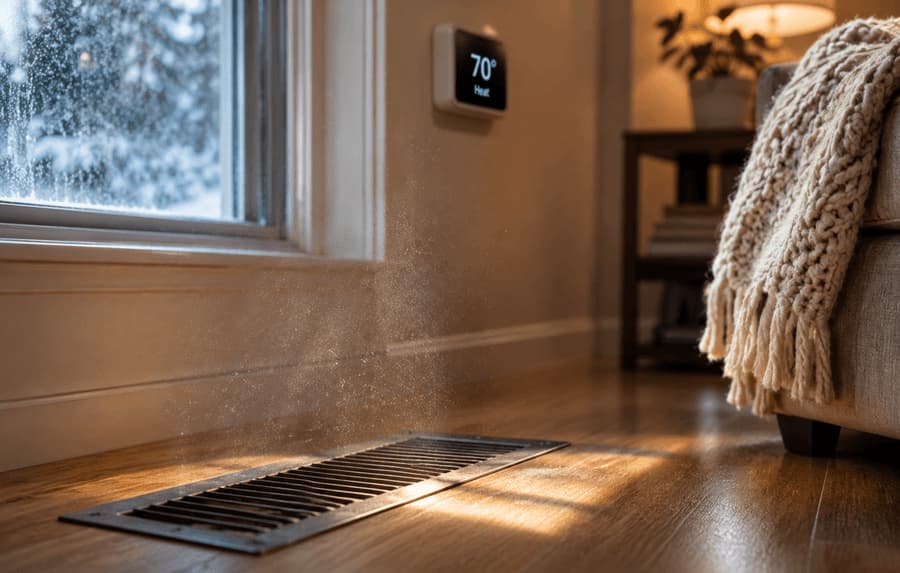
Dust after turning on the heat is usually normal: dust that settled on your furnace over the summer burns off and clears within a few hours. If the dust keeps coming back for days, a dirty or poorly fitting furnace filter is the usual cause.
Replace it with the exact size for your filter slot, rated MERV 13 if your system can handle it. Heating with a ductless mini split instead? Take the quick filter match quiz below.
MERV 13 filters capture microscopic particles, the highest level of residential filtration.
Heating With a Ductless Mini Split? Find Your Filter Match
Answer a few quick questions and we’ll match you to the right filter for your mini split.
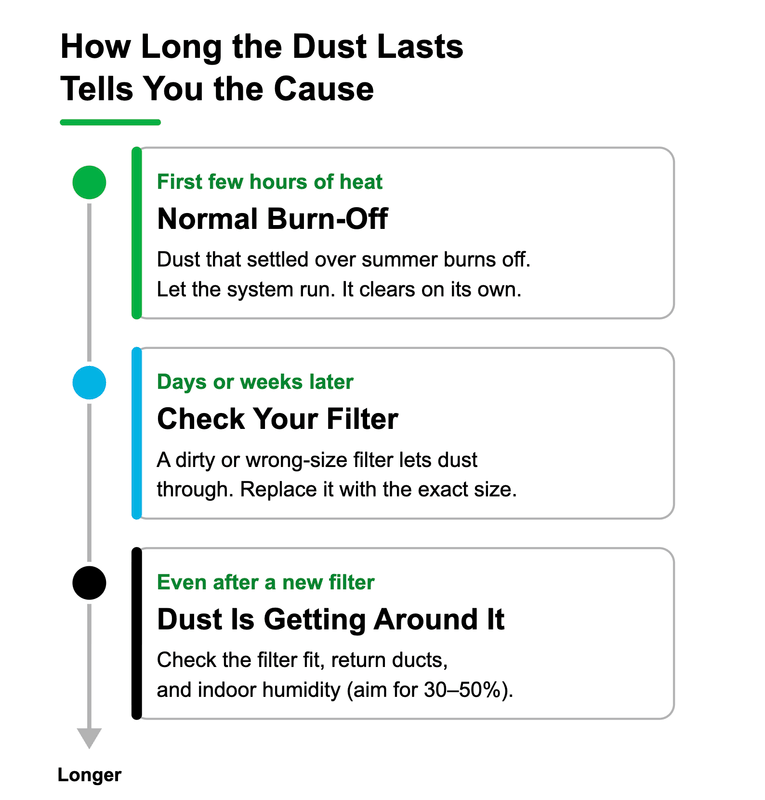
Dust after turning on the heat is usually normal: settled dust burns off heating components and clears within an hour. But if dust keeps blowing from vents for days, the cause is typically a dirty or ill-fitting furnace filter, leaky return ducts, or low indoor humidity. Replace the filter with the correct size, vacuum vents, and check humidity levels to fix it.
Is It Normal to See Dust When You First Turn On the Heat?
Yes, a short burst of dust and a dusty odor during the first heating cycle of the season is typical. Dust settles on burners, heat exchangers, and furnace components over the summer months, and when the system fires up again, that dust burns off and circulates through the ductwork. This "burning dust" odor is usually temporary and clears within about 30 minutes to a few hours of continuous operation.
The distinction that matters is between temporary startup dust, dust that keeps recurring, and odors that suggest something other than dust.
If you smell something beyond dust (such as plastic, electrical burning, or rotten eggs), treat it as a separate issue from dust. Burning plastic or electrical smells can indicate an overheating blower motor or damaged wiring, and should prompt an immediate system shutoff and professional inspection. A sulfur or rotten egg smell can signal a natural gas leak and requires leaving the home immediately. For a full breakdown of furnace odors and what each one means, see Filterbuy's guide to furnace burning smell.
Why Is Dust Coming Out of Your Heating Vents? 7 Possible Causes
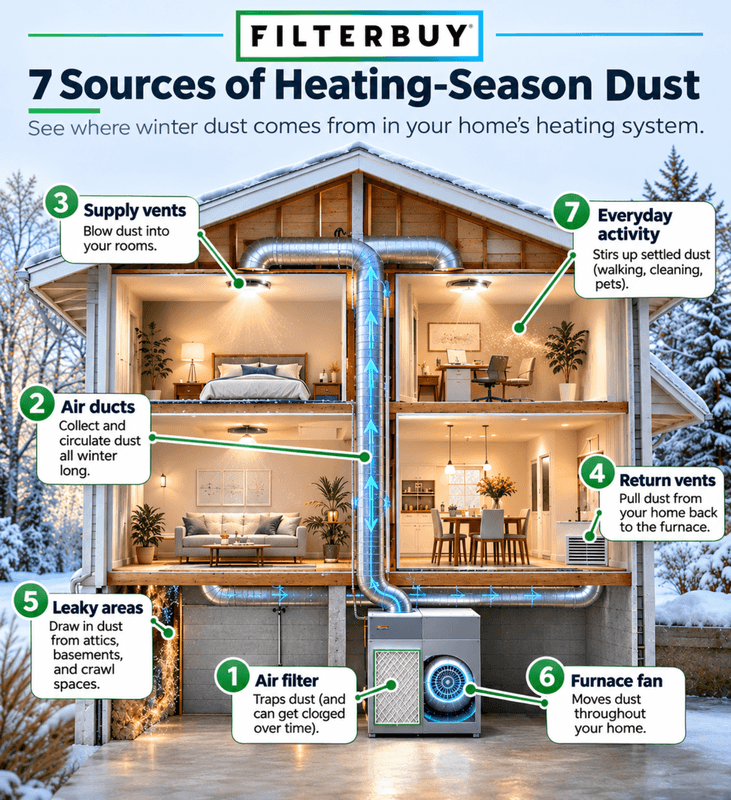
Dust at the vents when the heat turns on usually traces back to one of seven causes. Several can overlap in the same home.
1. Dust Has Settled Around Vents and HVAC Components
Dust naturally accumulates on registers, in ductwork, and on furnace parts while the system sits idle during warmer months. The first heating cycles dislodge and circulate this dust.
2. Your Furnace Filter Is Dirty or Clogged
A furnace filter loaded with dust does not stop capturing particles cleanly: it can reduce airflow and push the system to work harder, which increases the risk of dust and debris moving past an overloaded filter. For more on this relationship, see Filterbuy's explainer on whether a dirty filter makes a furnace work harder.
Note: A dirty filter does not automatically release previously captured dust back into your home, but it can allow more unfiltered dust to pass through going forward.
3. Your Air Filter Does Not Fit Properly
Even a correctly rated filter won't do its job if it doesn't fit the slot. Filters sold by nominal size are intentionally cut smaller than the number on the frame, and a filter that's the wrong size, warped, or loosely seated creates gaps where dusty air bypasses the media entirely. Filterbuy's guide to furnace filter sizing explains how to measure your slot correctly.
4. Leaky Return Ducts Are Pulling in Dust
Return ducts operate under suction, and leaks in attics, crawlspaces, or garages can pull unfiltered dust directly into your heating system. A typical house loses about 20 to 30 percent of the air moving through its duct system to leaks and poorly connected ducts.
5. Your Blower or Other HVAC Components Need Cleaning
Dust that accumulates on the blower wheel, coils, or inside the air handler cabinet can get stirred up and distributed through the ducts, particularly when the system first ramps up for the season.
6. Dry Indoor Air Makes Dust More Noticeable
Winter heating dries out indoor air, and dry conditions make dust particles more prone to becoming airborne and clinging to surfaces via static, rather than settling quickly.
7. Everyday Household Activities Keep Adding Dust
Cooking, cleaning, pet dander, foot traffic, and even opening holiday storage boxes continually add dust to your home's air. Winter's closed windows trap this dust indoors rather than letting it dissipate outside. Filterbuy's guide on a dusty house in winter covers these seasonal sources in more depth.
Where Is the Dust Coming From? Use This Quick Diagnostic Guide
How to Stop Dust When You Turn On the Heat: 6 Practical Fixes
Step 1. Turn Off the HVAC System and Inspect the Filter
Before doing anything else, shut off the system at the thermostat or service switch. Pull the existing filter and check it against a light source: if you can't see light through it, it's overdue for replacement.
Step 2. Replace the Filter With the Correct Size
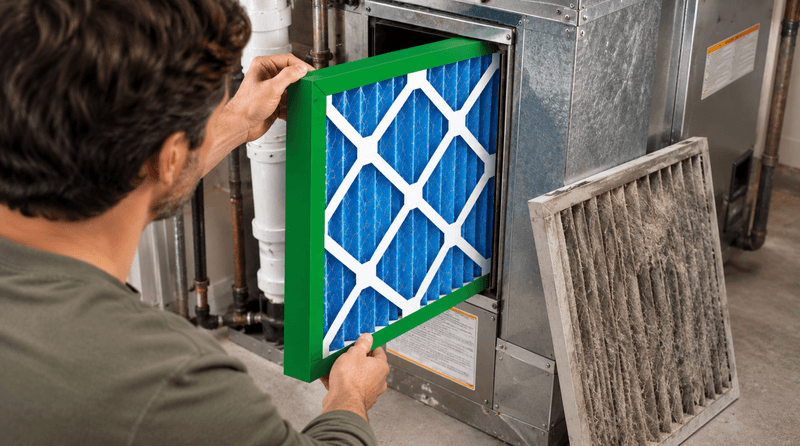
Order the exact nominal size printed on your old filter's frame, or measure the slot directly if the label has faded. A snug, properly sized filter prevents dusty air from bypassing the media through gaps. Need help finding your exact fit? Shop Filterbuy air filters by size for fast, free delivery to most of the US.
Step 3. Vacuum and Wipe Accessible Air Vents
Remove supply and return registers where possible and vacuum the visible ductwork just inside the opening, along with the register covers themselves.
Step 4. Reduce Dust Throughout the Home
Regular vacuuming with a HEPA-filter vacuum, dusting surfaces, and washing bedding reduces the overall dust load circulating through your HVAC system.
Step 5. Check Indoor Humidity and Ventilation
Use a hygrometer to confirm indoor humidity stays between 30% and 50%. Humidity below that range makes dust more likely to become airborne and cling to surfaces via static.
Step 6. Request HVAC or Duct Inspection if Dust Persists
If dust keeps returning after a filter replacement and cleaning, have a qualified HVAC technician inspect your ductwork and system components for leaks or contamination.
What Furnace Filter Is Best for Reducing Dust?
Filters are rated by MERV (Minimum Efficiency Reporting Value), a 1–16 scale defined under ANSI/ASHRAE Standard 52.2 that measures how effectively a filter captures airborne particles. It is recommended to select a filter rated at least MERV 13, or as high a rating as your system's fan and filter slot can accommodate.
Choose MERV 11 if dust and pet dander are a daily concern and your HVAC manual approves it. Choose MERV 13 if fine-particle filtration matters most to your household (but only after confirming system compatibility, since not every furnace or blower is designed to handle its airflow resistance). For sizing, confirm the nominal dimension against your slot using Filterbuy's air filter size chart, and follow correct installation steps, including pointing the airflow arrow toward the blower. For filter replacement frequency, see Filterbuy's guidance on filter replacement timing.
Should You Clean Your Air Ducts if Dust Keeps Coming Back?
A blanket recommendation for air duct cleaning cannot be made, because duct cleaning has not been shown to conclusively prevent health problems or reduce household dust levels. Consider duct cleaning specifically if ducts show substantial visible mold growth, are infested with vermin, or are clogged with excessive dust and debris that is actually being released into the home from supply registers.
It's worth distinguishing three separate services that are sometimes confused:
Duct cleaning removes dust and debris already inside the ductwork.
Duct sealing closes air leaks in the duct system, which can improve both indoor air quality and energy efficiency.
Filter replacement is routine maintenance that prevents new dust from entering the system in the first place.
If dust persists after a filter upgrade and basic cleaning, duct sealing may address leaks pulling in dust from unconditioned spaces, while duct cleaning addresses dust already accumulated inside the system.
How to Prevent Dust Problems Before the Next Heating Season
Replace your filter before the first cold snap of the season, with a fresh filter installed ahead of initial startup.
Vacuum registers and visible ductwork at the end of each heating season.
Confirm your filter size and MERV rating match your system's requirements.
Schedule an annual HVAC inspection to catch duct leaks or component buildup early.
Monitor indoor humidity year-round, keeping it in the 30–50% range.
Keep three feet of clearance around your furnace for safe operation.
Keep Dust Under Control With the Right Furnace Filter
A little dust during the first heating cycle of the season is normal and nothing to worry about. Persistent dust, though, usually points to a filter that's dirty, the wrong size, or improperly sealed in its slot; these issues are straightforward to fix once you know where to look. Start with the basics: the correct filter size, a proper fit, and regular replacement.
Ready to stop guessing at sizes? Shop Filterbuy's full range of furnace filters and get the exact fit your system needs, with fast, free delivery to most of the US.
Frequently Asked Questions
Why Is My House So Dusty When the Heat Is On?
Closed windows trap dust indoors, longer furnace run times push more air through an aging filter, and dry winter air makes dust more likely to become airborne and cling to surfaces.
Is It Normal for Dust to Come Out of Vents When the Heat First Turns On?
Yes. Dust settled on furnace components over the summer burns off and circulates during the first heating cycles, typically clearing within an hour.
How Do I Stop My Furnace From Blowing Dust?
Replace the filter with the correct size, vacuum accessible vents, check indoor humidity, and have ducts inspected if dust keeps returning after these steps.
Will Changing My Furnace Filter Reduce Dust?
Yes, a correctly sized and properly installed filter is the most effective first step, since it prevents new dust from passing into your home's air.
Why Is There Still Dust After Replacing My Furnace Filter?
A gap around an incorrectly sized filter, leaky return ducts, or low indoor humidity can all allow dust to persist even with a fresh filter in place.
Do I Need Duct Cleaning if My Heating Vents Are Dusty?
Not necessarily. Duct cleaning is recommended mainly when ducts show visible mold, vermin, or heavy debris actually releasing into the home: start with filter replacement and a leak check first.