
Ajax Real-Time AQI Tracker
What's Actually In Ajax Air Today?
What High AQI Means for Your Lungs in Ajax
How to Read AQI
The Air Quality Index (AQI) measures how polluted the air is and how it may affect your health.
0–50 (Good): Air quality is satisfactory.
51–100 (Moderate): Acceptable, but some pollutants may pose minor concerns.
101–150 (Unhealthy for Sensitive Groups)
151–200 (Unhealthy)
201–300 (Very Unhealthy)
301+ (Hazardous)
Moderate
Still okay for most, but if you have asthma or allergies, take it easy and avoid long outdoor workouts.
Shop MERV 11 filters→What's the Right Filter for Your AQI Level?




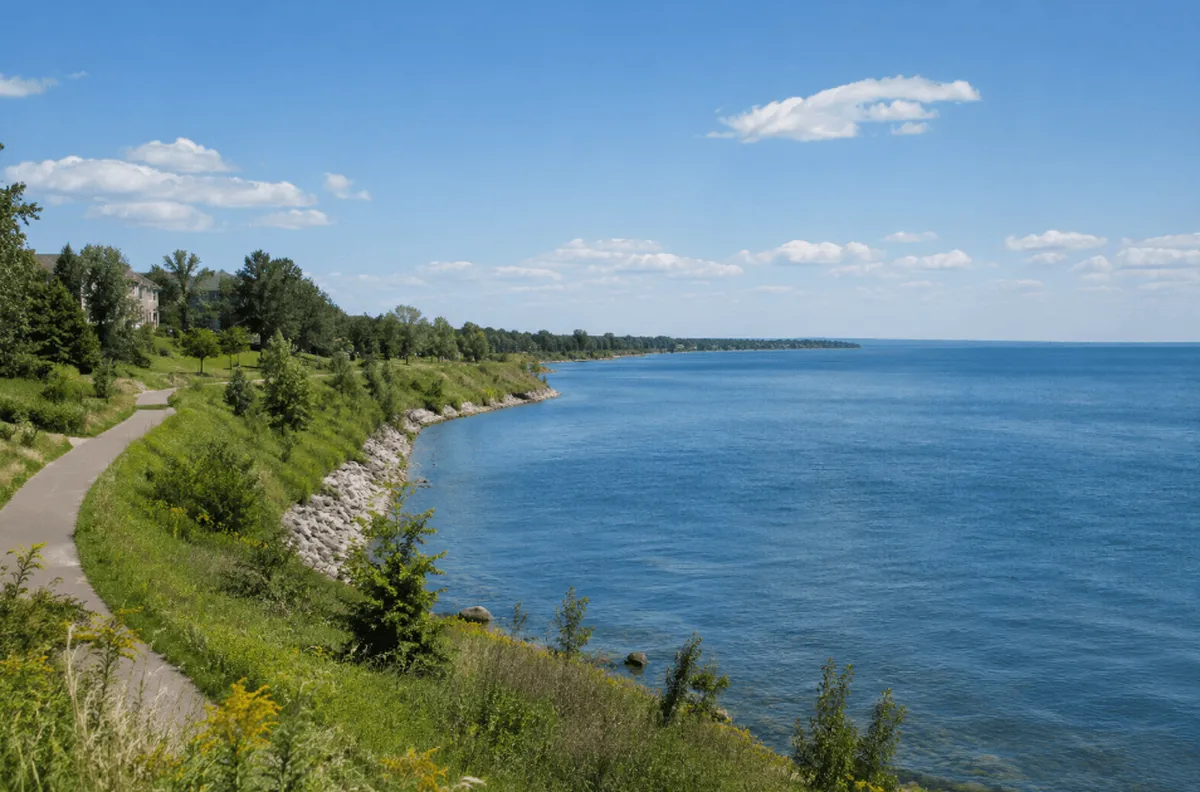
Check Today's Live Real Time Air Quality Index AQI Map in Ajax, ON Now
By Michelle Wan, Brand Manager and Air Quality Writer, Filterbuy Canada. Published 31 August 2026. Updated 31 August 2026.
TL;DR
There is no air quality monitoring station in Ajax. The live Air Quality Health Index number you see for the town is measured at the Oshawa station, 15 kilometres east and 10 kilometres inland from Lake Ontario. Peer-reviewed measurements taken along this shoreline, including at the Ajax GO commuter rail station, show that distance from the lake matters far more to ozone than distance along it. Read the number as a regional guide, then adjust for your part of town.
Key Takeaways
Ajax is not one of the 38 stations in Ontario's AQHI monitoring network. Oshawa operates the only station in Durham Region.
Durham Region Health Department points residents to the Oshawa forecast page, so the reading an Ajax household follows is an Oshawa measurement.
The AQHI runs from 1 to 10+. Ontario issues a yellow warning at a forecast 7 or greater and an orange warning at 10 or above.
Where you live in Ajax changes how to read that number. North Ajax matches the monitor's setting most closely. The waterfront matches it least.
A 2024 University of Toronto study sampled ozone at the Ajax GO station. Ozone barely changes along the shoreline but falls steeply within the first kilometre inland.
Where the Ajax Air Quality Number Actually Comes From
Ontario's environment ministry runs 38 ambient monitoring stations that feed the hourly Air Quality Health Index, and not one of them sits inside the Town of Ajax. The nearest is Oshawa, to the east. Next nearest is Toronto East, at Kennedy Road and Lawrence Avenue East in Scarborough, and the two sit 37 kilometres apart with Ajax in the middle.
The Oshawa station is the only one in all of Durham Region, home to just under 700,000 people. It stands on Ontario Tech University land in north Oshawa, near Britannia Avenue West, 161 metres above sea level. Ajax sits around 90 metres up and much closer to the water.
Ajax is the second Durham town we have covered where the monitor sits outside the place it reports on. Whitby is the other, on the same station, whose reading appears on our Oshawa page.
We checked this the slow way, which is how Filterbuy Canada builds every one of these city pages. We pulled the province's station list and looked for Ajax, which is not on it. We followed the air quality link that Durham Region publishes for residents, and it opened on a page headed Oshawa. Then, rather than estimating, we took the coordinates the province publishes for that station and measured the distances ourselves.
Which means an Ajax family following their own health unit's advice is reading a number taken 15 kilometres away. Environment and Climate Change Canada also files the town under an alert area named for its neighbours: Pickering, Oshawa and Southern Durham Region.
Ontario is candid about this. The province's own Air Quality in Ontario report says stations are sited to represent general population exposure, and so do not necessarily reflect air pollution near local sources such as major transportation corridors. Highway 401 runs straight through the middle of Ajax. The Oshawa monitor sits nowhere near it.
None of this makes the AQHI unreliable. It makes it regional, which is what it was built to be.
What Researchers Measured at the Ajax GO Station
In 2024, atmospheric chemists Yao Yan Huang and D. James Donaldson of the University of Toronto published a measurement report in Atmospheric Chemistry and Physics on ground-level ozone along the north shore of Lake Ontario. Six sites were sampled along a transect parallel to the shoreline, and one of them was Ajax GO, the commuter rail station on Westney Road. Pickering, Whitby, Rouge Hill and Oshawa were on the list too.
Two of their findings changed how we read Ajax's number.
The first is that ozone barely changes as you travel east or west along this shoreline. Between Rouge Hill and Oshawa they measured an average change of about 0.26 parts per billion per kilometre, negligible next to what they saw inland. On that axis, Oshawa is a fair stand-in for Ajax.
The second is that ozone changes a great deal as you move away from the water. Across the first kilometre inland they recorded a consistent drop: about 23.5 parts per billion per kilometre in Oshawa in summer, and 15.4 in Toronto. Ozone ran highest at the water and bottomed out roughly 600 to 800 metres in. They call it a lake-edge removal effect.
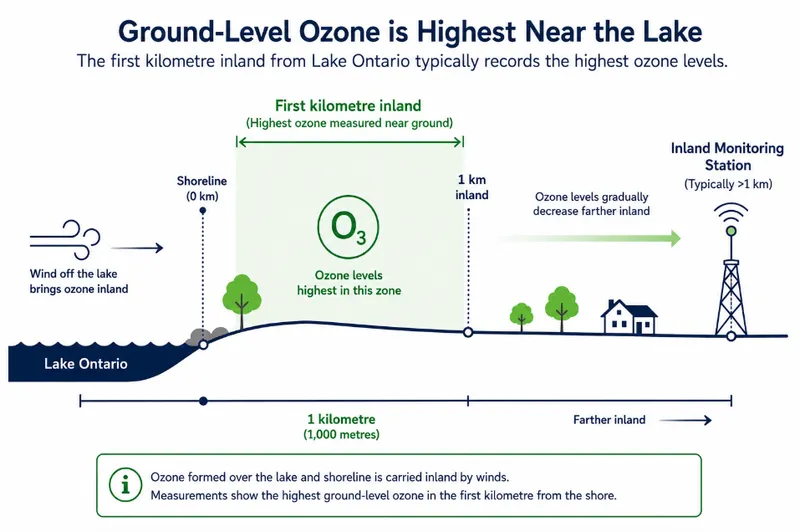
Nobody has put those two findings together for Ajax, so here is the connection we drew. Ajax's number comes from a monitor sitting well inland and well uphill, which is the one axis the research says matters most. We will not push that further than it goes. The AQHI blends ozone with PM2.5 and nitrogen dioxide, and one field campaign is not a permanent monitor. But the direction is consistent, and it was measured on Ajax's doorstep.
Michelle Wan, Brand Manager and Air Quality Writer, Filterbuy Canada
How to Read the AQHI Scale in Ajax
Canada's Air Quality Health Index runs from 1 to 10+, calculated hourly from ozone, fine particulate matter and nitrogen dioxide, and a higher number means a greater health risk. Readings of 1 to 3 are low. Between 4 and 6 the risk is moderate, and people at greater risk may want to ease off strenuous outdoor activity if symptoms appear. At 7 to 10 it is high, and above 10 very high.
Ontario issues a yellow warning when the index is forecast to reach 7 or greater, and an orange warning at 10 or above. People with heart or breathing conditions are at greater risk and should follow their doctor's usual advice.
Which Ajax Are You In?
A live air quality map reports one number for a whole region, and Ajax is not one place. So we took the gradient above and laid it over the town's geography. What follows is Filterbuy Canada's framework rather than a government one, so read it as judgement rather than measurement.
1. South of Bayly Street, within a kilometre of the lake. The band where the research measured ground-level ozone highest. On warm, calm summer afternoons, treat a moderate regional reading as the floor for your street, not the ceiling.
2. The Highway 401 corridor. Closest to traffic, so nitrogen dioxide runs highest. Ozone can read lower here, because it is scavenged by nitrogen oxide from vehicles. The regional number can overstate your ozone and understate your nitrogen dioxide at once.
3. North of Taunton Road. Inland, higher ground, well back from the highway. This is the part of town that most resembles the Oshawa monitor's own setting, so the regional number is closest to true here.
Which leaves an irony worth sitting with. Ajax calls itself the Town of Ajax by the Lake, and the station reporting its air best describes the part of town furthest from the water.
The Two-Station Trick for Reading Ajax's Air
There is an upside to sitting between two stations, and it comes down to which way the wind is blowing.
Ontario reports that through smog season, May to September, prevailing southwesterly airflows carry smog pollutants into the province. On those days Toronto East, 23 kilometres west, sits upwind of Ajax and Oshawa downwind. So Toronto East previews what is heading your way, and Oshawa records what has gone past.
That order reverses when the weather does. The province attributes the severe smoke episode of late spring 2023 to persistent northeasterly winds carrying Quebec wildfire smoke south, and on a day like that Oshawa leads while Toronto East trails.
Check the wind first, then pick your station. Both sit on Air Quality Ontario's station map and both feed the provincial picture.
Wind decides which station to trust. Season decides what you are looking at. Summer is ozone and wildfire smoke. Autumn and winter push the problem indoors, with furnaces running six to eight months and the windows shut, which is when the filter in your furnace starts doing most of the work. Spring is pollen, which the AQHI does not count.
Supporting Statistics
Three findings from United States federal sources.
1. Roadside Air Needs Separate Monitors
Roadway effects fade back to background within roughly 500 to 600 feet downwind.
More than 45 million Americans live, work or attend school within 300 feet of a major road, airport or railway.
The EPA found its neighbourhood monitors sat too far from those sources, so it mandated a separate near-road network.
What it means for Ajax: Highway 401 crosses the town. The monitor reporting Ajax's air sits 15 kilometres away.
Source: EPA, Near Roadway Air Pollution and Health
2. A Third of a Health Standard, Inside One Kilometre
The US ozone standard is 70 parts per billion, averaged over eight hours.
The summer gradient measured in this corridor ran to about 23.5 parts per billion per kilometre inland.
That gap is roughly a third of the whole standard, across a ten-minute walk.
What it means for Ajax: A difference too small to show on a regional map can still be a real share of a health limit.
Source: EPA, NAAQS Table
3. Filters Catch Particles, Not Gases
Home furnace and HVAC filters are built to capture particles.
Most filters handle particles or gases, not both.
Filters rated MERV 13 and above, on the ASHRAE efficiency scale, must remove at least 50 per cent of the smallest particles tested.
What it means for Ajax: Wildfire smoke is a particle you can filter. Ozone is a gas that passes straight through.
Source: EPA, Guide to Air Cleaners in the Home
Managing Indoor Air on Poor Air Quality Days in Ajax
We should be straight about where we sit. Filterbuy Canada sells air filters. We do not measure outdoor air, and every reading and health message here comes from Environment and Climate Change Canada, Ontario's environment ministry or Durham Region. What we can speak to is the half of the problem that happens indoors.
Durham Region Health Department's smoke-event guidance holds up on any poor air quality day. Keep windows and doors closed while the indoor temperature is comfortable, and switch your HVAC system to recirculation. Run a clean filter, and ask an HVAC professional how high a rating your equipment can safely handle.
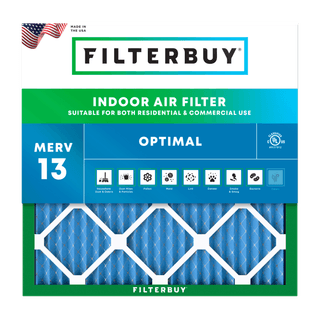
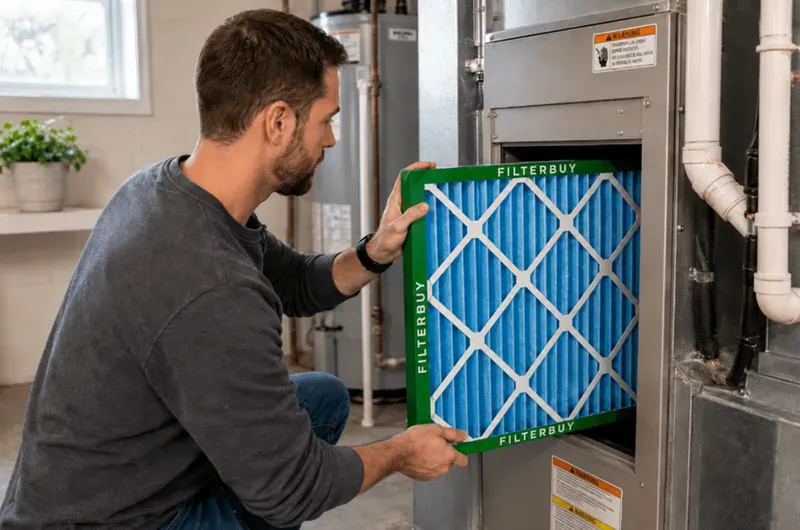
For particles, the filter is the lever. Our guide to MERV ratings explains what each captures and how to match one to your system, and MERV 13, which we label Optimal, is what Health Canada points to for fine particulate during smoke events.
We carry over 600 sizes, including the odd ones older Ajax homes and townhouses need, with custom sizes available and prices in Canadian dollars.
None of that will move the number on the map. It changes the air in the room you are sitting in, which on a smoky August afternoon is the only part of this you control. So the practical next step is an unglamorous one. Find out what size your system takes, then keep a spare on the shelf before smoke season rather than during it. Filterbuy Canada carries every size and ships free across Canada.
Frequently Asked Questions
Glossary
Air Quality Health Index (AQHI). Canada's public air quality scale, 1 to 10+, calculated hourly from ozone, fine particulate matter and nitrogen dioxide. It is a health risk tool, not a pollution concentration.
Air Quality Index (AQI). The United States scale, 0 to 500, not used for Canadian forecasts or warnings.
PM2.5 (fine particulate matter). Airborne particles 2.5 micrometres or smaller. The dominant pollutant during wildfire smoke episodes.
Ground-level ozone (O3). A gas formed when sunlight reacts with nitrogen oxides and volatile organic compounds. It peaks on warm, sunny, calm days.
Lake-edge removal effect. The steep drop in ozone across roughly the first kilometre inland from a large lake.
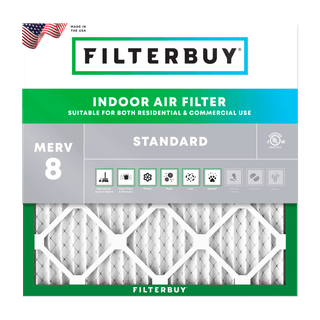
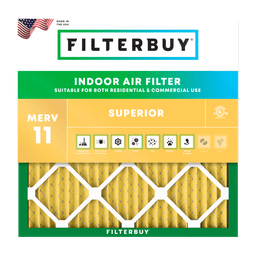
MERV. Minimum Efficiency Reporting Value, the ASHRAE scale rating how well a filter captures airborne particles. Filterbuy Canada labels its ratings Standard (MERV 8), Superior (11) and Optimal (13).