
Levis, QC Live Wildfire Smoke Map
Get Alerts For Wildfires In Your Area
The moment a wildfire starts near you, you'll get an instant alert and simple tips to reduce your smoke exposure.
What's In The Smoke
30xSmaller than a human hair
Fine enough to reach deep into the lungs. A MERV 13 is built to capture it.
How Far It Travels


It Doesn't Stay Local
Smoke rides the wind far downwind — you can get smoky air with no fire nearby.
What To Do During A Smoke Event
Simple steps to reduce indoor exposure.
- Stay In, Close UpShut windows and doors to keep smoke out.
- Set Fan To "On"Keeps air cycling through your filter, not just when heating or cooling.
- Recirculate AirSwitch off fresh-air intake so you're not pulling smoke in.
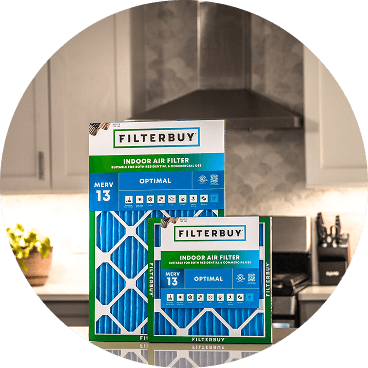
- Run A MERV 13Built to capture the fine PM2.5 in smoke.
- Add A PurifierExtra filtration for the room you use most.
- Wear an N95 if OutsideFits snug to block fine particles — a cloth mask won't.


The Best Air Filter For Wildfire Smoke
During smoke events, the EPA recommends upgrading to a MERV 13 filter — or the highest-rated filter your system can handle — to help reduce the fine particles smoke brings indoors. MERV 13 is the level most home HVAC systems can run while still capturing PM2.5, the fine particulate that makes up the bulk of wildfire smoke.
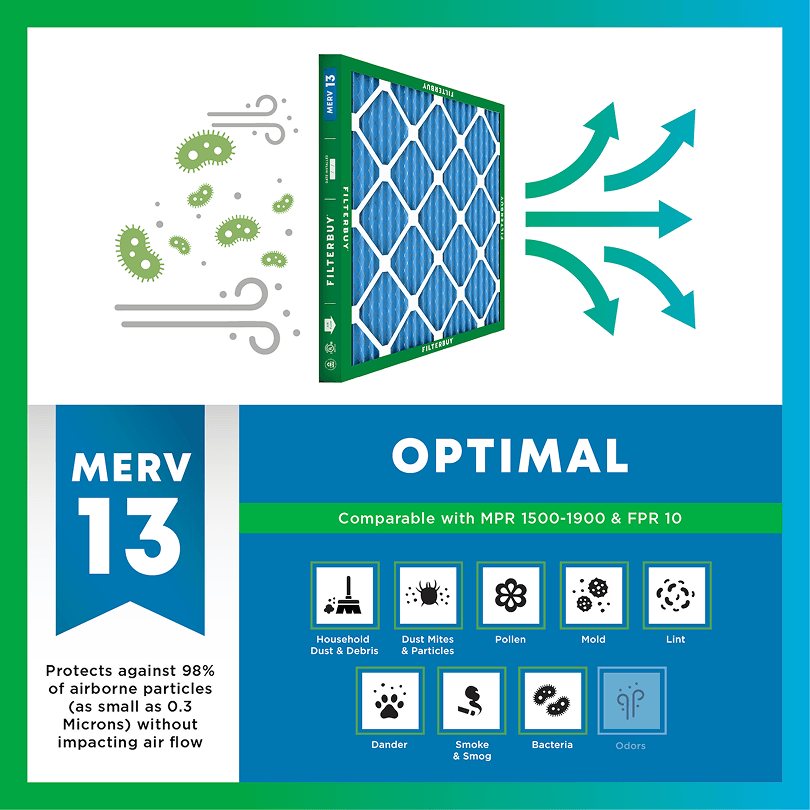
- Captures PM2.5 particles
- Blocks ash, soot, and smoke odor
- Keeps your indoor air safe—even when the outdoor air is dangerous
- Meets the EPA's recommended rating for filtering fine wildfire smoke particles.

Wildfire Smoke FAQs
Facts About Wildfires
Over 70,000 wildfires burn in the U.S. every year.
Wildfire smoke can travel 1,000+ miles, affecting states that aren't even near the blaze.
Exposure to wildfire smoke can worsen asthma, trigger heart issues, and lead to ER visits.
Indoor air can hold more fine particles during wildfire events unless it's properly filtered.
The EPA advises using MERV 13 filters or portable HEPA air cleaners during wildfire smoke events.
Don't Wait Until The Smoke's Inside.
Use the live wildfire smoke tracker and upgrade your air filters today to protect your lungs and your home.
Shop Filters For Smoke Protection
Live Levis, QC Forest Wildfire & Smoke Map Today
Local Air Quality Tracking & Indoor Protection Solutions
TL;DR
Smoke over Lévis usually drifts in from distant fires, some as far away as Western Canada, and when Filterbuy Canada mapped Quebec's station data for this page, we found just one active provincial monitoring station in the city. Start with the live wildfire map at the top of this page, then confirm burn bans with SOPFEU, the smoke outlook with the FireWork forecast from Environment and Climate Change Canada (ECCC) and measured readings on Quebec's Air Quality Index (IQA) map. On smoky days, close the windows, switch the air exchanger off or to recirculation, and run a MERV 13 furnace filter, or portable HEPA air cleaners if you heat with baseboards.
Key Takeaways
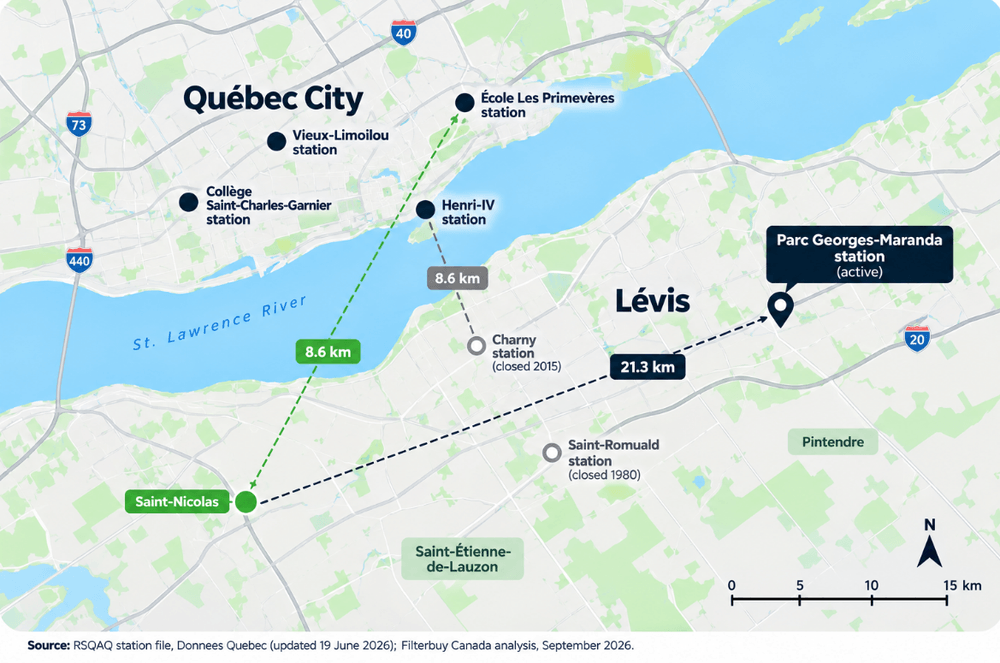
ECCC publishes no Air Quality Health Index (AQHI) for Lévis. Its official reading is Quebec's IQA, from one active station, Parc Georges-Maranda in old Lévis; Charny's station closed in 2015.
Filterbuy Canada's distance analysis found that Saint-Nicolas is 21.3 km from the Lévis station but only 8.6 km from a Quebec City station across the St. Lawrence River.
Quebec's IQA wildfire layer, with seasonal fine-particle sensors and a 72-hour smoke forecast, runs only from 1 May to 30 September; after that, rely on station readings and FireWork.
Live Lévis Wildfire and Smoke Map: Which Source Answers Which Question?
The live wildfire map at the top of this page is the quickest first check. The map plots active fires from Natural Resources Canada and satellite-detected smoke plumes, and Filterbuy's guide to reading a wildfire smoke map explains each layer. We checked every official source below while preparing this page:
Forecasts are guidance; the ground-level IQA reading is the final word. For the national picture, see the Canada wildfire and smoke map and the Canada air quality map.
Is There a Forest Fire in Lévis Today?
SOPFEU, Quebec's wildfire agency, covers Lévis as part of its Chaudière-Appalaches region. The city has been named in past provincial bans on open fires in or near forests, including a May 2020 order.
When we reviewed SOPFEU's 2026 notices, the bans issued on 1 June and 9 June targeted northern and western regions and left Chaudière-Appalaches out. Restrictions shift with the weather, so check the SOPFEU status page before any outdoor burning. To report a wildfire or suspicious smoke, call 911 or SOPFEU at 1-800-463-3389, or use SOPFEU's contact options.
Where Lévis Wildfire Smoke Comes From
We pulled these episodes from public health notices and news coverage; in each, the smoke came from distant fires:
Sources: Chaudière-Appalaches public health, Radio-Canada, ECCC and Quebec City public health.
Which Monitoring Station Covers Your Part of Lévis?
According to the province's published station list, Lévis has a single active station: Parc Georges-Maranda, 200 rue des Commandeurs, open since 9 July 2013. The Charny station closed on 18 November 2015, and ECCC's Info-Smog page lists AQHI forecasts in Quebec only for Montreal, Quebec City and Gatineau.
Because Lévis covers about 448 square kilometres, Filterbuy Canada calculated straight-line (haversine) distances from Quebec's published station coordinates to three former station sites and three district centre points.
In the western districts of Charny, Saint-Nicolas and Saint-Étienne-de-Lauzon, a Quebec City station across the river is closer than Parc Georges-Maranda. Quebec's IQA guidance says residents without a nearby station should use the nearest regional station or Info-Smog forecasts, so our practical read is this: on smoky days, check stations on both shores and plan around the higher reading.
If Parc Georges-Maranda shows a grey dot on the IQA map, its data is unavailable; switch to the nearest Quebec City station in the table. The listed north-shore stations are the ones still reporting, since Quebec City's Monique-Corriveau and Vitré stations closed in July 2025.
How to Read Lévis Air Quality During a Smoke Event
Quebec's IQA sorts each hourly reading into three categories: good (1 to 25), acceptable (26 to 50) and poor (51 and above). Under the IQA methodology, a station's value is set by its worst pollutant, and fine particles reach the poor threshold at a three-hour average of 35 micrograms per cubic metre. When a reading is poor, young children, seniors and people with respiratory or heart problems are advised to cut back on outdoor physical activity.
During the August 2025 smoke episode, Quebec City public health named the groups most at risk: children under 5, pregnant people, adults 65 and older, people with respiratory or heart disease or diabetes, and anyone who exercises or works outdoors. For health questions, call Info-Santé at 811.
How to Keep Wildfire Smoke Out of Your Lévis Home
How much smoke gets in depends on the house. Lawrence Berkeley National Laboratory researchers estimate that an older home can hold 70% to 80% of outdoor particle levels even with the windows closed, while good filtration can bring that below 20%.
The steps below combine advice from Chaudière-Appalaches public health and Quebec City public health:
Close windows and exterior doors while the indoor temperature stays comfortable. Quebec City public health notes that heat is generally more harmful to health than poor air quality.
Turn the air exchanger (HRV or ERV) off or set it to recirculation so it stops drawing smoky air inside.
Keep using portable or window air conditioners and heat pumps, since they don't bring in outdoor air.
If your home has central mechanical ventilation, turn outdoor air intake down to the minimum without shutting the system off, unless it has a MERV 13 or higher filter.
Run a portable HEPA air cleaner in the rooms where people spend the most time. The U.S. EPA advises a smoke clean air delivery rate (CADR) of at least two-thirds of the floor area in square feet, so a 300 sq ft (about 28 square metre) bedroom needs a smoke CADR of about 200. Skip any unit that produces ozone; Health Canada advises against ozone generators in homes.
Hold off on indoor pollutants such as paint fumes, frying, candles and wood stove smoke until the smoke clears.
Supporting Statistics
About 90% of the particle mass in wildfire smoke is fine particulate matter (PM2.5). The U.S. Environmental Protection Agency calls PM2.5 the smoke pollutant of greatest public health concern because it can travel deep into the lungs (U.S. EPA).
Emergency department visits for asthma in the U.S. ran 17% higher than expected on the 19 wildfire smoke days between April and August 2023, when smoke from Canadian wildfires reached most of the country (CDC).
Americans spend about 90% of their time indoors, where some pollutants are often two to five times more concentrated than typical outdoor levels (U.S. EPA).
Choosing a Furnace Filter for Lévis Smoke and Heating Seasons
For wildfire smoke, use a MERV 13 filter, the rating Health Canada recommends for fine smoke particles. Filterbuy Canada's action line is a poor reading at your nearest IQA station or a U.S. AQI of 100. What you do next depends on how your home is heated:
Furnace or ducted heat pump: switch to MERV 13, set the thermostat fan to On so it filters all the time, and run a portable HEPA air cleaner in each occupied room, bedrooms first. The furnace filter cleans the whole house, while the portable unit works harder in one room.
Electric baseboards: there's no whole-home filter, so portable HEPA air cleaners are your main defence. That's common in Quebec, where Statistics Canada reports almost two-thirds of households heat with baseboards or radiant heating.
Every home: keep windows and doors shut, and set the air exchanger to off or recirculation.
The U.S. EPA notes that most furnaces handle MERV 13 without problems when it's changed often, so just confirm a snug fit in your size. During smoke, replace the filter once it turns dark brown or black, and keep a spare on hand.
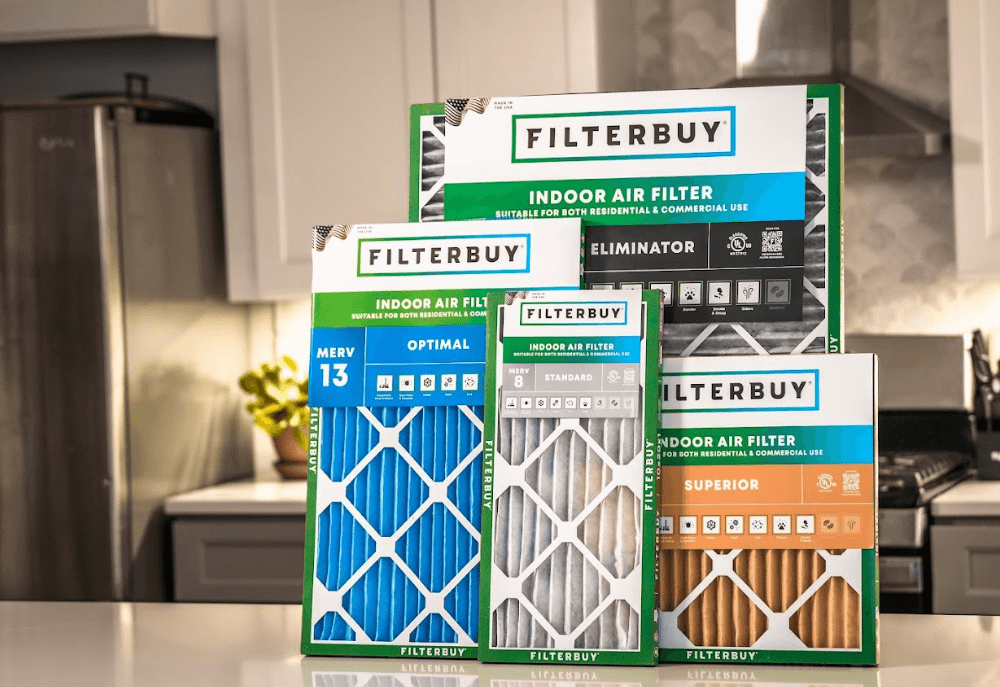
We carry three colour-coded options, backed by more than 85,000 five-star reviews:
MERV 13 Optimal: our pick for smoke season.
Odour Eliminator: our carbon-infused line for lingering smoke smell. Pleated filters catch particles, and smell comes from gases.
MERV 11 Superior: for pets and seasonal allergies. Step up to MERV 13 for smoke.
Compare the two layers in Filterbuy's MERV 13 vs. HEPA guide, or see every tier in the MERV rating guide.
Our take: "No single number tells the whole story in Lévis. Watch the live map and your nearest IQA station, and treat filtration as the part you control." (Filterbuy Canada)
"Most systems I test are not struggling because the filter is too efficient. They are struggling because it has been in there since spring." — David Clark, Licensed HVAC Technician, Filterbuy HVAC Solutions
Before heating season starts, put in a fresh filter. Filterbuy Canada carries MERV 13 in over 600 standard sizes plus custom sizes, ships free to Canada on every order, and lets you edit, skip or cancel a subscribe and save plan anytime.
Get MERV 13 in your size before the next smoke event: shop MERV 13 filters at Filterbuy.ca.
Frequently Asked Questions
Is there a wildfire near Lévis right now?
Check the live wildfire map at the top of this page first, then the SOPFEU map for Quebec burn restrictions. To report a fire or suspicious smoke, call 911 or SOPFEU at 1-800-463-3389.
What is the best live smoke map for Lévis today?
Start with the live map on this page. For smoke, the ECCC FireWork map gives Canada's official 72-hour forecast, and the Quebec IQA map shows whether that smoke has reached ground level on both sides of the river.
Does Lévis have an AQHI reading?
No. The official Lévis reading is Quebec's IQA, from Parc Georges-Maranda or the nearest Quebec City station.
Why do apps show different air quality for Lévis and Quebec City?
Apps may pull from different stations, rely on low-cost sensors or show the U.S. AQI, which isn't interchangeable with the IQA. For Lévis decisions, use the IQA.
How often should I change my furnace filter during smoke season?
Check it often during smoke events and replace it when it looks dark brown or black, even if that's well before its normal interval. Keep a spare on hand. Filterbuy's guide on how often to change your furnace filter covers everyday intervals, and a Filterbuy Canada subscription can ship spares more often in smoke season.
Glossary
SOPFEU: The Société de protection des forêts contre le feu, the non-profit agency that prevents and fights wildfires in Quebec's forests.
IQA (indice de la qualité de l'air): Quebec's hourly Air Quality Index, published for each monitoring station and grouped as good, acceptable or poor.
AQHI (Air Quality Health Index): Canada's 1 to 10+ scale for the health risk of outdoor air. ECCC doesn't publish it for Lévis.
U.S. AQI (Air Quality Index): The United States' 0 to 500 air quality scale, often shown in weather apps.
FireWork: ECCC's forecast system predicting how wildfire smoke will move over the next 72 hours.
PM2.5: Fine particulate matter 2.5 microns or smaller, the main pollutant of concern in wildfire smoke.
Air exchanger (HRV or ERV): A home ventilation unit that swaps stale indoor air for fresh outdoor air.
MERV: Minimum Efficiency Reporting Value, a rating of how well an HVAC filter captures particles between 0.3 and 10 microns.
HEPA: A high efficiency particulate air filter, used in portable air cleaners, that captures at least 99.97% of 0.3-micron particles.