
Burlington, ON Live Wildfire Smoke Map
Get Alerts For Wildfires In Your Area
The moment a wildfire starts near you, you'll get an instant alert and simple tips to reduce your smoke exposure.
What's In The Smoke
30xSmaller than a human hair
Fine enough to reach deep into the lungs. A MERV 13 is built to capture it.
How Far It Travels


It Doesn't Stay Local
Smoke rides the wind far downwind — you can get smoky air with no fire nearby.
What To Do During A Smoke Event
Simple steps to reduce indoor exposure.
- Stay In, Close UpShut windows and doors to keep smoke out.
- Set Fan To "On"Keeps air cycling through your filter, not just when heating or cooling.
- Recirculate AirSwitch off fresh-air intake so you're not pulling smoke in.
- Run A MERV 13Built to capture the fine PM2.5 in smoke.
- Add A PurifierExtra filtration for the room you use most.
- Wear an N95 if OutsideFits snug to block fine particles — a cloth mask won't.


The Best Air Filter For Wildfire Smoke
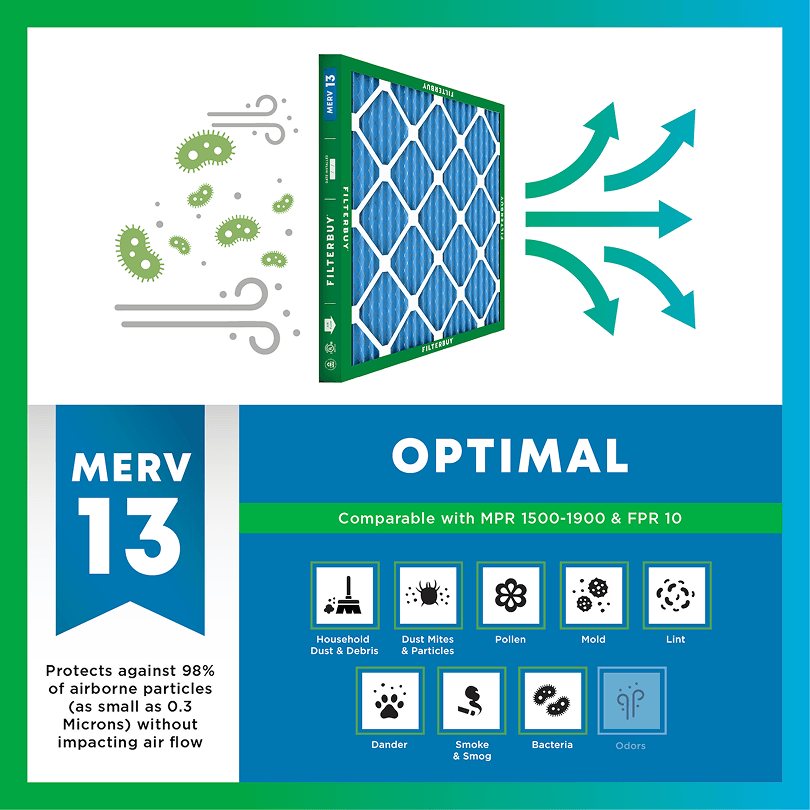
During smoke events, the EPA recommends upgrading to a MERV 13 filter — or the highest-rated filter your system can handle — to help reduce the fine particles smoke brings indoors. MERV 13 is the level most home HVAC systems can run while still capturing PM2.5, the fine particulate that makes up the bulk of wildfire smoke.
- Captures PM2.5 particles
- Blocks ash, soot, and smoke odor
- Keeps your indoor air safe—even when the outdoor air is dangerous
- Meets the EPA's recommended rating for filtering fine wildfire smoke particles.

Wildfire Smoke FAQs
Facts About Wildfires
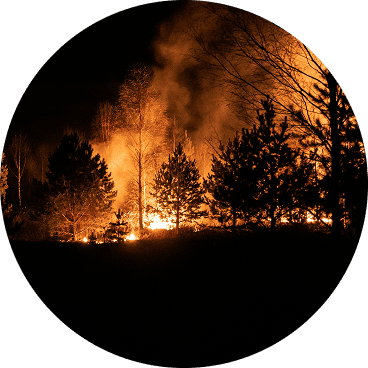
Over 70,000 wildfires burn in the U.S. every year.
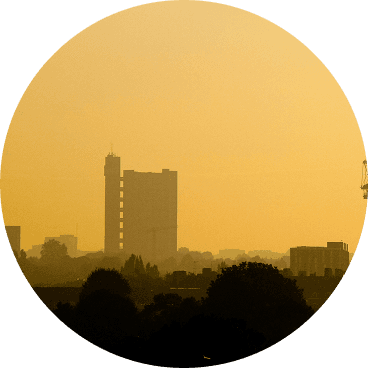
Wildfire smoke can travel 1,000+ miles, affecting states that aren't even near the blaze.
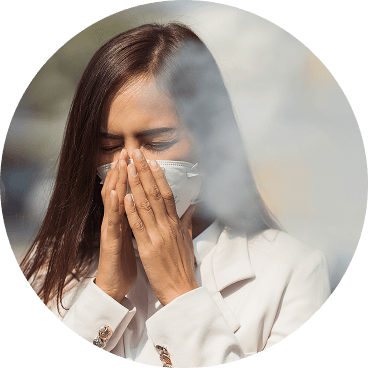
Exposure to wildfire smoke can worsen asthma, trigger heart issues, and lead to ER visits.
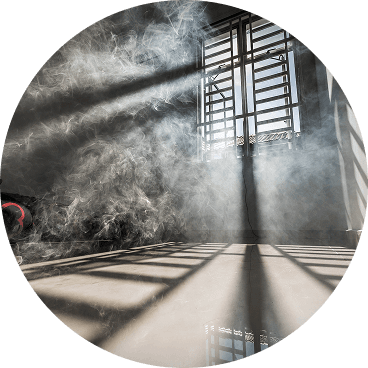
Indoor air can hold more fine particles during wildfire events unless it's properly filtered.
The EPA advises using MERV 13 filters or portable HEPA air cleaners during wildfire smoke events.
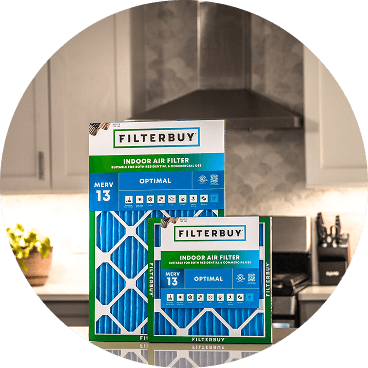
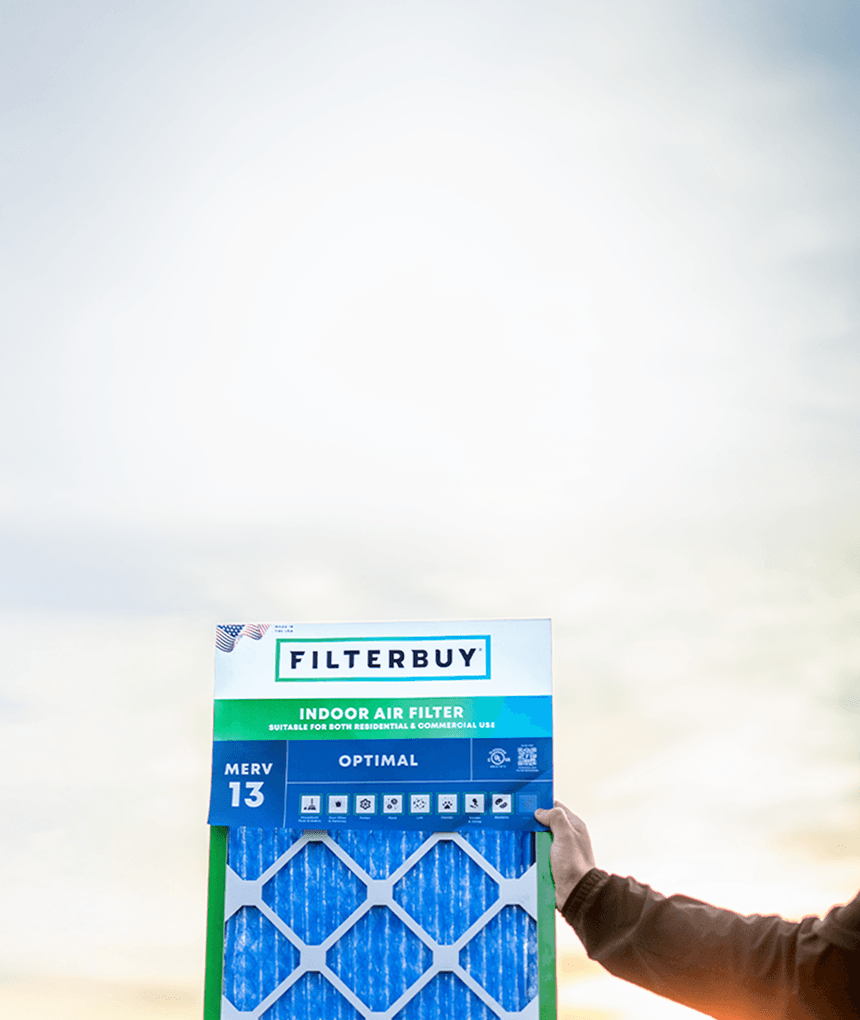
Don't Wait Until The Smoke's Inside.
Use the live wildfire smoke tracker and upgrade your air filters today to protect your lungs and your home.
Shop Filters For Smoke Protection
Live Burlington, ON Forest Wildfire & Smoke Map Today: Local Air Quality Tracking & Indoor Protection Solutions
TL;DR
The live map above shows active wildfires and smoke plumes near Burlington, Ontario, along with local air quality readings. Fires rarely burn nearby, but smoke from northwestern Ontario fires pushed local air to "very high risk" in July 2026. Filterbuy's action line is an AQI of 100 on the map or an AQHI of 7: switch to a MERV 13 filter, set the furnace fan to On, run a portable HEPA air cleaner in each occupied room and close the house up.
Key Takeaways
• Burlington's smoke usually travels far. In July 2026, smoke from wildfires in northwestern Ontario pushed Burlington's Air Quality Health Index (AQHI) to 10+, the top of the scale.
• Fine particles are the main concern. Health Canada notes that PM2.5, fine particles 2.5 microns or smaller, makes up roughly 90% of the particle mass in wildfire smoke.
• MERV 13 is the recommended filter level. Health Canada and the U.S. EPA both point to MERV 13 or higher during smoke events.
• Prepare before the haze. Filterbuy's advice: fit a clean MERV 13 and keep a spare on hand before smoke season starts in May.
Why Filterbuy Built This Burlington Page
Government agencies track the outdoor air, and this page links you straight to them. Filterbuy's job is the air inside your home. We cut and frame every filter to order in our own facilities, and that hands-on work shapes the advice here.
How to Read the Burlington Wildfire & Smoke Map Above
The interactive wildfire map at the top of this page is your live view of fire and smoke conditions around Burlington. It shows active fire locations, the direction smoke plumes are drifting and current air quality readings near Halton Region.
Scroll up to the live Burlington wildfire and smoke map and look for three things:
1. Fire markers. These show where wildfires are burning. Most fires affecting Burlington sit far to the north or northwest.
2. Smoke plumes. Shaded areas show where smoke is moving. A plume drifting southeast toward Lake Ontario means Burlington's air may worsen within hours.
3. Air quality readings. Coloured dots show measured air quality. Most map readings use the U.S. 0–500 AQI; an AQI of 100 is where Filterbuy tells customers to act.
Next, check the ECCC FireWork 72-hour smoke forecast and Ontario's interactive Forest Fire Information Map.
What Do Burlington's Air Quality Numbers Mean?
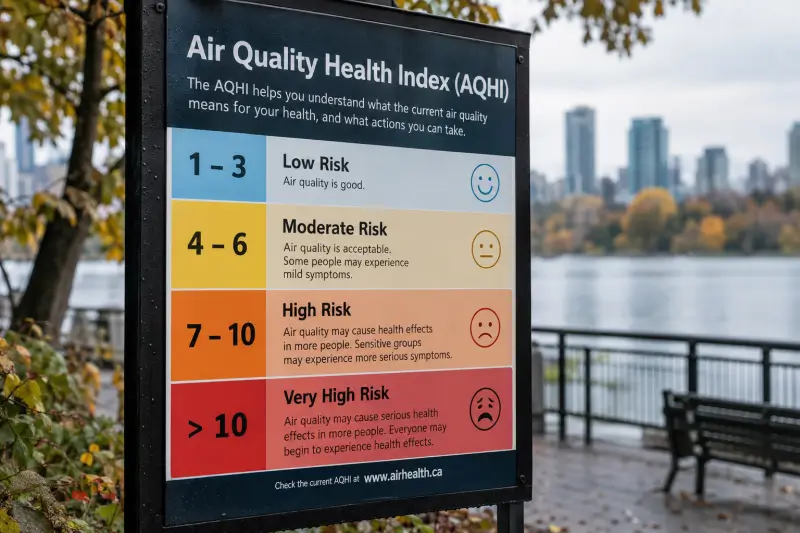
Burlington's official air quality reading is Canada's Air Quality Health Index (AQHI), a 1 to 10+ scale from Environment and Climate Change Canada (ECCC). Lower numbers mean lower risk. Filterbuy's action line is an AQHI of 7, or an AQI of 100 on the map: switch to MERV 13, set the fan to On, run a portable HEPA air cleaner in each occupied room and close up. Learn more on ECCC's AQHI page.
Table 1: Burlington AQHI risk levels compared
Risk levels are from Environment and Climate Change Canada. Home actions are Filterbuy recommendations, not official guidance. Check Burlington's current reading at airqualityontario.com.
Check the official reading on the Air Quality Ontario Burlington AQHI page. Per Take Action Burlington, a Special Air Quality Statement comes at a forecast AQHI of 7–10, and an Air Quality Advisory at 10+ from wildfire smoke. Burlington is in the Halton–Peel region for Ontario's free email air quality alerts, and the WeatherCAN app can notify you at a level you choose.
Why Does Wildfire Smoke Reach Burlington?
Wildfire smoke reaches Burlington when northerly or northwesterly winds carry it south from Ontario's boreal forest fires. Burlington sits at the western end of Lake Ontario, far from the forest regions where most Ontario wildfires burn.
Ontario's fire season runs 1 April to 31 October. Ontario's forest fires page counted 798 wildland fires by 5 October 2026, against a 10-year average of 700. Health Canada notes smoke can travel thousands of kilometres. See Filterbuy's live Ontario wildfire and smoke map.
What Happened During the July 2026 Burlington Smoke Event?
In mid-July 2026, wildfire smoke from northwestern Ontario pushed Burlington's AQHI to 10+, the highest level on the scale. Environment Canada issued an orange-level air quality warning. Here is how the week unfolded:
• 15 July: Halton Region announced an air quality warning as smoke reached Burlington, according to BurlingtonToday.
• 16 July: CBC Hamilton reported that Burlington, Hamilton, Brantford and St. Catharines reached 10+ on the AQHI while Ontario had 176 active fires. The City of Burlington closed outdoor pools and recreation programmes.
• 17 July: The orange warning held, with poor air expected into the weekend (BurlingtonToday; The Trillium).
Filterbuy's takeaway from that week: Burlington can go from clear skies to very high risk in a day, with no fire anywhere nearby. That is why Filterbuy recommends getting your home ready by May, before smoke season starts.
What Should You Do Indoors When Smoke Reaches Burlington?
Follow Environment Canada and Halton Region Public Health first. If officials advise you to stay indoors or leave, do that. Filtration is one layer of your plan, not a replacement for official guidance.
At an AQI of 100 on the map or an AQHI of 7, Filterbuy recommends these four steps, in order:
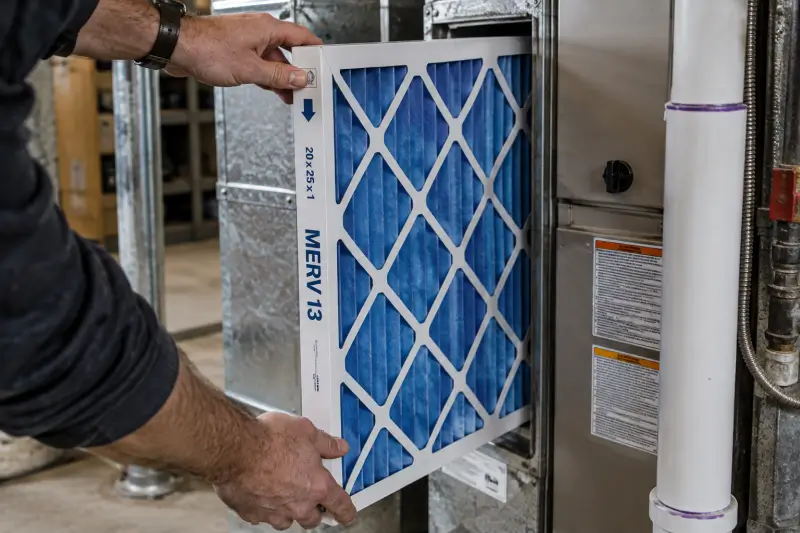
1. Put a MERV 13 filter in your furnace. Your central system moves far more air than any portable unit, so this is the whole-home layer. Health Canada advises using the highest-quality filter your system can handle and keeping extras on hand.
2. Set the thermostat fan to On. Auto only filters while the system heats or cools; On filters all the time. The U.S. EPA also advises running the fan as often as you can during smoke.
3. Run a portable HEPA air cleaner in each occupied room, bedrooms first. That's Filterbuy's rule; EPA's cleaner air room guide describes one room. Choose a smoke CADR of at least two-thirds of the room's square footage, so a 300 sq ft bedroom needs about 200. Skip ionizers and any cleaner that makes ozone, which EPA advises against.
4. Close the house up. Shut windows and doors, set the HVAC to recirculate and turn down any HRV or ERV (heat or energy recovery ventilator). Skip candles, frying, smoking and vacuuming without a HEPA vacuum.
No ductwork? In apartments and homes with baseboard heat or ductless units, portable HEPA air cleaners do the main filtering job, not a supporting one.
Short on air cleaners? A box fan with a 20x20 MERV 13 filter attached is a reasonable stopgap until you can get a certified unit. EPA research found the design reduces smoke. Use a certified fan made in 2012 or later, and don't leave it running unattended (EPA).
These steps reduce what's in your indoor air. They don't make it smoke-free.
What Filterbuy Has Learned Making Filters for Smoke Season
• Order by the number on the frame. The size printed on your filter (like 16x25x1) is the nominal size. Filterbuy cuts every filter slightly smaller on purpose so it slides into the slot.
• Order in spring. Filterbuy makes your filter after you order, and most orders ship within 24 hours. Shipping into Canada can take a few extra days for customs, so have it in place by May.
• Judge by colour. A new MERV 13 has bright blue media. Once it looks dark brown or black, replace it.
“We build filters, not forecasts. Put a clean MERV 13 in before the AQI passes 100, and keep a spare on the shelf.”
Filterbuy Indoor Air Quality Team
Burlington Smoke Situations Most Guides Miss
Most smoke advice assumes a detached house and mild weather. Burlington homes often face more.
• Hazy sky, low AQHI. Smoke can sit high overhead before it reaches ground level. Keep windows closed and recheck the AQHI in a few hours.
• Renting or in a condo? Ask your landlord or property manager which MERV rating is installed and when it was last changed. A portable HEPA air cleaner gives you a room you control.
• Smoke during a heat wave. July 2026 brought both. Cool with air conditioning on recirculate. If it's too hot indoors, Take Action Burlington points to cooling spaces like libraries and community centres.
• Airing out afterwards. Health Canada advises checking the AQHI before opening windows, then ventilating once it's back in the low range.
• Smoke season ends, furnace season begins. A filter that worked through summer smoke now faces six or more months of heating. Start October with a fresh Filterbuy filter.
What MERV Rating Do You Need for Wildfire Smoke?
MERV 13 is the filter rating to use for wildfire smoke. It's the tier Filterbuy recommends for smoke, and it's the level health agencies point to.
Health Canada's cleaner air guidance recommends HVAC filters rated MERV 13 or higher to remove fine particles. The U.S. EPA recommends MERV 13 or higher during smoke events.
Table 2: MERV 8 vs MERV 11 vs MERV 13 for wildfire smoke
Filtration figures are Filterbuy's tier descriptors. MERV 13 is the tier Filterbuy recommends for wildfire smoke.
Will MERV 13 work in my furnace? Most furnaces and HVAC systems can take a MERV 13 filter without equipment problems, as long as it's replaced often, according to EPA's fire-season guidance. Check the fit the way you'd confirm a size: it should sit snugly in the slot.
“I work alongside the team that builds our filters, and fit is the detail I see overlooked most. A MERV 13 with gaps around the frame lets smoke slip right past it. Order the exact size printed on your old filter, and keep a spare before smoke season starts.”
Michelle Wan, Brand Manager and Air Quality Writer, Filterbuy
How often should I change it during smoke? Check it during every smoke event, and replace it when it looks dirty, dark brown or black. That can be well before the normal interval, so keep spares on hand. Filters capture particles, not smoke odour. See Filterbuy's MERV 13 vs. HEPA guide.
Supporting Statistics
Canadian health authorities back indoor filtration. Three numbers show why.
1. 2,500 deaths a year
• Finding: Long-term wildfire smoke exposure contributed to up to 2,500 deaths a year in Canada (2013–2018), plus up to 240 from short-term exposure.
• Why it matters: Smoke from distant fires still reaches Burlington.
• Source: Health Canada
2. AQHI 4 is enough to trigger symptoms
• Finding: A moderate AQHI of 4 can worsen symptoms for people with chronic lung disease.
• Why it matters: If you have a lung or heart condition, follow your health care provider's advice, and have your MERV 13 in place before readings climb.
• Source: Canadian Lung Association
3. +25% more wildfires by 2030
• Finding: Health Canada's 2020 guidance cites projections that wildfires in Canada will rise 25% by 2030 and 75% by 2100.
• Why it matters: Smoke seasons will get busier. Stock a spare Filterbuy MERV 13 before May.
• Source: Health Canada
Find the Right MERV 13 Filter for Your Burlington Home
Filterbuy makes MERV 13 Optimal filters in more than 600 sizes, plus custom sizes, in our own facilities across four U.S. states, and ships them free to Canada with no minimum order. Choose MERV 13 in your size from the MERV 13 size list, or order custom air filters. Prices are shown in Canadian dollars at checkout.
• Subscribe and save. Auto-delivery saves 5% on every order and keeps spares coming. You can edit, skip or cancel anytime.
Filterbuy is trusted by homeowners across North America, with more than 85,000 five-star reviews.
Frequently Asked Questions
Is There a Wildfire in Burlington, Ontario, Right Now?
Rarely. Most smoke in Burlington comes from forest fires in northern Ontario, Québec or Western Canada. Check the live map above for current fires.
What MERV Rating Do I Need for Wildfire Smoke?
MERV 13. It's the tier Filterbuy recommends for smoke, and Health Canada and the U.S. EPA point to MERV 13 or higher during smoke events.
Why Does Burlington Smell Like Smoke Today?
Wind is usually carrying smoke from distant fires into southern Ontario. Check the plume layer above and Burlington's AQHI. At an AQHI of 7 or higher, follow the four steps above.
Glossary
• AQHI (Air Quality Health Index): Canada's official 1 to 10+ scale for the health risk of outdoor air pollution, published by Environment and Climate Change Canada.
• PM2.5: Fine particles 2.5 microns or smaller; the main particle pollutant in wildfire smoke.
• MERV (Minimum Efficiency Reporting Value): A 1–16 rating under ASHRAE Standard 52.2 of how well an HVAC filter captures particles.
• MERV 13: Filterbuy's Optimal tier. Captures 98% of Airborne Particles. It's the tier Filterbuy recommends for wildfire smoke.
• Clean-air room: One closed room in your home kept especially clean with a portable air cleaner during smoke events.
Related Wildfire Smoke Resources
• Live Ontario wildfire and smoke map
• Live St. Catharines, ON wildfire and smoke map
• Filterbuy's live Ontario air quality index map
About the Author and Reviewer
Michelle Wan is Brand Manager and Air Quality Writer at Filterbuy. She works directly with Filterbuy's manufacturing team to turn filter specs into plain-language advice.
David Clark is a Licensed HVAC Technician with Filterbuy HVAC Solutions. He reviewed the MERV 13 compatibility advice on this page.