
Montreal Real-Time AQI Tracker
What's Actually In Montreal Air Today?
What High AQI Means for Your Lungs in Montreal
How to Read AQI
The Air Quality Index (AQI) measures how polluted the air is and how it may affect your health.
0–50 (Good): Air quality is satisfactory.
51–100 (Moderate): Acceptable, but some pollutants may pose minor concerns.
101–150 (Unhealthy for Sensitive Groups)
151–200 (Unhealthy)
201–300 (Very Unhealthy)
301+ (Hazardous)
Moderate
Still okay for most, but if you have asthma or allergies, take it easy and avoid long outdoor workouts.
Shop MERV 11 filters→What's the Right Filter for Your AQI Level?




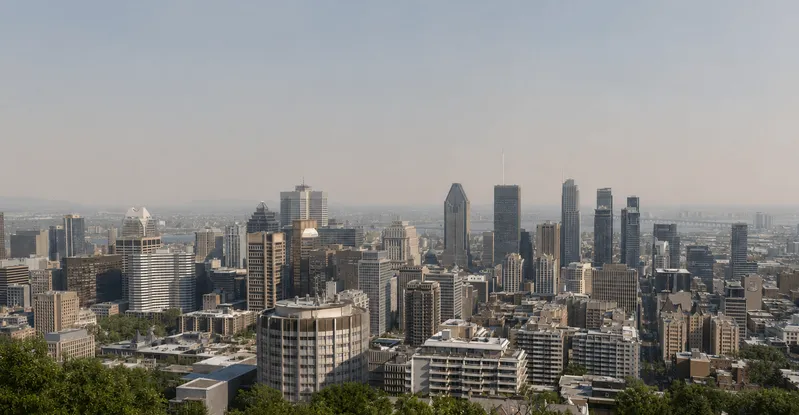
Check Today's Live Real-Time Air Quality Index (AQI) Map in Montreal, QC Now
Montréal's air is good most days. It can turn on a cold, still night, though, when wood smoke from the neighbourhood settles low and lingers. The map below shows the live air quality index (AQI) for your area right now, updated throughout the day. Search your postal code, read today's number, and you'll know whether to open the windows or keep them shut.
TL DR: Quick Answers
Live air quality index (AQI) map now today in Montreal, QC
Check the live map above for Montréal's air quality right now, updated throughout the day and broken down by neighbourhood.
What's worth knowing:
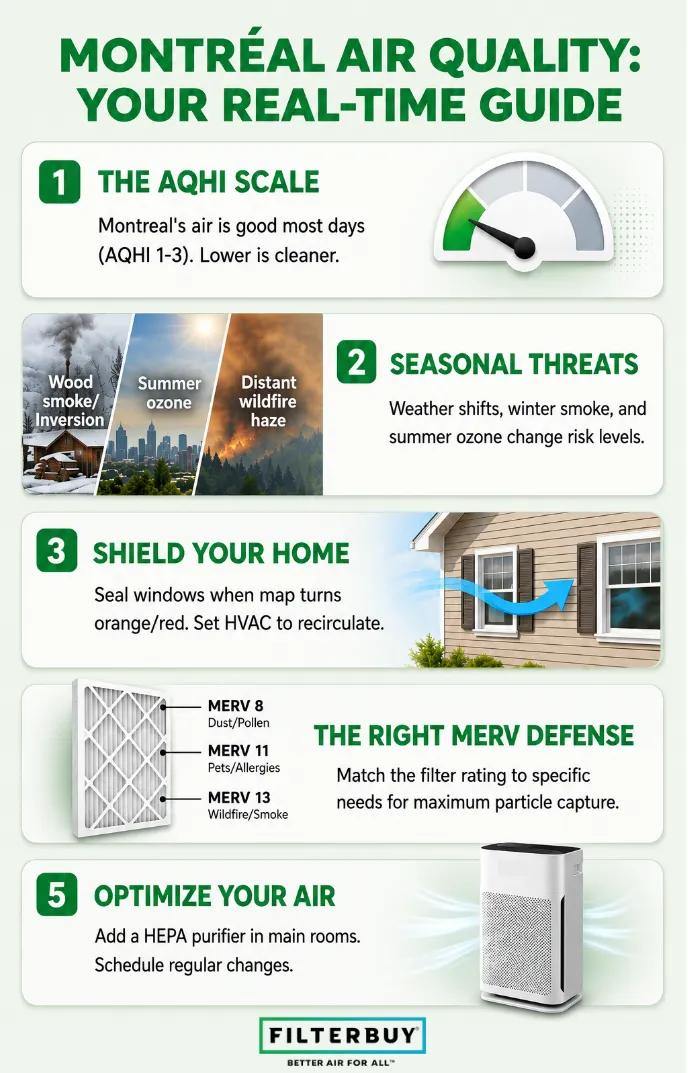
Most days it's good. Montréal usually sits in the low-risk range (AQHI 1 to 3).
AQI vs. AQHI. You search "AQI," but Canada reports the Air Quality Health Index, 1 to 10+. Either way, lower is cleaner.
What pushes it up. Winter wood smoke, summer ozone, and wildfire smoke drifting in. PM2.5 is the pollutant to watch.
When it climbs. Close the windows, set your system to recirculate, and run a fresh MERV 13 filter.
Top Takeaways
Check the map first. Montréal's air is good most days (AQHI 1 to 3). It shifts with the weather, so a quick look tells you whether to open the windows.
AQI and AQHI differ. You search "AQI." Canada reports the AQHI, 1 to 10+. Either way: lower is cleaner.
Winter beats summer for bad air. Cold, still nights trap wood smoke close to the ground. The year's worst air often hits in January.
The map tells you when. Your filter is how. MERV 11 for most homes. MERV 13 for smoke or allergy season.
Get ahead of bad days. Close the windows, set your system to recirculate, and run a HEPA purifier. Keep a spare filter on hand.
Montréal Air Quality at a Glance
Check the map for your neighbourhood, then check it again after the weather changes.
Most days, Montréal's air sits in the low-risk range (AQHI 1 to 3). Winter wood smoke, summer smog, and wildfire smoke drifting in are what usually push it up.
When the number climbs, close the windows and doors and set your furnace or central air to recirculate.
Run a fresh MERV filter that suits your system, and add a True HEPA purifier in one room you can keep mostly shut.
What the AQI Means (and How It Differs from Canada's AQHI)
The air quality index, or AQI, boils a lot of pollution data down to one number. Lower means cleaner air, and it's a fast way to judge whether outdoor plans make sense today.
Here's the wrinkle in Canada: you'll often see a different scale. Environment Canada reports the Air Quality Health Index (AQHI), which runs from 1 to 10+ and focuses on health risk rather than pollutant levels. In Québec, the City of Montréal also publishes its own provincial index from its monitoring network. The scales work differently, but you read them the same way. A higher number means take more care, especially for children, older adults, and anyone with a heart or lung condition.
Two pollutants drive most of Montréal's readings: fine particles (PM2.5), the kind found in wood smoke and wildfire smoke, and ground-level ozone, which builds up on hot, sunny days.
The AQI Scale (0 to 500)
| AQI | Category | What It Means |
|---|---|---|
| 0–50 | Good | Air is clean. Carry on with normal outdoor activity. |
| 51–100 | Moderate | Acceptable. Very sensitive people may want to take it easier. |
| 101–150 | Unhealthy for Sensitive Groups | Children, older adults, and people with heart or lung conditions should limit exertion. |
| 151–200 | Unhealthy | Everyone may notice effects. Cut back on time outdoors. |
| 201–300 | Very Unhealthy | Move activity indoors and keep windows closed. |
| 301+ | Hazardous | Stay indoors with clean, filtered air. |
Canada's Air Quality Health Index (1 to 10+)
| AQHI | Health Risk | Guidance |
|---|---|---|
| 1–3 | Low | Ideal conditions for outdoor activity. |
| 4–6 | Moderate | Sensitive groups may want to ease up on strenuous activity. |
| 7–10 | High | Consider rescheduling strenuous outdoor activity. |
| 10+ | Very High | Avoid strenuous outdoor activity. Sensitive groups should stay indoors. |
Whichever scale your map shows, the rule holds: green is good, and as the colour climbs, you'll want to move activity indoors and keep the house sealed and filtered.
How to Use the Live Montréal AQI Map
Search by neighbourhood or postal code to see the current reading and the main pollutant near you.
Tap nearby stations to compare conditions across the island, Laval, and the South Shore.
Check again throughout the day if the wind shifts, smoke moves in, or a winter inversion settles over the city.
Notice whether you're reading AQI or AQHI, and follow that scale's colour legend.
What Affects Montréal's Air Quality
Montréal's air is usually good, but a handful of local things can change it day to day. Knowing what's behind the number makes it easier to plan around.
Winter wood smoke and temperature inversions
It surprises a lot of people, but Montréal can see more smog days in winter than in summer. On cold, calm nights, wood-burning fireplaces and stoves release fine particles, and temperature inversions trap that pollution close to the ground. Road salt and traffic add to it. If you heat with wood, burning dry, well-seasoned wood and keeping your home well-filtered both help.
Summer ground-level ozone
On hot, sunny afternoons, sunlight reacts with vehicle and industrial emissions to form ground-level ozone, a main ingredient of summer smog. Levels usually peak in the late afternoon, and humid, stagnant air makes it worse.
Wildfire smoke season
In recent years, smoke from wildfires in other provinces and the U.S. has drifted into Montréal, sometimes from hundreds of kilometres away. It can sharply raise PM2.5 levels for several days, even on a clear day. This is when a MERV 13 filter and a HEPA purifier really earn their keep.
Spring pollen and everyday traffic
Spring brings pollen that can bother allergy sufferers, and busy corridors tend to show higher readings year-round. A fresh filter through allergy season makes a noticeable difference to the air inside your home.
Protecting Your Indoor Air on Poor-Air Days
When the map turns orange or red, a few simple steps keep the air inside cleaner.
Close windows and doors. Set your furnace, heat pump, or central air to recirculate instead of pulling in outdoor air.
Use a snug, correctly sized HVAC filter and change it on schedule. Swap it more often during heating season or a smoke event.
Run a True HEPA purifier in one bedroom or living area, and keep that door mostly shut.
Go easy on indoor sources. Keep frying brief, skip candles and incense, and don't over-run the kitchen or bathroom exhaust fans.
Heading out? Check the map first. In heavy smoke, a well-fitting N95 helps. A loose cloth or surgical mask won't catch fine particles. Keep the car windows up and the cabin air on recirculate.
Choosing the Right MERV Filter for Your Montréal Home
The filter in your furnace is your first line of defence against the particles that outdoor air brings inside. Match it to your home and to what your system can comfortably handle.
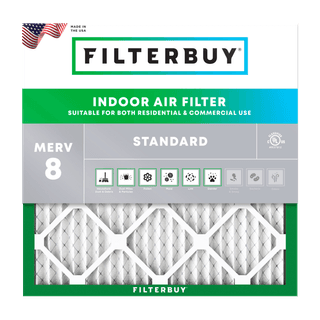
MERV 8 — Standard: everyday dust, lint, and pollen for standard homes. Lowest airflow resistance.
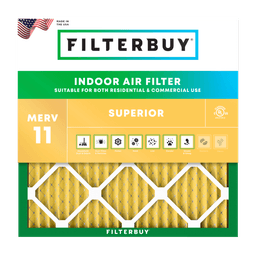
MERV 11 — Superior: smaller particles for homes with pets or seasonal allergies. A dependable all-rounder.
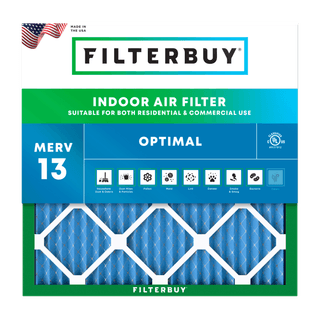
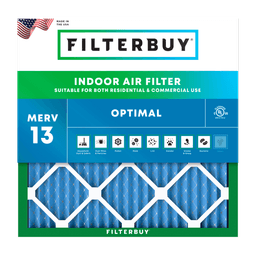
MERV 13 — Optimal: finer particles, including wildfire smoke and smaller allergens. Pick the highest MERV your furnace can run without straining airflow.
Odour Eliminator: carbon-infused media for cooking, smoke, and pet odours. Welcome through the long winters when the windows stay shut.
Filterbuy makes pleated HVAC filters in over 600 sizes, including custom, all with our signature green frame so you can spot the right one at a glance. Prices show in CAD, shipping to Canada is free with no minimum, and Subscribe & Save sends a fresh filter on your schedule, ready before the next smog or smoke day. We craft every filter in our own facilities and ship it straight to your door in Canada.
Backed by over 85,000 five-star reviews from homeowners across North America. Filter sizes are listed in inches (for example, 20x25x1), the standard fit for North American systems.
Most people assume air-quality trouble is a summer thing. In our experience, the calls from Montréal homeowners pick up on the coldest, stillest winter nights, when wood-stove smoke and a temperature inversion trap fine particles right where families breathe. After years of helping households across Canada keep their indoor air clean, we've learned the simplest safeguard is the one most people skip: change the right MERV filter on schedule, before the smoke ever arrives.
— Filterbuy Team
Essential Resources for Checking Montréal's Air Quality
Our map gives you the quick answer. When you want to look closer, or just double-check what you're seeing, here are seven sources we'd point a neighbour to. Each one does something a little different.
Start With Canada's Official Forecast (Environment Canada AQHI)
The official word on Montréal's air, today and tomorrow. It uses the Air Quality Health Index, a simple 1-to-10+ scale where a higher number means a greater health risk. Think of it as a gentle prompt to take more care, not a reason to worry.
Source: weather.gc.ca/airquality/pages/qcaq-001_e.html
See What's Measured Across the Island (City of Montréal RSQA)
The city monitors its own air through a dedicated network. Eleven permanent stations feed an index that updates every hour and shows in three colours: good, acceptable, or poor. It's the closest look at the air in your corner of the island.
Source: montreal.ca/en/topics/air-quality
Compare Your Neighbourhood With the Region (Quebec Air Quality Index)
Handy when you want to see how conditions off the island compare with home. Every hour, it pulls together readings for ozone, fine particles, sulphur dioxide, nitrogen dioxide, and carbon monoxide into one clear number.
Source:iqair.com/ca/canada/quebec/quebec
Know What to Do When Smoke Drifts In (Health Canada)
Friendly, practical guidance for the smoke season. It's a useful reminder that fine particles (PM2.5) are the main concern, and that the air can be off even when you can't see or smell smoke. That helps you judge when to ease up on outdoor plans.
Source: canada.ca/en/services/health/healthy-living/environment/air-quality/wildfire-smoke.html
Follow Real-Time PM2.5 and the Seasonal Pattern (IQAir)
An easy-to-read live map with PM2.5 readings and a bit of history. It captures Montréal's familiar rhythm, where colder months tend to be smokier from heating and wood-burning, while spring is often the freshest of the year.
Source: iqair.com/ca/canada/quebec/montreal
Add an Air-Quality Check to Your Daily Forecast (The Weather Network)
A familiar daily stop that shows Montréal's index right alongside the usual forecast. It's especially useful in summer, since ground-level ozone tends to climb in hot, sunny weather and usually peaks in the late afternoon.
Source: theweathernetwork.com/en/city/ca/quebec/montreal/air-quality
Watch for Smoke Heading Your Way (World Air Quality Index)
A real-time map that draws on live readings from more than 100 countries. Good for spotting smoke or haze drifting toward Montréal from other provinces or south of the border, before it reaches the island.
Source: aqicn.org/map/canada/
What the Research Shows, and What We've Seen
Years of helping Canadian households keep their air clean have taught us one thing: the science and the service calls line up. Here are three findings from independent U.S. authorities, and what each one means in practice.
1. The air you breathe most is inside your own home
People spend, on average, about 90% of their time indoors.
Indoors, the concentrations of some pollutants often run 2 to 5 times higher than outdoor levels.
What we've seen: a home can feel stuffy on a “good air” day. The filter in your furnace, not the number on the map, is what you can actually control.
Source: U.S. EPA, Indoor Air Quality
2. The particles that matter most are invisible
Fine particles (PM2.5) are about 30 times smaller than a human hair.
They're small enough to reach deep into the lungs, and some pass into the bloodstream, which is why they carry the greatest health risk.
What we've seen: “clear” and “clean” aren't the same thing. Wood smoke and wildfire haze are invisible by definition, so trust a good filter over your own eyes.
Source: U.S. EPA, Particulate Matter (PM) Basics
3. The fix is usually a better filter
The EPA recommends a MERV 13 or higher filter to capture the fine particles in smoke.
Most furnaces and HVAC systems handle a MERV 13 without trouble, as long as you replace it often.
What we've seen: the replacement schedule is the part most homes forget. Swap it more often during a long heating season or a stretch of smoke.
Source: U.S. EPA, Preparing for Smoke and Heat
A Final Thought
Here's something we've noticed after years of shipping filters across Canada: people check the air quality map far more often than they change the thing that actually cleans their air.
The map earns that attention. It tells you when to close the windows and when it's fine to head out. But it's not where clean air gets won. That happens quietly, behind your furnace, in a filter most people forget until it turns grey.
If we could give a Montréal household one piece of advice:
Don't chase a perfect AQHI reading. Get ahead of the cold, still nights instead.
Watch January, not the dramatic forecasts. The worst air of the year tends to settle in on a calm winter evening when the wood stoves are going, and nothing moves the smoke along.
Put a fresh filter in before that night. It does more for your family than any alert you'll get during it.
Your Next Steps
Checked the map? Here's how to turn that number into cleaner air at home, in four steps.
1. Read today's number
Note your AQI or AQHI and the main pollutant.
Good range? Carry on as usual.
Climbing? Go easy outdoors, especially children, older adults, and anyone with heart or lung conditions.
Check again if the wind shifts or smoke moves in.
2. Seal up on poor-air days
Close the windows and doors.
Set your furnace, heat pump, or central air to recirculate.
Run a True HEPA purifier in one room you can keep mostly closed.
Skip candles, incense, and long frying sessions.
3. Check your current filter
Read the size on the frame (for example, 20x25x1).
Hold it to the light. Dark or clogged means it's time to change it.
Check the MERV: 11 for most homes, 13 for allergy season or smoke.
4. Prepare for the next smoke or smog day
Find your size and pick the MERV rating that fits your home.
Add an Odour Eliminator for cooking or pet odours through the closed-window months.
Set up Subscribe & Save. Free shipping to Canada, no minimum.
Keep a spare on hand for smoke season, when filters fill up faster.
Not sure which filter fits? No worries. Tell us your size, and we'll help you find the right one.
Frequently Asked Questions
Clean Air Starts at Home
Find your filter size, choose the MERV rating that fits your household, and set up Subscribe & Save so you're ready before the next smog or smoke day, with free shipping right to your door in Canada.