
Vaughan Real-Time AQI Tracker
What's Actually In Vaughan Air Today?
What High AQI Means for Your Lungs in Vaughan
How to Read AQI
The Air Quality Index (AQI) measures how polluted the air is and how it may affect your health.
0–50 (Good): Air quality is satisfactory.
51–100 (Moderate): Acceptable, but some pollutants may pose minor concerns.
101–150 (Unhealthy for Sensitive Groups)
151–200 (Unhealthy)
201–300 (Very Unhealthy)
301+ (Hazardous)
Moderate
Still okay for most, but if you have asthma or allergies, take it easy and avoid long outdoor workouts.
Shop MERV 11 filters→What's the Right Filter for Your AQI Level?



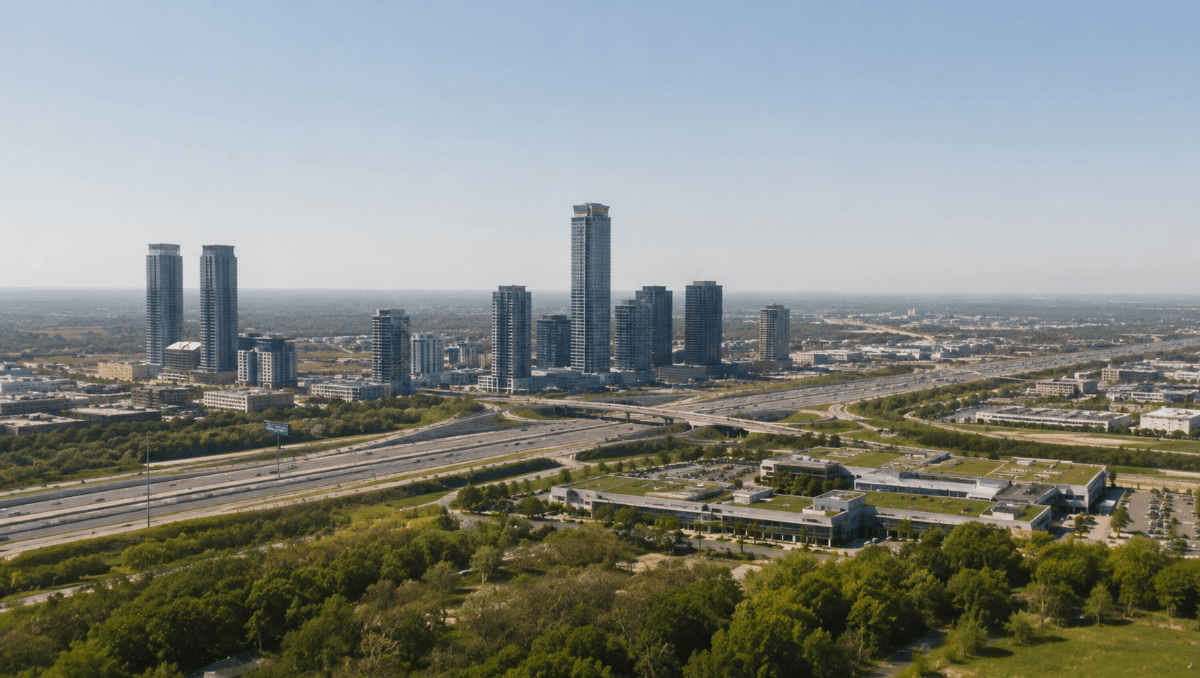
Check Today's Live Real Time Air Quality Index AQI Map in Vaughan, ON Now
By Michelle Wan | Reviewed by David Clark, Licensed HVAC Technician Published: 23 July 2026 | Last updated: 23 July 2026
TL;DR
Vaughan's air quality is reported on Canada's AQHI, a 1 to 10+ health-risk scale, not the 0-500 AQI scale used in the U.S. Vaughan has no monitoring station of its own, so readings come from the nearest Ontario station, usually Toronto North on Dufferin Street. Most days fall in the low-risk band of 1 to 3. When the number passes 7, stay indoors and run your furnace fan with a clean, high-efficiency filter.
Key Takeaways
AQHI runs 1 to 10+. A Vaughan reading of "3" is low-risk, not a near-perfect AQI score.
None of Ontario's 38 provincial stations sit inside Vaughan.
Toronto North is closest for most of Vaughan (3-5 km from Concord and the Vaughan Metropolitan Centre); Woodbridge is marginally closer to Toronto West.
AQHI combines ozone, NO2 and PM2.5 on a three-hour rolling average.
Health Canada recommends MERV 13+ during smoke events, if the system can handle the added airflow resistance.
What Is the Air Quality in Vaughan Today?
Vaughan's air quality is reported as an AQHI value between 1 and 10+, updated hourly by Environment and Climate Change Canada and Air Quality Ontario: 1-3 is low risk, 4-6 moderate, 7-10 high, and above 10 very high. On 23 July 2026, Toronto North read 3 and Newmarket read 2, both low risk. The number moves for practical reasons: ozone builds on hot, still afternoons; NO2 tracks traffic on Highways 400, 407 and 7; PM2.5 spikes when wildfire smoke drifts in.
AQI or AQHI? What Vaughan's Number Actually Means
The AQHI isn't the same scale as the American AQI - the most common source of confusion for homeowners checking an air quality app. AQHI (1 to 10+) combines the health risk from ozone, NO2 and PM2.5 on a rolling three-hour average with no fixed ceiling (severe smoke reads "10+"); US AQI (0-500) instead reports the single worst pollutant's concentration. Many weather apps show a US-style AQI for Canadian cities using EPA breakpoints, so a Vaughan AQI of 42 on one app and an AQHI of 3 on another aren't contradictory - they're two scales describing the same air.
Table 1. AQHI Risk Bands and What to Do
Summarised from the Air Quality Health Index categories published by Environment and Climate Change Canada and Air Quality Ontario. People with heart or breathing conditions are at greater risk and should follow their doctor's usual advice.
Vaughan Has No Monitoring Station: Here's Where Your Reading Comes From
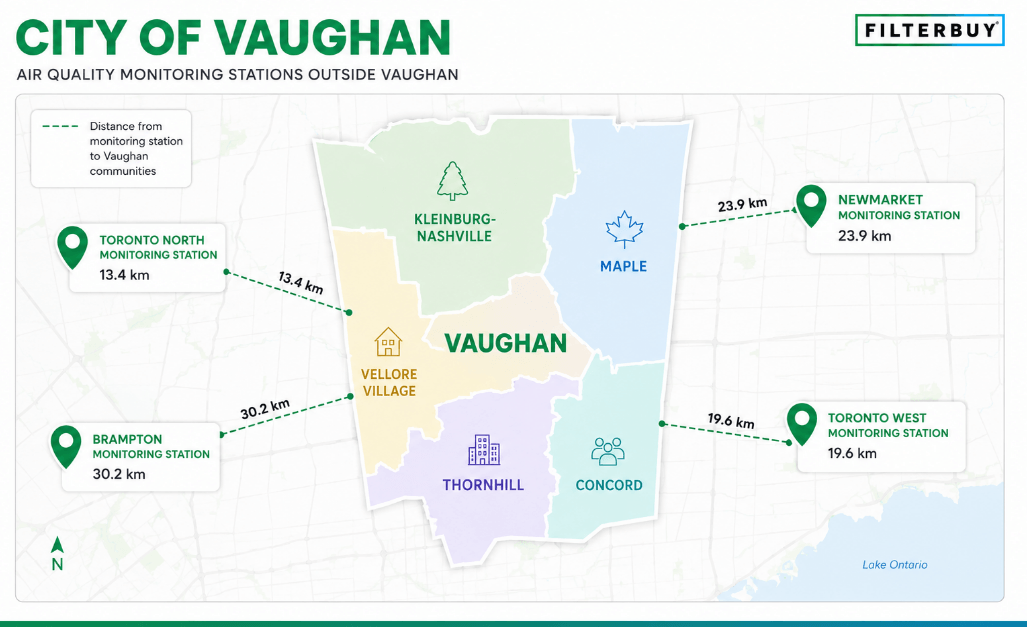
None of Ontario's 38 provincial stations sits in Vaughan (272 km2, ~323,000 people across Woodbridge, Maple, Concord, Kleinburg and Thornhill's Vaughan side), so every reading is borrowed from a neighbouring municipality. We plotted station addresses against each community's centre point to find the closest match.
Table 2. Nearest Official Monitoring Station by Vaughan Community
Straight-line distances between community centre points and station addresses published by Air Quality Ontario, rounded to the nearest kilometre.
Toronto North proxies Concord, Thornhill and the Vaughan Metropolitan Centre; Toronto West is the better match for Woodbridge; Kleinburg's nearest station is 15 km away. York Region Public Health's own page points residents to Newmarket instead, about 29 km out versus Toronto North's roughly 5 km - neither is wrong for a region-wide smoke event, but the closer station is the better guide on an ordinary day.
What Drives Vaughan's Air Quality Through the Year
Summer (June to September) brings the two conditions most likely to push the AQHI into moderate or high territory: hot, stagnant afternoons that generate ground-level ozone, and wildfire smoke, which drives PM2.5 and can lift readings within hours.
Spring (April to June) is allergy season. Pollen does not factor into the AQHI at all. The index can read 2 on a day when your eyes are streaming. Indoor filtration is what addresses pollen, not the outdoor index.
Autumn (September to October) is when Vaughan furnaces start running again. Outdoor air is often at its best, while indoor air becomes the more relevant concern as windows close.
Winter (October to April) means a long heating season. Canadian furnaces typically run six to eight months a year, so your filter works far harder than one in a milder climate.
When You Check Matters as Much as What It Says
The AQHI averages three pollutants that each peak at different times, so a single morning check can mislead. NO2 follows commute traffic; ozone needs sunlight and peaks mid-to-late afternoon on hot, still days - exactly when people plan to be outside; PM2.5 keeps no schedule, arriving whenever wind brings smoke. A 7am reading tells you little about an evening run - check again before you head out.
What the AQHI Does Not Tell You
Excludes pollen (built from ozone, NO2 and PM2.5 only), so allergies can peak on a low-risk day - your furnace filter matters even when the outdoor number looks fine.
Ignores humidity and temperature, which affect comfort and how hard your HVAC system works.
Isn't measured in Vaughan; every reading describes your region, not your street.
Live values are provisional and automatically polled without full quality control, so a single hourly spike can be wrong - watch the trend instead.
What to Do Indoors When Vaughan's AQHI Climbs
When the outdoor AQHI reaches the high band, stay indoors with windows and doors closed and filter the air you already have. Health Canada recommends MERV 13+ HVAC filters to remove PM2.5 during smoke events, if the system can handle the resulting pressure drop, plus sealed windows and recirculation mode.
"The failure I see most often isn't the wrong MERV rating, it's the right rating in a system that can't move air through it. A MERV 13 in a furnace sized for MERV 8 restricts airflow and makes the blower work harder. Check the manual, or have someone measure static pressure, before you upgrade." - David Clark
Check what your system can take - consult your manual or an HVAC technician; most systems installed in the last decade handle MERV 13, older ones may not.
Match the filter: MERV 11 for pollen and pet dander, MERV 13 for smoke, Odour Eliminator for smells particle filtration won't remove.
Set the thermostat fan to "on" rather than "auto" to circulate indoor air through the filter continuously.
Change filters more often during a smoke event - a filter that normally lasts 60-90 days can load up within weeks.
Measure before ordering: size is printed on the current filter's frame. Vaughan homes commonly use 16x25x1 and 20x25x1.
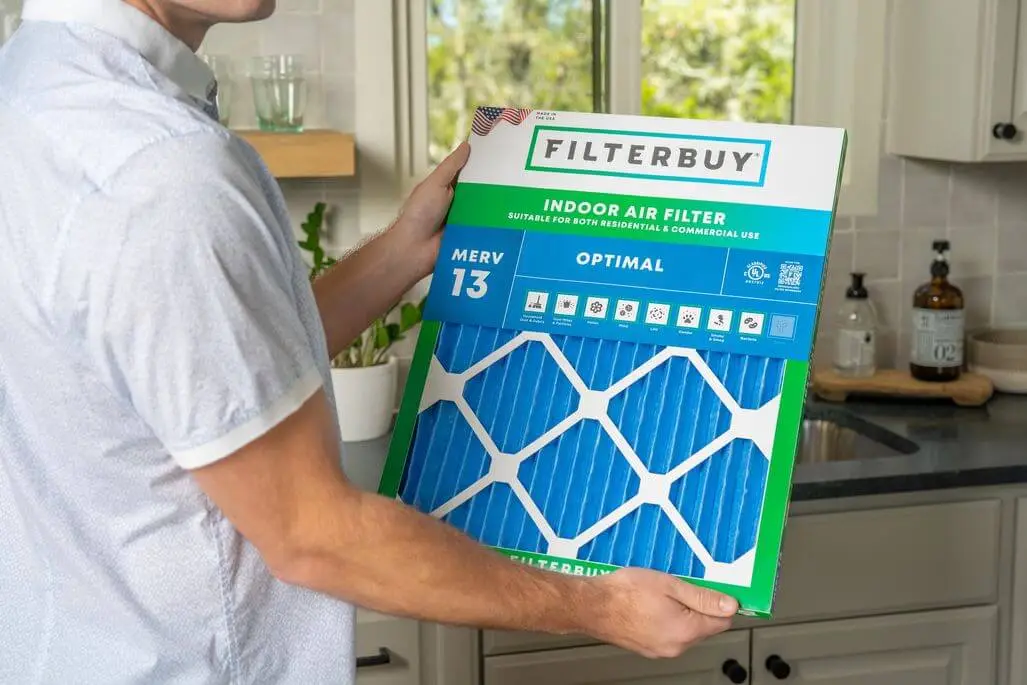
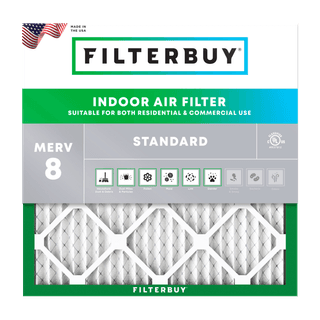
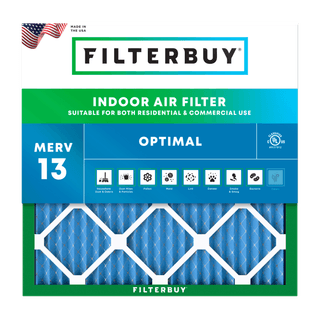
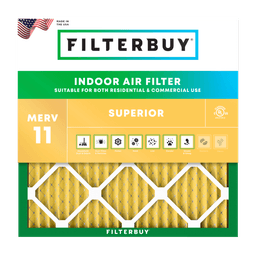
Filterbuy makes pleated filters in over 600 sizes, including custom dimensions, manufactured at its own U.S. facilities and backed by 85,000+ five-star reviews. Orders ship free to Canada, prices show in CAD, and Subscribe & Save lets you edit, skip or cancel anytime - Standard (MERV 8) for everyday use, Superior (MERV 11) for pollen and pet dander, Optimal (MERV 13) for smoke season, or Odour Eliminator for lingering smells.
Frequently Asked Questions
Is the air quality bad in Vaughan today?
Usually not - readings typically sit in the low-risk band of 1 to 3. Check the live map above; treat 7 or higher as a reason to limit strenuous outdoor activity.
What is Vaughan's PM2.5 level today?
Reported through the nearest provincial station, usually Toronto North, alongside the hourly AQHI value.
Why does my weather app show a different number?
It's likely showing a US-style AQI (0-500) instead of Canada's AQHI (1-10+) - both can describe the same air.
Does the AQHI include pollen or humidity?
No - it's calculated from ozone, NO2 and PM2.5 only.
How often is Vaughan's air quality updated?
Hourly, with forecasts for today, tonight and tomorrow.
7 Essential Vaughan Air Quality Resources Worth Bookmarking
1. Is it just Vaughan or all of southern Ontario?
A provincial map showing whether the whole Golden Horseshoe is affected.
Source: filterbuy.ca - Ontario live AQI map
2. Closer reading for Woodbridge
Toronto West (~9 km out) is marginally closer, covering roughly a third of Vaughan's population.
Source: weather.gc.ca - Toronto West AQHI
3. Which pollutant is driving today's number
Hourly PM2.5, ozone and NO2 by station; PM2.5-driven points to smoke, ozone-driven to a hot, still afternoon.
Source: airqualityontario.com - AQHI by station
4. Get notified before smoke arrives
Email alerts when a Special Air Quality Statement or Smog and Air Health Advisory is issued.
Source: airqualityontario.com - air quality alert sign-up
5. Check if your household is higher-risk
York Region Public Health's risk groups and Ontario's colour-coded warning system. Health Connection: 1-800-361-5653.
Source: york.ca - Outdoor Air Quality
6. Set your home up before the next smoke event
Health Canada's guidance on filtration, recirculation, sealing and sheltering at home.
Source: canada.ca - cleaner air spaces guidance
7. Official reading for most of Vaughan
ECCC's AQHI observation and forecast for Toronto North.
Source: weather.gc.ca - Toronto North AQHI
Supporting Statistics
Three figures behind the filtration advice (filter physics, not air policy) apply on both sides of the border.
1. Americans spend about 90% of their time indoors, where some pollutants run 2-5 times higher than outdoors (U.S. EPA) - the mechanism holds in Vaughan too, since homes stay sealed through a long heating season.
Source: U.S. EPA - Report on the Environment: Indoor Air Quality
2. Under the ASHRAE test method, MERV 13 captures 50%+ of particles at 0.30-1.0 micron versus MERV 11's 20%+, and 85-90%+ at larger sizes; wildfire smoke sits in the smallest band, which is why guidance moves from Superior to Optimal during smoke events (U.S. EPA).
Source: U.S. EPA - What is a MERV rating?
3. In one home monitored through a severe 2020 wildfire episode, outdoor PM2.5 averaged 260 micrograms per cubic metre versus 134 indoors with a MERV 13 filter running intermittently (a 0.55 ratio); a portable air cleaner dropped that to 0.21 (Antonopoulos, Dillon & Gall, 2024, Pollutants 4(1):26-41).
Source: Antonopoulos, Dillon & Gall (2024), Pollutants 4(1):26-41, via the U.S. National Library of Medicine
Glossary
AQHI: Canada's official 1 to 10+ air quality scale, expressing short-term health risk from outdoor air.
AQI: The 0-500 scale used by the U.S. EPA, reporting the single worst pollutant's concentration; not Canada's official measure.
PM2.5: Fine particulate matter 2.5 micrometres or smaller, small enough to reach deep into the lungs; smoke and combustion are the main sources.
Ground-level ozone (O3): A gas formed when sunlight reacts with vehicle and industrial emissions, peaking on hot, sunny afternoons.
Nitrogen dioxide (NO2): A gas released mainly by vehicle exhaust and fuel combustion, higher near busy roadways.
MERV: The scale describing filter particle-capture efficiency. Filterbuy labels MERV 8 Standard, MERV 11 Superior and MERV 13 Optimal.
Air Quality Ontario: The provincial service operating Ontario's 38 monitoring stations and publishing hourly AQHI and pollutant data.
Related Guides
All about MERV ratings: charts and scales
MERV 8 Standard air filters
MERV 11 Superior air filters
MERV 13 Optimal air filters
Odour Eliminator carbon air filters
Air filter subscription: edit, skip or cancel anytime
Sources
Environment and Climate Change Canada: Air Quality Health Index
Health Canada: Guidance for Cleaner Air Spaces during Wildfire Smoke Events
Statistics Canada, 2021 Census: City of Vaughan population and land area
About the author. Michelle Wan is Filterbuy's Brand Manager and Air Quality Writer, covering AQI/AQHI trends, wildfire smoke and indoor air quality across Filterbuy's resource library. B.A. in Sociology, UC Santa Cruz (2021).
About the reviewer. David Clark is a licensed HVAC technician with Filterbuy HVAC Solutions, who reviewed this article's claims on HVAC systems, MERV ratings, airflow and filter compatibility.