
Saanich Real-Time AQI Tracker
What's Actually In Saanich Air Today?
What High AQI Means for Your Lungs in Saanich
How to Read AQI
The Air Quality Index (AQI) measures how polluted the air is and how it may affect your health.
0–50 (Good): Air quality is satisfactory.
51–100 (Moderate): Acceptable, but some pollutants may pose minor concerns.
101–150 (Unhealthy for Sensitive Groups)
151–200 (Unhealthy)
201–300 (Very Unhealthy)
301+ (Hazardous)
Moderate
Still okay for most, but if you have asthma or allergies, take it easy and avoid long outdoor workouts.
Shop MERV 11 filters→What's the Right Filter for Your AQI Level?
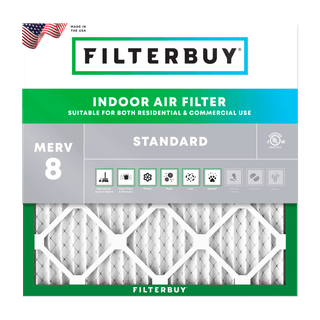




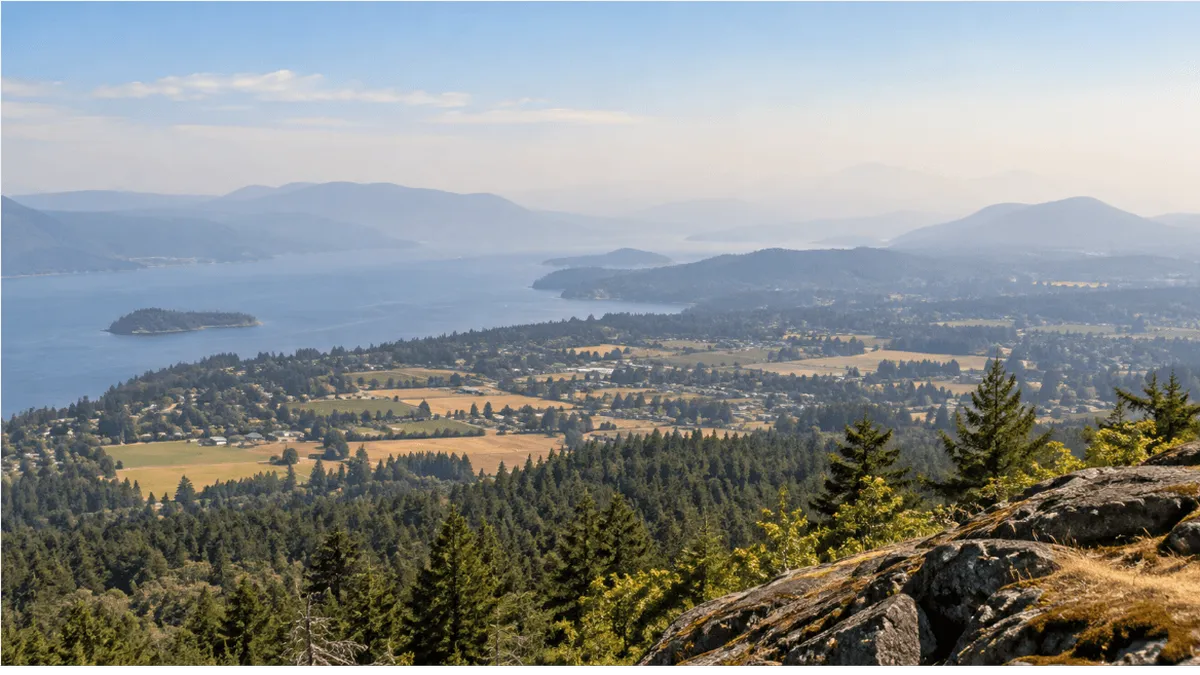
Check Today's Live Real Time Air Quality Index AQI Map in Saanich, BC Now
Filterbuy has made air filters since 2013, and that narrow trade shapes what we can usefully tell you here. We can say almost nothing about the outdoor number on the map above, and a good deal about the half you control. On a smoky August week in Gordon Head, most of your hours are spent breathing indoor air, and indoor air follows from decisions about your own house.
TL;DR
The District of Saanich, the largest municipality in BC's Capital Regional District, sits inside ECCC's "Victoria/Saanich" Air Quality Health Index reporting area, which runs on a 1 to 10+ health-risk scale, not the 0 to 500 AQI most maps display. Read the live map above for current conditions. Most days here rate Low Risk. The exceptions arrive on a predictable schedule, either as summer wildfire smoke drifting in from the BC Interior and the Pacific Northwest, or on cold, still winter nights when wood smoke settles into the low-lying valleys.
Key Takeaways
AQHI bands run 1 to 3 for Low Risk, 4 to 6 Moderate, 7 to 10 High, and above 10 Very High.
BC has used an adjusted formula, AQHI-Plus, since March 2021, because the original under-reported risk during smoke.
Fine particulate drives Saanich's worst days, arriving as wildfire smoke in summer and wood smoke in winter.
The nearest provincial monitor sits at Victoria Topaz, so PurpleAir sensors in Broadmead often catch smoke a single station averages away.
How to Read the Live Saanich Air Quality Map on This Page
Start with the number, then the colour band, then the trend. This page is the Saanich view of our live air quality index map for Canada. The value is a recent hourly average from the nearest monitor, so a rising number tells you more than any snapshot. For what comes next, Environment and Climate Change Canada publishes forecast AQHI maximums for tonight, tomorrow, and tomorrow night, and WeatherCAN pushes alerts at whatever threshold you set. If you are following a particular fire, our live Canadian wildfire and smoke map shows where the plumes are heading.
AQI and AQHI: Why Saanich Has Two Air Quality Numbers
Canada and the United States measure the same air with different rulers, and no official conversion exists between them. A Saanich resident and a Port Angeles resident breathing the same plume across Juan de Fuca Strait see two different numbers, and both are right.
No official conversion exists between the two scales. AQI values shown for Saanich on third-party maps are estimates, not Canadian government figures.
British Columbia adds a wrinkle. Since March 2021, following a pilot that began in May 2018, the province has reported AQHI-Plus, which raises the index when fine particulate alone justifies a stronger health warning. In practice a Saanich AQHI of 7 during fire season is almost always smoke, which also explains why air quality in Vancouver spikes in the same weeks Saanich does.
A note from Michelle Wan, Brand Manager and Air Quality Writer at Filterbuy: The question I answer more than any other is why a phone app and a government page disagree about the same afternoon. One is reporting AQI and the other AQHI, and neither is wrong. On the Peninsula a second gap sits on top of that, because the nearest official monitor may be across a ridge from where you stand. I stopped treating a mismatch as an error to resolve a long time ago. Two readings that disagree usually mean the air is moving faster than either scale can update.
What Each Air Quality Level Means for Your Day in Saanich
Match your behaviour to the band showing on the live map. The sky is a poor guide, because smoke usually thickens well before it becomes visible from Mount Douglas.
Health Canada guidance is deliberately stricter for at-risk populations than for the general public. If you have a lung or heart condition, follow the at-risk messaging rather than the general-population line.
Is the Air Safe to Breathe in Saanich Right Now?
On most days, yes. Saanich rates Low Risk for the large majority of the year, and the air here is clean by global standards. The exception is a wildfire smoke episode, when the same street can be a poor place to exercise for days at a time. The live map at the top of this page carries today's value, and that is what should decide your afternoon.
Why the Map Can Lag the Air on Your Street
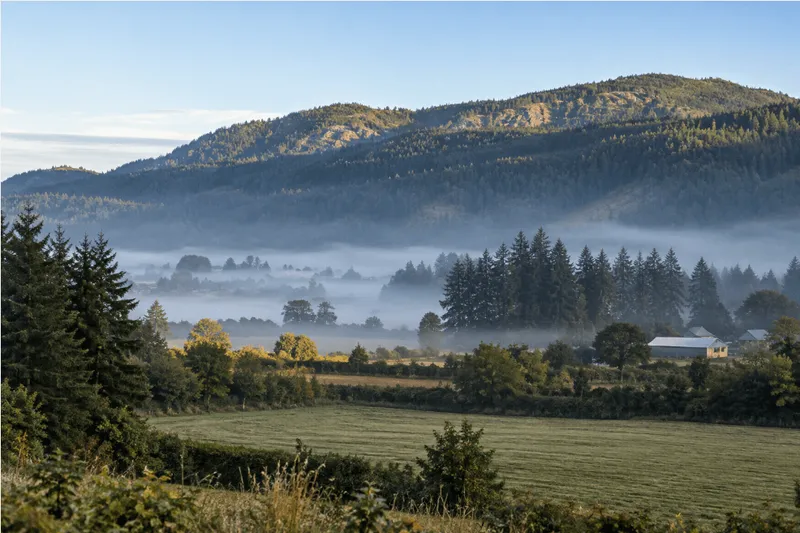
The District of Saanich covers roughly 103 square kilometres, and the monitoring network across it is thin. The BC Ministry of Environment and Parks runs the main station at Victoria Topaz along with Colwood City Hall, so a reading labelled Saanich may have been taken kilometres from where you live. Three things widen that gap.
Hourly averaging. Index values come from averaged data, so a smoke surge takes time to appear on the map.
Terrain. Cool air pools overnight in Blenkinsop and along the Colquitz corridor, concentrating smoke in pockets while hilltops stay clear.
Sensor density. Neighbouring Central Saanich runs PurpleAir sensors at Saanichton Municipal Hall and Fire Station #1 on Keating Cross Road, and plenty of Broadmead residents run their own.
When the official number and your own nose disagree, act on whichever is more cautious.
Where Saanich's Air Pollution Actually Comes From
Constant marine air across the Peninsula and Juan de Fuca Strait keeps the baseline clean, so almost every bad air day traces back to one of four sources.
Wildfire smoke is the dominant episodic risk and the reason the AQHI ever reaches High Risk here. It arrives aloft from the BC Interior, and on southerly flow from fires burning in Washington and Oregon.
Residential wood smoke is the quieter local source. Saanich's Fire Prevention Bylaw bars smoke from a solid fuel burning device that obscures more than 20 percent of an observer's view of the background for over three minutes in any hour. That rule exists because chimney smoke is a documented neighbourhood-scale PM2.5 problem, and Island Health has flagged it to Peninsula municipalities. The district also bars open burning from May 1 to October 15, prohibits it year-round inside the Urban Containment Boundary, and asks residents to hold off when the Southern Vancouver Island Venting Index forecasts poor dispersal.
Traffic contributes along its own corridors. The Trans-Canada Highway and Highway 17 carry commuter and Swartz Bay ferry traffic past residential streets, adding nitrogen dioxide and fine particulate nearby.
Ozone plays a smaller warm-season role, since marine ventilation keeps it below the levels that trouble inland valley communities.
Wildfire Smoke Season on Southern Vancouver Island
Wildfire smoke is now the leading source of fine particulate pollution in British Columbia, according to BC Lung's 2026 State of the Air report, which attributes roughly 1,900 premature deaths a year in the province to PM2.5. Being coastal does not spare Saanich. In the record 2018 season, Victoria logged among the highest counts of poor-visibility days of any BC city.
Treat that as a preparation window. Smoke season here runs from July into September, so the sensible time to buy filters and air cleaners is spring. Waiting until you can smell smoke on Shelbourne Street means competing with the whole region for supply.
When Smoke and Heat Arrive Together
When a heat event and a smoke event overlap in Saanich, keep cool first. This is the one place where the advice on this page has to be overruled. Everything else here tells you to close the windows, and during extreme heat that instruction can hurt you, because much of Saanich has no central cooling and a closed-up house on a 34-degree afternoon turns dangerous faster than the smoke outside it.
Health Canada is unambiguous here. When extreme heat and wildfire smoke arrive together, prioritize keeping cool, because overheating is the more immediate danger. The Public Health Agency of Canada makes the same call, noting at least 619 people died in BC during the June 2021 heat event. Cooling comes before cleaner air when you cannot have both.
In practice that means running a fan or cooling on recirculate, blocking afternoon sun on west-facing rooms, and leaving the oven alone. If the house will not stay both cool and breathable, leave it. A library, rec centre or mall is a legitimate destination, and Health Canada recommends seeking out cleaner air spaces when you have no air conditioning and it is too warm to stay inside. No filter Filterbuy sells changes that calculation.
Our Take: the Two Windows That Matter Most in Saanich
Filterbuy watches smoke season arrive in the order book before it shows up in a forecast. When an advisory lands somewhere, orders from that region climb within a day, which tells us people act on what they smell before they act on what they read. So we tell Saanich households to plan around timing. There are two points in the year worth thinking hard about.
The first is late June, by which point you want filters on hand and a cleaner sized for the bedroom. The second is mid-October, when wood heat comes back on and PM2.5 turns from a regional problem into a neighbourhood one. Outside those windows, Saanich air is clean enough that aggressive filtration only wastes money and static pressure. What we recommend is seasonal readiness. Filterbuy ships free across Canada with no order minimum, so there is no reason to wait for an advisory before you find your filter size.
Which Filter Handles Smoke, and When Filtration Is Not the Answer
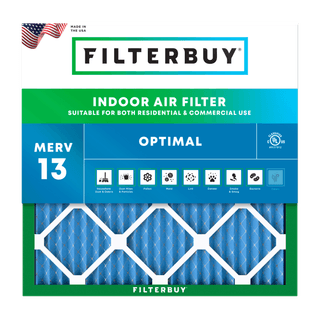
Wildfire smoke is overwhelmingly fine particulate, and that is exactly what a pleated filter captures. If your Saanich home has a ducted furnace or heat pump, Filterbuy MERV 13 air filters are what you want for smoke season, since MERV 13 removes at least half the particles in the 0.3 to 1.0 micron band where smoke concentrates. Every batch we make is tested to ANSI/ASHRAE Standard 52.2, the test that produces a MERV number, and our guide to how MERV ratings work covers where the ratings separate.
The order matters more than people expect. Seal the house first, then upgrade the filter and set the fan to On rather than Auto, and only then add a portable HEPA cleaner to the bedroom. A furnace filter cleans air only while the blower turns, which on Auto is under a quarter of the time. When Filterbuy costed a purifier against an HVAC filter, whole-home filtration came out roughly ten times cheaper per square foot in the first year.
Two things are worth flagging before you upgrade. Higher MERV means higher resistance, so an older Saanich furnace with undersized returns may not tolerate MERV 13, and a MERV 11 filter that actually runs will beat a MERV 13 that trips a limit switch. Fit matters more than rating. Nearly every exchange Filterbuy processes traces back to one habit, measuring the old filter instead of the opening it sits in. Older Peninsula houses are full of odd slots, so measure the slot and have us cut custom air filters to match. A snug MERV 11 outperforms a rattling MERV 13.
If a purifier is out of reach, build one. A box fan with a MERV 13 filter taped to the intake is a real substitute, and the EPA reports that DIY cleaners are safe and effective, with one study measuring roughly 56 percent less PM2.5 in a larger room after 90 minutes and about 99 percent in a small room within an hour. Use a newer fan and do not leave it running unattended. It costs a fraction of a purifier, which matters in a district with as many rental suites as Saanich, where the furnace is not yours to touch.
No pleated filter captures gases or smoke odour. That takes activated carbon media, which rates below MERV 13 on particles, so in a one-inch slot you have to choose. During active smoke, take the particles.
No Ducts? Your Saanich Home May Not Have a Filter Slot
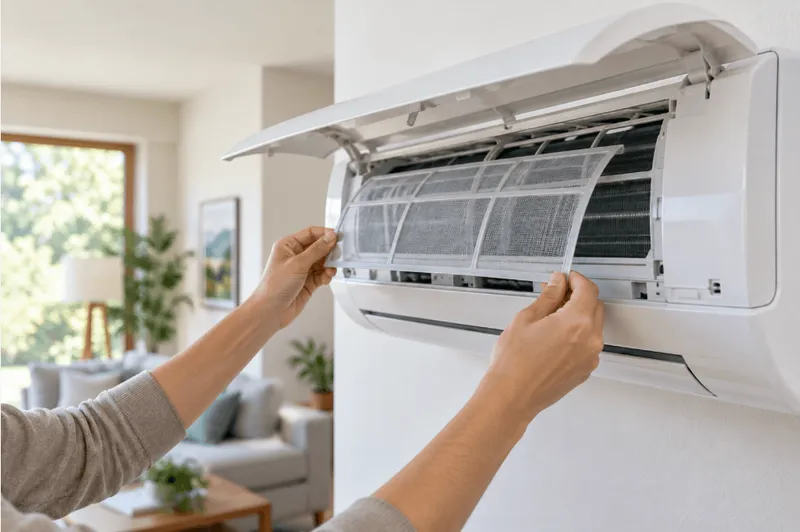
Many Saanich homes have nowhere to put a furnace filter at all, which matters more in Greater Victoria than almost anywhere in Canada. Much of the district runs on electric baseboard heat or ductless mini-splits, and neither has a slot for a pleated panel filter. A mini split heats and cools a room well but does not filter the air: the screen behind the front panel carries no MERV rating and exists to keep lint off the coil. Clip-on pads cover only part of the intake face, so most air goes around them.
In a ductless or baseboard home the portable cleaner becomes the first purchase. Buy a HEPA unit sized for the room you use most, and rinse the mini-split mesh fortnightly through smoke season. Filterbuy makes no filter that fits a baseboard heater, and we would rather say so.
“In a Greater Victoria house the filter question answers itself at the wall. If the heat comes from baseboards or a mini split head, there is no slot to upgrade and nothing I can sell you that changes it. Put the money into a portable cleaner for the bedroom. I would rather lose the sale than have someone believe their mini split is cleaning the air during a smoke week.”
David Clark, Licensed HVAC Technician, technical reviewer for Filterbuy
Supporting Statistics
Three findings from US federal research sit behind the advice on this page. Filterbuy would rather cite independent measurement than its own marketing.
1. Wildfire smoke dominates the particulate picture. The EPA's 2020 National Emissions Inventory attributed 52 percent of US PM2.5 emissions to wildland fires, the same shift BC Lung reports on this side of the border. Source: EPA, Wildland Fire Research.
2. Wood burning out-emits traffic in winter. Working from the 2017 inventory, the EPA found residential wood smoke emits more PM2.5 than on-road and non-road vehicles combined, ranking second nationally for wintertime PM2.5. Hence the 20 percent opacity limit in Saanich's bylaw. Source: EPA Burn Wise.
3. One portable cleaner halved indoor smoke again. In a Portland home during a Pacific Northwest megafire, MERV 13 central filtration alone held the indoor-to-outdoor PM2.5 ratio at 0.55, and adding one portable cleaner brought it to 0.22. Source: Antonopoulos, Dillon and Gall, Pollutants 2024, via NIH.
All three are US datasets, used because particle and filtration physics carry across the border, while Saanich conditions stay sourced to the Canadian links above. Burn Wise closed in 2025, so its figures rest on the 2017 inventory.
Frequently Asked Questions
Glossary
AQHI: Canada's official scale, 1 to 10+, combining PM2.5, ozone, and nitrogen dioxide into one health-risk value.
AQHI-Plus: BC's adjusted AQHI, used since March 2021, which raises the index when fine particulate alone warrants a stronger warning.
AQI: The US scale, 0 to 500, reporting whichever pollutant is worst.
PM2.5: Fine particulate 2.5 microns or smaller, the main component of smoke.
MERV: How effectively an HVAC filter captures airborne particles.
HEPA: A grade capturing 99.97% of particles at 0.3 microns, used in portable cleaners.
Victoria/Saanich: The community name ECCC uses when reporting AQHI here.