
Calgary Real-Time AQI Tracker
What's Actually In Calgary Air Today?
What High AQI Means for Your Lungs in Calgary
How to Read AQI
The Air Quality Index (AQI) measures how polluted the air is and how it may affect your health.
0–50 (Good): Air quality is satisfactory.
51–100 (Moderate): Acceptable, but some pollutants may pose minor concerns.
101–150 (Unhealthy for Sensitive Groups)
151–200 (Unhealthy)
201–300 (Very Unhealthy)
301+ (Hazardous)
Moderate
Still okay for most, but if you have asthma or allergies, take it easy and avoid long outdoor workouts.
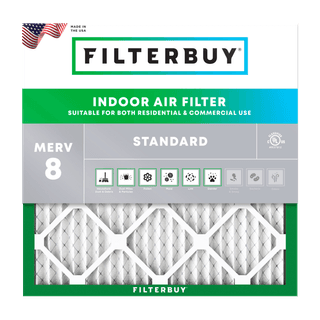
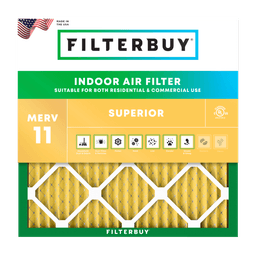
Shop MERV 11 filters→What's the Right Filter for Your AQI Level?



Check Today's Live Real Time Air Quality Index AQI Map in Calgary, AB Now
TL;DR: Quick Answers
Live air quality index (AQI) map now today, Calgary, AB
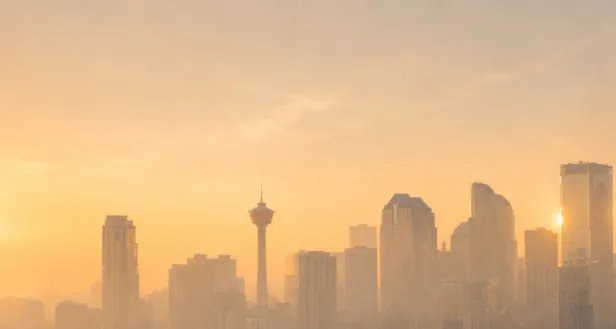
On a clear Calgary morning, the air can read Good, then slide toward the unhealthy range by afternoon when wildfire smoke drifts in. This page shows you the live air quality index (AQI) right now, station by station, refreshed every hour. Check the map below before you plan your day.
A few quick pointers:
What you'll see: the current AQI number, its category from Good to Hazardous, and the main pollutant, usually fine particulate matter (PM2.5).
When it matters most: summer smoke days, when the reading can jump from good to unhealthy in a few hours.
What to do when it climbs: close the windows, run your furnace fan, and fit a MERV 13 filter to catch the fine smoke particles.
A word from our team: the number tells you when to act. A clean filter is how you actually breathe easier.
Top Takeaways
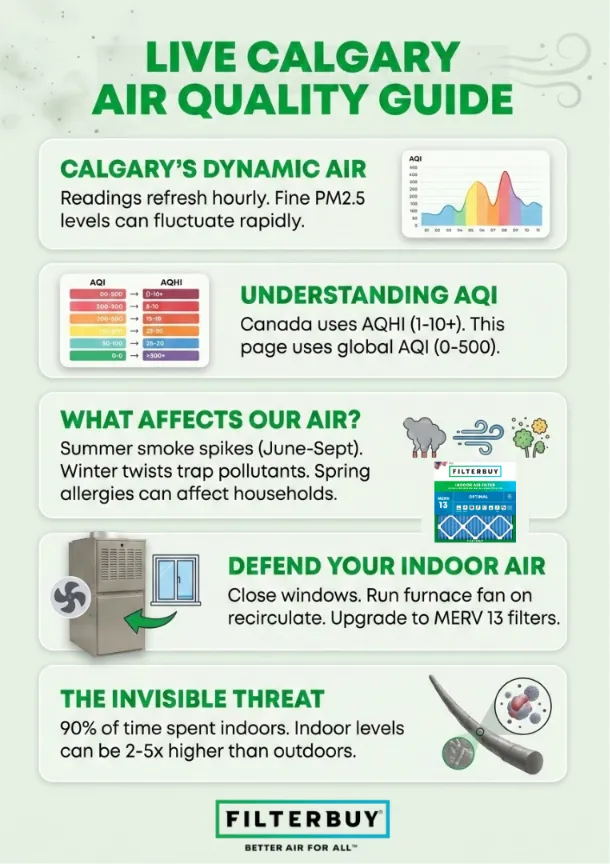
Calgary's air changes fast. It can go from good to smoky in an afternoon, so check the live map before you head out.
PM2.5 matters most. It's too small to see, it travels deep into the lungs, and it drives most of the swings.
Indoor air is what you breathe. When the reading dips, shut the windows and let the furnace filter.
MERV 13 is the smoke-season pick. Add an Odour Eliminator for smell, and change filters every 60 to 90 days.
Readiness beats reaction. Keep a clean filter in and a spare on the shelf.
Calgary Air Quality Index (AQI) Map
Tap any monitoring station to see its current reading and the main pollutant nearby. The map covers the whole city, from downtown out to the northwest, the southeast, and the airport. Readings refresh every hour, so you're always seeing today's conditions rather than yesterday's.
What Is the Air Quality in Calgary Today?
Right now, Calgary's AQI sits in the Moderate range (51–100). The index combines several pollutants into one number, and fine particulate matter (PM2.5) is the one we watch most closely here. For most people, the air is fine for time outdoors today, though if you have asthma or allergies, you may want to take it a little easier and check the live map before a long session outside.
Calgary's air rarely holds steady. It can move from good to elevated in a matter of hours, usually when wildfire smoke drifts in over the summer. The live map above always shows the current reading, so check it before you head out or decide whether to leave the windows open.
Understanding the Air Quality Index (AQI)
The lower the AQI number, the cleaner the air. The Air Quality Index (AQI) bundles common pollutants like fine particles and ground-level ozone into that one score. Here's what the ranges mean for your day:
| AQI Range | Category | What It Means for You |
|---|---|---|
| 0–50 | Good | Air quality is satisfactory, with little or no risk. |
| 51–100 | Moderate | Acceptable for most people. Anyone unusually sensitive may notice mild effects. |
| 101–150 | Unhealthy for Sensitive Groups | Children, older adults, and people with heart or lung conditions should ease back on prolonged outdoor exertion. |
| 151–200 | Unhealthy | Everyone may start to notice effects, and sensitive groups more so. |
| 201–300 | Very Unhealthy | A health alert. Everyone may experience more serious effects. |
| 301+ | Hazardous | Emergency conditions. The whole population is likely to be affected. |
A Quick Note for Canadian Readers: AQI vs. AQHI
Canada has its own official measure too: the Air Quality Health Index (AQHI), which runs on a 1 to 10+ scale instead of 0 to 500. Both track similar pollutants and report them a little differently. This page uses the widely recognized AQI, so you can compare Calgary with other tools and other cities. On an official government advisory, you'll usually see the AQHI.
Calgary PM2.5 & PM10 Levels Today
A PM2.5 particle measures about 30 times thinner than a human hair, small enough to slip past your nose and travel deep into your lungs. That's the fine particulate that makes up most wildfire smoke, which is why we watch it closely. Calgary's PM2.5 reading right now is [9 µg/m³].
PM10 covers slightly larger bits like dust and pollen, sitting at [18 µg/m³] today. Both are worth a glance, but PM2.5 is usually what pushes Calgary's air quality up or down. A good furnace filter is one of the simplest ways to cut the fine particles that drift indoors.
What Affects Calgary's Air Quality?
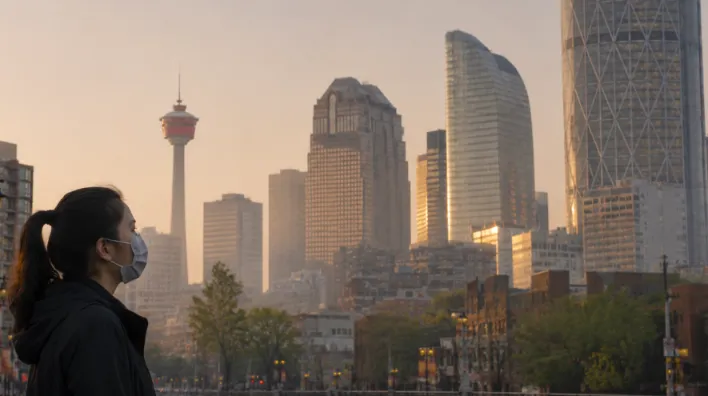
Most of Calgary's bad-air days arrive on the wind. Wildfire smoke is the biggest cause, though winter and spring add their own twists.
Wildfire Smoke (Summer)
Calgary's biggest swings come from wildfire smoke blowing in from British Columbia, northern Alberta, and across the Prairies. Smoke season now stretches from June into September, and when it arrives, the AQI can climb from good into the unhealthy range within a few hours. The fine PM2.5 in that smoke does most of the work.
Winter Inversions and Chinooks
Winter brings cold-air inversions that trap pollutants near the ground and let them build up. Then a Chinook sweeps through and clears the air just as fast. Calgary keeps you guessing, which is reason enough to check rather than assume.
Everyday Sources
Traffic, road dust, and pollen all add to the picture. Spring is the big one for allergies, when grass and tree pollen can bother sensitive households even on days the overall index looks fine.
How to Keep Your Indoor Air Clean in Calgary
When the air outside turns, your furnace is the best tool you have indoors. Keep the windows shut and let it filter the air for you. The filter you choose makes the difference:
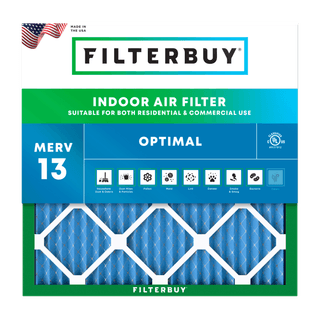
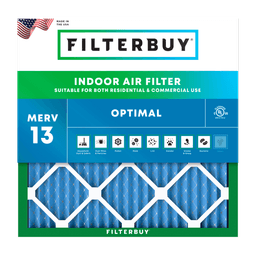
MERV 13 (Optimal) is our pick for smoke season. It captures the fine PM2.5 that smoke is made of, the particles that a basic filter lets straight through.
Odour Eliminator filters add a carbon layer for smoke and cooking smells, which helps through the long stretches when Calgary windows stay shut.
Change it on schedule. Calgary's heating season is long, so your filter works hard. A swap every 60 to 90 days keeps your system efficient and your air clean, and you'll want to check it more often when smoke is heavy.
Don't want to track it yourself? Subscribe and save sends the right size to your door on your schedule, with free shipping to Canada. You can edit, skip, or cancel anytime, and you'll always see prices in Canadian dollars.
After years of filtering Alberta homes, we've learned that Calgary's air quality isn't about the average day. It's about the handful of smoke days that show up fast, sometimes in a single afternoon. The homeowners who handle those days best already have a MERV 13 in the furnace before the smoke arrives.
— Filterbuy Indoor Air Quality Team
7 Essential Resources for Tracking Calgary's Air Quality
Checked today's number? These are the places we'd send a neighbour next. Every one is an official government or established Canadian source, so you can trust what you find.
1. Start With Calgary's Official Reading
Environment and Climate Change Canada runs Calgary's official Air Quality Health Index, with current conditions and a next-day outlook. Federal and Alberta agencies build it together.
→ Environment and Climate Change Canada, Calgary AQHI
2. Zoom In on Your Own Corner of the City
Alberta's interactive map lets you check individual monitoring sites instead of one city-wide figure. It shows pollutant readings by station and the AQHI by community.
→ Alberta Air Quality Health Index, Interactive Map
3. Get the Local Picture From Calgary's Own Monitors
The Calgary Region Airshed Zone (CRAZ) is a non-profit that runs real-time monitors across Calgary, Airdrie, and the surrounding municipalities, from Banff and Kananaskis to Vulcan and Wheatland Counties.
→ Calgary Region Airshed Zone (CRAZ)
4. Make Sense of What the Numbers Mean
The Government of Canada's overview walks you through the index and what each reading means for your health, with current conditions and station locations alongside.
→ Government of Canada, Air Quality Health Index
5. Know the Steps to Take When Smoke Arrives
Health Canada's guidance spells out who's most affected and what to do. It also notes that the smoke season runs from early April to late October, and that smoke can travel thousands of kilometres from the fire.
→ Government of Canada, Wildfire Smoke and Your Health
6. See What's Coming With a Two-Day Smoke Forecast
FireSmoke Canada's BlueSky forecast estimates where wildfire smoke may land over the next two days. The Weather Forecast Research Team at the University of British Columbia produces it.
→ FireSmoke Canada, BlueSky Smoke Forecast
7. Look at the Long-Term Trends
For the longer view, Alberta's Air Data Warehouse stores the province's historical, quality-assured air quality data.
→ Alberta.ca, Air Quality Data and Reports
Supporting Statistics: What We've Learned, Backed by the Research
We've filtered enough Alberta homes to notice a few patterns. The U.S. Environmental Protection Agency (EPA) has the research to back it up.
1. The Outdoor Reading Is Only Half the Story
Most people watch the outdoor number. You breathe the indoor air far more.
You spend about 90% of your time indoors, according to the U.S. EPA.
Indoor levels of some pollutants run two to five times higher than outdoors.
What this means for you: the map tells you when to act. What you do indoors is what you actually breathe.
Source: U.S. EPA, Indoor Air Quality · epa.gov/report-environment/indoor-air-quality
2. The Particles That Matter Most Are Invisible
By the time you can see haze or smell smoke, the particles doing the real work are already too small to notice.
A human hair runs about 70 micrometres wide, roughly 30 times larger than the biggest fine particle.
PM2.5, under 2.5 micrometres, poses the greatest health risk.
These particles reach deep into the lungs, and some get into the bloodstream.
Why we focus there: we built our advice around PM2.5, not the dust you can see.
Source: U.S. EPA, Particulate Matter (PM) Basics · epa.gov/pm-pollution/particulate-matter-pm-basics
3. Why We Reach for MERV 13 in Smoke Season
A thin basic filter was never built for fine particles. We've watched plenty of homes find that out the hard way.
The EPA recommends a filter rated MERV 13 or higher to clear fine smoke particles.
Most furnaces and HVAC systems can run a MERV 13 without strain, as long as you replace it regularly.
Our rule: the right filter only helps if you change it on time, and more often when the smoke is heavy.
Source: U.S. EPA, Preparing for Smoke and Heat · epa.gov/wildfire-smoke-course/preparing-smoke-and-heat
Final Thought: Our Take on Calgary's Air
The Calgary homeowners who sail through the smoke season have one thing in common. They got ready before the smoke showed up.
Checking today's AQI is the right first move, but the number is only the start. What you do next is what keeps your air clean.
Calgary's air can swing from good to smoky in a single afternoon. By the time the haze shows, the fine PM2.5 that matters most is already inside, where you spend most of your day.
So here's our honest opinion: don't wait for a smoke warning to think about your air. The homeowners who stay comfortable through August have usually done three simple things:
Fitted a clean MERV 13 in the furnace before the smoke season starts.
Kept a spare on the shelf so a swap takes minutes.
Close the windows when the map turns orange and let the furnace filter the air.
It's small, quiet preparation. Very Calgary, in its way, and worth far more than a last-minute scramble. None of it is complicated: check the map when it matters, keep a good filter in, and change it on time. Do that, and you've handled most of what this city's air can throw at you. If you're not sure where to start, we're glad to help you find the right size.
Next Steps: Your Calgary Clean-Air Checklist
Your next move depends on what today's reading is showing.
Good air today (AQI 0–50)
A clear day is the best time to get set for the next smoky one.
Check your filter. Swap it if it looks dark or it's past 60 days.
Find your size. It's printed on the side of your current filter, like 20x25x1.
Stock a spare so you're never caught short.
Smoky air today (AQI 51+)
Keep your indoor air clean while it lasts.
Close the windows.
Run the furnace fan on recirculate if you can.
Fit a MERV 13 (Optimal) filter, and add an Odour Eliminator if smoke smell lingers.
Change it more often. Check every couple of weeks in heavy smoke.
Set up for the season
Subscribe and save. The right size arrives on your schedule, with free shipping to Canada. Edit, skip, or cancel anytime.
See the province-wide picture on our live Alberta AQI map.
Bookmark this page so you can check the live AQI before you head out.
Plan ahead with the two-day smoke forecast in Essential Resources above.
Not sure where to start?
Tell us your filter size, and we'll point you to the right fit.
Frequently Asked Questions
Check the Air, Then Clean It Up
You've just checked Calgary's live AQI, so take the one step that actually changes the air at home: fit a clean MERV 13 and keep a spare ready for smoke season. Find your size in seconds, and we'll ship it free across Canada, with the freedom to edit, skip, or cancel anytime.