How High Should a Mini Split Outdoor Unit Be for Snow? Stands vs. Wall Brackets
October 22, 2026
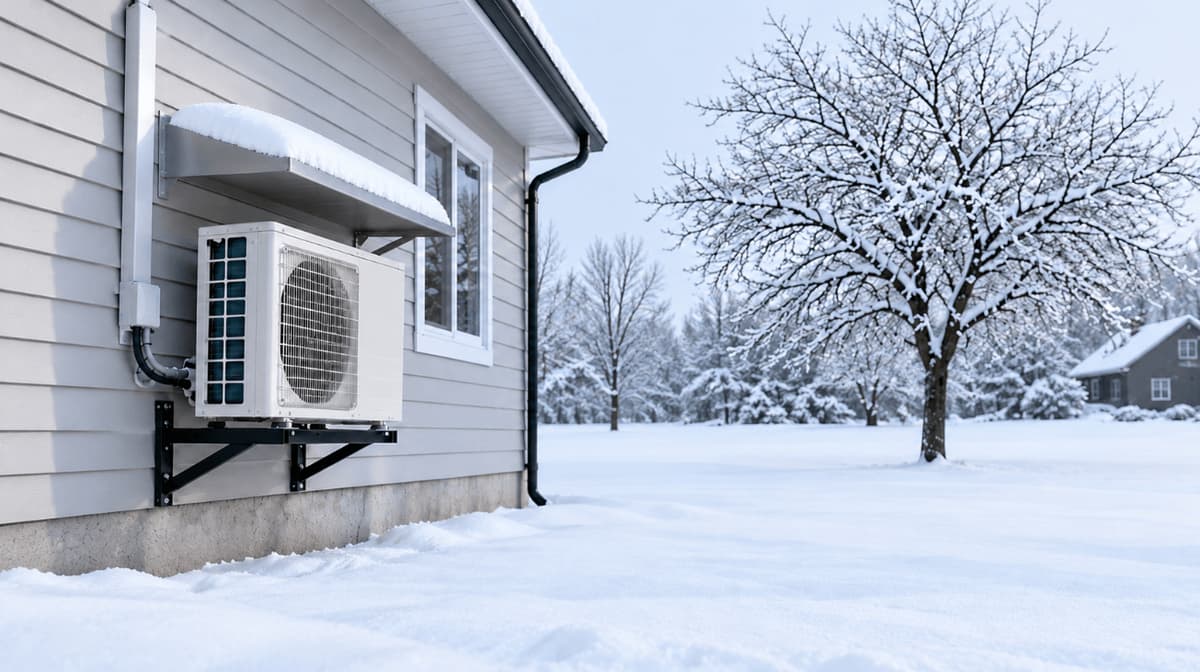
Mount it so the base pan sits at least 12 inches above the deepest snow that normally builds up at that spot, or 18 to 24 inches above it in heavy-snow regions. Measure from the snow line, not the ground, and count drifts. Your installation manual sets the final minimum.
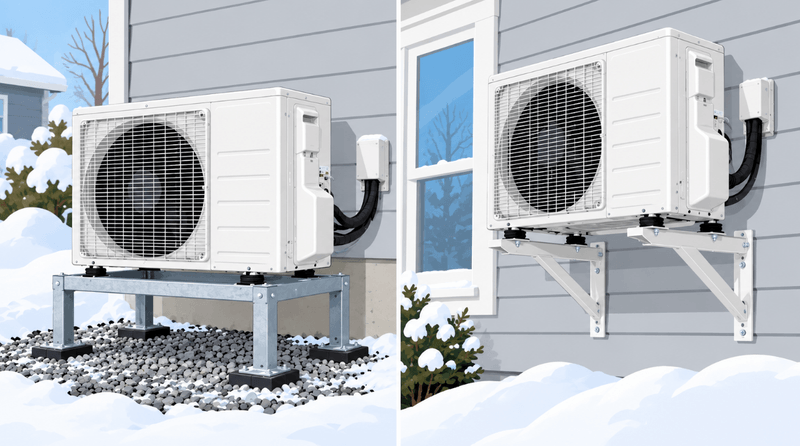
- Ground stand: Fits light to moderate snow and open yards. Quieter and easier to service.
- Wall bracket: Fits deep or drifting snow and tight side yards. Needs solid framing and vibration isolators.
Measure from the snow line, not the ground
Base-pan height = deepest snow + at least 12 in
Outdoor unit
Bottom of base pan
12 in minimum
18–24 in for heavy snow
Snow line
Deepest typical snow
Drifts included
Ground
Example: 20 in of drifted snow + 12 in clearance
= base pan at 32 in off the ground
Planning a mini split for a snowy climate?
Answer a few quick questions and we'll match you to the right system for your space.
Already know your size? Shop Filterbuy mini split systems: 17 SEER2, free 2-day delivery, and a 7-year compressor warranty.
TL;DR
A mini split outdoor unit should sit at least 12 inches above the deepest snow that normally covers the ground, or 18 to 24 inches above it in heavy-snow regions. At Filterbuy, we measure from that snow line, not the ground. Ground stands suit light to moderate snow, while wall brackets suit deep or drifting snow and tight side yards. Your installation manual sets the final minimum.
Key Takeaways
Plan from the deepest snow, drifts included. For example, 20 inches of drifted snow plus 12 inches of clearance puts the base pan at 32 inches.
Snow on the outdoor coil works like a clogged filter on the outside of the house, cutting airflow and forcing extra defrost cycles.
Ground stands are quieter and easier to service, while wall brackets clear deeper snow but need solid framing and vibration isolation.
Placement matters as much as height, so keep the unit out from under roof edges and away from snow piles.
Why Does Mini Split Outdoor Unit Height Matter in Winter?
Mounting height matters because snow blocks the airflow a ductless mini split needs to make heat. In heating mode, the outdoor coil pulls heat from winter air moving across its fins.
We think of snow at the coil as a clogged filter on the outside of the house. Filterbuy's service data shows a restricted indoor filter cuts a mini split's efficiency by 5–30% (see how to clean mini split filters). We haven't measured the snow version, but packed snow chokes the same airflow from the other side.
In Green Building Advisor, HVAC contractor Jon Harrod reports that during a 2015 blizzard, building-energy expert Marc Rosenbaum saw a mini split go from defrosting every four hours to every hour, with cycles stretching from 4–5 minutes to about 15.
Height protects drainage, too. On a low unit, defrost meltwater refreezes under the cabinet and can build up into the coil or fan.
How High Should a Mini Split Outdoor Unit Be Off the Ground?
Filterbuy's rule is simple: start at the snow line, not the ground. Take the deepest snow that typically settles at your house and add at least 12 inches, or 18 to 24 inches in heavy-snow regions. Maine's efficiency program, as summarized in a NEEP cold-climate installation assessment, calls for more than 24 inches above the snow line, preferably on wall brackets.
Measure every height from the ground to the bottom of the base pan.
“Most height advice starts at the ground. We start at the snow line, because that’s where airflow stops. Size for your worst normal winter, not your average one.”
— Filterbuy Team
Check local snow-depth history through NOAA's National Centers for Environmental Information, then run the Filterbuy drift-line check. After a storm, note where snow stacks against your wall and where the snowblower throws it.
A worked example: If 14 inches sits in your yard but drifts reach 20 inches where the unit will go, plan from 20. Adding 12 inches puts the base pan at 32 inches, which calls for a tall stand or a wall bracket.
If your manual's minimums and this table disagree, go with the manual.
Mini Split Stand for Snow vs. Wall Bracket: Which Is Better?
Ground stands win in light snow and open yards; brackets win in deep or drifting snow. NEEP's Guide to Installing Air-Source Heat Pumps in Cold Climates, listed by the U.S. Department of Energy's Building America Solution Center, requires a level unit and prefers wall mounting where practical.
When a ground stand makes sense. Choose a mini split stand for snow when typical snow stays under about 16 inches outside a drift zone, and anchor it to a pad so it stays level.
When a mini split wall bracket outdoors makes sense. A bracket clears deep snow but can carry vibration into the wall. Filterbuy's mini split mounting options guide says to match the load rating to the unit's weight plus a snow-load buffer, add vibration-dampening pads, and fasten into framing or masonry rather than siding alone.
Where Should a Mini Split Outdoor Unit Go in Winter?
The best winter spot keeps the unit clear of roof runoff and snow piles, with the fan facing away from prevailing wind. No mounting height can fix a unit in the wrong place.
Stay out from under roof edges and gutters. Drips refreeze on the coil, and sliding snow can crush a unit.
Avoid snow-dump zones. A unit by the driveway can still get buried by the snowblower.
Plan a path for defrost water. Drain meltwater onto gravel, not a walkway.
Turn the fan face away from prevailing winter wind. Hydronics manufacturer Caleffi's idronics design guide also advises securing the frame in high-wind areas.
How Do You Know Your Outdoor Unit Is Mounted Too Low?
Watch for these signs in the first winter. Steam during defrost is normal; ice that stays is not.
Snow reaches the bottom of the coil between clearings.
An ice mound builds under the cabinet and doesn't melt between storms.
Ice forms on the fan blades or the grille.
Meltwater pools and refreezes around the stand or bracket feet.
If you see two or more, ask your installer about raising the unit before next season, and see Filterbuy's complete mini split maintenance guide for seasonal care.
What Should You Ask Your Installer About Outdoor Unit Height?
Settle these before install day. The Filterbuy team would want a clear number or reason for each answer.
What height will the base pan sit at, and what snow depth does it assume?
Will you use a ground stand or a wall bracket, and what weight is it rated for?
For a bracket: what does it fasten into, and will you add vibration isolators?
For a stand: what pad does it sit on, and how is it anchored against frost heave?
Does this model have a base pan heater, and where will defrost water drain?
Does our state or utility rebate program have its own height requirement?
New York's Clean Heat program commissioning checklist, a recommended tool, records outdoor unit height above grade. For the full process, see our step-by-step mini split installation guide.
Filterbuy builds its own ductless mini splits and has made air filters in the U.S. since 2013, so we see this as an airflow question first. Outdoor unit height shapes how well your mini split heats on the coldest night of the year.
Supporting Statistics: What the Research Shows
1. About 17 Million U.S. Homes Heat Mainly With a Heat Pump
The U.S. Energy Information Administration's 2020 Residential Energy Consumption Survey counts 16.13 million homes heating mainly with a heat pump and 1.06 million with a ductless mini split.
2. Defrost Used a Median 5–8% of Total Energy in DOE Cold-Climate Field Tests
In the DOE Cold Climate Heat Pump Challenge field validation, Pacific Northwest National Laboratory found defrost used a median 5–8% of total energy between 5 °F and 35 °F. One site spent 16% of its time below 40 °F in defrost, versus a 5% average.
3. One Lake-Effect Storm Dropped 60 Inches in About Three Days
The National Weather Service in Buffalo recorded 60 inches at Rodman, N.Y., and 48 inches at Watertown during a January 2014 lake-effect event lasting about 60–72 hours.
Frequently Asked Questions
Should I Cover My Mini Split Outdoor Unit in Winter?
No. A mini split keeps heating all winter, so it needs open airflow. A raised roof hood with open sides is fine, though.
Does a Mini Split Outdoor Unit Need a Base Pan Heater?
Many cold-climate models come with one to keep defrost meltwater from refreezing inside the unit. A NEEP cold-climate installation assessment notes that the heater matters less when the unit has good ground clearance and a drip cap.
How Much Space Does a Mini Split Outdoor Unit Need Around It?
Your manual sets the exact clearances. As a general guide, Filterbuy recommends at least 12 inches between the back of the unit and the wall, with the fan side left open.
Is It Normal for a Mini Split Outdoor Unit to Steam in Winter?
Yes. Steam during a defrost cycle is normal. The warning sign is ice that builds up and stays between storms.
Can I Raise an Existing Mini Split Outdoor Unit Myself?
Usually not. Raising an installed unit means lengthening the refrigerant lines and resetting the drain, which is work for a licensed technician with EPA Section 608 certification. Longer runs also change the refrigerant charge, as our guide to mini split line set length explains.
Glossary
Mini split (ductless heat pump): A heating and cooling system linking an outdoor unit to indoor units by refrigerant lines, without ducts.
Outdoor unit (condenser): The outside half of a mini split, holding the compressor, coil, and fan.
Defrost cycle: An automatic cycle that melts frost off the outdoor coil.
Base pan: The outdoor unit's bottom tray, which drains meltwater.
Base pan heater: A small heater that keeps the base pan from freezing.
Snow line: The deepest level snow typically reaches at a given spot.
Drip line: The ground directly below a roof edge.
Drip cap: A cover that sheds water and snow off the top of the unit.
Line set: The insulated copper refrigerant lines between the outdoor and indoor units.
Frost heave: Ground lift from freezing soil that can tilt a stand.
Lake-effect snow: Heavy, localized snow downwind of large lakes such as the Great Lakes.
EPA Section 608 certification: Federal certification required to handle refrigerant.
NEEP: Northeast Energy Efficiency Partnerships, a nonprofit that publishes cold-climate heat pump guidance.
Keep Your Mini Split Breathing Easy All Winter
Because Filterbuy builds mini splits as well as filters, we treat the outdoor and indoor halves as one airflow system. Rinse indoor mesh filters every 2 to 4 weeks. For ducted systems, measure your air filter and set up auto-delivery.
Written by Michelle Wan. Reviewed by David Clark, Licensed HVAC Technician.
Michelle Wan is Filterbuy's Brand Manager and Air Quality Writer. David is President of Filterbuy HVAC Solutions. An EPA-certified technician and graduate of the South Florida Academy of Air Conditioning