
Quebec Live Wildfire Smoke Map
Get Alerts For Wildfires In Your Area
The moment a wildfire starts near you, you'll get an instant alert and simple tips to reduce your smoke exposure.
What's In The Smoke
30xSmaller than a human hair
Fine enough to reach deep into the lungs. A MERV 13 is built to capture it.
How Far It Travels


It Doesn't Stay Local
Smoke rides the wind far downwind — you can get smoky air with no fire nearby.
What To Do During A Smoke Event
Simple steps to reduce indoor exposure.
- Stay In, Close UpShut windows and doors to keep smoke out.
- Set Fan To "On"Keeps air cycling through your filter, not just when heating or cooling.
- Recirculate AirSwitch off fresh-air intake so you're not pulling smoke in.
- Run A MERV 13Built to capture the fine PM2.5 in smoke.
- Add A PurifierExtra filtration for the room you use most.
- Wear an N95 if OutsideFits snug to block fine particles — a cloth mask won't.


The Best Air Filter For Wildfire Smoke
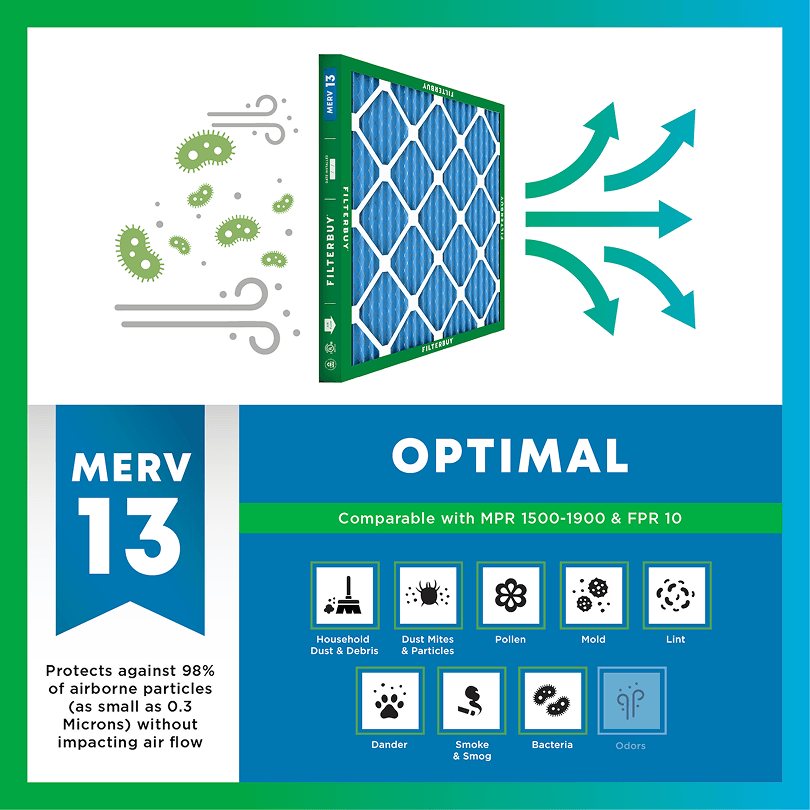
During smoke events, the EPA recommends upgrading to a MERV 13 filter — or the highest-rated filter your system can handle — to help reduce the fine particles smoke brings indoors. MERV 13 is the level most home HVAC systems can run while still capturing PM2.5, the fine particulate that makes up the bulk of wildfire smoke.
- Captures PM2.5 particles
- Blocks ash, soot, and smoke odor
- Keeps your indoor air safe—even when the outdoor air is dangerous
- Meets the EPA's recommended rating for filtering fine wildfire smoke particles.

Wildfire Smoke FAQs
Facts About Wildfires
Over 70,000 wildfires burn in the U.S. every year.
Wildfire smoke can travel 1,000+ miles, affecting states that aren't even near the blaze.
Exposure to wildfire smoke can worsen asthma, trigger heart issues, and lead to ER visits.
Indoor air can hold more fine particles during wildfire events unless it's properly filtered.
The EPA advises using MERV 13 filters or portable HEPA air cleaners during wildfire smoke events.
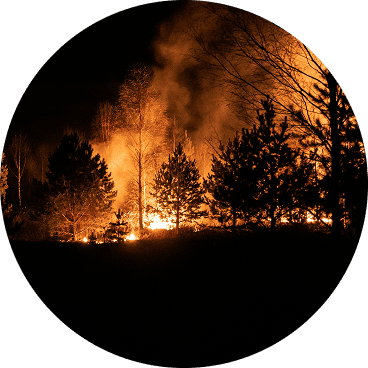
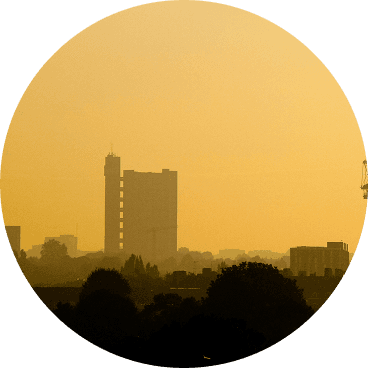
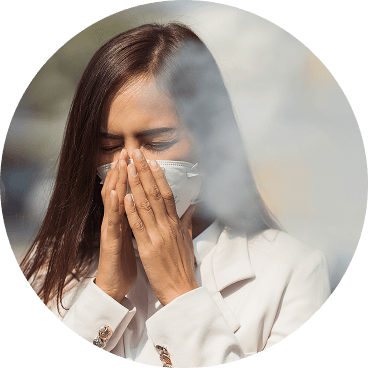
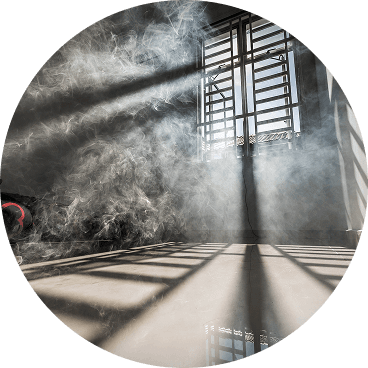
Don't Wait Until The Smoke's Inside.
Use the live wildfire smoke tracker and upgrade your air filters today to protect your lungs and your home.
Shop Filters For Smoke Protection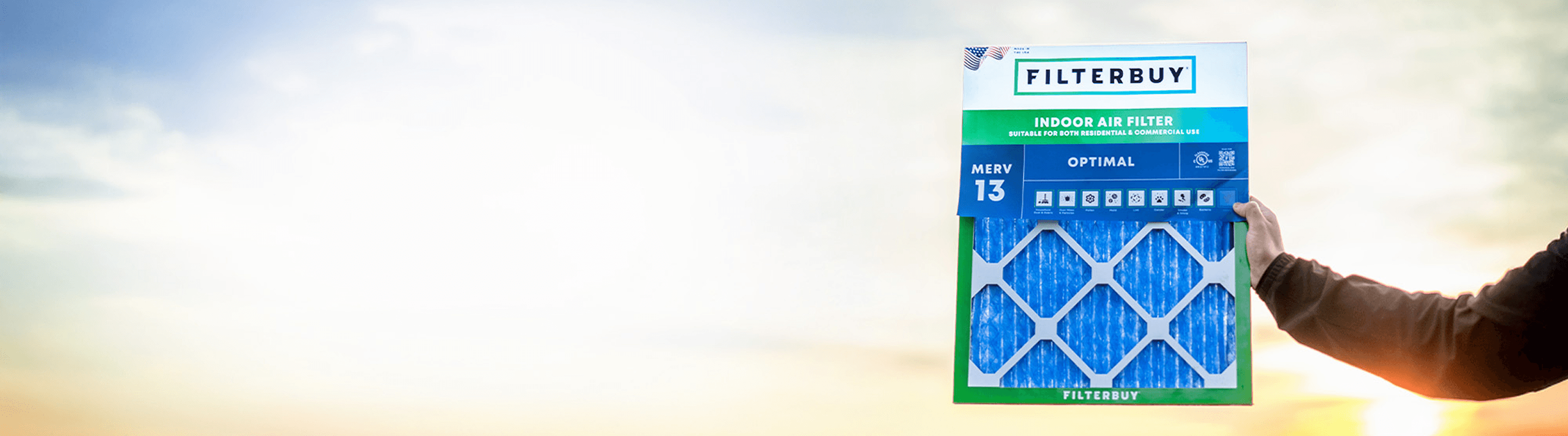
Live Quebec Forest Wildfire & Smoke Map Today: Provincial Air Quality Tracking & Indoor Protection Solutions
Written by Michelle Wan · Reviewed by David Clark, Licensed HVAC Technician
Published: 1 September 2026 · Last updated: 1 September 2026
TL;DR
Quebec's official wildfire map comes from SOPFEU, and the smoke forecast from Environment and Climate Change Canada's FireWork system, which projects 72 hours ahead.
Building this page, Filterbuy found two things worth knowing before smoke season. Quebec runs on two different air quality indices, and the federal one covers only three locations province-wide. Most Quebec homes also have no furnace filter slot, since almost two-thirds heat with electric baseboards or radiant panels.
So the first question isn't which filter to buy, but which index covers you and whether your home has one at all.
Key Takeaways
SOPFEU is the official source for active wildfire locations in Quebec, and its map carries fire danger ratings and open-fire restrictions too.
ECCC's FireWork forecasts smoke movement 72 hours ahead, showing where smoke is going, not only where it is.
Quebec runs two different air quality scales. The federal AQHI covers three locations, the provincial IQA far more. Filterbuy checked both, and the gap surprised us.
Most Quebec homes have no furnace filter slot, since Statistics Canada puts baseboard and radiant heating at almost two-thirds of households. A portable air cleaner is what matters there.
Health Canada recommends MERV 13 or higher for homes with forced air.
AQHI 7 is the number to act on, where ECCC advises the general population to reduce strenuous outdoor activity.
How Do I Read the Live Quebec Fire and Smoke Map?
Read the map in two layers. The fire layer shows where wildfires are burning and what status SOPFEU has assigned each one, from new through being held, under control, or out of control. The smoke layer is a forecast rather than an observation, so a community with no fire near it can still sit under heavy smoke.
The status labels are what we see misread most often. When SOPFEU marks a fire "under control," it expects the fire to stay within its perimeter, not to have stopped producing smoke. Smouldering fires keep emitting for weeks after the flame front is contained, which is why a map that looks calmer than the air feels isn't wrong.
Why Does Quebec Give Me Two Different Air Quality Numbers?
This is the section that sent us back to the primary sources twice, because we didn't believe the first result. Quebec residents are served by two official air quality indices, on different scales, from two levels of government, and knowing which applies to you prevents a misreading.
The federal index is the AQHI, published by ECCC from 1 to 10+ and calculated hourly from PM2.5 during smoke events.
When the Filterbuy Canada team pulled up ECCC's Quebec summary and counted, the province turned out to have AQHI values for exactly three locations: Gatineau, Montréal, and Québec City, across more than 1.5 million square kilometres.
The provincial index is the IQA, reported hourly by Quebec's environment ministry from stations across the province. Its bands run bon (1 to 25), acceptable (26 to 50), and mauvais (51 and above), with a PM2.5 reference of 35 µg/m³ over three hours.
One detail we nearly missed: between 1 May and 30 September, the IQA map adds a wildfire-tracking mode carrying seasonal PM2.5 readings and a 72-hour forecast from the Meteorological Service of Canada. It isn't on by default, and the instruction to switch it on sits beside the map in French only, under "Suivi de l'impact des feux de forêt." We haven't seen it explained in English.
That leaves two gaps. Outside those three cities there's likely no AQHI value at all, and the provincial map excludes Island of Montreal stations, which the city publishes separately.
There is a shortcut past both. Because the indices aren't comparable, skip the index number and read the raw PM2.5 in µg/m³ that both dashboards report, giving you one figure on one scale everywhere. Quebec treats 35 µg/m³ as the point where air becomes mauvais, and the U.S. EPA sets essentially the same threshold for its "unhealthy" category, so two regulators arrived at the same line independently.
What Should I Do at Each Air Quality Reading?
ECCC pairs every AQHI band with health advice, and the practical trigger is 7.
1 to 3, low risk. Ideal for outdoor activity, and at-risk people can carry on as usual.
4 to 6, moderate risk. No need to change plans unless you notice coughing or throat irritation.
7 to 10, high risk. Reduce or reschedule strenuous outdoor activity. Children and older adults should take it easy, and at-risk people should cut back regardless of symptoms.
Above 10, very high risk. At-risk people should avoid outdoor exertion; everyone else should reduce it.
On the IQA, mauvais carries a comparable warning for young children, older adults, and anyone with respiratory or cardiac conditions.
What we take from this. Most wildfire pages say "check the AQHI" and stop, but for most of Quebec that doesn't resolve to a number. Find out which index covers you before the smoke arrives, not on a bad air day.
The Filterbuy Canada Team
What Is Wildfire Smoke, and Why Does It Get Indoors?
Wildfire smoke is largely fine particulate matter, particles 2.5 micrometres and smaller, known as PM2.5. Health Canada identifies it as the main public health threat from wildfire smoke at roughly 90% of total particulate mass, and ECCC notes it can be carried thousands of kilometres.
Particles that small slip through the ordinary gaps in a house, around window frames and door thresholds and in through the fresh-air intake, so closing windows helps without sealing anything. Many Quebec homes also run an HRV or ERV that draws outdoor air inside to manage winter humidity, and in a smoke event it pulls smoke in too. Check whether yours has a recirculation setting before you need it.
First Question: Does Your Home Even Have a Filter Slot?
Most Quebec homes don't, and this page would be dishonest if it skipped past that.
Statistics Canada reports that almost two-thirds of Quebec households heat with electric baseboards (58%) or electric radiant (7%), against just over half nationally running forced air. Cheap hydroelectricity made baseboards the default here.
Baseboard heat moves no air through ductwork, so there's no return vent and no filter slot. If that describes your home, most wildfire smoke advice online wasn't written for you, including the standard line about upgrading to MERV 13.
Baseboards or radiant panels: a portable air cleaner sized to one room is your tool, and you can skip the furnace filter aisle.
Ductless heat pump or mini-split: the screen inside is washable rather than MERV-rated, so it won't capture PM2.5.
Forced-air furnace or air handler: the steps below apply.
We wrote a separate guide for the first two groups: protecting your air without a furnace.
How Do I Protect My Indoor Air During a Quebec Smoke Event?
Health Canada's cleaner air spaces guidance recommends filters rated MERV 13 or higher, alongside sealing windows and doors and switching to recirculation.
Filterbuy ships filters into Canadian smoke seasons every year, and the ordering pattern tells its own story: demand for MERV 13 spikes after the haze arrives. Here's the better order.
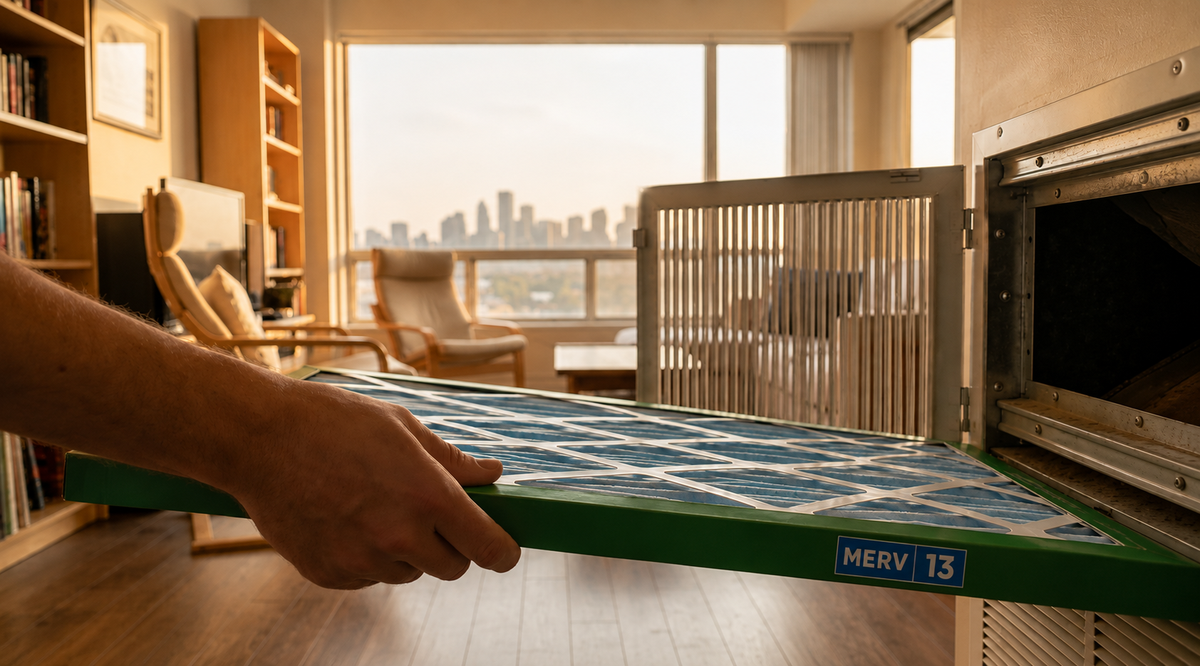
Check compatibility first, because not every furnace takes a MERV 13 without a meaningful pressure drop. Our MERV 13 versus HEPA comparison covers why true HEPA isn't an option in a residential slot.
Close up and switch to recirculation, then switch back once smoke clears, since Health Canada notes pollutants can otherwise stay trapped indoors.
Run the furnace fan continuously, because a filter only cleans air that passes through it. Most people skip this, and the EPA figures below show the cost.
Replace the filter more often, since heavy smoke loads it faster than the standard 60 to 90 day cycle.
Get the size right, because a filter that doesn't fill its slot lets air stream past the media. It's why we cut over 600 sizes.
Filtration reduces exposure without eliminating it, so at the very high band, follow public health guidance.
Supporting Statistics
Three findings from U.S. agencies supporting claims above.
1. Quebec smoke pushed New York City to AQI 465, its worst reading on modern record, from fires hundreds of kilometres north in another country.
Source: NYC Emergency Management
2. Asthma emergency department visits ran 17% higher than expected across 19 smoke days in 2023, with the 6–8 June episode alone producing 364 excess visits across New York and New Jersey, while Canadian smoke covered most of the contiguous United States.
Source: CDC, Morbidity and Mortality Weekly Report
3. A high-efficiency filter with the fan running continuously cuts indoor PM2.5 by about 50%, against roughly 24% for a low-efficiency one. Closing windows alone still leaves indoor levels at 55% to 60% of outdoor.
Source: U.S. EPA
Which Filterbuy Filter Should I Choose for Wildfire Smoke?
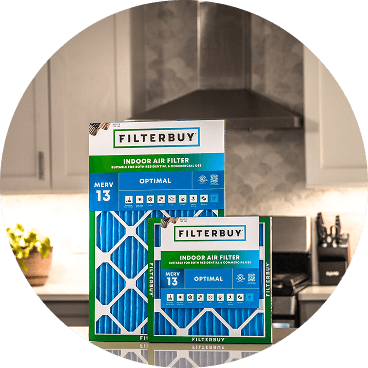
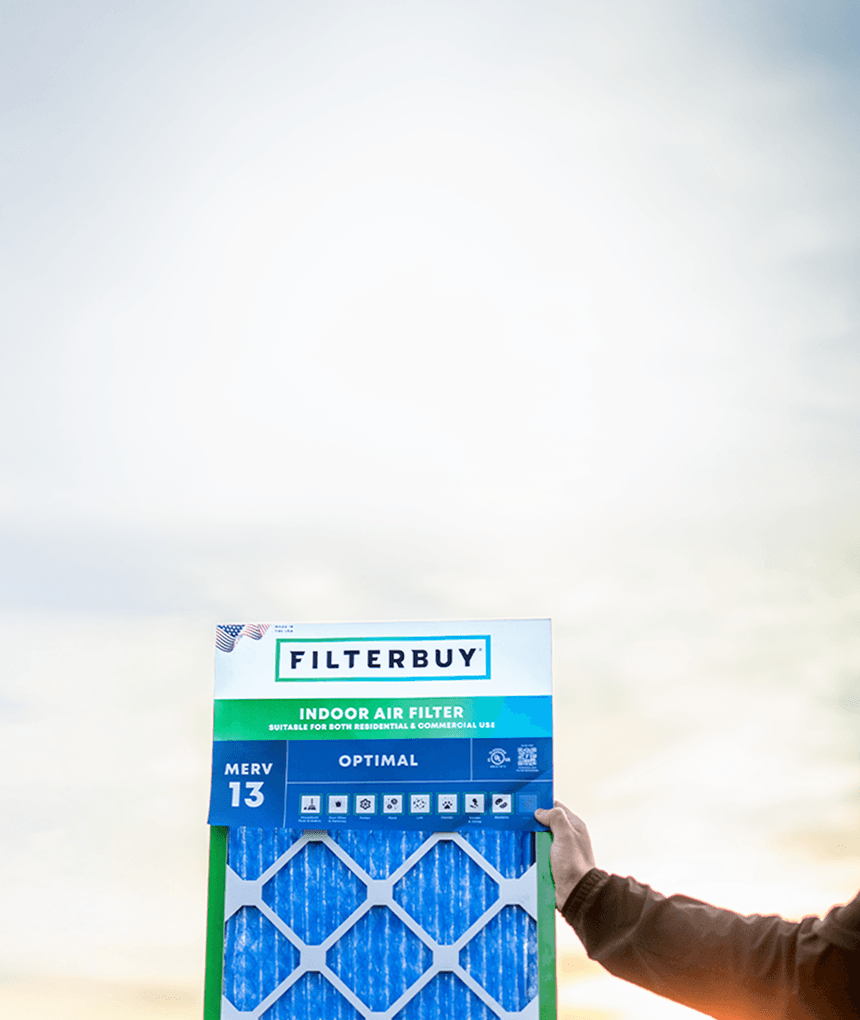
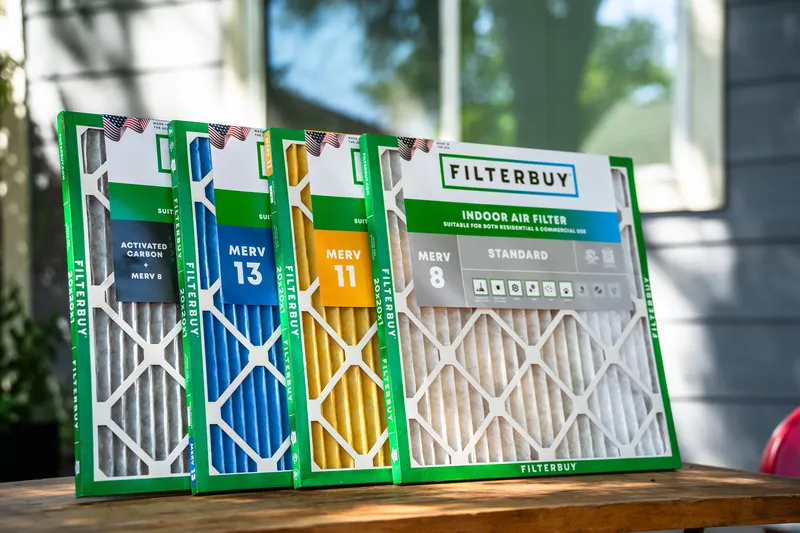
If your home has forced air, MERV 13 Optimal is the one to reach for. Filterbuy colour-codes the media so the rating is identifiable at a glance.
MERV 8, Standard captures 90% of airborne particles, but not fine smoke.
MERV 11, Superior captures 95%, including dust mites, mould spores, and pet dander.
MERV 13, Optimal captures 98%, including smoke, and matches Health Canada's guidance.
Odour Eliminator uses carbon media for smoke smell, since particle filters don't remove gases.
Every filter ships free to Canada with no minimum, in over 600 sizes priced in CAD. If yours isn't stocked, our custom filter tool will make it, and Subscribe and save lets you edit or cancel anytime.
When Is Quebec's Wildfire Smoke Season, and Which Regions Are Affected?
Quebec's season runs from spring snowmelt through early autumn, peaking June to September, with SOPFEU suspending its fire danger index over winter.
Fire activity concentrates in the boreal forest, across Abitibi-Témiscamingue, Nord-du-Québec, and Saguenay–Lac-Saint-Jean, while prevailing winds carry the smoke south into the St. Lawrence Valley and on into Ontario. SOPFEU records 2023 as Quebec's worst season in over a century: 713 fires, 4.3 million hectares, 99.9 per cent lightning-started.
Frequently Asked Questions
Glossary
AQHI (Air Quality Health Index). Canada's federal health-risk scale, 1 to 10+, published by ECCC. Called the Cote air santé in French.
FireWork. ECCC's smoke movement forecast, 72 hours ahead.
HRV / ERV. Heat and energy recovery ventilators, which exchange indoor and outdoor air.
IQA (Indice de la qualité de l'air). Quebec's provincial index, banded bon, acceptable, and mauvais.
MERV (Minimum Efficiency Reporting Value). Filter efficiency rating; higher numbers capture smaller particles.
PM2.5. Fine particulate matter 2.5 micrometres and smaller, the main component of wildfire smoke.
SOPFEU (Société de protection des forêts contre le feu). Quebec's wildfire management agency.
Related Guides From Filterbuy Canada
Questions about your filter size or subscription? Call (855) 345-8289 or email info@filterbuy.com. Filterbuy Canada, 96 Carrier Dr, Toronto, ON M9W 5R1.