
Saskatoon Real-Time AQI Tracker
What's Actually In Saskatoon Air Today?
What High AQI Means for Your Lungs in Saskatoon
How to Read AQI
The Air Quality Index (AQI) measures how polluted the air is and how it may affect your health.
0–50 (Good): Air quality is satisfactory.
51–100 (Moderate): Acceptable, but some pollutants may pose minor concerns.
101–150 (Unhealthy for Sensitive Groups)
151–200 (Unhealthy)
201–300 (Very Unhealthy)
301+ (Hazardous)
Moderate
Still okay for most, but if you have asthma or allergies, take it easy and avoid long outdoor workouts.
Shop MERV 11 filters→What's the Right Filter for Your AQI Level?



Check Today's Live Real Time Air Quality Index AQI Map in Saskatoon, SK Now
Author: Michelle Wan | Technical Reviewer: David Clark, Licensed HVAC Technician | Publish Date: July 26, 2026 | Updated Date: July 26, 2026
TL;DR
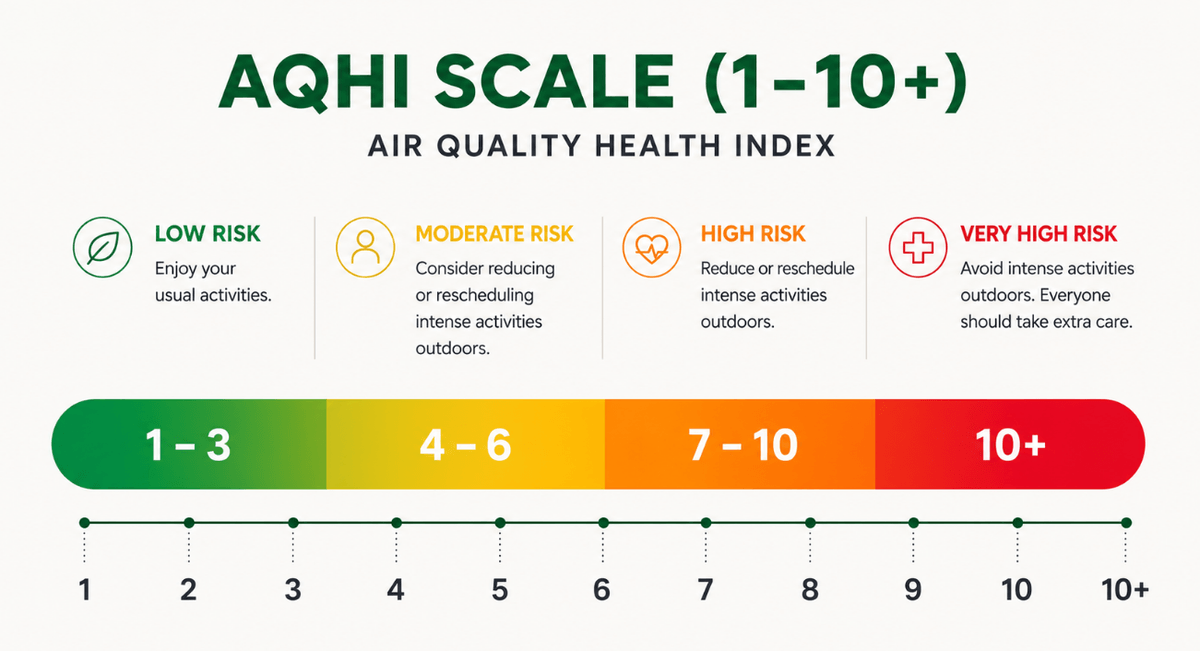
Saskatoon's air quality is tracked through Canada's Air Quality Health Index (AQHI), a 1-to-10+ scale combining ozone, PM2.5, and nitrogen dioxide into one health-risk number, updated hourly. Use the live map above for today's reading, not yesterday's, since conditions shift quickly when smoke or dust moves through. Planning a trip elsewhere? Canada's live air quality map covers every province.
Key Takeaways
The AQHI runs from 1 (low risk) to 10+ (very high risk), distinct from the U.S. EPA's 0–500 AQI scale.
Saskatoon's readings come from Environment and Climate Change Canada and the Saskatchewan Ministry of Environment's monitoring network.
Saskatoon sits south of the boreal forest, so its air can worsen from wildfire smoke drifting in from Saskatchewan, Alberta, or the NWT, even with no fire nearby.
Spring prairie dust and winter inversions are two other local conditions worth watching.
A Special Air Quality Statement (SAQS) means at-risk groups should adjust outdoor activity.
A properly rated HVAC filter manages indoor particulate matter, alongside, not instead of, checking the live AQHI.
What Is the Air Quality Health Index (AQHI)?
Canada reports air quality through the Air Quality Health Index, a joint initiative of Environment and Climate Change Canada, Health Canada, and the Saskatchewan Ministry of Environment. Unlike the U.S. EPA's AQI, which scores individual pollutants on a 0-to-500 scale, the AQHI combines ozone, PM2.5, and nitrogen dioxide into one number from 1 to 10+ reflecting combined health risk.
AQHI Risk Categories
Why Saskatoon's Air Quality Can Change Even on a Calm, Clear Day
Saskatoon sits on the open prairie, hundreds of kilometres south of Saskatchewan's boreal forest, where most of the province's wildfire activity happens. That distance doesn't offer the protection it might seem to. Smoke from fires in northern Saskatchewan, northern Alberta, and even the Northwest Territories has repeatedly travelled south and settled over Saskatoon, sometimes triggering Special Air Quality Statements while the fire zone itself has already started to clear. Environment Canada meteorologists have described this pattern directly: a weather system pulling smoke down "all the way south as far as Saskatoon" from fires burning hundreds of kilometres away.
This is what makes Saskatoon's story different from a city closer to its own pollution sources: today's number may have little to do with anything in city limits. A quiet, windless afternoon can still carry a smoke plume that started two provinces away the week before. Check the live AQHI rather than assume yesterday's clear sky repeats, and keep an eye on Canada's live wildfire and smoke map through the summer.
Signs Your Air Might Be Changing, Before You Check the Map
The live map updates hourly, but your senses often notice a shift first:
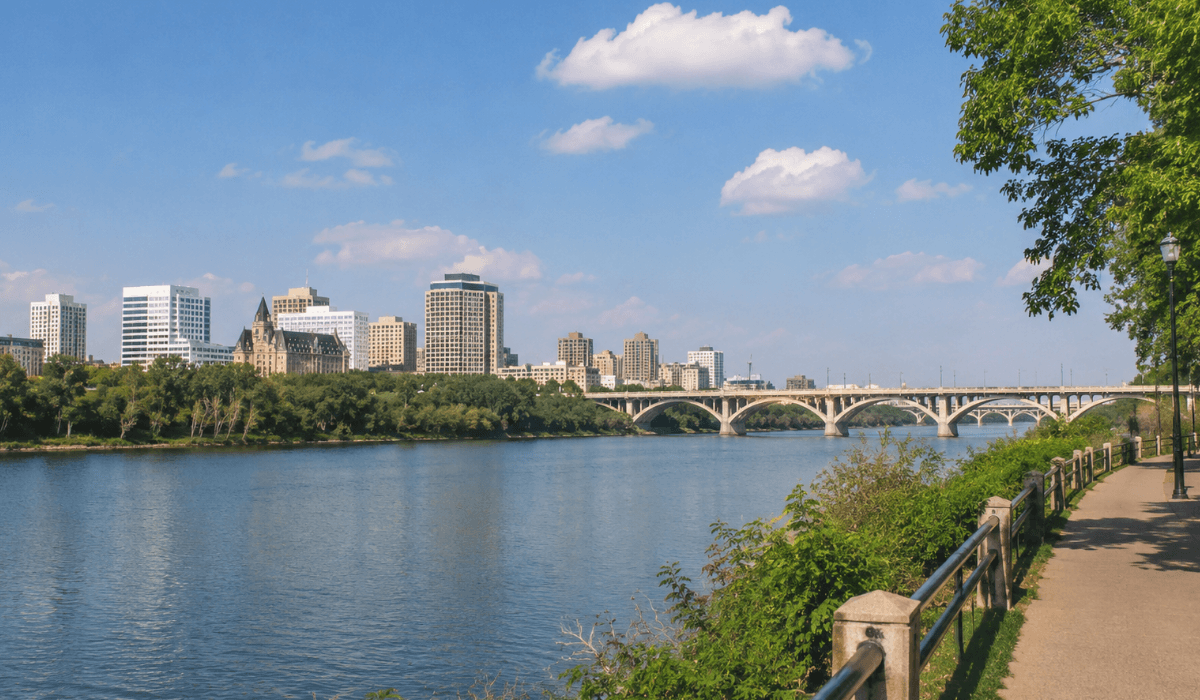
A hazy or washed-out horizon, especially looking north up the South Saskatchewan River valley.
A sunrise or sunset that looks unusually orange or red for the season.
A faint campfire smell indoors with the windows shut.
Mild eye or throat irritation on an ordinary walk.
None of these confirm an exact AQHI value, but they're a good prompt to check the live reading.
How Saskatoon's Air Quality Is Measured
Source: Government of Saskatchewan, Air Quality Monitoring
Seasonal Patterns That Affect Saskatoon's Air
Summer wildfire smoke (June-September): long-range smoke from northern Saskatchewan, Alberta, and the NWT is the most common driver of poor readings.
Spring prairie dust: as snow melts and farmland dries out, wind lifts fine soil, adding to the region's PM2.5 load on gusty days.
Winter temperature inversions: cold, still air traps vehicle exhaust and wood smoke near the ground during the long heating season.
None of this means Saskatoon's air is bad by default; most days sit in the low-risk range. These are simply the recurring reasons a reading can shift.
Who in Saskatoon Should Watch the AQHI Most Closely
Health Canada's at-risk categories cover children, older adults, and people with heart or lung conditions. In Saskatoon, that means:
Parents and schools: outdoor recess and sports practice are usually first to scale back.
Meewasin Valley Trail users: walkers, runners, and cyclists along the South Saskatchewan River spend extended time outdoors right when smoke settles into the valley.
Farm and outdoor construction crews: spring dust and summer smoke land hardest on full outdoor shifts.
Older adults without central air: an open window is often the only cooling option, and it stops working once the AQHI climbs.
Protecting Your Indoor Air When Saskatoon's AQHI Climbs
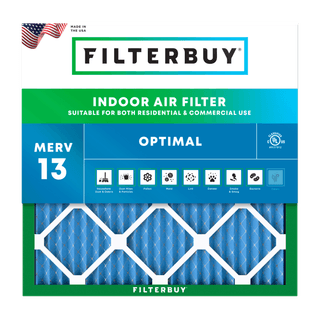
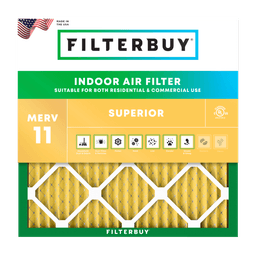
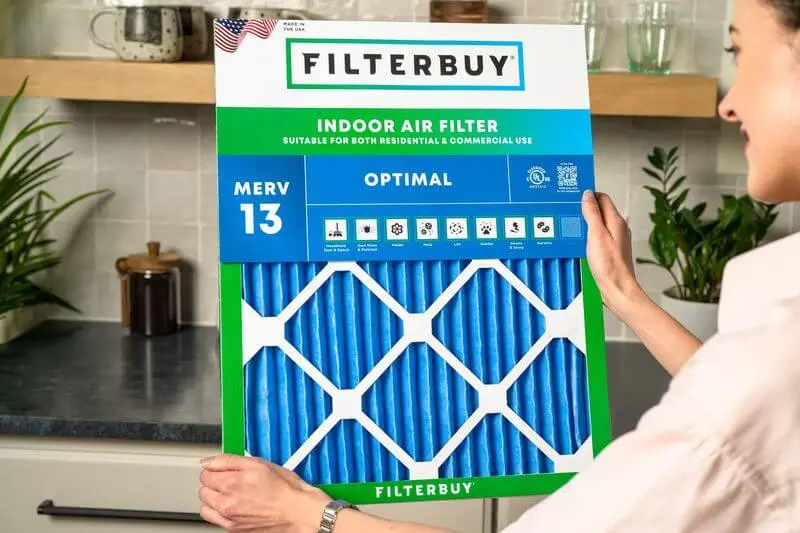
Checking the live AQHI tells you what's happening outside; what happens inside depends on your HVAC filter. A Filterbuy Canada MERV 11 (Superior) filter captures the pet dander, mould spores, and finer dust a basic filter lets through, while a MERV 13 (Optimal) filter steps up to bacteria and smoke particles, the two ratings our customers reach for most once wildfire smoke trends in the news.
Filterbuy Canada ships every filter size direct to your door, backed by 85,000+ five-star reviews across North America, with a Subscribe & Save option so a fresh filter arrives on schedule all year. For lingering smoke smell, our Odour Eliminator filter helps directly. Unsure which rating fits your system? Our MERV ratings guide breaks it down in plain language.
Filterbuy Canada's Take
Most air quality guidance treats the AQHI like an alarm: check it, react, move on. At Filterbuy Canada, working with homeowners across the Prairies, we've noticed the pages that change behaviour explain why a reading moved, not just what it says. Saskatoon's air rarely turns bad because of anything in Saskatoon itself; more often, a fire hundreds of kilometres north pushed smoke into the wind. Once that clicks, checking the map feels less like a chore and more like reading the weather.
“In Saskatoon, I tell homeowners not to wait for a smoky sky before they think about their filter. Furnaces here run most of the year, and between dry prairie dust in spring and wildfire smoke in summer, a filter that's already overdue has less capacity left for the extra load. Checking the AQHI and checking your filter go hand in hand.”
- David Clark, Licensed HVAC Technician, Filterbuy Canada Technical Reviewer
Essential Resources
Filterbuy Canada makes air filters; we don't run the monitoring stations. For the data and science, here's where we send our own team.
Choose the Right Filter
Filterbuy Canada's MERV ratings guide to compare MERV 8, 11, and 13.
Check the Official Sources
Environment Canada's Saskatoon AQHI page for the hourly reading and forecast.
Saskatchewan's real-time Air Quality Map for station data across the province.
Track Wildfire Smoke Early
Environment Canada's Wildfire Smoke and Air Quality page for smoke forecasts and alerts.
Understand Your Personal Risk
Health Canada's AQHI health-risk guide for how the index applies to at-risk groups.
Supporting Statistics
Fine particulate matter and wildfire smoke don't stop at a border. Three figures show why outdoor AQHI and indoor filtration matter.
1. Cross-border smoke drove a 17% spike in asthma ER visits
Wildfire smoke from Canada blanketed much of the US in 2023.
Asthma ER visits ran 17% higher than expected across 19 smoke days.
Sharpest spikes hit regions where PM2.5 peaked.
Source: CDC, MMWR
2. Indoor air can be 2 to 5 times more polluted than outdoor air
Americans spend about 90% of their time indoors.
Indoor pollutant levels often run 2 to 5 times higher than outdoors, per the EPA.
The outdoor AQHI is only half the picture. Your HVAC filter covers the rest.
Source: U.S. EPA, Report on the Environment
3. A stricter PM2.5 standard could prevent thousands of deaths a year
In 2024, EPA lowered the annual PM2.5 limit from 12.0 to 9.0 micrograms per cubic metre.
PM2.5 is the same particulate reflected in Canada's AQHI.
Projected to avoid up to 4,500 premature deaths and 800,000 asthma-symptom cases a year by 2032.
Source: U.S. EPA, PM2.5 NAAQS Fact Sheet
Frequently Asked Questions
Glossary
AQHI: Canada's 1-to-10+ scale combining ozone, PM2.5, and nitrogen dioxide into one health-risk number.
AQI: The U.S. EPA's 0-to-500 pollutant scale, distinct from Canada's AQHI.
PM2.5: Fine particulate matter smaller than 2.5 microns; a major driver of wildfire-smoke and dust-related AQHI increases.
NAPS: National Air Pollution Surveillance program, monitoring Canadian air quality since 1969.
SAQS: Special Air Quality Statement, an Environment Canada advisory for at-risk groups.
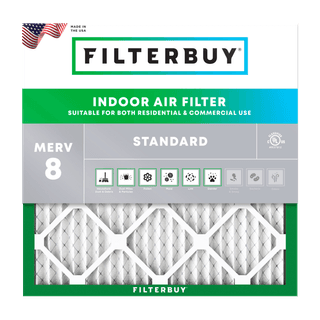
MERV: Minimum Efficiency Reporting Value; Filterbuy Canada labels MERV 8, 11, and 13 as Standard, Superior, and Optimal.