
Terrebonne Real-Time AQI Tracker
What's Actually In Terrebonne Air Today?
What High AQI Means for Your Lungs in Terrebonne
How to Read AQI
The Air Quality Index (AQI) measures how polluted the air is and how it may affect your health.
0–50 (Good): Air quality is satisfactory.
51–100 (Moderate): Acceptable, but some pollutants may pose minor concerns.
101–150 (Unhealthy for Sensitive Groups)
151–200 (Unhealthy)
201–300 (Very Unhealthy)
301+ (Hazardous)
Moderate
Still okay for most, but if you have asthma or allergies, take it easy and avoid long outdoor workouts.
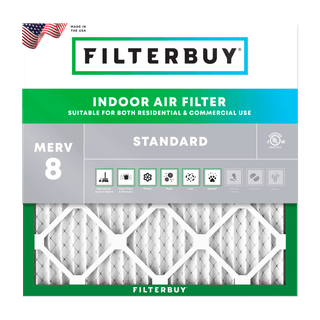
Shop MERV 11 filters→What's the Right Filter for Your AQI Level?




Check Today's Live Real Time Air Quality Index AQI Map in Terrebonne, QC Now
TL;DR
Terrebonne has a government air quality monitoring station inside the city, Terrebonne - Parc Vaillant, reporting hourly on Quebec's provincial Air Quality Index. It has no Air Quality Health Index, because Environment and Climate Change Canada publishes the AQHI for only three places in the province and this is not one of them. That station also has a notable record: it is one of only four in Quebec to have exceeded the annual fine particle standard, which the province attributes to residential wood heating. Use the live map above for current conditions.
Key Takeaways
Terrebonne has no AQHI. Environment and Climate Change Canada publishes the Air Quality Health Index for three Quebec locations only: Montreal, Quebec City and Gatineau.
Terrebonne - Parc Vaillant is a Quebec government monitoring station located inside the city, so residents get a genuinely local hourly reading rather than a number borrowed from Laval or Montreal.
Quebec's Air Quality Index uses three categories: Good (1 to 25), Acceptable (26 to 50) and Poor (51 and above).
Terrebonne - Parc Vaillant was one of only four stations in Quebec to exceed the annual Canadian Ambient Air Quality Standard for fine particles over the 2020 to 2022 period.
Quebec's environment ministry names Terrebonne - Parc Vaillant as one of two stations demonstrating that residential wood heating drives winter days of poor air quality.
How to Check Terrebonne Air Quality Right Now
The live map above shows current conditions for Terrebonne and the surrounding Lanaudiere region. The readings come from Terrebonne - Parc Vaillant, a station in the Quebec air quality monitoring network, run by the province's environment ministry. It sits inside the city boundaries, so the number reflects local conditions rather than a regional average. Filterbuy Canada keeps the map here year-round so you can find it in one place.
That matters more than it sounds. Quebec classifies its stations by how far their readings can be trusted to travel, and treats a station inside your municipality as a good indicator for the surrounding urban area. Terrebonne residents get a same-city number. Mascouche, Bois-des-Filion and Sainte-Anne-des-Plaines have no station at all, and fall back on regional readings.
AQHI or IQA: Which Index Applies in Terrebonne?
Terrebonne runs on Quebec's Air Quality Index, the IQA, not the national Air Quality Health Index. The AQHI is Canada's health-based scale, running from 1 to 10 and above, but Environment and Climate Change Canada publishes it for only three Quebec locations, and the nearest to Terrebonne is Montreal. The result is an odd gap. Terrebonne is better monitored than most Quebec suburbs, yet no health index is published for it.
The AQHI sorts conditions into four bands. At 1 to 3 the risk is low, and the general population can carry on as usual outdoors. At 4 to 6 it is moderate: people at risk should consider easing off strenuous outdoor activity if symptoms appear. At 7 to 10 the risk is high, so at-risk people should cut back or reschedule, and children and older adults should take it easy as well. Above 10 the risk is very high, and at-risk people should avoid strenuous outdoor activity altogether.
The IQA works differently, with three categories: Good from 1 to 25, Acceptable from 26 to 50, and Poor at 51 and above. Each hour the ministry calculates a sub-index for every pollutant a station measures, dividing the reading by a health-based reference value and multiplying by 50. The published IQA is whichever sub-index comes out highest. For fine particles the reference value is 35 micrograms per cubic metre over three hours; for ozone, 82 parts per billion over one hour.
The U.S. Air Quality Index, which runs from 0 to 500, shows up on many third-party apps covering Terrebonne. It is a fair point of comparison, but it is not the scale Canadian or Quebec authorities issue health advice against.
What Terrebonne's Monitoring Record Shows
We went through Quebec's latest progress report on the Canadian air quality standards, station by station. Terrebonne - Parc Vaillant was one of only four stations in the province to exceed the annual standard for fine particles across 2020 to 2022. That standard is 8.8 micrograms per cubic metre, averaged over three years. The other three were Montreal - Echangeur Decarie, Quebec - Henri IV and Quebec - Ecole Les Primeveres.
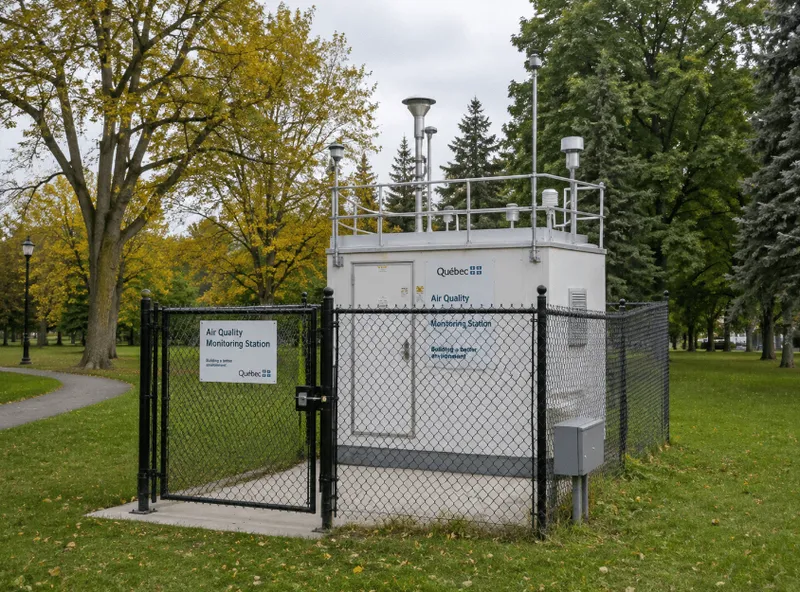
What caught our attention was the company Terrebonne keeps on that list. Echangeur Decarie sits at one of Montreal's busiest highway interchanges. Henri IV sits beside a major Quebec City motorway. Terrebonne - Parc Vaillant sits in a residential park. Three of the four have an obvious source next door. Terrebonne's does not.
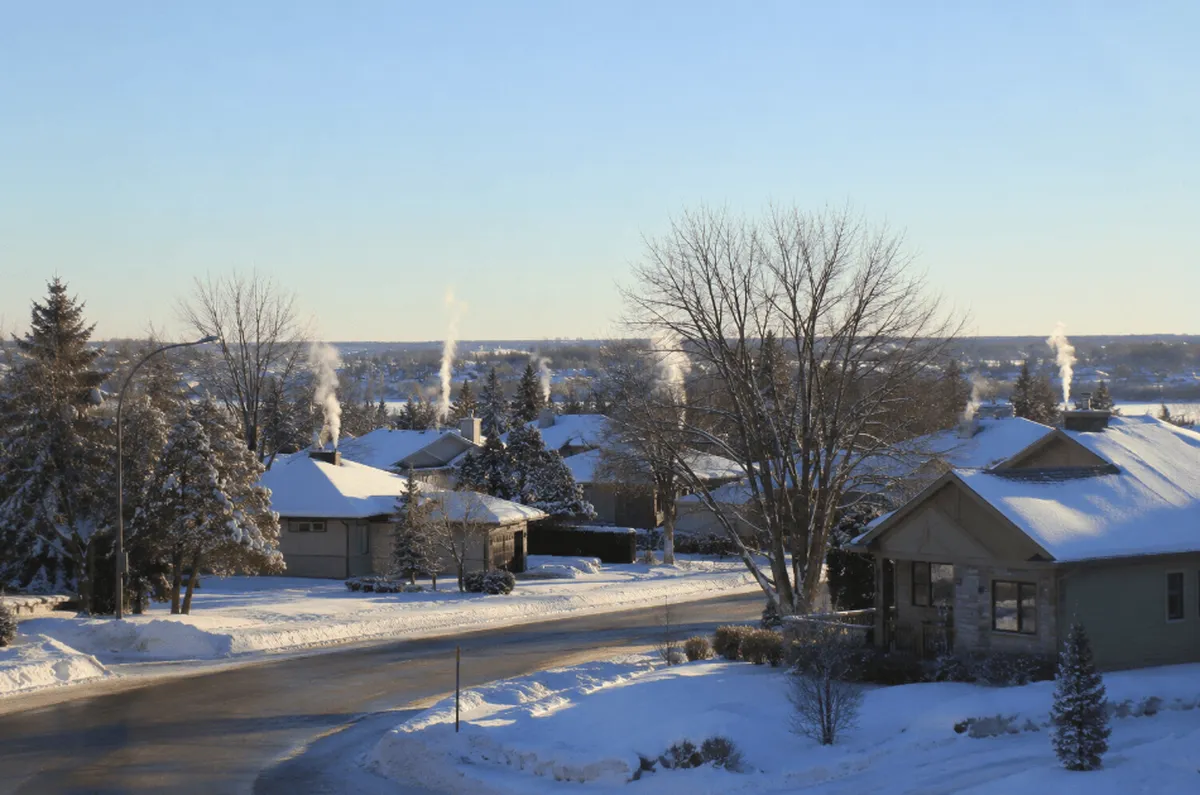
The ministry explains the difference itself. Its annual statistics on days of poor air quality name residential wood heating as the main driver of winter days in urban areas, and single out Terrebonne - Parc Vaillant as one of two stations that show the pattern. The other is Quebec - Charlesbourg.
That makes Terrebonne's air quality story a seasonal one, and a local one. Across Quebec in 2025, the average station recorded 16.8 poor air quality days, and forest fires accounted for 81 per cent of them, a larger share than in the 2023 wildfire season. Terrebonne's extra winter days come from somewhere else entirely: the stoves and fireplaces on its residential streets.
What Drives Air Quality in Terrebonne Through the Year
Terrebonne's air quality follows two distinct seasonal patterns, and fine particles drive both. Quebec's environment ministry reports that fine particles are the principal cause of poor air quality days province-wide, while ozone contributed to only two such days across the network in 2025.
In winter, wood smoke dominates. Cold, calm nights trap smoke close to the ground in low-density residential streets, which is precisely why a quiet park station can record higher fine particle levels than a highway station. Terrebonne sits in the Lanaudiere region just north of Laval, across the Riviere des Mille Iles, with roughly 119,900 residents across the Terrebonne, Lachenaie and La Plaine sectors.
In summer, wildfire smoke takes over. Between 1 May and 30 September, Quebec adds seasonal sensor data and a 72-hour fine particle forecast to its IQA map to track it. During the summer of 2025, wildfires generated between 2 and 20 poor air quality days per station across the network.
Traffic contributes year-round, though less than Terrebonne's highway geography might suggest. Autoroutes 25, 40 and 640 all pass through or beside the city, and road transport is the main source of the nitrogen oxides that form ozone. Measured nitrogen dioxide across Quebec stayed within both the hourly and annual Canadian standards throughout the reporting period.
What the Terrebonne Reading Can and Cannot Tell You
The Parc Vaillant figure is the best local number available. It also has limits, all of them published openly by Quebec, and worth knowing before you act on a reading:
One station covers 158 square kilometres. Quebec classifies urban stations as having limited spatial reach. Wood smoke is highly local, so a still evening in La Plaine or Lachenaie may not match what Parc Vaillant records.
Fine particle readings are a three-hour average. A short, sharp evening spike is smoothed across three hours before it reaches the index.
Live numbers are unvalidated, and the index only reflects the contaminants a station actually measures. A pollutant with no analyser cannot raise the reading.
Summer sensor data comes from different equipment. The map adds seasonal wildfire sensors from May through September, and the ministry notes these are not among its certified instruments.
None of this makes the reading unreliable. It makes it a good guide to the city and a rough one to your street.
Supporting Statistics on Wood Smoke, Fine Particles and Filtration
1. Indoor Wood Burning Drives Up to 90 Per Cent of Local Particle Pollution
The American Lung Association reviewed the research on residential combustion. Three findings stand out:
Indoor wood burning causes up to 90 per cent of local particulate matter pollution in smaller communities and rural areas.
Roughly 9 per cent of the 118.2 million housing units in the United States burn wood.
Wood-burning heating appliances cause sharp spikes in indoor particle levels.
2. A Better Furnace Filter Cuts Indoor Fine Particles by About Half
The U.S. Environmental Protection Agency reports these reductions when the system fan runs continuously:
High-efficiency filter: about 50 per cent less indoor PM2.5.
Typical low-efficiency filter: about 24 per cent less.
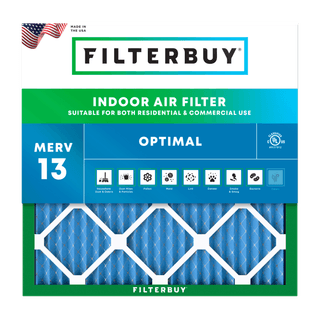
The EPA recommends MERV 13 or higher during smoky periods.
3. The U.S. Annual Fine Particle Limit Is 9.0 Micrograms Per Cubic Metre
The EPA set the annual PM2.5 standard at 9.0 micrograms per cubic metre in February 2024.
The agency announced a reconsideration of that level in March 2025.
Canada's annual standard is 8.8 micrograms per cubic metre, the limit Terrebonne's station exceeded.
Reducing Your Exposure Indoors in Terrebonne
Most Canadian air quality advice is written for wildfire season. Terrebonne's record points somewhere else, and that changes what we would tell a homeowner here. Indoor air is where residents have the most control, especially on still winter evenings when neighbourhood wood smoke settles. Fine particles drift in through windows, doors and ventilation, so what moves through your furnace matters most in exactly the months it runs hardest.
Check the map before opening windows. On days the IQA reports Poor conditions, keeping windows closed limits how much outdoor smoke comes in.
Run the furnace fan continuously rather than only on heat cycles. More air passing through the filter means more particles captured.
Match the filter to the particle. Wood smoke and wildfire smoke are fine particles, and MERV 13 media captures a great deal of what lower ratings pass straight through. The Filterbuy Canada guide to MERV ratings explains how the scale works and which rating suits which home.
Change filters more often during heating season. Canadian furnaces typically run six to eight months a year, far longer than in most U.S. homes, so a filter works harder here.
If you burn wood, burn cleanly. The EPA advises burning only dry, seasoned wood at a moisture content below 20 per cent, which produces considerably less smoke than damp wood in an older stove.
Filterbuy Canada carries over 600 filter sizes, including hard-to-find and custom dimensions, with free shipping to Canada on every order and no minimum purchase. Given what the station data shows, we would rather talk to a Terrebonne homeowner about heating season than about smoke season. If you are not sure which size or rating fits your system, our team is glad to work it out with you.
Frequently Asked Questions
Glossary
AQHI (Air Quality Health Index): Canada's national health-based air quality scale, developed by Environment and Climate Change Canada and Health Canada. It runs from 1 to 10 and above, grouped into low, moderate, high and very high risk bands.
IQA (Indice de la qualite de l'air): Quebec's provincial air quality index, published hourly by the Quebec environment ministry. It reports three categories: Good (1 to 25), Acceptable (26 to 50) and Poor (51 and above).
AQI (Air Quality Index): The United States air quality scale, running from 0 to 500. It is widely used by third-party apps and is a secondary reference in Canada rather than an official one.
PM2.5 (fine particulate matter): Airborne particles 2.5 micrometres in diameter or smaller. They are the main component of wood smoke and wildfire smoke and the principal driver of poor air quality days in Quebec.
Terrebonne - Parc Vaillant: The Quebec government air quality monitoring station located within Terrebonne, part of the provincial monitoring network. Quebec notes that nearly all its stations carry at least a fine particle and an ozone analyser.
CAAQS (Canadian Ambient Air Quality Standards): National air quality objectives set through the Canadian Council of Ministers of the Environment. The annual fine particle standard is 8.8 micrograms per cubic metre, averaged over three years.
MELCCFP: Quebec's ministry responsible for the environment, climate change, wildlife and parks. It operates the provincial air quality monitoring network and publishes the IQA.
MERV (Minimum Efficiency Reporting Value): The industry scale rating how effectively an air filter captures particles. Higher numbers capture smaller particles, with MERV 13 capturing a large share of smoke-sized particles.