
Kitchener Real-Time AQI Tracker
What's Actually In Kitchener Air Today?
What High AQI Means for Your Lungs in Kitchener
How to Read AQI
The Air Quality Index (AQI) measures how polluted the air is and how it may affect your health.
0–50 (Good): Air quality is satisfactory.
51–100 (Moderate): Acceptable, but some pollutants may pose minor concerns.
101–150 (Unhealthy for Sensitive Groups)
151–200 (Unhealthy)
201–300 (Very Unhealthy)
301+ (Hazardous)
Moderate
Still okay for most, but if you have asthma or allergies, take it easy and avoid long outdoor workouts.
Shop MERV 11 filters→What's the Right Filter for Your AQI Level?



Check Today's Live Real Time Air Quality Index AQI Map in Kitchener, ON Now
Author: Michelle Wan | Reviewer: David Clark, Licensed HVAC Technician | Publish Date: July 26, 2026 | Updated Date: July 26, 2026
TL;DR
Kitchener's air quality is tracked in real time through the Air Quality Health Index (AQHI), Canada's 1-to-10+ scale for health risk, using a dedicated Environment Canada monitoring station. Most days Kitchener sits in the low-risk range, though the Waterloo Region has seen several high-risk wildfire smoke events since 2023. Use the live map above to check current conditions before planning outdoor time today.
Key Takeaways
Kitchener's AQHI is measured at a dedicated Environment Canada station (site 26060), reported through weather.gc.ca and Air Quality Ontario.
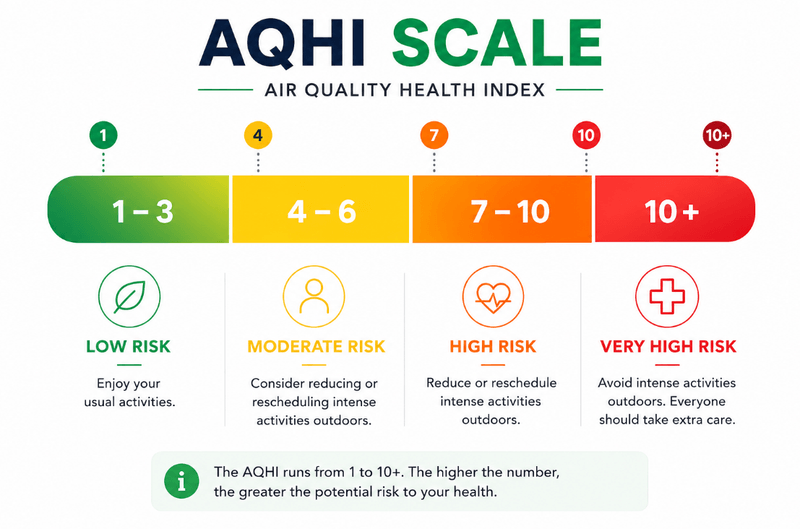
The AQHI runs from 1 to 10+: Low Risk (1-3), Moderate Risk (4-6), High Risk (7-10), and Very High Risk (10+).
Wildfire smoke triggered Special Air Quality Statements for Waterloo Region in June 2023 and again in July 2025.
Kitchener's industrial legacy as a rubber and tire manufacturing hub, plus the Conestoga Parkway running through downtown, shape local air quality differently than in purely suburban Ontario communities.
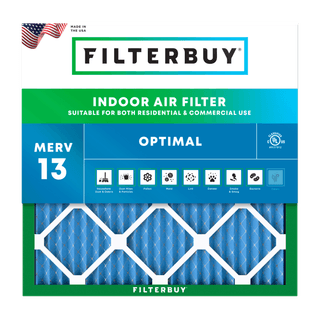
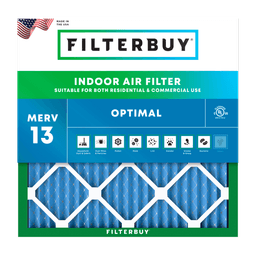
Filterbuy's Optimal (MERV 13) filter is the top choice for Kitchener households during wildfire smoke season, rated to capture particles down to 0.3 microns.
The AQHI should not be treated as a fixed number; Environment Canada notes readings are unvalidated and meant for real-time checking, not archival record.
For the provincial picture, see Filterbuy Canada's live Ontario AQI map.
Understanding Kitchener's AQHI, and Where the Reading Comes From
Most searches for Kitchener's current conditions use the term AQI, the international scale, but Canada's official measure is the AQHI. Both track the same underlying air on different scales; the live map above shows the Canadian AQHI reading local households and news outlets actually rely on.
The AQHI is a joint program of Environment and Climate Change Canada, Health Canada, and the Province of Ontario. Kitchener is served by its own dedicated station, listed as station 26060, reporting current values and forecast maximums throughout the day.
Readings group into three bands:
Low Risk (1-3)
Moderate Risk (4-6)
High Risk (7-10)
Very High Risk (10+)
At Moderate Risk, people with heart or lung conditions may want to reduce strenuous outdoor activity; at High Risk, the general population is advised to do the same. AQHI data arrives in real time without detailed quality control and readings can be revised, which is why this page does not publish a fixed number.
The station sits near Victoria Park; University of Waterloo GEMM researchers note that neighbourhoods closer to highway corridors, including the Conestoga Parkway, can see higher pollution than the citywide number suggests, a pattern a peer-reviewed Kitchener sensor study confirmed directly. A single instrument also means a single point of failure: on June 12, 2024, an apartment fire on Brybeck Crescent briefly skewed the station's reading into the 10+ Very High Risk range. CBC News reported the Ministry of the Environment, Conservation and Parks called the data “not representative of regional air quality” and removed it, an example worth remembering before an unexplained spike changes anyone's plans.
Households near the University of Waterloo campus have a second, more local source: since spring 2025, GEMM's rooftop sensor network has tracked campus-level PM2.5, ozone, and nitrogen dioxide, adding detail the citywide station cannot provide.
Kitchener's Two-Layer Air Quality Story
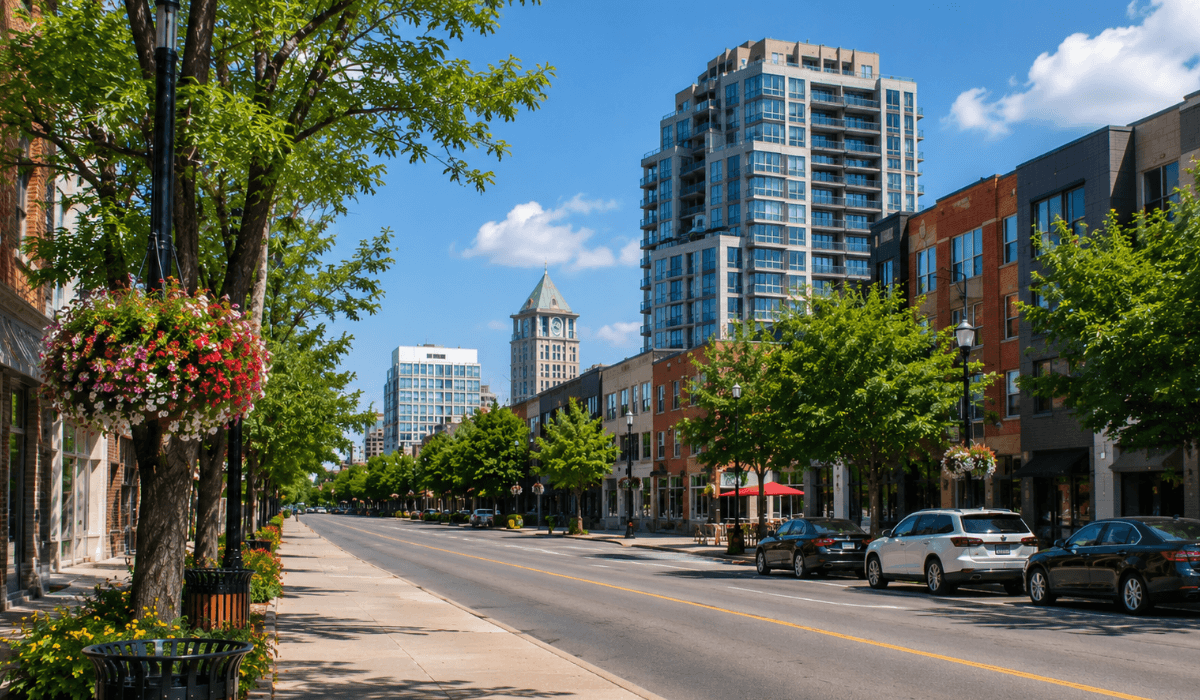
Most Kitchener air quality pages stop at the daily AQHI reading. This page adds the layer we have not seen covered elsewhere: a manufacturing legacy built on rubber. Kitchener was once known as the “rubber capital of the world,” home to the Dominion Tire Company plant on Glasgow Street, which by 1964 was Canada's largest tire manufacturer. The site continues today as AirBoss Rubber Solutions, now the largest independent rubber mixing plant in North America.
Layered on top of that legacy is the Conestoga Parkway, the 20.7-kilometre expressway carrying Highways 7, 8, and 85 directly through Kitchener and Waterloo's core. People living within 500 metres of a highway face higher exposure to traffic-related pollutants, tied to increased respiratory illness risk. Because the parkway runs through, rather than around, the urban core, it places a meaningful share of Kitchener neighbourhoods inside that exposure zone in a way a peripheral bypass would not.
Together, this corridor and through-city expressway give Kitchener's air a distinct local shape beyond the daily AQHI number.
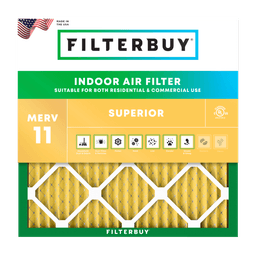
“We have shipped filters to homes across Ontario for more than a decade, and Kitchener is one of the few cities where the outdoor number and the specific neighbourhood you are standing in can tell two different stories. A rubber-manufacturing legacy and an expressway running through downtown will never show up on an AQHI map, but they are exactly the kind of local detail that decides whether a Superior (MERV 11) or an Optimal (MERV 13) filter is the better everyday choice for a given household.”
– Filterbuy Canada
Wildfire Smoke Season in Waterloo Region
In two of the last three summers, weeks of clean air have ended abruptly when wildfire smoke from hundreds of kilometres away turned Kitchener's sky grey within a single afternoon. In June 2023, CBC News reported Special Air Quality Statements for Waterloo Region as smoke from Quebec and northern Ontario wildfires pushed conditions to moderate and high risk on back-to-back weeks; Global News called that week's pollution “off our charts” in parts of Ontario, and area school boards cancelled outdoor activities. The pattern repeated in July 2025, when CBC News again reported a Special Air Quality Statement for the region.
The Region of Waterloo distinguishes two alert levels: a Special Air Quality Statement (SAQS), issued when the AQHI is expected to reach High Risk (7 to 10), and an Air Quality Advisory (AQA), issued when smoke is expected to push it past 10, into Very High Risk. Both call for the same response: check the AQHI, spend less time outdoors, and keep indoor air clean while smoke is elevated. For deeper whole-home protection, see Filterbuy Canada's guide to MERV 13 versus HEPA filtration for wildfire smoke.
Seasonal Air Quality Patterns for Kitchener
Kitchener's air quality follows a seasonal rhythm shaped by local conditions and smoke arriving from farther afield.
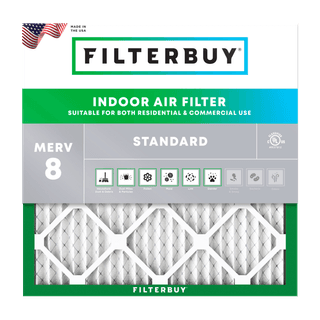
Filterbuy Canada stocks Standard, Superior, and Optimal filters year-round, so switching ratings between seasons is just a size and label away.
Protecting Your Indoor Air in Kitchener
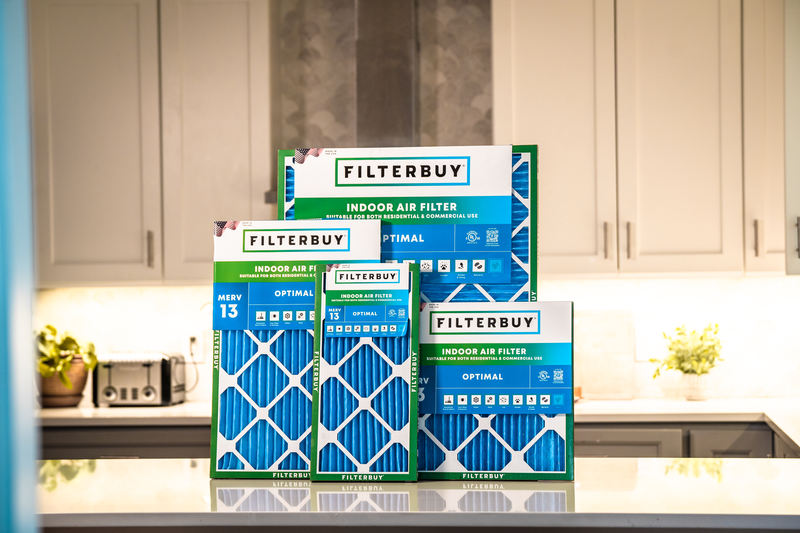
Whatever the outdoor AQHI shows, indoor air is something households can act on directly. Two questions decide most of that choice: does the household have pets or allergies, and how seriously does it treat wildfire smoke season. A well-matched Filterbuy furnace filter answers both.
Filterbuy Canada ships free to every province and territory, with pricing shown in CAD at checkout, and runs a Subscribe and Save program that times filter deliveries to the region's long heating season.
For a deeper walkthrough of how the MERV scale works, see Filterbuy Canada's guide to MERV ratings.
Essential Resources
Check Kitchener's Official Air Quality Sources
Track Kitchener's live AQHI: Environment Canada AQHI for Kitchener reports current values and forecast maximums from station 26060.
Understand regional alerts: Region of Waterloo Air Quality explains Special Air Quality Statements, Air Quality Advisories, and how to protect your health during wildfire smoke season.
See a hyperlocal reading: University of Waterloo's GEMM air monitoring project tracks campus-level PM2.5, ozone, and nitrogen dioxide alongside the citywide station.
Match Your Filter to Kitchener's Air
Learn the MERV scale: Filterbuy Canada's MERV ratings guide breaks down MERV 8, 11, and 13 in plain language.
Shop wildfire-ready filtration: Filterbuy Canada MERV 13 filters and Odour Eliminator filters target fine smoke particles, cooking odours, and pet smells; MERV 13 versus HEPA compares whole-home and portable protection.
Keep Your Filter Schedule on Track
Set it and forget it: Filterbuy Canada Subscribe and Save times deliveries to Kitchener's long heating season, editable or cancellable anytime. See also: How often should I change my HVAC filter.
Supporting Statistics
45 million+ Americans live within 300 feet of a major highway, rail line, or airport, linked to higher traffic-pollution exposure and asthma risk. (Source: U.S. EPA, Research on Near Roadway and Other Near Source Air Pollution)
U.S. asthma-related ER visits rose 17% above expected during the same April-to-August 2023 wildfire smoke episode that triggered Waterloo Region's statements. (Source: CDC, Morbidity and Mortality Weekly Report)
Upgrading to a MERV 13 filter and running the HVAC fan continuously can cut indoor PM2.5 by roughly 50% during a smoke event. (Source: U.S. EPA, Strategies to Reduce Exposure Indoors)
Frequently Asked Questions
Glossary
AQHI (Air Quality Health Index): Canada's 1-to-10+ scale for air quality and health risk, run jointly by Environment and Climate Change Canada, Health Canada, and provincial partners.
AQI (Air Quality Index): The US EPA's 0-to-500 scale for air pollution, a different system from the AQHI.
PM2.5: Fine particulate matter measuring 2.5 microns or smaller, small enough to be inhaled deep into the lungs; a major component of wildfire smoke.
Special Air Quality Statement (SAQS): An alert issued when the AQHI is expected to reach High Risk (7 to 10), most often triggered by wildfire smoke.
Air Quality Advisory (AQA): An alert issued when wildfire smoke is expected to push the AQHI past 10, into Very High Risk.
MERV (Minimum Efficiency Reporting Value): The industry-standard scale rating how effectively an air filter captures particles; Filterbuy Canada carries MERV 8 (Standard), MERV 11 (Superior), and MERV 13 (Optimal).