
Guelph Real-Time AQI Tracker
What's Actually In Guelph Air Today?
What High AQI Means for Your Lungs in Guelph
How to Read AQI
The Air Quality Index (AQI) measures how polluted the air is and how it may affect your health.
0–50 (Good): Air quality is satisfactory.
51–100 (Moderate): Acceptable, but some pollutants may pose minor concerns.
101–150 (Unhealthy for Sensitive Groups)
151–200 (Unhealthy)
201–300 (Very Unhealthy)
301+ (Hazardous)
Moderate
Still okay for most, but if you have asthma or allergies, take it easy and avoid long outdoor workouts.
Shop MERV 11 filters→What's the Right Filter for Your AQI Level?




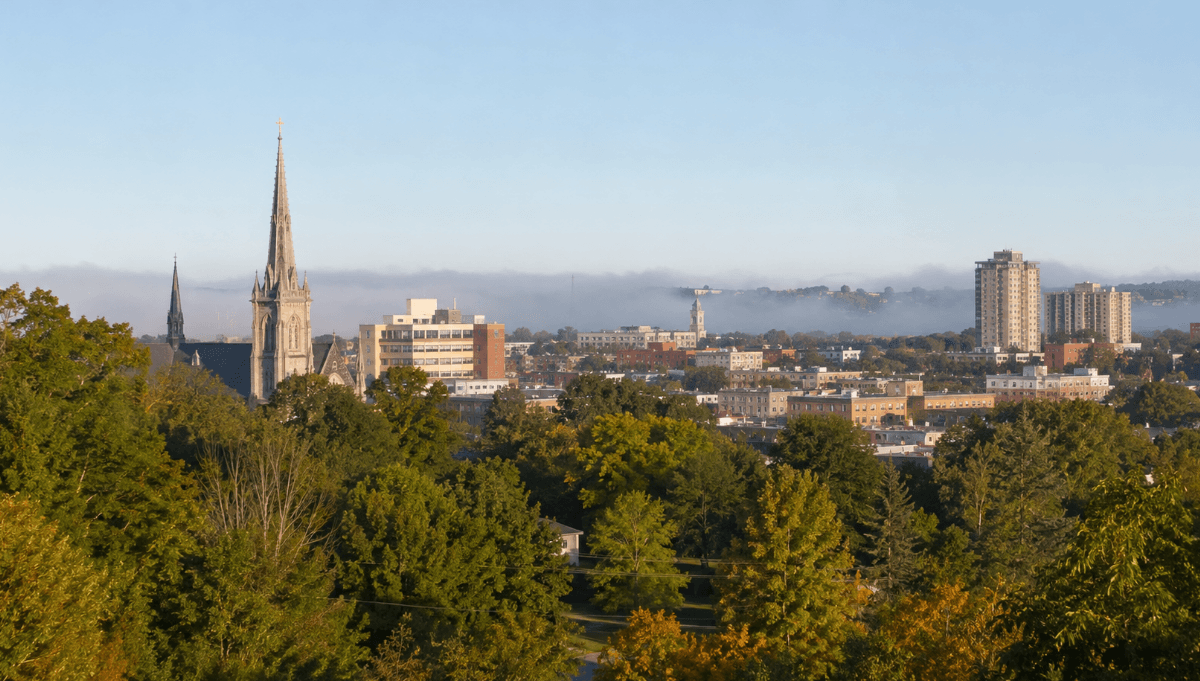
Check Today's Live Real Time Air Quality Index AQI Map in Guelph, ON Now
Guelph's air quality is measured hour by hour at a provincial station on Exhibition Street, and the live map above shows where it stands right now. Most days the reading sits in the low-risk range. When it climbs, the cause is almost always wildfire smoke drifting in from northern Ontario, Quebec, or the Prairies, usually between June and September.
TL;DR
Guelph has its own air monitoring station, at Exhibition Street and Clark Street West, and it feeds the live AQI and AQHI readings on this page. The air here is good for most of the year. The exception is smoke season, when fine particulate matter (PM2.5) carried in from distant fires can lift the reading within hours. For most households, checking the map before heading outdoors and keeping a well-rated filter in the furnace covers it.
Key Takeaways
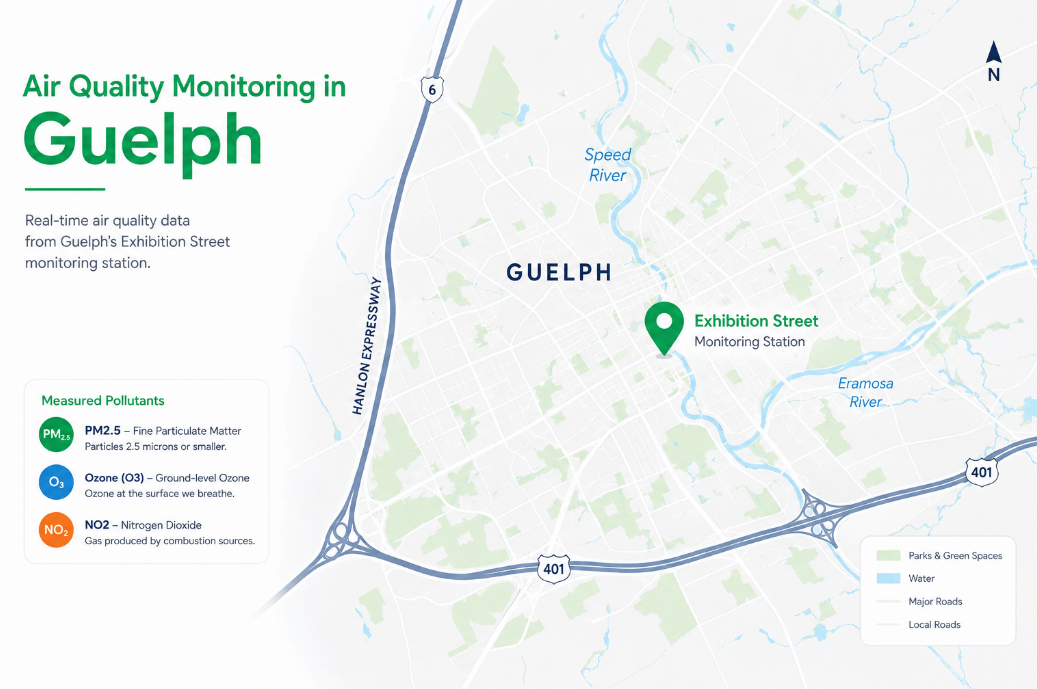
Guelph's official reading comes from one provincial station at Exhibition Street and Clark Street West, measuring ozone, PM2.5, and NO2.
Guelph gets no alert of its own. Alerts are issued for the wider Waterloo-Wellington region.
Canada replaced "special air quality statement" wording with colour-coded alerts in late 2025: yellow most common, orange uncommon, red rare.
Read the alert and the station reading together. The alert covers the region; the station reports the city.
A surprising reading is worth checking against a neighbouring station before you act on it.
What Is the Air Quality in Guelph Today?
The live map above shows Guelph's current air quality, refreshed through the day. That reading comes from real measurements taken inside the city, not an estimate borrowed from the next town over.
Official reading: Air Quality Ontario, Guelph current AQHI
Conditions can turn over a single afternoon as smoke arrives or the wind shifts, so a reading taken at breakfast is a poor guide to an evening run.
AQI vs. AQHI: The Two Scales in Guelph
You will run into two scales in Guelph, and they are not interchangeable. The AQI is the international one. The AQHI is Canada's official scale, and it is what Ontario and local public health work from.
Where Guelph's Air Quality Number Comes From
I went looking for where Guelph's number physically comes from, because the answer explains more than the number does. It is one station, run by Ontario's Ministry of the Environment, Conservation and Parks (MECP), at Exhibition Street and Clark Street West, one of 38 province-wide.
Two things stood out when I pulled the station file. First, the intake sits four metres up in a residential neighbourhood by design, built to represent the air a typical household breathes rather than the kerbside of the Hanlon Expressway or Highway 401. If you live or exercise beside either, your own air can be worse than the city number suggests.
Second, and this I did not expect: Guelph has a dedicated station but not a dedicated alert. Environment and Climate Change Canada issues alerts for the Waterloo-Wellington forecast region, bundling the city with Waterloo Region and rural Wellington County. The measurement is local; the warning is not.
What Drives Guelph Air Quality by Season
Air pollution in Guelph follows a predictable annual rhythm, and knowing which season brings which pollutant makes the live number far easier to interpret. What drives a poor reading in February is not what drives one in July.
Summer matters most. In June 2023, smoke put Guelph and Waterloo Region under a special air quality statement for several days, and school boards cancelled outdoor sport. A second followed that month, and Prairie smoke reached southern Ontario again in July 2025.
Autumn is the quiet season, and the one worth acting on. A fresh filter before the furnace starts is the change we suggest most often to Filterbuy Canada customers, because it beats swapping one mid smoke event.
How Guelph Air Quality Alerts Work Now
Canada changed how alerts are issued in late 2025. Environment and Climate Change Canada now attaches a colour to every weather alert, air quality included, to signal how much risk the conditions carry.
Here is the habit I took from those two facts. Read the alert and the station reading together, because they describe different areas. An alert can be driven by conditions in rural Wellington County while Exhibition Street sits lower, and the reverse happens too. The colour tells you the region; the station tells you Guelph.
Wellington-Dufferin-Guelph Public Health advises reading the full alert, not just the colour, since it states timing, area, and actions. One point matters in a Guelph summer: when smoke and extreme heat arrive together, keeping cool takes priority, because overheating is more immediately dangerous.
When a Reading Looks Wrong, Check a Second Station
A single station measures one spot, and a very local event can move it. On 12 June 2024 the provincial station in Kitchener, the nearest to Guelph, reported the AQHI in the 10+ very high risk band. The cause was a fire close to the station itself. MECP confirmed the readings were not representative and pulled several hours of data from the record.
That cuts both ways in Guelph. A spike on one station is not automatically city-wide, and a calm reading at Exhibition Street does not guarantee clean air in every neighbourhood. So when the number looks surprising, compare it against a neighbouring station on the same map before changing plans. Two stations disagreeing usually means something local; two agreeing usually means weather.
How to Protect Your Indoor Air in Guelph
When the outdoor reading climbs, most of what you can do happens indoors. Closing the windows helps, but a closed house still exchanges air, and the furnace is already moving enough of it to make filtration worth getting right.
Close windows and doors when smoke is present, and switch the thermostat fan from Auto to On.
Run the highest-rated filter your system can take, checking the documentation if you are unsure.
Add a portable HEPA air cleaner where you spend the most time, as a supplement not a replacement.
Keep indoor sources down by skipping candles and running the range hood as you cook.
Filterbuy Canada carries over 600 filter sizes with free shipping across Canada, and auto-delivery on a subscription can be timed to the heating season.
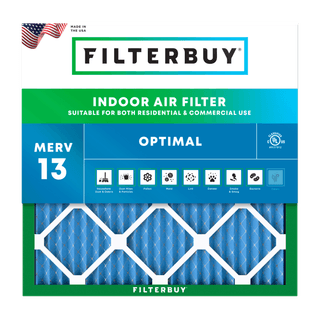
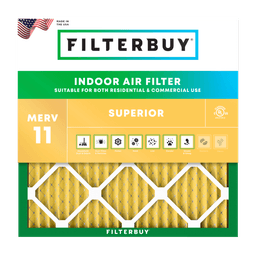
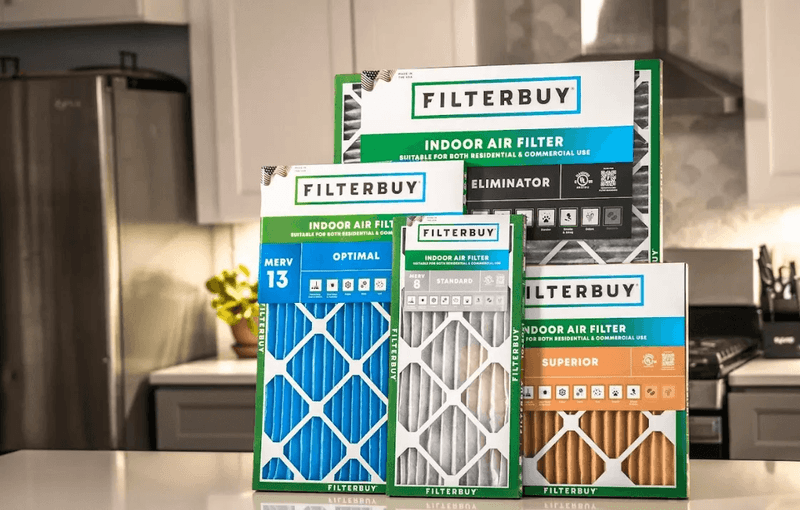
Our MERV ratings guide covers the trade-off between filtration and airflow. For most Guelph homes it comes down to Superior (MERV 11) through allergy season, then Optimal (MERV 13) once smoke arrives.
Our Take on Guelph Air Quality
Writing these city guides across Canada, we keep meeting one pattern, and Guelph fits it. Households buy portable purifiers and overlook the filter already running in the furnace half the year. A purifier cleans a room; the furnace moves the house.
We would rather a Guelph household check the map before opening the windows than buy anything from us. The filter matters, but the timing matters more. By the time smoke is something you can smell indoors, you are cleaning up instead of keeping it out.
— Filterbuy Canada
Supporting Statistics
1. One station cannot see a whole city
Wilfrid Laurier University researchers ran a multisensor network across Kitchener and found pollutant levels varied site to site and tracked with traffic, showing that one provincial station cannot pick up a city's hotspots.
Source: Atmosphere, Air Quality Measurements in Kitchener, Ontario
2. MERV 13 is the recommended smoke rating
EPA research on reducing wildfire smoke indoors recommends a MERV 13 filter for the very small particles in smoke, and advises checking it daily during an event.
Source: U.S. EPA, Research on DIY Air Cleaners to Reduce Wildfire Smoke Indoors
3. Smoke days track respiratory emergencies
During the 2023 Canadian wildfire smoke episodes, the U.S. Centers for Disease Control and Prevention found asthma-associated emergency visits rose with the share of monitors reporting an AQI at or above 101.
Source: CDC, Morbidity and Mortality Weekly Report, Vol. 72, No. 34
Guelph Air Quality FAQ
Glossary
AQHI (Air Quality Health Index): Canada's official scale, 1 to 10+, combining the risk of PM2.5, ozone, and nitrogen dioxide.
AQI (Air Quality Index): The U.S. Environmental Protection Agency scale, 0 to 500, set by whichever pollutant is worst.
PM2.5 (fine particulate matter): Airborne particles 2.5 micrometres or smaller, fine enough to reach deep into the lungs. The main pollutant in smoke.
Ground-level ozone (O3) and nitrogen dioxide (NO2): The gases the AQHI tracks with PM2.5. Ozone forms when sunlight meets emissions; NO2 comes from engines.
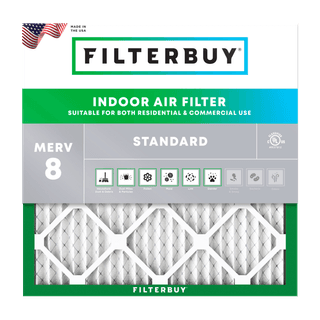
MERV (Minimum Efficiency Reporting Value): The North American scale for how well a filter captures particles, where higher numbers catch smaller ones. Filterbuy Canada labels its tiers Standard (MERV 8), Superior (MERV 11), and Optimal (MERV 13).
Waterloo-Wellington forecast region: The Environment and Climate Change Canada alert area covering Guelph, Waterloo Region, and Wellington County.
Essential Guelph Air Quality Resources
Get the official reading
Air Quality Ontario, Guelph AQHI: the hourly station reading.
ECCC, Guelph AQHI: the federal reading and forecast maximum.
Understand alerts, find clean air
Live Ontario air quality map: how the province looks.
Live Canada air quality map: the same view nationwide.
Canada's colour-coded weather alerts: what each colour means.
WDG Public Health, Outdoor Air Quality: health guidance written for local residents.
WDG Public Health, ClimateSafe Map: nearby clean air spaces.
Written by Michelle Wan, Brand Manager and Air Quality Writer at Filterbuy Canada, who writes the company's city air quality guides and tracks AQHI reporting nationally.
Technically reviewed by David Clark, Licensed HVAC Technician