
Greater Sudbury Real-Time AQI Tracker
What's Actually In Greater Sudbury Air Today?
What High AQI Means for Your Lungs in Greater Sudbury
How to Read AQI
The Air Quality Index (AQI) measures how polluted the air is and how it may affect your health.
0–50 (Good): Air quality is satisfactory.
51–100 (Moderate): Acceptable, but some pollutants may pose minor concerns.
101–150 (Unhealthy for Sensitive Groups)
151–200 (Unhealthy)
201–300 (Very Unhealthy)
301+ (Hazardous)
Moderate
Still okay for most, but if you have asthma or allergies, take it easy and avoid long outdoor workouts.
Shop MERV 11 filters→What's the Right Filter for Your AQI Level?




Check Today’s Live Real Time Air Quality Index AQI Map in Greater Sudbury, ON Now
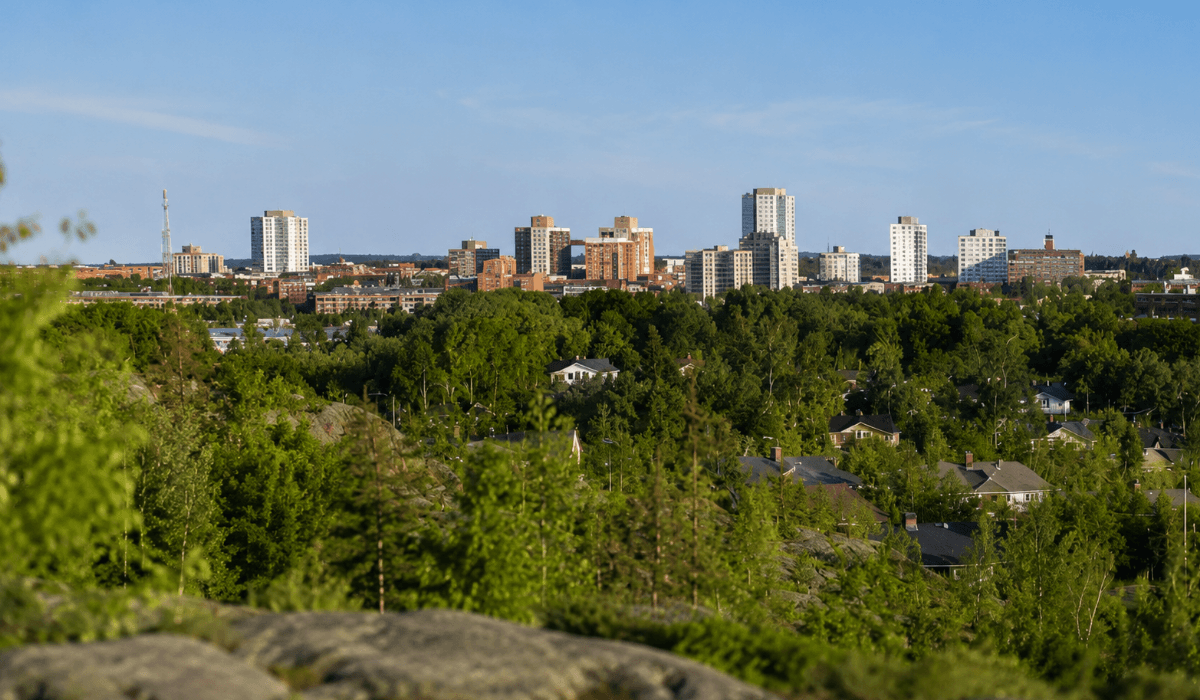
Greater Sudbury’s air can turn over in a single afternoon. A clear morning across the Nickel Basin gives way to a hazy evening in New Sudbury, Val Caron or Lively, on smoke from a fire hundreds of kilometres off.
TL;DR: Quick Answers
Greater Sudbury’s official reading is the Air Quality Health Index (AQHI), a 1 to 10+ scale published by Environment and Climate Change Canada from Ontario’s Applegrove Street station. Most days sit in the low-risk band of 1 to 3. Spikes are almost always wildfire smoke from Northwestern Ontario or the Prairies. Above 7, close the windows, run the fan, check the filter.
Top Takeaways
Greater Sudbury’s official number is AQHI, not AQI. Environment and Climate Change Canada uses a 1 to 10+ health-risk scale; most apps show 0 to 500 AQI.
Sudbury’s air is measured at one Ontario station, at Applegrove and Birch, tracking ozone, PM2.5, nitrogen dioxide and sulphur dioxide.
Wildfire smoke is now the main driver of poor air days, and PM2.5 is the pollutant that matters most.
Local sulphur dioxide has collapsed to a fraction of the provincial one-hour criterion, so the smelter no longer drives a bad air day here.
AQHI 4 is the watch level for at-risk residents. The Canadian Lung Association notes a 4 can worsen symptoms for anyone with a chronic lung condition.
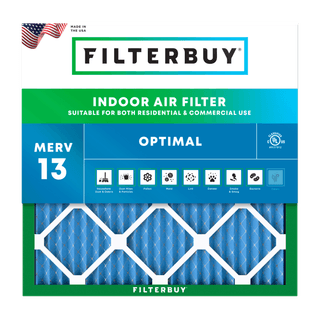
A clean MERV 13 filter, which Filterbuy labels Optimal, is the most practical indoor step during a smoke episode, as Public Health Sudbury & Districts advises.
What Today’s Reading Means in Greater Sudbury
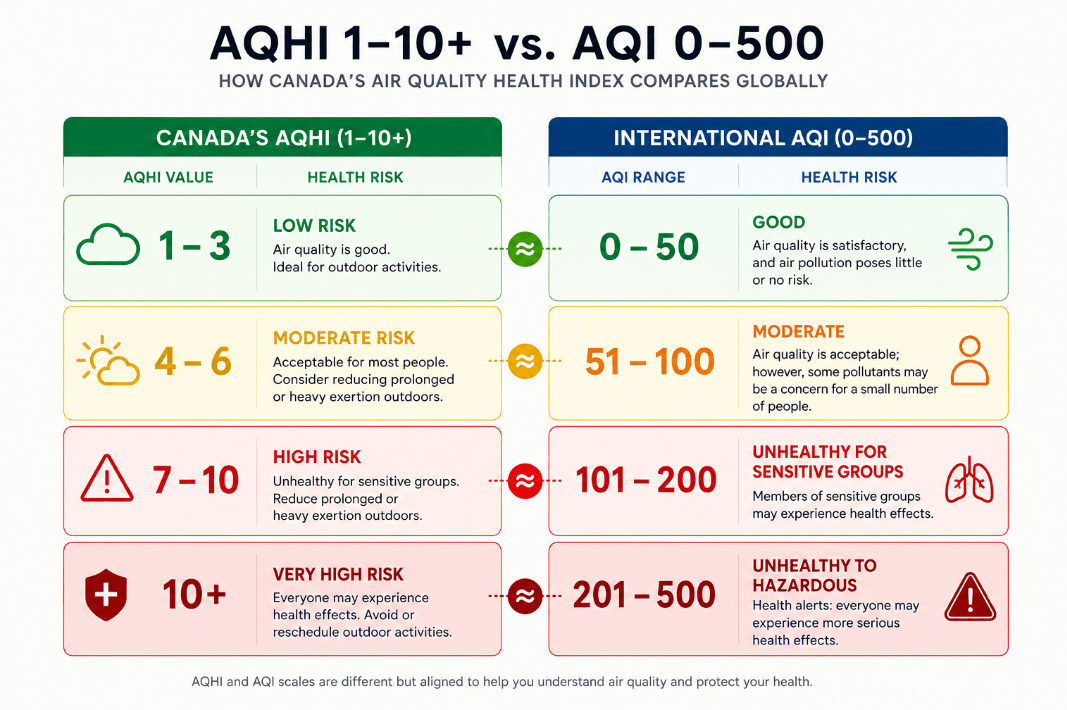
Greater Sudbury’s AQHI runs 1 to 10+: 1 to 3 low, 4 to 6 moderate, 7 to 10 high, above 10 very high. It combines ozone, nitrogen dioxide and PM2.5, and answers a health question, not a chemistry one: how much is today’s air likely to affect you?
This is where most Sudbury searches go sideways. You search “AQI Greater Sudbury,” an app returns 90, and Environment and Climate Change Canada shows 4 for the same hour. Both are correct. Different scales, same air.
AQI equivalents are approximate. The two indices use different formulas and cannot be converted exactly.
3 Things the AQHI Number Won’t Tell You
The AQHI is the best single number available for Sudbury. It has three blind spots.
1. It does not count sulphur dioxide
The formula uses only ozone, nitrogen dioxide, and PM2.5. Environment and Climate Change Canada dropped sulphur dioxide and carbon monoxide because they added no measurable health risk once the other three were counted. In a former smelter city that matters: the station still measures SO2, but the index never shows it.
What to do: for the SO2 figure, open the station page and read it directly.
2. It lags a fast-moving plume
The AQHI is a rolling three-hour average. When smoke arrives quickly, the number trails the air outside your window. Alberta built a separate hourly index, AQHI+, for this reason.
What to do: during an episode, read the hourly PM2.5 chart rather than the index. It shows the leading edge first.
3. It comes from one station
We went looking for a second monitoring site in Greater Sudbury. There isn’t one. One station at Applegrove and Birch covers more than 3,200 square kilometres. In 2023, the local Board of Health asked the province to widen northern coverage.
What to do: treat it as a regional guide, not a measurement of your street. When smoke tracks in from the west, the Sault Ste. Marie station often turns first.
The Sudbury Reversal: Why the Story Flipped
Greater Sudbury is the rare Canadian city where local industrial pollution has fallen sharply while poor-air days grew more common. Filterbuy calls it the Sudbury Reversal.
The local source got dramatically cleaner. Vale Base Metals completed its $1-billion Clean Atmospheric Emissions Reduction (Clean AER) Project at Copper Cliff in 2018, cutting sulphur dioxide by about 85 per cent and metal particulate by 40 per cent. The 381-metre Superstack, built in 1972 to disperse those emissions, was decommissioned in 2020. Vale removed 32 metres in 2025 and targets 87 more in 2026.
The imported source got worse. The smoke driving Sudbury’s worst readings starts hundreds of kilometres away.
Chronic sulphur dioxide could not be filtered at home. Episodic fine particulate largely can.
What Drives Sudbury’s Air Quality, Season by Season
Air pollution in Greater Sudbury changes character through the year, and so does the filter that suits it.
Sudbury furnaces run six to eight months a year, so filters here log more hours than in most of Canada.
A Real Example: 15–16 July 2026
On 15 July 2026, forest fire smoke from Northwestern Ontario pushed Greater Sudbury’s AQHI to 10+ for much of the day and into the next morning. By 8 a.m. on 16 July it had eased to 9, returning to low risk by evening.
That shape is typical: a fast climb, a day or two at the top, a fast clearance. Sudbury has seen worse. On 25 June 2023 it hit an AQHI of 24.
3 Numbers Behind the Advice on This Page
Filterbuy cites independent evidence here, not in-house testing. All three sources are U.S. federal or non-profit.
1. 90%
Share of time spent indoors
The U.S. EPA reports people spend about 90 per cent of their time indoors.
Indoors, some pollutants run 2 to 5 times outdoor levels.
So indoor air matters as much as the outdoors.
Source: U.S. EPA, Report on the Environment: Indoor Air Quality
2. 0.55
Indoor-to-outdoor PM2.5 ratio with a MERV 13 filter
An EPA-funded study measured this during the 2020 Pacific Northwest fires.
A MERV 13 filter in a central forced-air system held indoor PM2.5 at 55 per cent of outdoor.
A portable air cleaner brought the ratio down to 0.22.
Indoor levels still exceeded health thresholds. Useful, not a force field.
Source: National Institutes of Health (PMC): Interventions to Reduce PM2.5 during a Wildfire Event
3. 75 million
People in the U.S. hit by Canadian wildfire smoke in one month
In June 2023, Canadian wildfire smoke degraded air for 75 million Americans.
Effects reached Florida and Central Europe.
Smoke ignores distance. A Northwestern Ontario fire lands on a Sudbury monitor.
Source: American Lung Association: Why Wildfire Smoke Is Now a Nationwide Issue
Your Next 10 Minutes
Whatever Greater Sudbury’s AQHI reads right now, here is what to do.
Low (1–3). Air the house out. Replace your filter if it is more than 60 days old.
Moderate (4–6). Check on anyone with asthma, COPD, or allergies. Symptoms often show before the number climbs.
High (7+). Windows shut, HVAC on continuous fan, a clean MERV 13 in the slot. An Odour Eliminator carbon filter helps with lingering smell.
Any band. Chest tightness, persistent coughing, or shortness of breath means calling a healthcare provider or Telehealth Ontario, 811.
Greater Sudbury Air Quality Resources
1. Get the Official Sudbury Reading and Tomorrow’s Forecast
Current AQHI plus forecast maximums for tonight and tomorrow. The figure to trust when an app disagrees.
Source: weather.gc.ca: Sudbury AQHI
2. See Which Pollutant Is Driving Today’s Number
The station pollutant by pollutant, hour by hour. PM2.5-led means smoke; ozone-led means heat.
Source: airqualityontario.com: Sudbury station data
3. Get an Email Before the Air Turns
Ontario emails you when the AQHI is forecast to reach high risk (7+) or very high (10+). Select Greater Sudbury, and you hear about smoke before you smell it.
Source: airqualityontario.com: air quality alert sign-up
4. Confirm Whether an Alert Is In Effect Right Now
Any active air quality statement or warning for Greater Sudbury and vicinity.
Source: weather.gc.ca: Greater Sudbury air quality alerts
5. Find Out Whether You Are in a Higher-Risk Group
Who feels smoke first, why an AQHI of 4 matters with asthma or COPD, and which masks help.
Source: lung.ca: protect your lungs from wildfire smoke
6. Cut the Fine Particulate That Gets Inside Your House
Ventilation, source control, filtration, and why indoor PM2.5 should stay below outdoor.
Frequently Asked Questions
Glossary
AQHI (Air Quality Health Index): Canada’s official scale, 1 to 10+, combining ozone, nitrogen dioxide and PM2.5 into one health-risk value.
AQI (Air Quality Index): An international scale, 0 to 500, reporting only the highest-scoring pollutant. Used by most global apps.
PM2.5: Fine particulate matter 2.5 micrometres or less, the dominant pollutant in wildfire smoke.
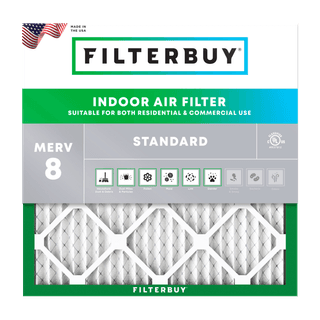
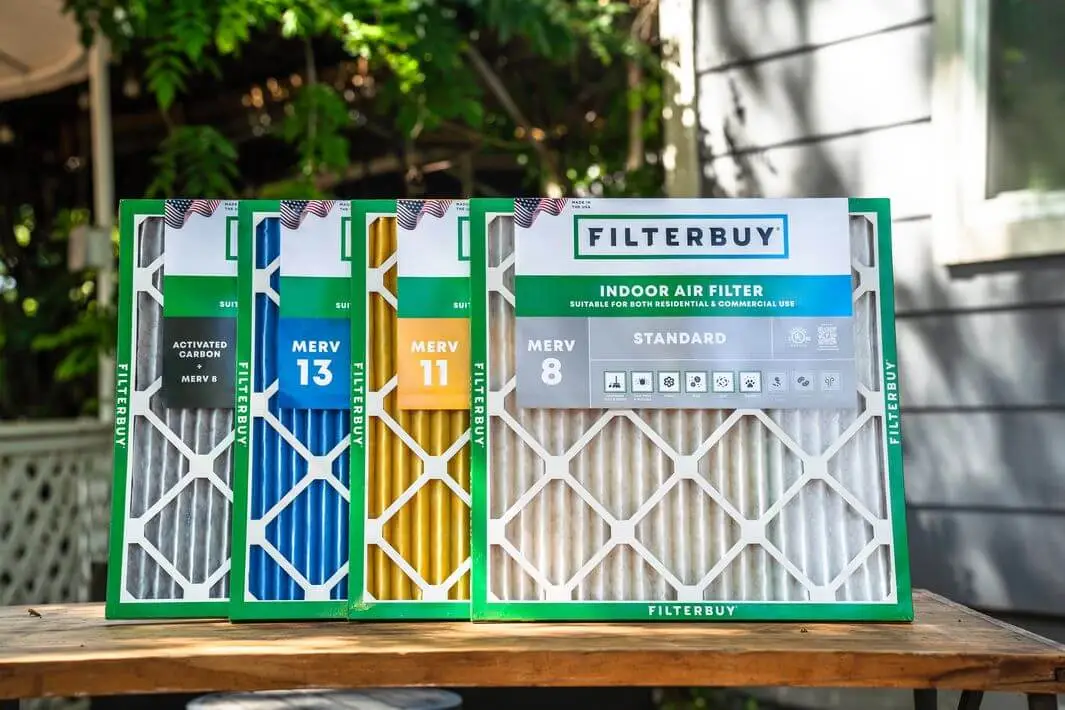
MERV: Minimum Efficiency Reporting Value, the filter capture scale. Filterbuy labels MERV 8 Standard, 11 Superior, 13 Optimal.
Breathe Easier This Season
Filterbuy makes pleated air filters in more than 600 sizes, including custom, in our own facilities and ships to your door in Greater Sudbury. Free shipping, no minimum, CAD pricing.
Superior (MERV 11) handles spring pollen and pet dander. Optimal (MERV 13) is our smoke-season pick.
Written by Michelle Wan | Reviewed by David Clark, Licensed HVAC Technician
Published 10 August 2026 | Last updated 10 August 2026