
Langley Real-Time AQI Tracker
What's Actually In Langley Air Today?
What High AQI Means for Your Lungs in Langley
How to Read AQI
The Air Quality Index (AQI) measures how polluted the air is and how it may affect your health.
0–50 (Good): Air quality is satisfactory.
51–100 (Moderate): Acceptable, but some pollutants may pose minor concerns.
101–150 (Unhealthy for Sensitive Groups)
151–200 (Unhealthy)
201–300 (Very Unhealthy)
301+ (Hazardous)
Moderate
Still okay for most, but if you have asthma or allergies, take it easy and avoid long outdoor workouts.
Shop MERV 11 filters→What's the Right Filter for Your AQI Level?



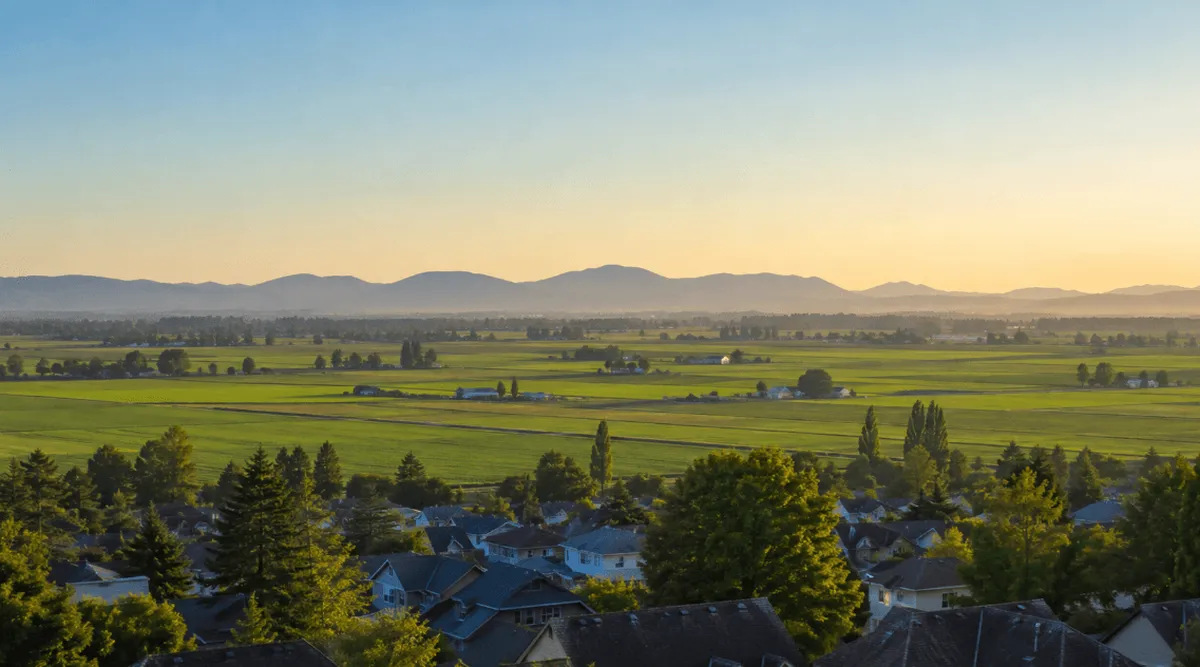
Check Today's Live Real Time Air Quality Index AQI Map in Langley, BC Now
TL;DR
Langley's live air quality is reported through the Air Quality Health Index (AQHI), a 1 to 10+ scale updated hourly by Environment and Climate Change Canada and Metro Vancouver. There is no Langley-only reading. The City and the Township are both reported inside the Metro Vancouver Southeast zone, alongside Surrey and White Rock. Read the band, not the digit.
Key Takeaways
Langley's AQHI is published under the zone name Metro Vancouver Southeast, which Environment and Climate Change Canada and Metro Vancouver define as Surrey, Langley and White Rock.
Ground-level ozone, not wildfire smoke, caused the only air quality warning Metro Vancouver issued in 2024, the latest year in its annual summary.
Wildfire smoke is the other half of Langley's summer. It raises PM2.5, the fine particulate that indoor filtration can actually reduce.
How to Check Langley Air Quality Today
The fastest way to check Langley air quality today is the map above, which pulls the current AQHI for the Metro Vancouver Southeast zone. Environment and Climate Change Canada publishes an observed value every hour, along with forecast maximums for the next two days, and Metro Vancouver's AirMap breaks the same data out station by station. Some apps show a U.S. AQI number on a 0 to 500 scale instead, and some interpolate between stations or lean on low-cost sensors. In Langley, act on the AQHI.
Langley Is Two Municipalities Sharing One Air Quality Reading
We went looking for an AQHI reading specific to Langley and could not find one, because none exists. The City of Langley covers roughly 10 square kilometres and recorded 28,963 residents in 2021. The Township wraps around it, covers 307 square kilometres, and recorded 132,603. They are separate municipalities with separate councils.
Air quality reporting does not separate them. ECCC and Metro Vancouver publish one AQHI value for the Metro Vancouver Southeast zone, which their warning bulletins define as Surrey, Langley and White Rock. That single number covers three municipalities and over half a million people.
Geography is part of why. Langley City sits against Surrey's Cloverdale boundary in the west, Aldergrove against Abbotsford in the east, and ozone builds as air moves east up the valley. Conditions at one end of the Township are not always conditions at the other.
Treat the zone reading as a regional signal, not a measurement of your street. If you can smell smoke in Brookswood, a neighbourhood in south Langley Township, while the zone reads moderate, trust the smoke. To see which way the gradient runs on a given day, compare the Langley station with Abbotsford to the east and Surrey East to the west on AirMap.
"We build these pages by opening the source data ourselves. For Langley that meant reading Environment and Climate Change Canada's warning bulletins, which define the zone as Surrey, Langley and White Rock. Not one municipality. Three. Once you have seen that, the number on your phone reads differently."
The Filterbuy Canada air quality team
How to Read the AQHI Scale
The Air Quality Health Index is the scale Environment and Climate Change Canada and Metro Vancouver use across BC. It groups hourly readings into four health risk bands, each with separate guidance for the general population and for people at higher risk.
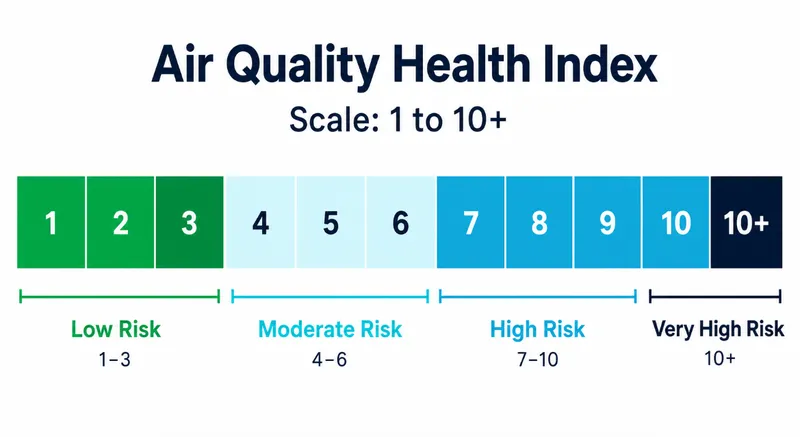
Low risk, 1 to 3. Ideal for outdoor activities, and people at higher risk can carry on as usual.
Moderate risk, 4 to 6. No need to change usual outdoor activities unless symptoms such as coughing or throat irritation appear. People at higher risk should ease off strenuous activity.
High risk, 7 to 10. Reduce or reschedule strenuous outdoor activities if symptoms appear. People at higher risk should reduce or reschedule regardless, and children and older adults should take it easy.
Very high risk, above 10. Reduce or reschedule strenuous outdoor activities. People at higher risk should avoid outdoor exertion altogether.
The scale has no ceiling. During heavy smoke, readings are reported as 10+ rather than capped. Health Canada names people with heart or lung conditions, pregnant people, infants, young children and older adults as most at risk.
Why Ground-Level Ozone Is Langley's Overlooked Pollutant
Most Langley residents blame a bad air day on wildfire smoke. We expected the record to agree. It does not. Metro Vancouver reports that the region's highest ozone concentrations are measured in eastern Metro Vancouver and the Fraser Valley, and Langley sits squarely in that eastern half.
In 2024, the latest year in Metro Vancouver's annual summary, the region received exactly one air quality warning. It was for ground-level ozone, ran three days in early July, and covered eastern Metro Vancouver and the Fraser Valley. Two localised bulletins followed, but no regional PM2.5 warning. The season can also start early: the earliest ozone advisory on record came on 15 May 2023.
Ozone is easy to miss because it is never emitted directly. It forms when nitrogen oxides and volatile organic compounds react in sunlight, which gives it a daily rhythm most people get backwards: it peaks in late afternoon and early evening, when many people head out to exercise. Shifting a hard workout to the morning is the best adjustment during an ozone episode.
For reference, Metro Vancouver's one-hour ozone objective is 82 parts per billion and its eight-hour objective is 60, matching the Canadian Ambient Air Quality Standard.
Smoke or Smog: How to Tell What Is Affecting Langley Air Today
Two pollutants push Langley's AQHI up, and they differ enough that it pays to know which one you have. PM2.5 comes mainly from wildfire smoke and wood burning, while ground-level ozone forms on hot, sunny days. Metro Vancouver names the pollutant in every warning, so the warning text will tell you.
PM2.5 is the one you can see and smell. Smoke episodes flatten the light and leave haze on the horizon. At 2.5 micrometres across or smaller, these particles travel deep into the lungs and get indoors readily, and smoke has reached the Lower Fraser Valley in seven of the last 10 years.
Ozone gives you nothing to go on. It is invisible and odourless, so if the AQHI rises on a clear, hot day with no haze, ozone is the likely cause.
That distinction matters, because filtration reduces indoor PM2.5 but does little for ozone. A smog day calls for timing rather than equipment.
When to Open the Windows in Langley
Whether to open the windows depends on the pollutant, because ozone and PM2.5 behave in opposite ways once the sun goes down.
On a smog day, ozone falls away overnight, so late evening and early morning are the cleanest hours and the time to air the house out.
On a smoke day, PM2.5 often holds steady or worsens overnight as smoke mixes down to the ground. Keep the windows shut and wait for the AQHI to fall, even when the air outside starts to cool.
Either way, check the forecast maximum, not just the current value. A 4 heading for 7 is a very different evening from a 4 heading for 2.
Supporting Statistics
Three figures from U.S. federal and non-profit research put Langley's numbers in context.
1. 152.3 Million Americans Breathe Failing-Grade Air
44 percent of the U.S. population lives in a county graded F for ozone or particles.
Unhealthy ozone reached more people than in the five prior reports.
Canadian wildfire smoke raised ozone, not just particles, across dozens of states.
2. The U.S. Cut Its Annual Fine Particle Limit by 25 Percent
On 7 February 2024 the annual PM2.5 standard fell from 12.0 to 9.0 micrograms per cubic metre.
The American 24-hour standard stayed at 35. Metro Vancouver's objective of 25 is stricter than both.
Source: U.S. Environmental Protection Agency, 2024 revised PM standards
3. A MERV 13 Filter Can Cut Indoor Particles by up to 95 Percent
MERV 13 to 16 filter: up to 95 percent fewer particles.
Portable air cleaner with a high efficiency filter: up to 85 percent.
Thermostat fan set to On: up to 24 percent.
During smoke, EPA advice is MERV 13 or higher.
How to Keep Indoor Air Clean on a Poor Air Quality Day
When the AQHI climbs, indoor air is the part you can control. Across smoke seasons, the homes that cope are not the ones that react fastest. They are the ones already set up before the air turned. The sequence:
If your HVAC system has a fresh air intake, set it to recirculate or close the damper.
Switch the thermostat fan from Auto to On so air keeps moving through the filter.
Avoid adding particles indoors: no candles, frying, wood stoves or vacuuming without HEPA.
Check the filter more often. Heavy smoke loads one far faster than usual.
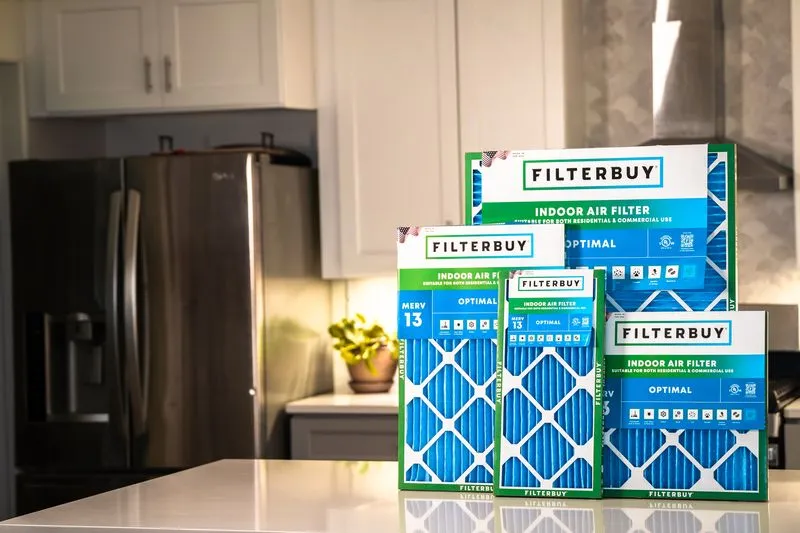
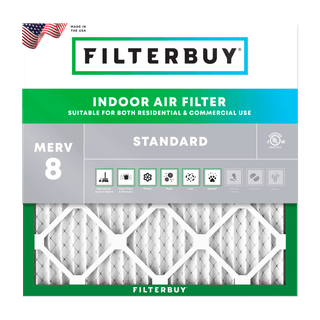
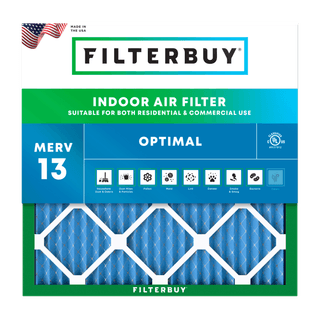
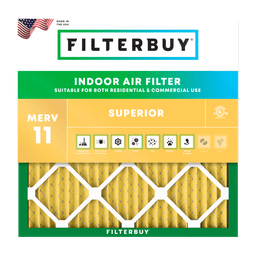
The filter does most of the work. Filterbuy Canada carries pleated filters in over 600 sizes. The range keeps it simple: MERV 8 Standard for everyday filtration, MERV 11 Superior for pets or allergies, MERV 13 Optimal for wildfire smoke season, and the Odour Eliminator for smoke odours. If you are unsure what your system can handle, our guide to MERV ratings walks through the trade-off between filtration and airflow.
Before the Next Smoke Season
Set up while the air is still clear. Find your size on the side of your current filter, printed in inches like 20x25x1, then move to MERV 13 before the season starts. Keep a spare, so a loaded filter is not left in the system waiting on a replacement. Filterbuy Canada ships free across Canada, and Subscribe and Save puts a fresh one on your schedule.
Frequently Asked Questions
Glossary
AQHI (Air Quality Health Index). Canada's national air quality scale, 1 to 10+, updated hourly. It reports health risk, not pollutant concentration.
AQI (Air Quality Index). The U.S. scale, 0 to 500. Common in apps, but not the basis of Canadian health guidance.
PM2.5. Fine particulate matter 2.5 micrometres across or smaller. The main health concern in smoke.
Ground-level ozone. A gas formed when nitrogen oxides and volatile organic compounds react in sunlight. The main ingredient in smog and the most frequent cause of summer warnings in eastern Metro Vancouver.
Metro Vancouver Southeast. The AQHI reporting zone covering Surrey, Langley and White Rock.
MERV (Minimum Efficiency Reporting Value). The industry scale for filter efficiency, 1 to 20. Higher numbers capture smaller particles.