Shop by
The Air Quality Index (AQI) measures how polluted the air is and how it may affect your health.
0–50 (Good): Air quality is satisfactory.
51–100 (Moderate): Acceptable, but some pollutants may pose minor concerns.
101–150 (Unhealthy for Sensitive Groups)
151–200 (Unhealthy)
201–300 (Very Unhealthy)
301+ (Hazardous)
Still okay for most, but if you have asthma or allergies, take it easy and avoid long outdoor workouts.
Shop MERV 11 filters→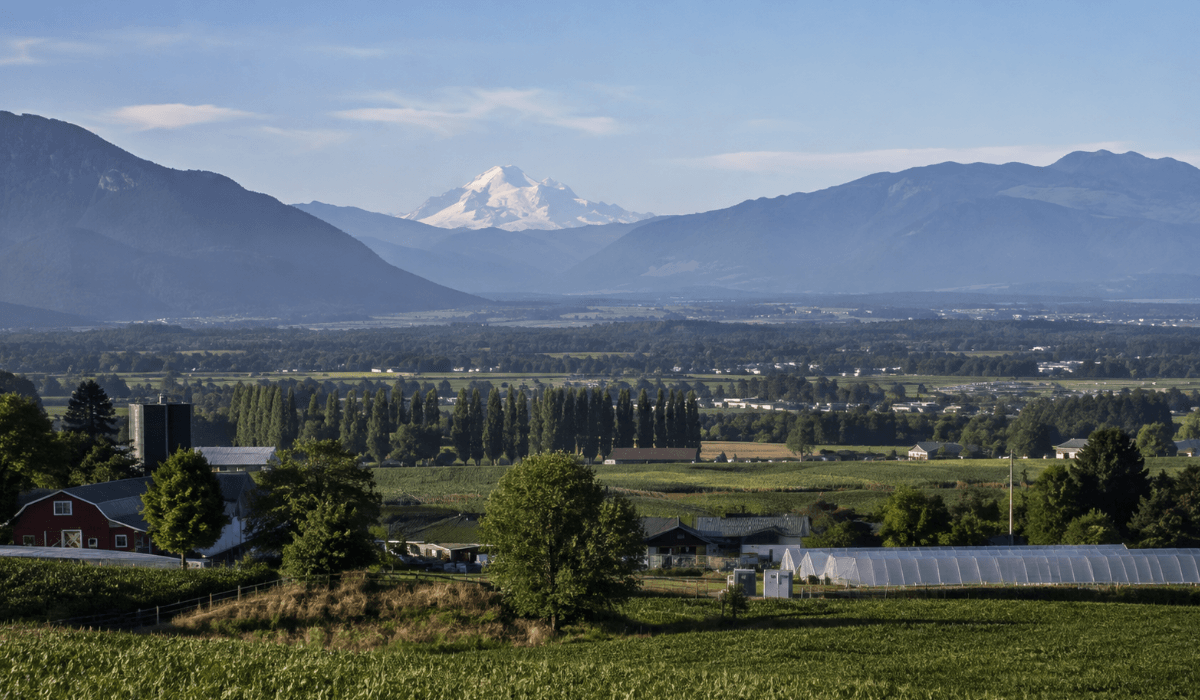
By Michelle Wan · Reviewed by David Clark, Licensed HVAC Technician · Published 10 August 2026 · Updated 10 August 2026
Abbotsford’s official reading is the Air Quality Health Index (AQHI), a 1-to-10+ health-risk scale from Environment and Climate Change Canada, not the 0–500 AQI most global apps display. Abbotsford reports under the Central Fraser Valley community, and the live map below shows current conditions. At AQHI 7 or higher, close your windows, run the furnace fan continuously, and make sure the filter is clean.
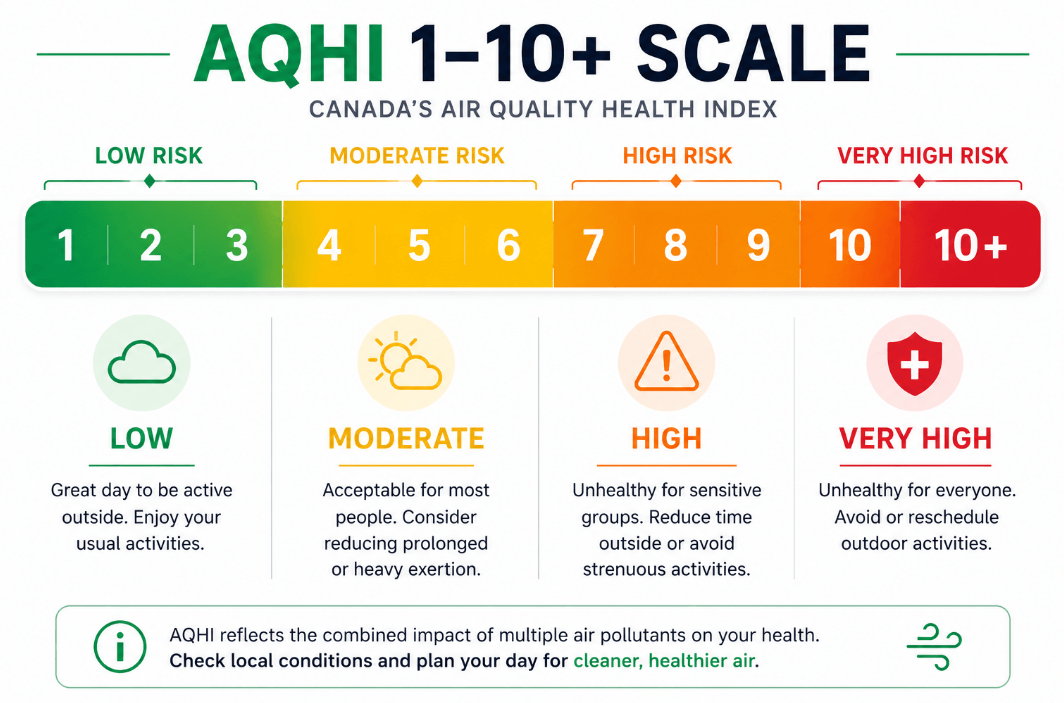
The Air Quality Health Index (AQHI) is Canada’s official air quality scale, 1 to 10+: 1–3 low risk, 4–6 moderate, 7–10 high, above 10 very high.
Environment Canada reports Abbotsford under Central Fraser Valley, so searching the city name alone may return a neighbouring community’s reading.
Abbotsford has two local air monitoring stations, Abbotsford Airport and Abbotsford–Mill Lake. Their readings can differ during a smoke or smog event.
Metro Vancouver now issues colour-coded air quality warnings: yellow for high health risk, orange for very high, replacing the older advisory wording.
Abbotsford sits in the Lower Fraser Valley airshed, where surrounding mountains trap pollutants drifting east from Metro Vancouver, giving the city a different profile from Vancouver on the same day.
Abbotsford’s current air quality appears on the live map above as an AQHI value between 1 and 10+. A reading of 1 to 3 means low health risk and normal outdoor activity is fine for most people. From 4 to 6, the risk is moderate, and people with asthma, heart conditions, or lung conditions may want to ease off strenuous outdoor activity. At 7 and above, Environment Canada advises everyone to reduce outdoor exertion. If you are unsure, Environment Canada publishes a short guide to whether you are in an at-risk group.
Readings move quickly in wildfire season, so check again before an evening run rather than trusting this morning’s number.
Canada uses the AQHI and the United States uses the AQI, and the two are not interchangeable. We checked what the big air quality apps return for Abbotsford against the official Environment Canada feed. They disagree. Neither is broken. They measure different things. The AQHI blends ground-level ozone, nitrogen dioxide, and fine particulate into one estimate of short-term health risk, 1 to 10+. The US AQI reports the concentration of whichever single pollutant is worst, 0 to 500. Environment Canada sets out why the two indexes are not comparable.
The two scales are not convertible. Broadly, AQHI 7 and above corresponds to the range the US AQI reports as unhealthy.
A second detail trips people up. Environment Canada groups Abbotsford into the Central Fraser Valley community, so searching the city name alone can surface the Eastern Fraser Valley reading for Chilliwack, Agassiz, and Hope. Those sit deeper in the valley and often read worse.
We traced which stations actually feed Abbotsford’s number and found three. Abbotsford Airport and Mill Lake sit in the Lower Fraser Valley network Metro Vancouver runs with the Fraser Valley Regional District and Environment and Climate Change Canada. The province operates a third, Abbotsford Central, publishing the latest PM2.5 readings by station.
They do not always agree. The airport sits in open ground south of the city; Mill Lake is closer to the centre. A gap of a few AQHI points is normal in smoke. Compare both on Metro Vancouver’s AirMap.
When conditions worsen, Metro Vancouver issues a warning for the affected part of the airshed. Since 2026, these have been colour-coded air quality warnings: yellow for high health risk, orange for very high. That replaced the advisory wording still repeated online.
Abbotsford sits in the Lower Fraser Valley airshed, where the Coast Mountains and the Cascades form a natural funnel. Prevailing westerlies push emissions from Metro Vancouver eastward, and the mountains trap that air pollution in the central and eastern valley. Researchers have recorded some of the valley’s highest particulate at the Abbotsford site.
Two local factors add to it. Abbotsford is one of Canada’s most intensive agricultural areas, and livestock operations release ammonia, which reacts to form fine particulate. In hot, still weather, sunlight also cooks vehicle emissions into ground-level ozone. The regional district publishes a breakdown of local pollutants and where they come from.
The practical result: on a hot summer afternoon, Abbotsford’s air can be measurably worse than Vancouver’s on the same day, with no wildfire anywhere nearby. The same pattern shapes air quality in Surrey, BC, further west, though Abbotsford sits deeper in the valley and clears more slowly.
We built this calendar from Fraser Valley Regional District, Metro Vancouver, and Environment and Climate Change Canada monitoring data. Updated 5 August 2026.
When the AQHI reaches 7 or higher, keeping outdoor air out and circulating indoor air through a filter is the most effective thing most households can do. Health Canada’s cleaner air spaces guidance is to close windows and doors, reduce indoor particle sources, and filter the air already inside.
Close windows and doors, including trickle vents. If smoke coincides with a heat warning, prioritize staying cool.
Set the furnace fan to on rather than auto so air keeps moving through the filter between heating and cooling cycles.
Check the filter. One already loaded with dust does very little, and filters load faster in smoke. Inspect monthly.
Add a portable HEPA air cleaner in the bedroom if anyone has asthma or a heart or lung condition.
Avoid adding indoor particles. No candles, incense, or wood stove while a warning is in effect.
A furnace filter reduces the fine particles circulating through your home. It does not make outdoor air safe, and it is no substitute for the advice issued with a warning. If anyone at home has a heart or lung condition, follow your physician first and Fraser Health’s wildfire smoke guidance.
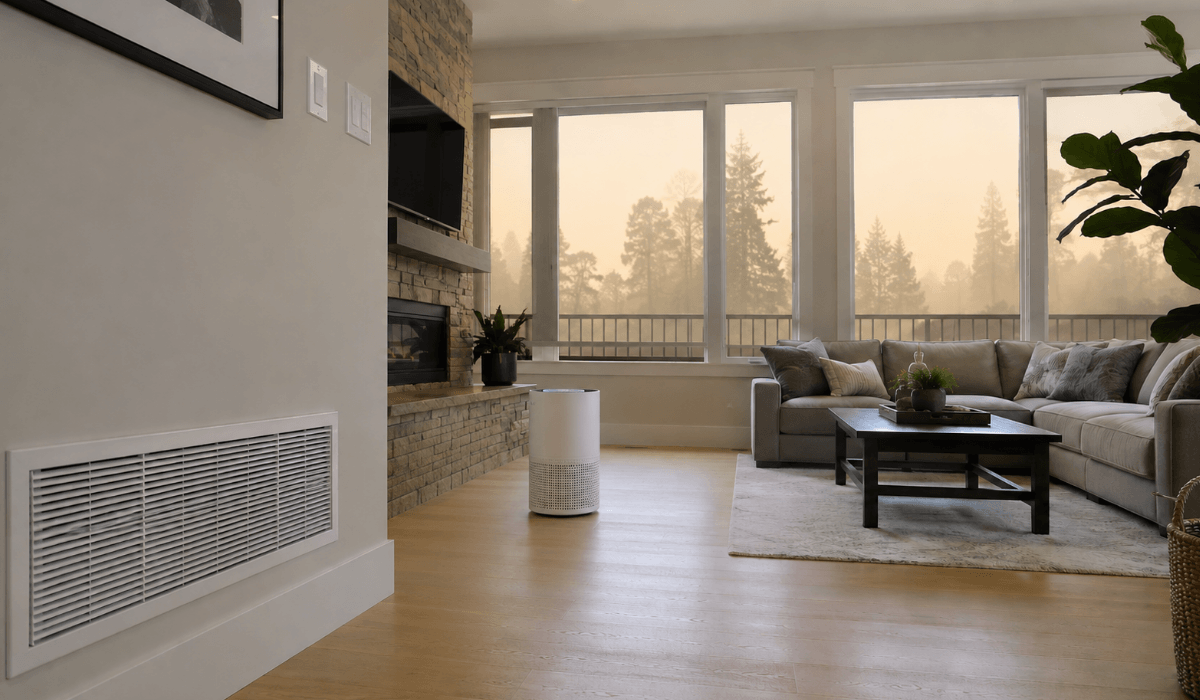
MERV, or Minimum Efficiency Reporting Value, rates how much airborne particulate a filter captures. Higher numbers catch finer particles. Given the Fraser Valley mix of wildfire smoke and farm particulate, plus spring pollen, most Abbotsford homes are best at MERV 11 or MERV 13. Our guide to MERV ratings covers the full scale.
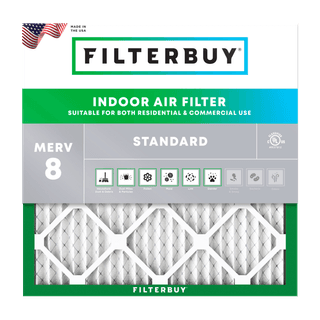
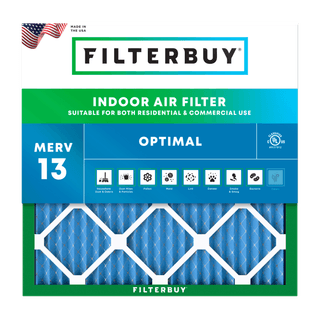
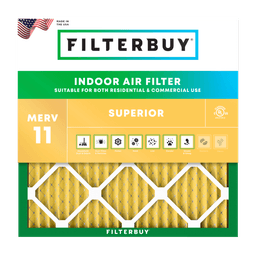
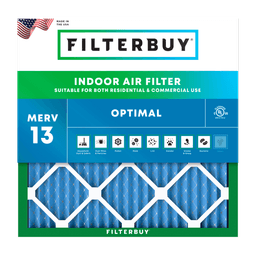
Shop the rating that fits: MERV 8 Standard for everyday dust, MERV 11 Superior for pets and pollen, MERV 13 Optimal for smoke season, or Odour Eliminator carbon filters for odour. Unusual cabinet size? You can build a custom size.
That is also why we will happily sell you the smaller filter. We make every filter we sell, so MERV 11 and MERV 13 are the same sale to us. The wrong one in the wrong furnace helps nobody.
Three US federal findings underpinning the guidance above.
Source: US Environmental Protection Agency, 2020 National Emissions Inventory.
Smoke is now the single largest source of fine particulate.
Why it matters here: smoke, not traffic, drives our summer spikes.
Source: EPA’s Wildfire ASPIRE filtration research, chamber testing.
MERV 13 filters were almost completely ineffective once dirty.
A 4-inch MERV 13 more than doubled a 1-inch’s clean air delivery rate: 248 versus 111.
Why it matters here: check monthly in smoke season, and go thicker if the cabinet allows.
Source: Livestock GRACEnet
Livestock waste 54%, fertilizer 27%.
Airborne ammonia reacts to form fine particulate.
Why it matters here: it explains particulate that traffic alone would not produce.
US federal figures describing US conditions. The science applies equally to Canadian homes; Canadian readings and guidance are cited throughout.
Check the live map above. Below 4 is low risk for most people. From 4 to 6, those with heart or lung conditions should ease off strenuous activity outdoors. At 7 or above, everyone should reduce exertion.
PM2.5 is published in real time by Metro Vancouver and the BC Air Quality website, from the Abbotsford Airport and Mill Lake stations. It is one of three pollutants feeding the AQHI.
Most international apps show the US EPA Air Quality Index on a 0–500 scale, while Canada’s official reading is the AQHI, 1 to 10+. Both can be correct at once.
Yes. Health Canada advises closing windows and doors during smoke events and filtering indoor air. Particle levels stay well below outdoor levels in a closed, filtered home.
Every 60 to 90 days suits most Fraser Valley homes. In smoke season, inspect monthly, since filters load faster with the fan running.
AQHI (Air Quality Health Index): Canada’s official air quality scale, 1 to 10+, published by Environment and Climate Change Canada. Estimates combined short-term health risk from ozone, nitrogen dioxide, and fine particulate.
AQI (Air Quality Index): The US EPA’s scale, 0 to 500, based on the single worst pollutant. Shown by many international apps, but not Canada’s official index.
PM2.5: Fine particulate 2.5 micrometres or smaller, small enough to reach deep into the lungs. The main pollutant in wildfire smoke.
Ground-level ozone: Formed when sunlight reacts with vehicle and industrial emissions. Peaks on hot, still days, higher inland than on the coast.
Lower Fraser Valley airshed: The body of air bounded by the Coast Mountains and the Cascades, from the Strait of Georgia east to Hope.
Central Fraser Valley: The Environment Canada AQHI reporting community covering Abbotsford and Mission.
MERV (Minimum Efficiency Reporting Value): The North American standard rating a filter’s ability to capture airborne particles, 1 to 16.
Air quality warning: A Metro Vancouver alert for the airshed. Yellow means high health risk; orange, very high.
We manufacture and sell replacement air filters. The guidance above supplements the health advice issued by Environment and Climate Change Canada, Health Canada, and your health authority. It never replaces it.
Find the right filter for your home, stay stocked with automatic deliveries, or check current air quality conditions across Canada. Free shipping to Canada, no minimum.