
Why Is My Heating Bill So High? 12 Causes and How to Fix Each One
October 12, 2026
A high heating bill almost always comes from higher rates, colder weather, or a home that wastes heat. We make air filters at Filterbuy, and a clogged filter is just one of the 12 causes below.
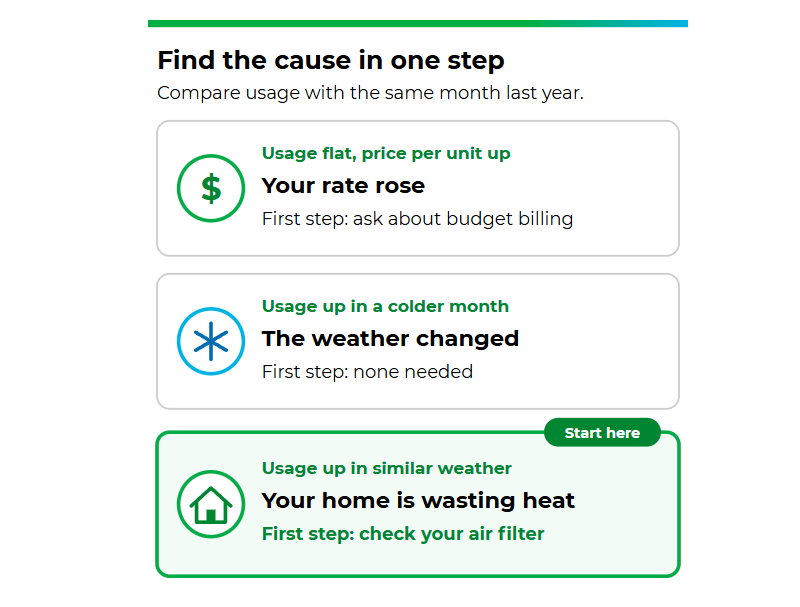
Your heating bill climbs when energy rates rise, the weather turns colder, or your home wastes heat. Compare this bill's usage with the same month last year to see which one changed. If usage jumped in similar weather, check your air filter first, since a clogged one makes your system work harder. Not sure which filter your system needs? Take the quick match quiz below.
Answer a few quick questions and we'll match you to the right filter for your system.
Already know your size? Shop air filters at Filterbuy.
TL;DR
Your heating bill climbs when energy prices rise or when your home and HVAC system waste heat, and cold weather makes both worse. Compare this month's energy use with the same month last year to see which one changed. A fresh air filter and a thermostat setback are the quickest fixes. Duct leaks and aging equipment call for a licensed HVAC technician.
Key Takeaways
Retail energy prices drive most year-to-year changes in winter heating costs, according to the U.S. Energy Information Administration (EIA).
Dividing your bill by the units used shows whether a higher bill came from a rate increase or from higher usage.
ENERGY STAR advises checking your HVAC air filter monthly in winter, because a dirty filter slows airflow and makes the system work harder.
Deep thermostat setbacks can backfire on heat pumps by switching on costlier electric backup heat.
Is It the Rate, the Weather, or Your Home?
Your bill tells you whether the rate, the weather, or your home caused the increase. Filterbuy's first rule for a high heating bill is to read it before you touch the thermostat.
Compare usage, not dollars. Find the therms, kilowatt-hours, or gallons on this bill, then on last year's bill for the same month.
Calculate your price per unit. Divide the total charge by the units used. If usage held steady while the unit price climbed, your rate is the cause.
Convert to daily usage. Divide units used by days billed. A 35-day bill looks worse than a 28-day one until you compare per day.
Worked example: Say 100 therms cost you $120 last January, or $1.20 a therm. This January, the same 100 therms cost $138, or $1.38 a therm. Usage stayed flat while the price rose 15%, so the rate caused the jump, and no furnace repair would lower this bill.
If daily usage jumped in similar weather, the cause is almost certainly inside your home.
12 Causes of a High Heating Bill at a Glance
Match each cause to its owner and first step.
| Cause | Who Fixes It | First Step |
|---|---|---|
| 1. Rate increase | Utility | Ask about budget billing |
| 2. Colder weather | No one | Compare usage to last year |
| 3. Long or estimated billing | Utility | Check dates and meter reading |
| 4. Dirty air filter | You | Replace the filter |
| 5. Skipped tune-up | Technician | Book a fall inspection |
| 6. Heat pump backup heat | You and technician | Use smaller setbacks |
| 7. Leaky ductwork | You and technician | Seal joints, request a duct test |
| 8. Blocked vents | You | Clear furniture and rugs |
| 9. Aging equipment | Technician | Get a repair or replace assessment |
| 10. Air leaks | You | Weatherstrip and caulk |
| 11. Thin attic insulation | You or contractor | Measure insulation depth |
| 12. Thermostat habits | You | Program a setback schedule |
Cause
Who Fixes It
First Step
1. Rate increase
Utility
Ask about budget billing
2. Colder weather
No one
Compare usage to last year
3. Long or estimated billing
Utility
Check dates and meter reading
4. Dirty air filter
You
Replace the filter
5. Skipped tune-up
Technician
Book a fall inspection
6. Heat pump backup heat
You and technician
Use smaller setbacks
7. Leaky ductwork
You and technician
Seal joints, request a duct test
8. Blocked vents
You
Clear furniture and rugs
9. Aging equipment
Technician
Get a repair or replace assessment
10. Air leaks
You
Weatherstrip and caulk
11. Thin attic insulation
You or contractor
Measure insulation depth
12. Thermostat habits
You
Program a setback schedule
Causes Set by Your Utility and the Weather
These three causes have nothing to do with your equipment, so rule them out before paying for repairs.
Your Utility Raised Its Rates
Rising energy prices are the main reason winter heating bills change from one year to the next. The U.S. Energy Information Administration found that trends in retail energy prices account for most of the changes in household heating costs.
The fix: check recent bills for a rate notice, and ask your utility about budget billing.
The Weather Got Colder
Cold weather makes any furnace or heat pump run longer, so a colder month raises usage.
The fix: none needed if last winter was milder. Your home is probably fine.
Your Billing Period Was Longer or Estimated
A longer billing cycle or a high estimated reading can inflate one month's total.
The fix: if the bill says "estimated" and the reading looks off, ask your utility to correct it.
Causes Inside Your HVAC System
Six HVAC problems make a furnace or heat pump run longer to deliver the same heat.
A Dirty Air Filter Is Restricting Airflow
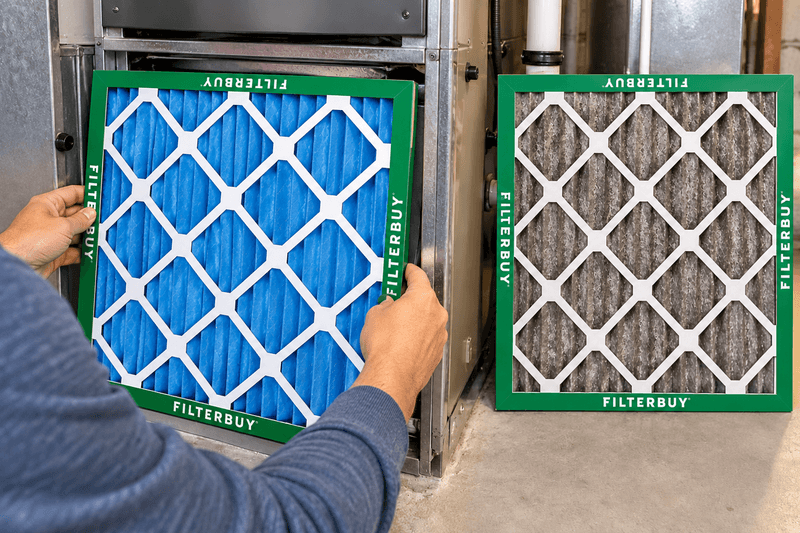
A clogged furnace filter is the cheapest cause to fix. ENERGY STAR, the EPA's energy efficiency program, advises checking your filter monthly in winter, since a dirty filter makes the system work harder.
The fix: hold the filter up to a light. If light barely passes through, replace it and write the install date on the new frame. As a filter maker, Filterbuy would rather you skip a purchase than toss a clean filter early. For schedules by filter depth, see our guide on how often to change your furnace filter in winter.
Your Heating System Skipped Its Annual Tune-Up
Skipping annual maintenance raises energy use. The U.S. Department of Energy reports that energy use between a well-maintained heat pump and a severely neglected one can differ by 10% to 25%.
The fix: book a professional heating inspection each fall.
Your Heat Pump Is Running on Backup Heat
A heat pump costs more to run when it switches to electric resistance backup heat. That happens when temperatures plunge, or the thermostat jumps several degrees at once, and the Department of Energy advises against setbacks that trigger it.
The fix: keep setbacks small and keep snow clear of the outdoor unit.
Your Ductwork Is Leaking Heated Air
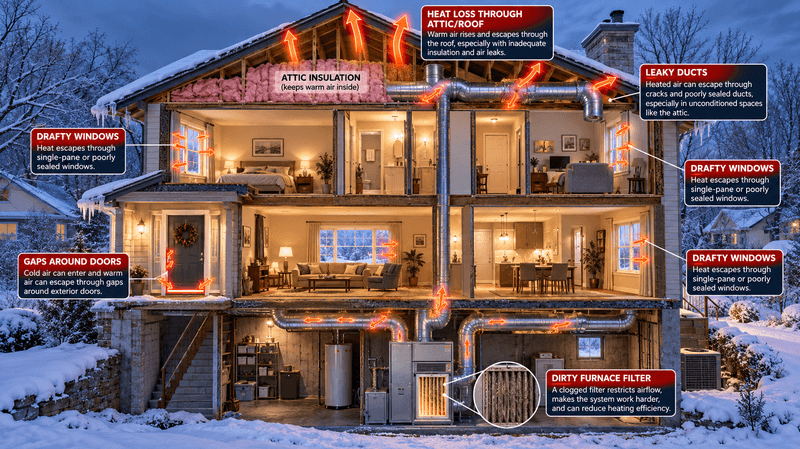
Leaky ducts in unheated attics or crawlspaces lose warm air before it reaches a room. ENERGY STAR estimates that sealing and insulating ducts can improve heating and cooling efficiency by as much as 20%.
The fix: seal visible joints with mastic or foil tape, then have a technician run a duct leakage test.
Vents and Return Grilles Are Blocked
Blocked vents and returns starve the system of air, much like a clogged filter. Rugs and furniture are the usual culprits in winter.
The fix: keep every vent and return clear, even in rooms you rarely use.
Your Furnace or Heat Pump Is Near the End of Its Life
Heating equipment loses efficiency as it ages. Annual Fuel Utilization Efficiency (AFUE) measures how much fuel becomes heat, so an 80% AFUE furnace turns 80 cents of every fuel dollar into warmth.
The fix: treat replacement as a last resort, and ask a licensed technician to weigh repair costs against it.
Causes in Your Home and Daily Habits
Your furnace can only produce heat. The house around it decides how long that heat stays inside, and most fixes here are do-it-yourself projects.
Drafts and Air Leaks Are Pulling Heat Outside
Gaps around windows and doors let warm air slip out.
The fix: on a windy day, run a damp hand around likely leak points and feel for moving air. Weatherstrip doors and windows, and caulk stationary cracks.
Your Attic Insulation Is Too Thin
Thin attic insulation lets heat escape through the ceiling. If you can see the tops of the attic floor joists, the insulation is probably too thin.
The fix: measure its depth against the recommended level for your climate, then add insulation or hire a contractor.
Thermostat Settings and Space Heaters Are Adding Up
Holding one warm setting around the clock, or running a space heater for hours, raises the bill a little every day.
The fix: program a lower setting for sleep and time away. Never leave a space heater running unattended.
A Winter Checklist to Keep Heating Bills Down
Prepare before the first freeze and adjust during cold snaps to keep winter bills in check.
Before the first freeze: book a heating tune-up, replace the air filter using Filterbuy's step-by-step furnace filter replacement guide, test carbon monoxide alarms, and weatherstrip exterior doors.
During a cold snap: follow our cold snap furnace protection tips and resist the urge to crank the thermostat.
When a High Heating Bill Means It Is Time to Call a Pro
Call a licensed HVAC technician if a rising bill comes with any of these signs.
The system runs constantly, but rooms never reach the set temperature, or the furnace blows cold air.
The furnace turns on and off every few minutes, a pattern called short cycling.
You smell gas or a carbon monoxide alarm sounds. Leave the home and call your gas utility or 911 from outside.
How to Get Help Paying a High Heating Bill
If a winter bill is more than you can pay, call your utility before the due date and ask about budget billing or a payment plan. The federal Low Income Home Energy Assistance Program (LIHEAP) helps low-income households with home energy bills through state and local energy assistance offices.
“On winter service calls, I check the air filter first, because a clogged one keeps the system running longer and takes five minutes to replace. If a heat pump's aux heat light stays on in mild weather, call a technician before the next bill arrives.”
David Clark, Licensed HVAC Technician
Supporting Statistics
1. Heating costs are projected to average $1,030 in winter 2026-27.
That is $82, or 8.7%, more than last winter. Filterbuy's take: judge your bill by the units you used.
Source: National Energy Assistance Directors Association, Winter 2026-27 Heating Cost Projections
2. Electricity prices rose 3.8%, and natural gas prices rose 4.4%
In the 12 months ending August 2026. Even with flat usage, that means a bigger bill.
Source: U.S. Bureau of Labor Statistics, Consumer Price Index for August 2026
3. Portable heaters were involved in 41% of fatal residential heating fires.
Portable heater fires peak in January.
Source: U.S. Fire Administration, Portable Heater Fires in Residential Buildings
Frequently Asked Questions
Why Is My Heating Bill So High When I Have Not Changed Anything?
Your rate likely rose, or the weather turned colder. If usage matches last year but the total climbed, the rate is the cause. If usage climbed in similar weather, check the filter and look for drafts.
Can a Dirty Air Filter Make My Heating Bill Go Up?
Yes. A clogged filter restricts airflow, so your furnace or heat pump runs longer for the same heat. Filterbuy recommends checking it monthly in winter.
Is It Cheaper to Leave the Heat at One Temperature All Day?
Not for most furnaces, since lowering the thermostat while you sleep or are away saves energy. Heat pumps are the exception, because a large setback can trigger costly backup heat.
Why Is My Electric Bill High in Winter If I Heat with Gas?
A gas furnace still needs electricity to run its blower fan, and that fan runs more often in cold weather. Space heaters and holiday lights add to the electric bill too.
Start with the Filter You Can Change Today
Filterbuy manufactures pleated air filters in MERV 8, MERV 11, and MERV 13 across hundreds of standard and custom sizes, with fast and free 2-day delivery to most US states. Check the size printed on your current filter and the MERV rating your HVAC system's manual supports, then shop air filters by size.
Glossary
AFUE (Annual Fuel Utilization Efficiency): The share of a furnace's fuel that becomes usable heat.
Auxiliary Heat: Electric backup heat that helps a heat pump in deep cold and costs more to run.
Budget Billing: A utility plan that spreads annual energy costs into equal monthly payments.
MERV (Minimum Efficiency Reporting Value): A 1 to 16 rating describing how well an HVAC air filter captures airborne particles.