
Holiday Cooking Air Quality: Reduce Smoke, Odors & VOCs
October 21, 2026
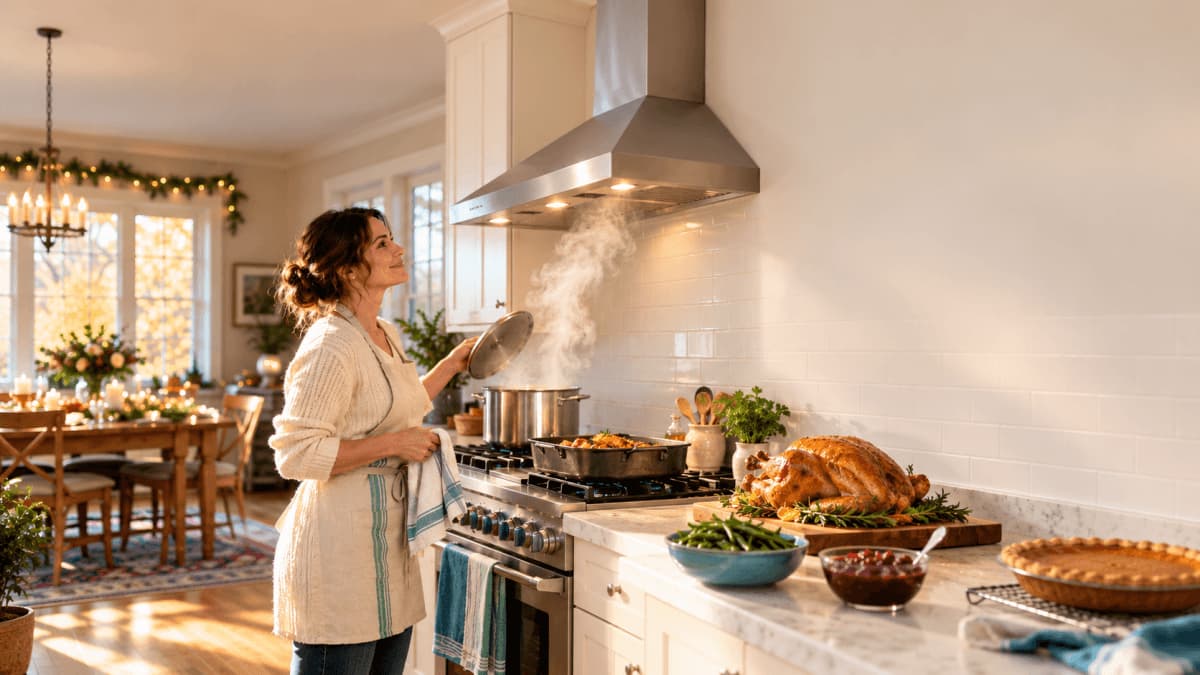
Start at the stove, not the HVAC filter: run an outdoor-venting range hood before, during, and after cooking. Add fresh air from a window when weather, outdoor air quality, and safety allow. Then let filtration handle what’s left: particle filters capture grease and smoke particles, and activated carbon can reduce select odors and gases. Take the quick quiz below to find the right air filter for your home this winter.
Find your air filter match
Answer a few quick questions and we’ll match you to the right filter for your HVAC system.
Quick answer: Reducing smoke, odors, and VOCs from holiday cooking starts with capturing emissions at the stove, not with upgrading your HVAC filter. Use an outdoor-venting range hood before, during, and after cooking; supplement with window ventilation when conditions allow; and choose filtration that matches the pollutant: particle filters for grease and smoke, gas-phase media for odors and some VOCs.
Holiday meals generate more cooking emissions than an average weeknight dinner. Multiple burners running at once, oven doors opening and closing, and hours of simmering, roasting, and frying all add up. The good news: you don't need to overhaul your HVAC system to manage it. The most effective approach is straightforward: reduce what you release at the source, move it outside with proper ventilation, and let filtration handle what's left.
Holiday Cooking Checklist: Five Priorities for Better Kitchen Air Quality
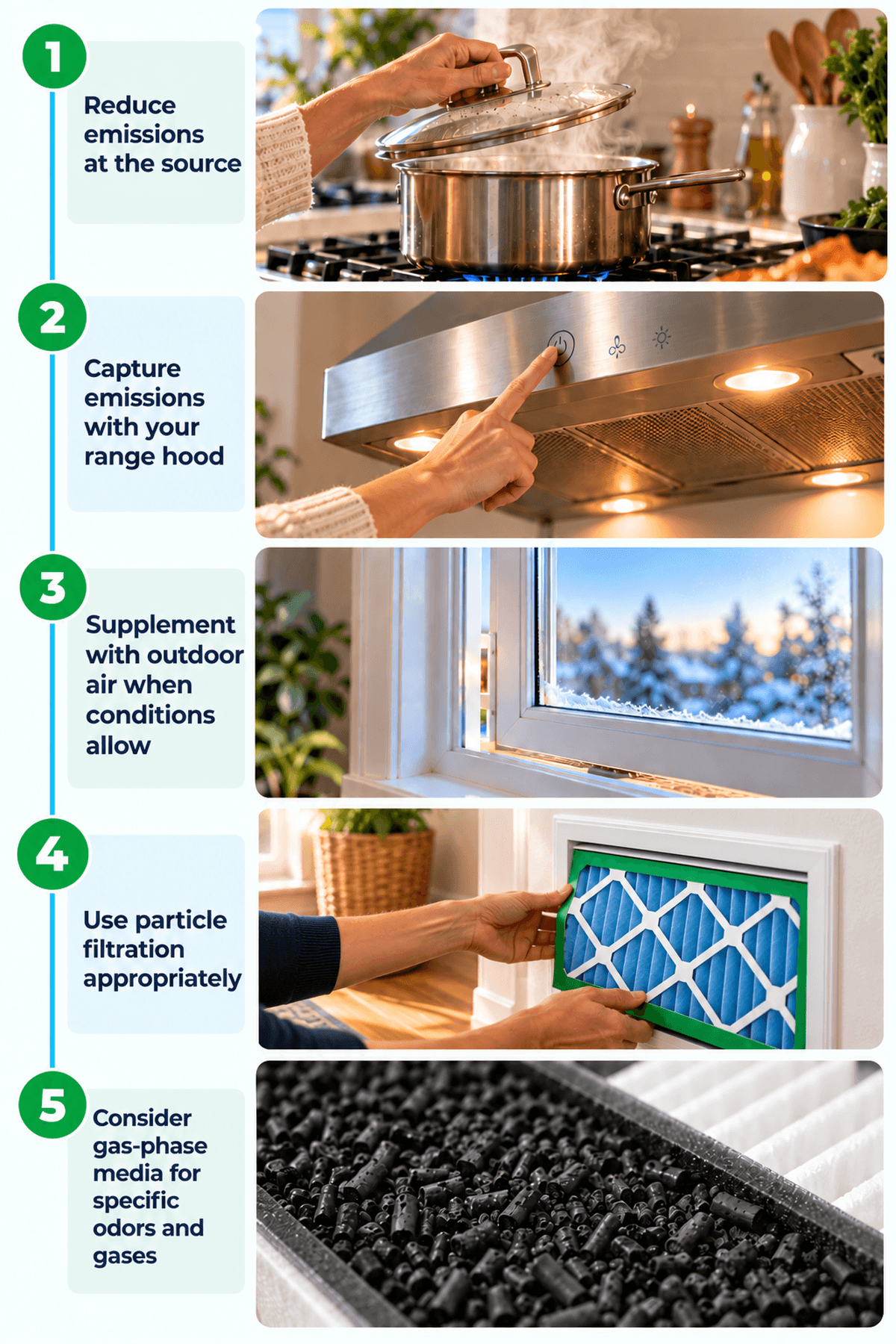
When kitchen air quality starts to suffer, work through these steps in order:
Reduce emissions at the source. Use lids on pots, avoid overheating oil past its smoke point, and stagger high-smoke cooking tasks (like searing or broiling) when practical.
Capture emissions with your range hood. Turn it on before you start cooking and let it run.
Supplement with outdoor air when conditions allow. Open a window or door briefly if the weather, outdoor air quality, and safety considerations permit it.
Use particle filtration appropriately. A clean, correctly sized HVAC filter or portable air cleaner helps capture airborne grease and smoke particles (but only while the system is running).
Consider gas-phase media for specific odors and gases. Activated carbon and similar media can reduce select odorous compounds, though no single filter removes every gas a kitchen produces.
What Does Cooking Actually Release?
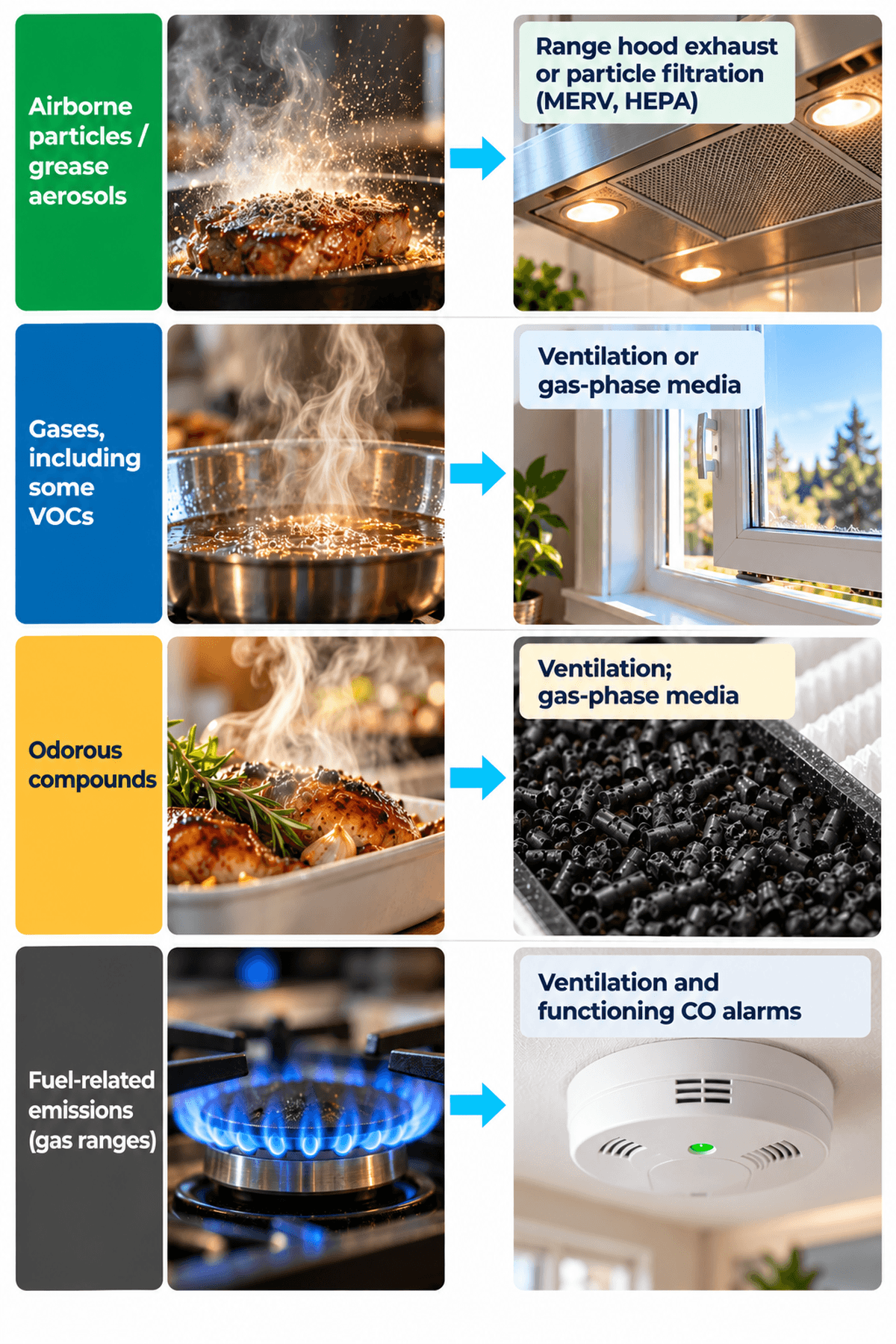
Cooking produces a mix of pollutants, and not all of them behave the same way or respond to the same solutions.
| Emission type | Examples | How it’s managed |
|---|---|---|
| Airborne particles / grease aerosols | Smoke, grease droplets from frying or searing | Captured by range hood exhaust or particle filtration (MERV, HEPA) |
| Gases, including some VOCs | Volatile organic compounds, which are gases released from certain foods, oils, and high-heat cooking processes. | Require ventilation or gas-phase media; particle filters do not remove them |
| Odorous compounds | Food smells, lingering cooking aromas | Ventilation disperses them; gas-phase media can adsorb select compounds |
| Fuel-related emissions (gas ranges) | Combustion byproducts, including carbon monoxide | Managed primarily through ventilation and functioning CO alarms |
A volatile organic compound (VOC) is a chemical compound that evaporates readily into the air at room temperature. Some cooking processes, particularly high-heat methods involving oils, release VOCs, but the amount and composition vary by food, cooking method, and ventilation already in place. MERV 13 describes particle-filtration performance, not VOC removal. A compatible HVAC filter can help capture cooking particles, while ventilation addresses airborne gases. Gas reduction requires appropriate gas-phase media and depends on the filter's design.
How to Ventilate While Cooking
Ventilation is the first line of defense against holiday cooking smoke and odors, and the type of range hood you have changes what it can realistically do.
Outdoor-venting hoods pull air from above the stove and exhaust it outside the home. This is the most effective option for removing smoke, grease particles, and gases together, since the pollutants leave the building entirely rather than recirculating.
Recirculating hoods pull air through a filter (often a basic grease filter) and release it back into the kitchen. These hoods capture some grease and particles but do not remove gases or most odors, since they aren't venting anything outside. They're not useless; they still reduce grease buildup on surfaces and can lessen visible smoke, but they shouldn't be relied on for odor or VOC reduction the way an outdoor-venting hood can.
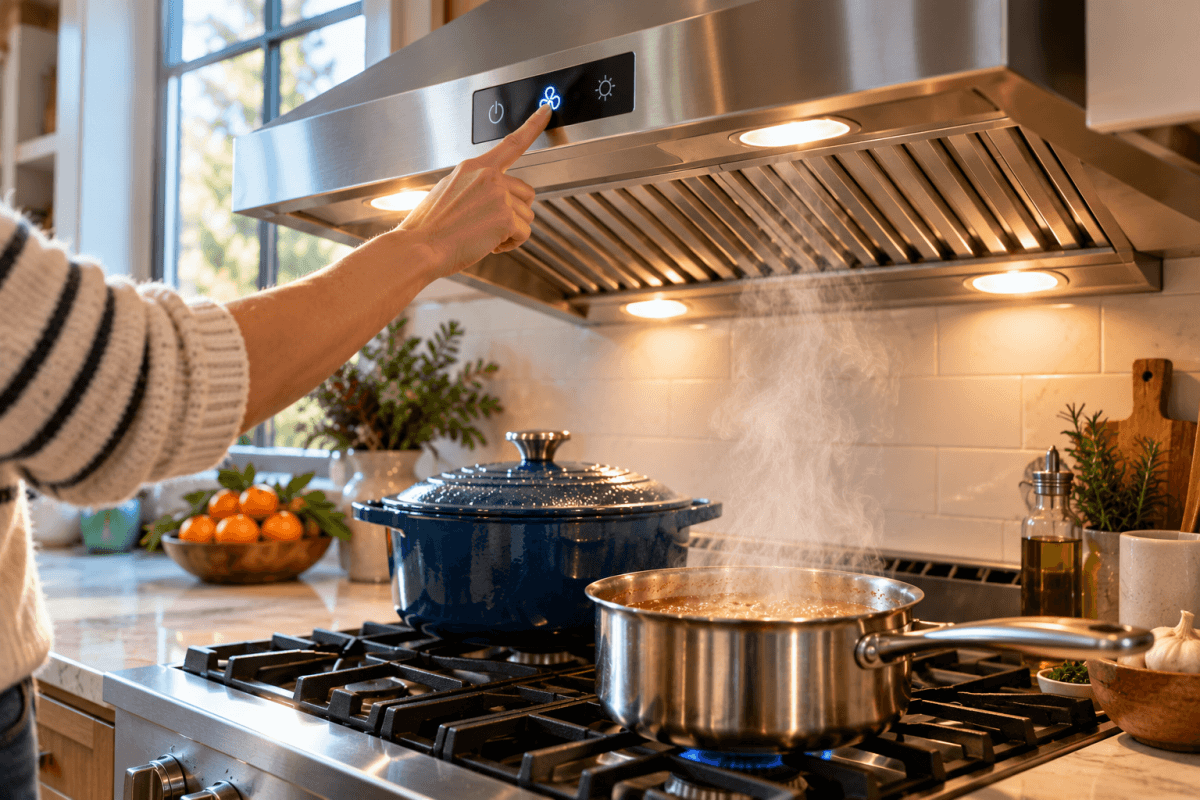
A few practical habits improve hood performance regardless of type:
Turn the hood on before you start cooking, not after smoke appears.
According to EPA guidance on kitchen ventilation, running the hood for 10–20 minutes after cooking finishes helps clear residual pollutants from the air.
Use back burners when practical, since hoods typically capture emissions from the back of the stove more effectively than the front.
Clean the grease filter regularly; a clogged filter reduces airflow and hood effectiveness.
Keep the path between the stove and hood clear of pots, pans, or decorations that block airflow.
When weather, outdoor air quality, and safety allow, supplementary ventilation, such as cracking a window near the kitchen, can help move additional air through the space. This isn't a guaranteed fix for every kitchen layout, but it's a reasonable supplement when an outdoor-venting hood isn't available or needs extra help during a long cooking session.
What Filters Can and Cannot Remove
Filtration plays a supporting role in holiday cooking air quality, but it's important to match the filter type to the pollutant you're targeting.
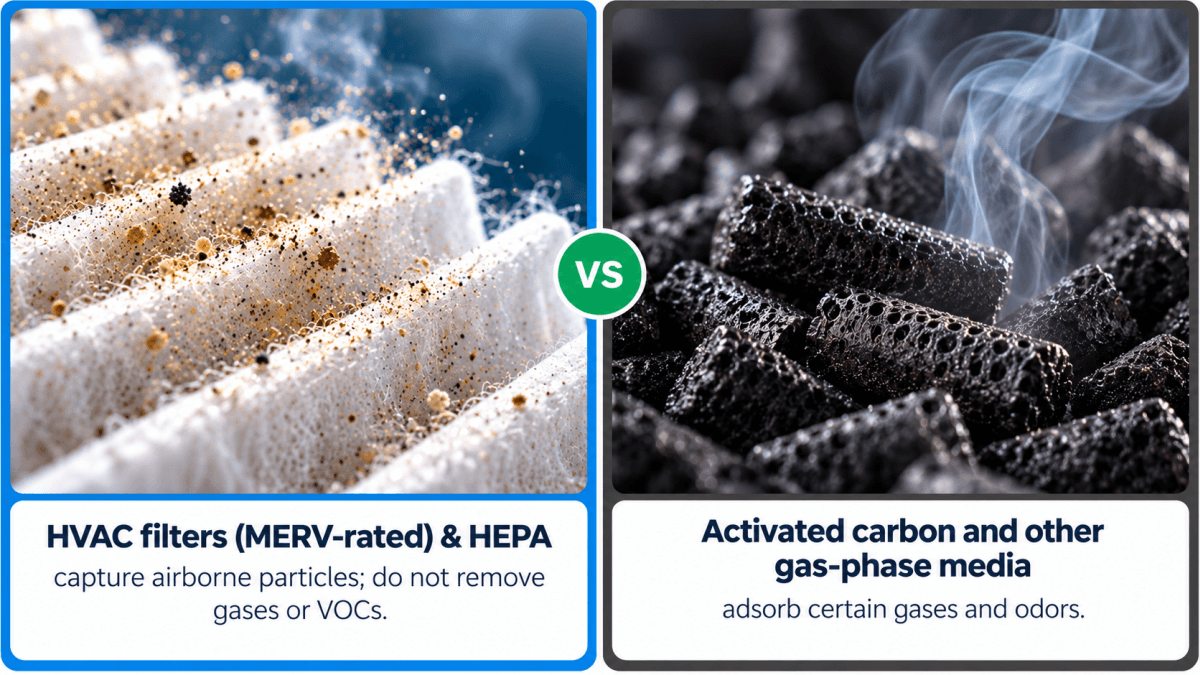
HVAC filters (MERV-rated) capture airborne particles (things like grease aerosols, dust, and smoke particulates) as air passes through your HVAC system. They only work while the system is actively running air through the filter, and they do not remove gases or VOCs. If your HVAC system runs frequently during holiday cooking, a higher-MERV filter rated for your system can help with particle capture. However, check your system's compatibility before upgrading, since some HVAC equipment isn't designed for high-MERV filters.
HEPA filtration captures particles at a high efficiency rate, typically used in portable air cleaners rather than standard residential HVAC systems. Like other particle filters, HEPA media does not remove gases or VOCs.
Activated carbon and other gas-phase media work differently: they adsorb certain gases and odors onto their surface, rather than trapping particles. This can reduce some cooking odors and specific gaseous compounds, but coverage depends on the type and amount of media used. A thin carbon layer in a basic filter isn't the same as a dedicated gas-phase filtration system, and no single gas-phase media removes every VOC a kitchen might produce.
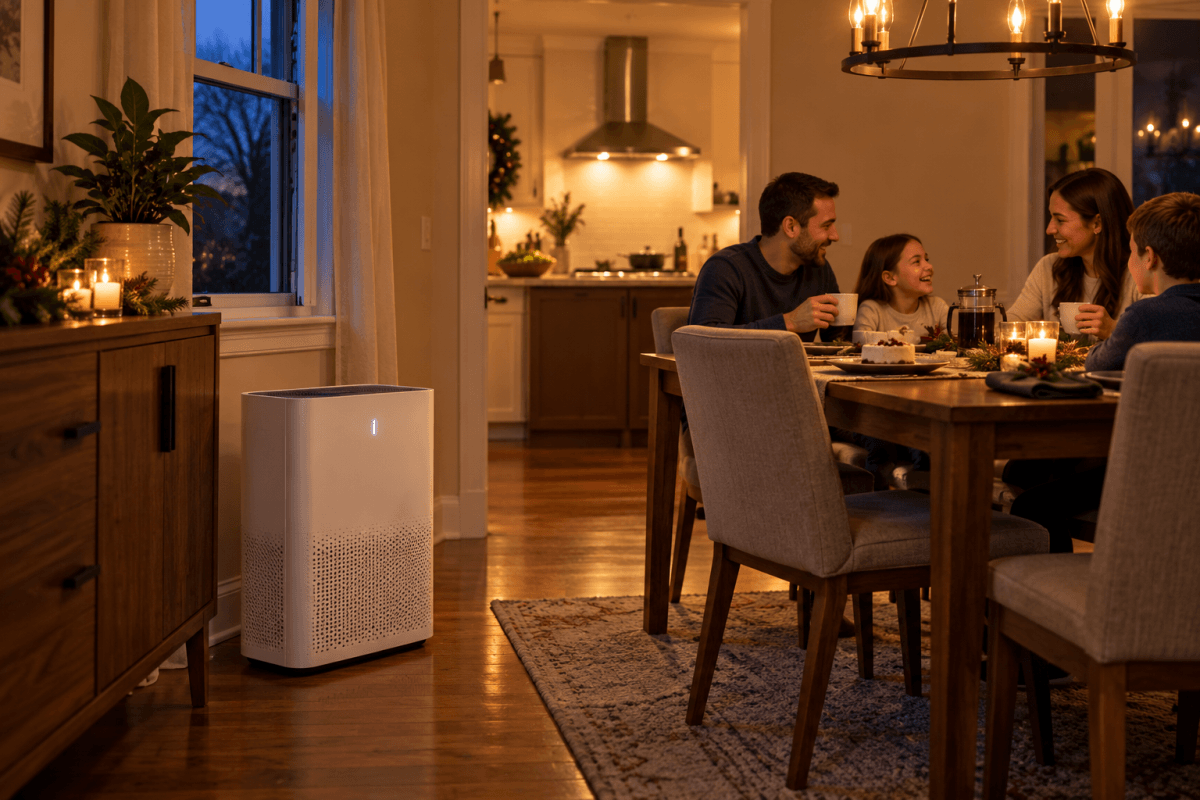
Portable air cleaners are rated by Clean Air Delivery Rate (CADR), which measures particle removal only; it says nothing about a unit's ability to reduce gases or odors. If odor or VOC reduction is a goal, look for a portable air cleaner that combines appropriately sized particle filtration (CADR matched to your room size) with a gas-phase media component. Run time should follow the manufacturer's instructions and the conditions in the room, rather than a fixed rule of thumb.
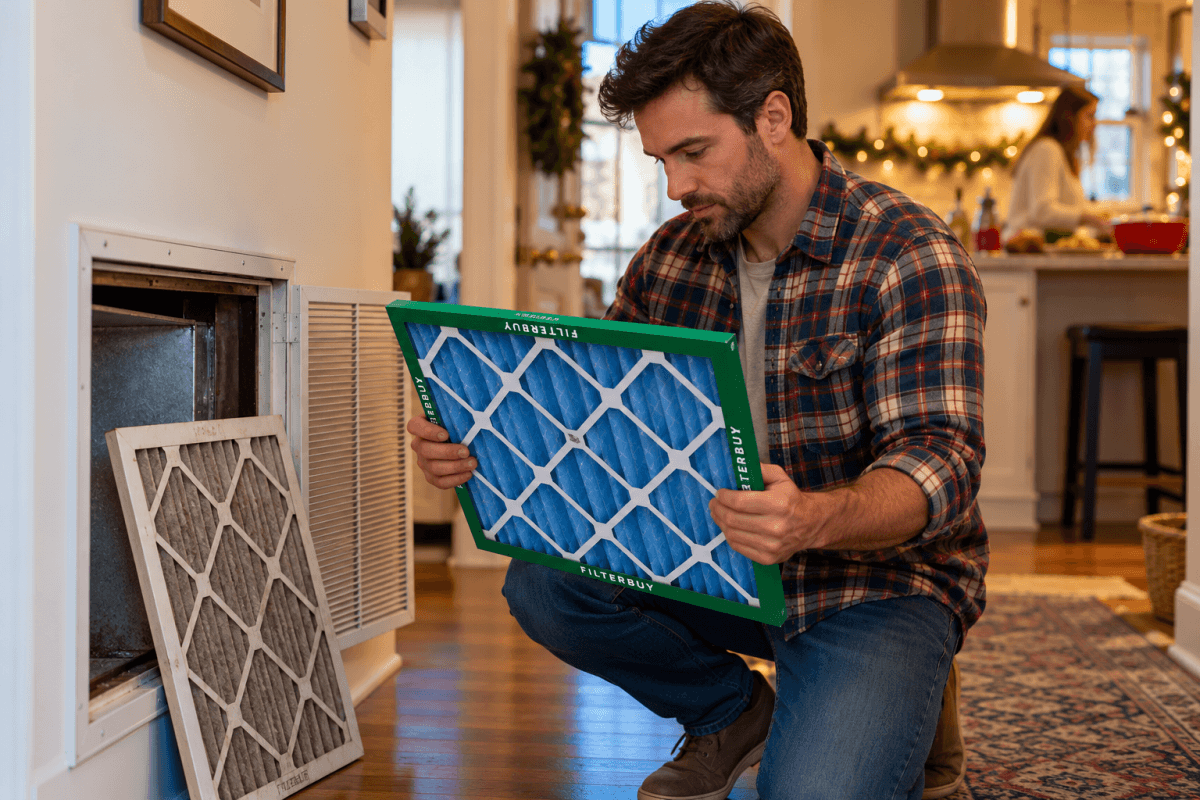
Check your filter size and choose the highest-efficiency option your HVAC system can accommodate. This is a reasonable step for particle capture, but it shouldn't be mistaken for a VOC solution.
Before, During, and After the Meal: A Practical Checklist
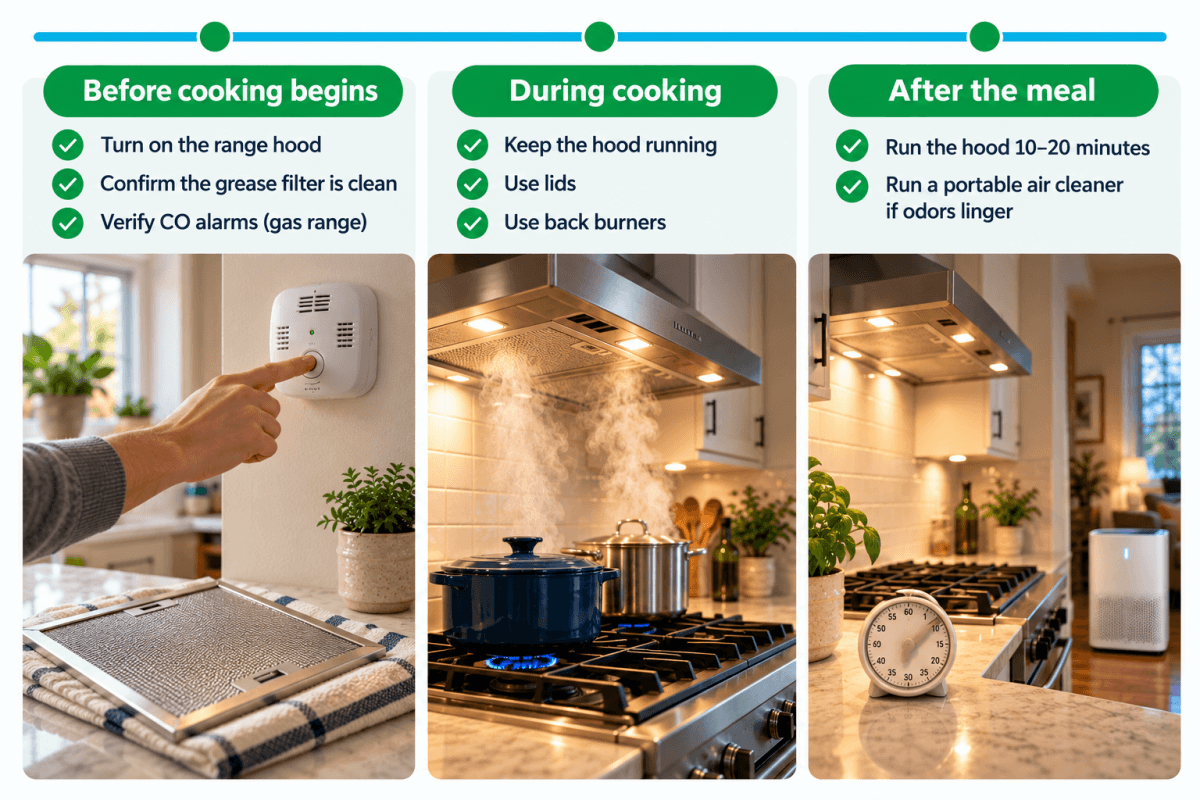
Before cooking begins:
Turn on the range hood.
Confirm the grease filter is clean.
Check that your HVAC filter is within its recommended replacement window.
Verify carbon monoxide alarms are functioning if you're using a gas range.
During cooking:
Keep the hood running continuously.
Use lids where possible to limit smoke and aerosol release.
Use back burners when practical.
Open a window briefly if conditions allow and more airflow is needed.
Consider staggering especially smoky cooking tasks (like high-heat searing) rather than running them simultaneously. This is optional, not a strict requirement.
After the meal:
Let the range hood run for 10–20 minutes after cooking finishes.
Run a portable air cleaner with particle and gas-phase filtration if odors linger.
Note any heavier-than-usual particle exposure and check your HVAC filter sooner than scheduled if needed, following manufacturer guidance.
Choosing Filtration That Matches the Job
Holiday cooking air quality comes down to one message: capture emissions at the stove, ventilate appropriately, and use filtration for the pollutants it's actually designed to remove. No single filter (particle or gas-phase) handles everything a busy kitchen produces, and that's fine. Matching the right tool to the right pollutant is more effective than relying on one upgrade to solve every problem.
If you're ready to check your filter size or compare particle and gas-phase filtration options for your home, explore our complete guide to indoor air quality to find the right fit for your HVAC system.
Frequently Asked Questions
Does Cooking Release VOCs?
Some cooking processes release VOCs, particularly high-heat methods involving oils. The amount and type vary depending on the food, cooking method, and existing ventilation in the kitchen.
Do HVAC Filters Remove Cooking Odors?
Standard HVAC filters are designed to capture airborne particles, not gases or odors. Odor reduction requires ventilation or a filter that includes gas-phase media like activated carbon.
Does HEPA Remove VOCs?
No. HEPA filtration is designed for high-efficiency particle capture. It does not remove volatile organic compounds or other gases.
How Long Should A Range Hood Run After Cooking?
The EPA recommends running a range hood for 10–20 minutes after cooking finishes to help clear residual smoke, particles, and gases from the air.
How Can I Ventilate A Kitchen In Winter?
Prioritize your range hood, especially if it vents outdoors. Supplement with a briefly opened window when weather, outdoor air quality, and safety allow. A portable air cleaner with particle and gas-phase filtration can help on days when opening a window isn't practical.
What If My Range Hood Recirculates Instead Of Venting Outdoors?
A recirculating hood still captures some grease and particles through its filter, but it does not remove gases or odors since it releases air back into the kitchen. Combine it with a clean grease filter, supplementary window ventilation when possible, and a gas-phase air cleaner if odor reduction is a priority.
See More
Holiday cooking can fill your home with more than delicious aromas. Discover practical ways to manage cooking smoke, lingering odors, and airborne VOCs while keeping your indoor air fresher throughout the festivities.
See how everyday cooking habits and proper kitchen ventilation can help reduce indoor air pollutants. These practical insights can help you maintain a more comfortable home during busy holiday meals.
Explore a visual guide to controlling cooking-related smoke, odors, and airborne pollutants. Learn how simple steps before, during, and after preparing holiday meals can support better indoor air quality.