
Winter Indoor Air Quality: Dust, Dry Air & Cleaner Air Tips
October 22, 2026
How to Improve Indoor Air Quality in Winter
Cleaner winter air comes down to three habits: cut dust at the source, ventilate, and filter well. Closed-up homes trap dust, pet dander, and cooking particles, and heated air gets dry.
Check your HVAC filter monthly and keep indoor humidity between 30% and 50%, as the EPA recommends. Find the right filter for your system below.
Cleaner winter air takes three habits
Cut sources
Damp-dust and wash pet bedding.
Ventilate
Run kitchen and bath exhaust fans.
Filter well
Use a snug-fitting filter and check it every month.
Dry air? Keep indoor humidity at 30–50%, per the EPA. A hygrometer shows where your home stands.
Heat with a mini split? Answer a few quick questions and we’ll match you to the right filters.
Indoor air quality can change during winter because homes are often closed more tightly, people spend more time indoors, and heating systems run more frequently.
Dust, pet dander, cooking particles, and combustion pollutants can build up when ventilation is limited, and heated outdoor air often lowers indoor relative humidity.
Improving winter indoor air quality usually comes down to three things: controlling pollutant sources, ventilating properly, and filtering effectively.
How Can You Improve Indoor Air Quality in Winter?
Use the right HVAC filter for your household and system.
Check your filter monthly during heating season.
Maintain indoor relative humidity around 30% to 50%.
Use kitchen and bathroom exhaust ventilation.
Reduce dust and particle sources through regular cleaning.
Consider a properly sized portable air cleaner when additional particle filtration is needed.
Why Does Indoor Air Quality Often Get Worse in Winter?
The U.S. Environmental Protection Agency (EPA) notes that air inside homes can be more seriously polluted than outdoor air, even in the largest and most industrialized cities, and that inadequate ventilation can raise indoor pollutant levels by not bringing in enough outdoor air to dilute them. Several winter-specific factors compound this.
Homes Get Less Outdoor Air
Cold weather means fewer open windows and doors, which reduces the air exchange rate, or the rate at which outdoor air replaces indoor air. According to the EPA, when infiltration, natural ventilation, and mechanical ventilation are all low, pollutant levels can increase indoors.
People Generate More Pollutants Indoors
Winter often means more time spent cooking, cleaning, burning candles, running fireplaces, and sharing space with pets. Each of these activities is a known indoor pollutant source, releasing particles, volatile organic compounds (VOCs), or combustion byproducts into the air.
Heating Systems Circulate Indoor Air
It's a common misconception that forced-air heating systems create dust. They don't; they move existing particles already present in the home. A furnace filter only filters air while the system is actively running, which the EPA notes is usually less than 25% of the time during heating and cooling seasons.
Indoor Air Can Become Very Dry
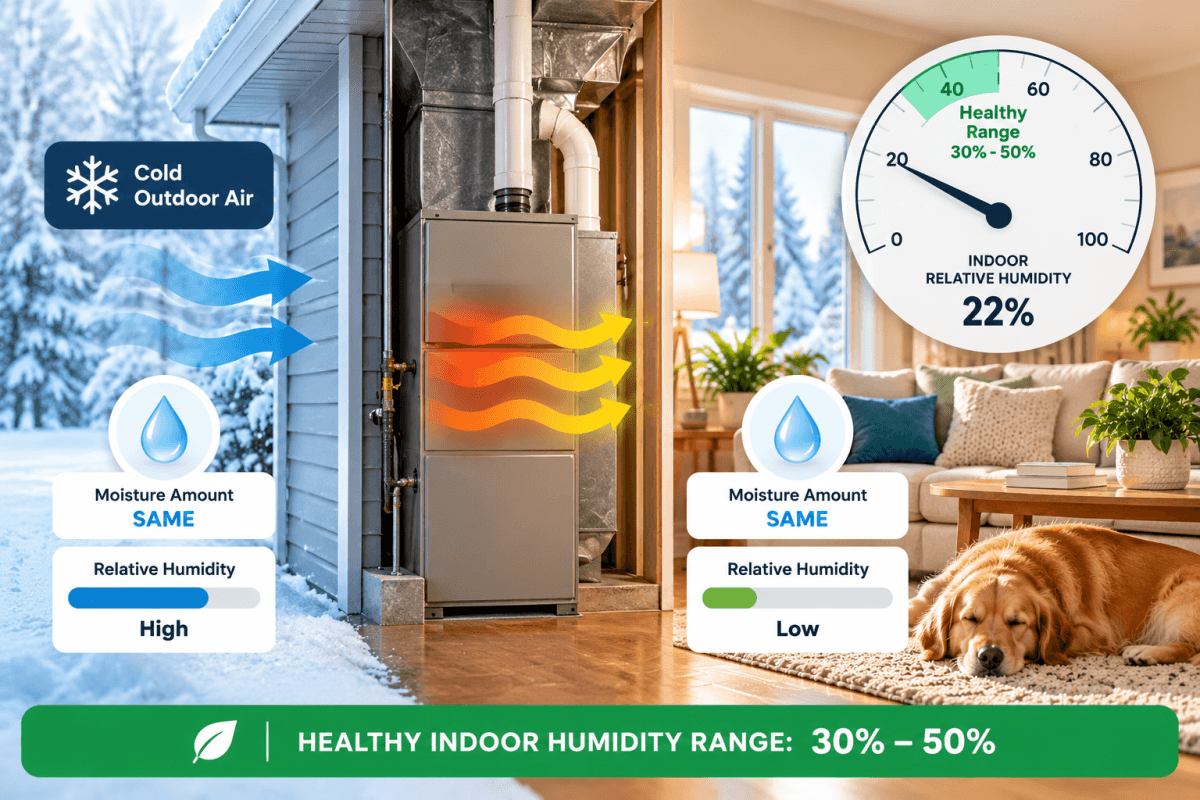
Cold outdoor air holds very little moisture. When that air enters a home and is heated, its relative humidity drops sharply, even though the actual amount of water vapor hasn't changed. This is why homes often feel noticeably drier in winter than in summer.
Why Is My House So Dusty in Winter?
Winter dust usually comes from a combination of sources already inside the home, not from the heating system itself. Common contributors include:
Pets: Dander and fur circulate more when pets spend more time indoors.
Textiles: Blankets, rugs, and upholstery shed fibers that settle as household dust.
Outdoor particles: Soil and debris tracked in on shoes and clothing.
Filter bypass: A poorly fitted filter lets air and dust leak around its edges instead of through it.
Cooking: Frying and other high-heat cooking release fine particles into the air.
Fireplaces and candles: Combustion sources add particulate matter.
Foot traffic: More time indoors means more particles disturbed from floors and surfaces.
Does Dry Winter Air Make Indoor Air Quality Worse?
Low indoor humidity is primarily a comfort and respiratory-irritation issue rather than a direct air quality hazard, though the two are related. The EPA recommends keeping indoor relative humidity between 30% and 50%, a range that also helps limit the growth of biological contaminants like mold, mildew, and dust mites.
A hygrometer, an inexpensive tool that measures indoor humidity, can help you track where your home stands.
If you use a humidifier, the EPA advises cleaning cool-mist and ultrasonic models according to the manufacturer's instructions and refilling them with fresh water daily, since these devices can otherwise become breeding grounds for biological contaminants. It's also worth noting that poorly maintained ultrasonic humidifiers can release mineral particles into indoor air, so monitoring humidity levels and avoiding over-humidifying matters as much as adding moisture in the first place.
7 Ways to Improve Indoor Air Quality in Winter
1. Use an HVAC Filter Your System Can Accommodate
MERV (Minimum Efficiency Reporting Value) measures how effectively a filter captures airborne particles. The higher the number, the greater the share of fine particles it removes. The right rating depends on your household: MERV 8 is a strong fit for most homes, MERV 11 suits households with pets or allergies, and MERV 13 is the step up for smoke and fine-particle concerns.
If you decide to upgrade, the EPA recommends choosing a filter rated at least MERV 13, or as high as your system fan and filter slot can accommodate, since filters rated MERV 13 and above must demonstrate at least 50% removal efficiency for the smallest particles tested.
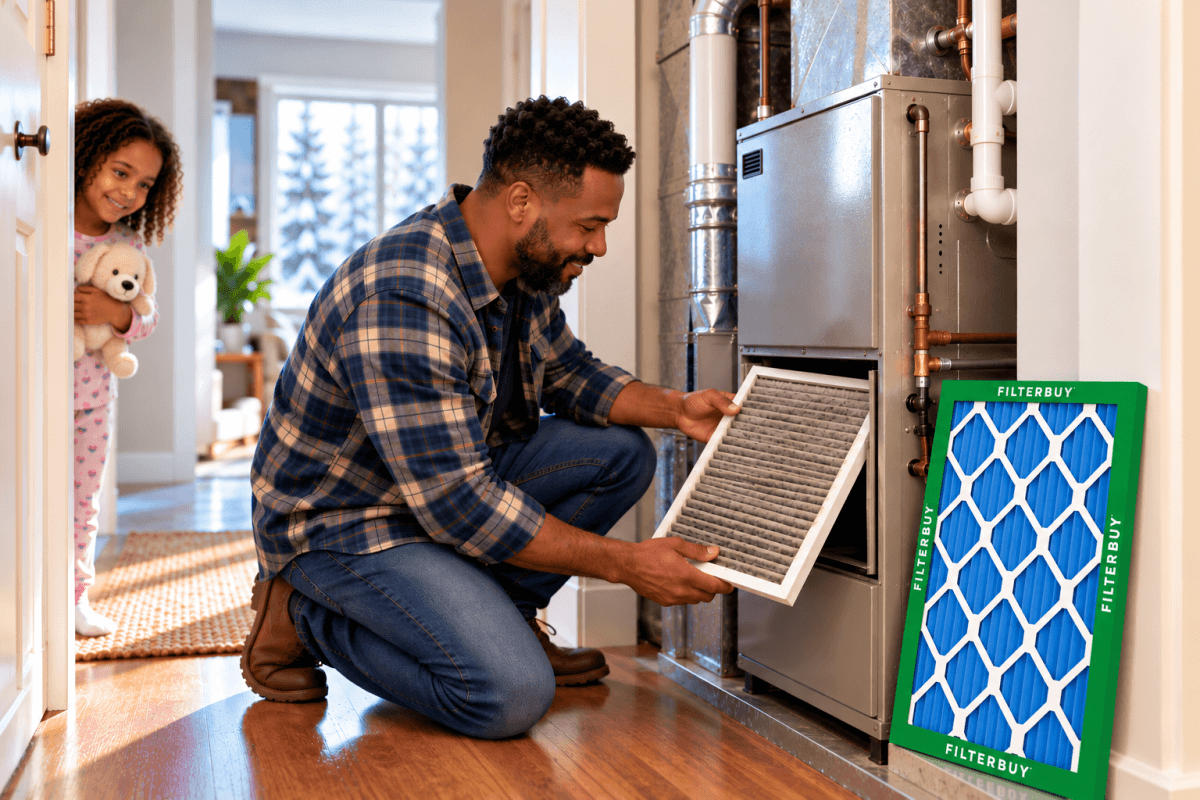
Not every HVAC system can handle a MERV 13 filter without restricting airflow, so your choice should depend on what your specific system supports. Consult a professional HVAC technician if you're unsure. Whatever rating you choose, make sure the filter fits snugly in its slot, since gaps let unfiltered air bypass the filter entirely, and double-check the airflow direction arrow printed on the filter frame during installation.
2. Check the Filter Monthly
Checking your filter and replacing it are not the same thing. The EPA notes that manufacturers typically recommend replacement every 60 to 90 days, but this varies by filter type, system usage, pets, occupancy, and home conditions. A monthly visual check lets you catch a dirty furnace filter before it affects airflow, even if it doesn't need replacing yet.
3. Control Indoor Humidity
Keep indoor relative humidity in the EPA's recommended 30% to 50% range. Use a hygrometer to monitor levels rather than guessing, and adjust humidifier or dehumidifier use accordingly.
4. Ventilate Pollutants at the Source
Run kitchen exhaust fans while cooking and bathroom exhaust fans while showering. Both vent moisture and pollutants directly outdoors rather than letting them circulate through the home. The EPA also recommends increasing outdoor-air ventilation during activities that generate high pollutant levels, such as painting or using solvents, when weather and outdoor air quality permit. Opening a window isn't always the right call, particularly on days with poor outdoor air quality, so weigh conditions before relying on it.
5. Reduce Dust at the Source
Regular, damp-method cleaning (damp dusting, mopping, vacuuming) is more effective than dry dusting, which can resuspend particles into the air. Wash bedding regularly, clean pet bedding, and pay attention to entryways where outdoor particles accumulate.
6. Consider a Portable Air Cleaner
Portable air cleaners can supplement source control and ventilation, but they don't replace either one. The EPA advises choosing a unit with a clean air delivery rate (CADR) sized appropriately for the room, and notes that portable units often reach a high CADR by using HEPA filtration. They're especially useful in bedrooms or other high-occupancy rooms. Avoid devices that intentionally generate ozone, which the EPA identifies as a lung irritant; no federal agency has approved ozone generators for use in occupied spaces.
7. Check Your HVAC System When Problems Persist
If dust keeps returning quickly, a filter loads unusually fast, airflow feels weak, or odors won't go away, these can signal a poorly fitted filter, duct leakage, or another mechanical issue worth having a professional evaluate. The EPA does not recommend routine air duct cleaning, only cleaning on an as-needed basis, so don't treat it as a default fix. And if you or household members are experiencing ongoing respiratory symptoms, consult a healthcare professional in addition to addressing HVAC maintenance.
MERV 8 vs. MERV 11 vs. MERV 13 for Winter
| Rating | What It Does | Typical Fit |
|---|---|---|
| Basic residential particle filtration; captures many common larger household particles | Most households | |
| Captures smaller particles more efficiently than MERV 8 | Homes with pets or allergy concerns | |
| Provides substantially better fine-particle filtration | Smoke or fine-particle concerns, if your system can accommodate it | |
| May suit some systems | Only where your HVAC equipment is confirmed compatible |
What MERV rating is best for winter? It depends on your household and your system. MERV 8 covers most homes, MERV 11 is a common step up for pets and allergies, and MERV 13 is the EPA's minimum recommendation when you're upgrading for fine particles, provided your system can accommodate it. If your system can't handle a higher rating, use the highest compatible efficiency rather than assuming a higher MERV number is automatically better for your equipment.
Winter Air Quality Problems at a Glance
| Problem | Possible Cause | What to Check First |
|---|---|---|
| Dust returns quickly | Particle sources, filter bypass, inadequate filtration | Filter fit and condition |
| Air feels very dry | Low relative humidity | Hygrometer reading |
| Cooking smells linger | Inadequate exhaust ventilation | Range hood/exhaust |
| One room is dusty | Airflow or local particle source | Supply/return vents and room sources |
| Filter gets dirty unusually fast | High particle load or heavy runtime | Home conditions and HVAC operation |
| Musty smell | Moisture problem | Look for water or mold source |
| Allergy symptoms indoors | Multiple possible allergens/particles | Filtration, cleaning, source control |
Signs the Problem May Be Bigger Than the Filter
Some issues point to something beyond routine filter maintenance:
Persistent odors that don't clear with ventilation
Uneven airflow between rooms
Visible air bypassing the filter
Moisture or mold growth
Suspected combustion or carbon monoxide concerns
Recurring respiratory symptoms among household members
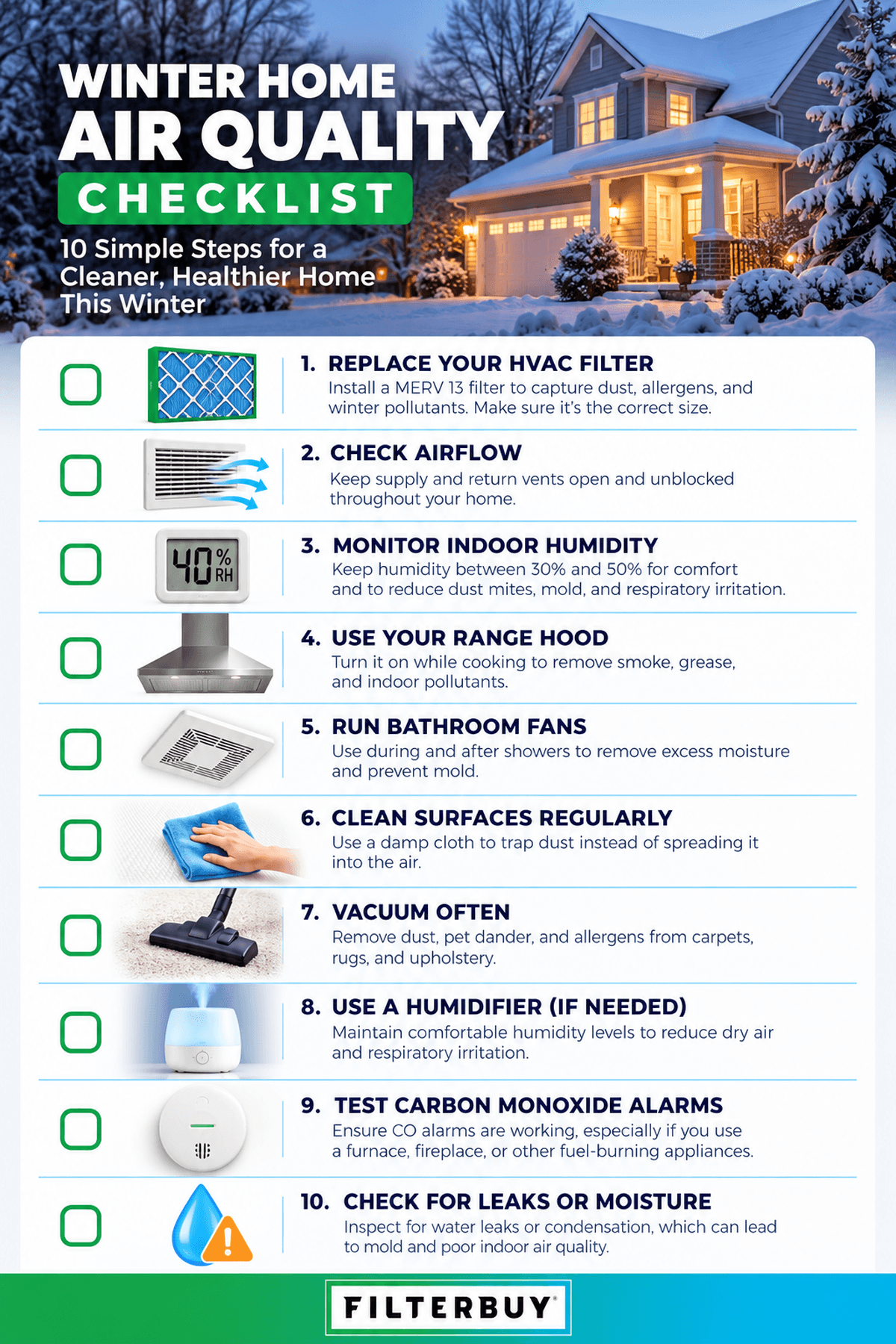
Winter Indoor Air Quality Checklist
Inspect your HVAC filter
Confirm correct fit and airflow direction
Check indoor humidity with a hygrometer
Use kitchen exhaust while cooking
Use bathroom exhaust when showering
Clean visible dust with damp methods
Vacuum floors and upholstery as needed
Clean humidifiers according to manufacturer instructions
Check carbon monoxide alarms where fuel-burning appliances are present
Address moisture, mold, unusual odors, or airflow problems promptly
When Should You Call an HVAC Professional?
Reach out to a technician if your system can't accommodate the filter rating you want, airflow drops noticeably after installing a higher-efficiency filter, filters don't fit properly, dust appears to bypass the filter, heating or airflow feels uneven, or equipment problems keep recurring. For respiratory symptoms, a healthcare professional, not just HVAC changes, is the appropriate next step.
Start With Source Control, Then Build From There
Winter indoor air quality isn't solved by any single fix. The EPA's own framework centers on three strategies working together: controlling pollutant sources, improving ventilation, and using air cleaning as a supplement to the first two rather than a substitute. A well-fitted, appropriately rated HVAC filter plays a real role in that system, but it works best alongside regular cleaning, smart humidity management, and exhaust ventilation where you need it most.
Frequently Asked Questions
Why Is My House So Dusty In Winter?
Winter dust typically comes from pets, textiles, cooking, candles, fireplaces, and particles tracked in from outside. Heating systems don't generate dust; they circulate particles already present, so a poorly fitted filter can let more of it recirculate.
Does Winter Make Indoor Air Quality Worse?
It can. Reduced ventilation, more time spent indoors, and increased use of combustion sources like fireplaces and candles can all contribute to higher indoor pollutant levels during winter months.
What Should Indoor Humidity Be In Winter?
The EPA recommends keeping indoor relative humidity between 30% and 50%, including during winter, to support comfort and help limit mold and dust mite growth.
What MERV Rating Should I Use In Winter?
It depends on your household and your system. MERV 8 works for most homes, MERV 11 suits homes with pets or allergies, and MERV 13 helps with smoke and fine particles if your system can accommodate it. Check with an HVAC technician if you're unsure what your system supports.
How Often Should I Change My Furnace Filter In Winter?
It depends on your filter, system, runtime, pets, and household conditions. Manufacturers often suggest 60 to 90 days, but a monthly visual check helps you catch filters that need earlier replacement.
Does A Furnace Filter Reduce Dust?
Yes, but only while the system runs, and only for particles that pass through it. A snug filter fit and correct airflow direction both affect how much dust it actually captures.
Should I Use A Humidifier In Winter?
A humidifier can help if indoor humidity falls below the 30% to 50% range, but it needs regular cleaning per manufacturer instructions to avoid becoming a source of biological contaminants itself.
How Can I Improve Indoor Air Quality Without Opening Windows?
Run kitchen and bathroom exhaust fans, reduce dust and pollutant sources through cleaning, maintain a properly fitted HVAC filter, and consider a sized portable air cleaner for high-use rooms.
See More
Learn how winter conditions can affect indoor air quality, including household dust, dry air, and reduced ventilation. Discover practical solutions for maintaining cleaner, more comfortable indoor air.
Explore common winter indoor air quality problems, including dust buildup, low humidity, and ventilation concerns, along with practical steps homeowners can take to improve indoor conditions.
Discover additional winter indoor air quality tips and learn how filtration, humidity management, and everyday household habits can help create a cleaner, more comfortable home.