
How Cold Is Too Cold? Safe Temperatures for Your Home, Pipes, HVAC, Pets, and Sleep
October 14, 2026
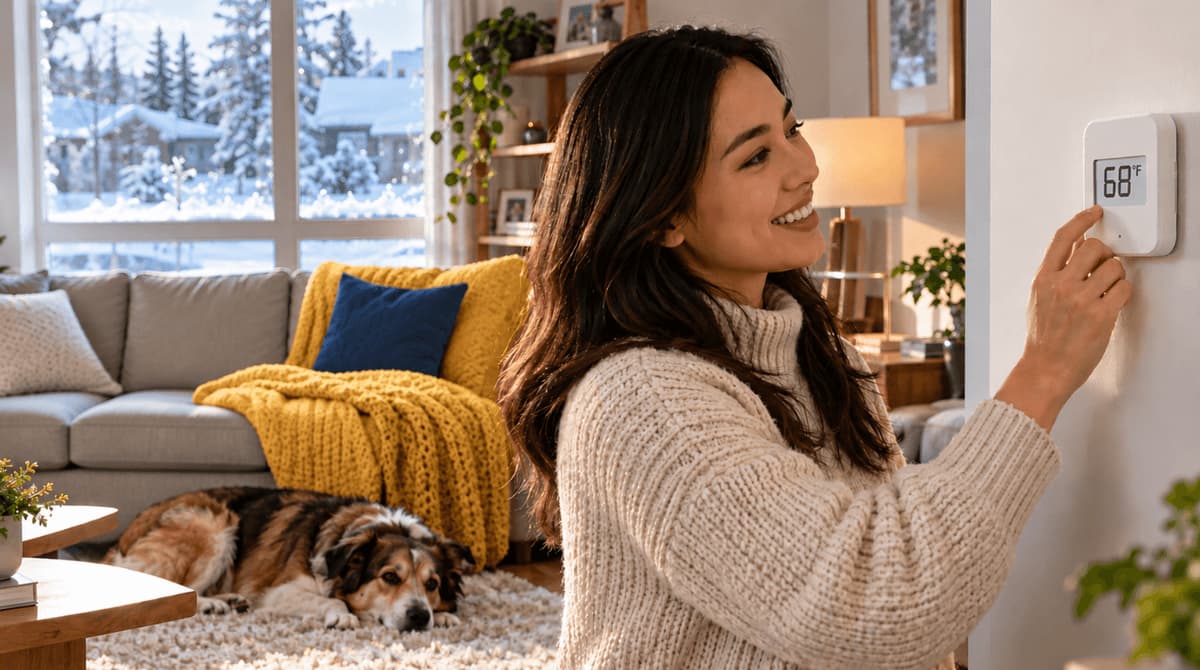
A house is too cold for people below 64°F (18°C), and an empty home should never drop below 55°F. The 64°F line comes from the World Health Organization. The American Red Cross advises keeping an empty house at 55°F or higher. Older adults and anyone who is ill do better at 68–70°F, per the National Institute on Aging.
Our winter thermostat schedule:
68°F while you are awake and home
65°F while you sleep
60°F when everyone is out
55°F while you travel, and never lower
Your furnace works hardest during a cold snap. A clogged filter restricts airflow, which can make a furnace overheat and short-cycle. Check your filter monthly from November through March.
Shop Air Filters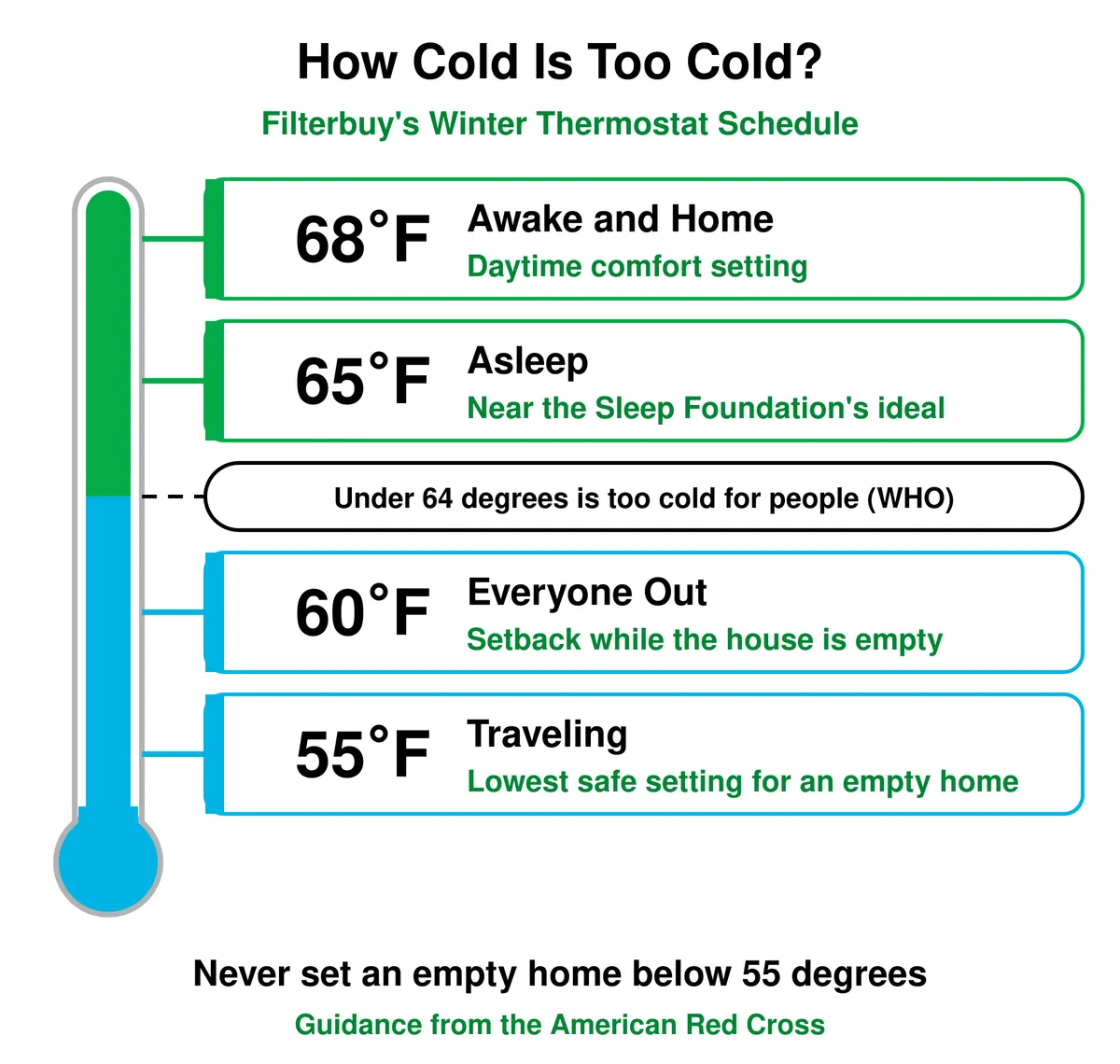
Answer a few quick questions and we will match you to the right filter for your home.
TL;DR
For most healthy people, a house gets too cold below 64°F (18°C), the minimum the World Health Organization recommends for cold seasons. Older adults and anyone who is ill should stay at 68–70°F, while babies sleep best around 65–69°F. Even in an empty house, keep the thermostat at 55°F or higher to protect your pipes. Equipment has limits too: standard heat pumps lean on backup heat in the 20s°F, and central AC shouldn't run below 60°F outside.
Key Takeaways
64°F (18°C) is the World Health Organization's minimum healthy indoor temperature.
68–70°F is the range the National Institute on Aging recommends for older adults.
55°F is the lowest setting the American Red Cross advises for a home left empty.
20°F outside is when uninsulated pipes in unheated spaces begin to freeze.
About 65°F is the bedroom temperature most adults sleep best in.
How Cold Is Too Cold Inside a House?
For the general population, indoor temperatures below 64°F (18°C) are too cold, according to the World Health Organization's Housing and Health Guidelines. Older adults and people with chronic illness need more warmth: the National Institute on Aging recommends 68–70°F and warns that even mildly cool homes of 60–65°F can trigger hypothermia in older people.
Filterbuy turns these limits into a schedule we call 68 / 65 / 60 / 55. Keep the house at 68°F while you're up, around 65°F while you sleep, around 60°F when everyone is out for the day, and never below 55°F when you travel. Filterbuy's guide to the best thermostat setting for winter adjusts it for heat pumps.
Chilly walls and windows also collect condensation, which feeds mold and dust mites and is one reason indoor air quality gets worse in winter.
Filterbuy pro tip: Your thermostat only reads the air around it. A room over the garage or at the end of a long duct run can be several degrees colder, so check it with a thermometer.
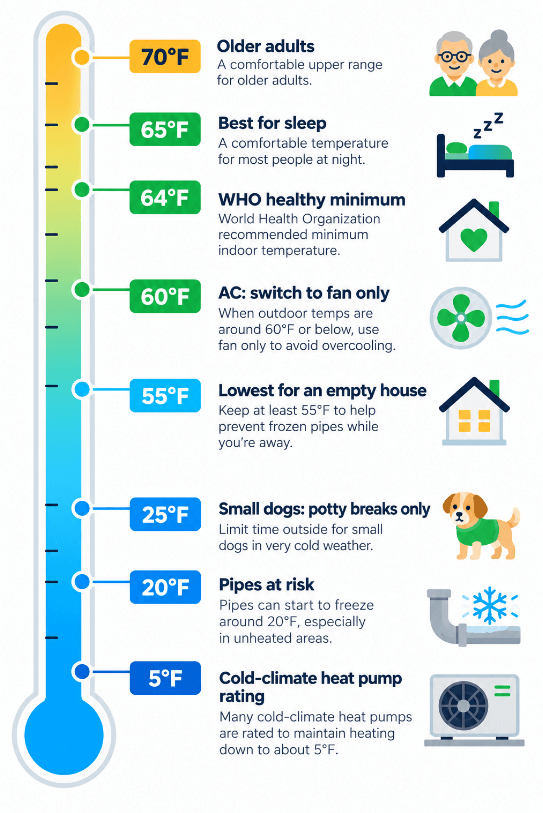
The Cold Threshold Cheat Sheet
The Filterbuy team built this side-by-side view of every "too cold" limit, with the source behind each number.
How Cold Is Too Cold for Pipes to Freeze?
Pipes begin to freeze when it's about 20°F outside, especially in homes built for mild winters, where uninsulated pipes run through attics, crawl spaces, garages, and exterior walls. That threshold comes from University of Illinois Building Research Council field tests. Pipes inside a house can freeze at warmer temperatures when cold air leaks through wall gaps.
When the forecast heads toward 20°F, the American Red Cross recommends these steps:
Keep the thermostat at the same temperature day and night.
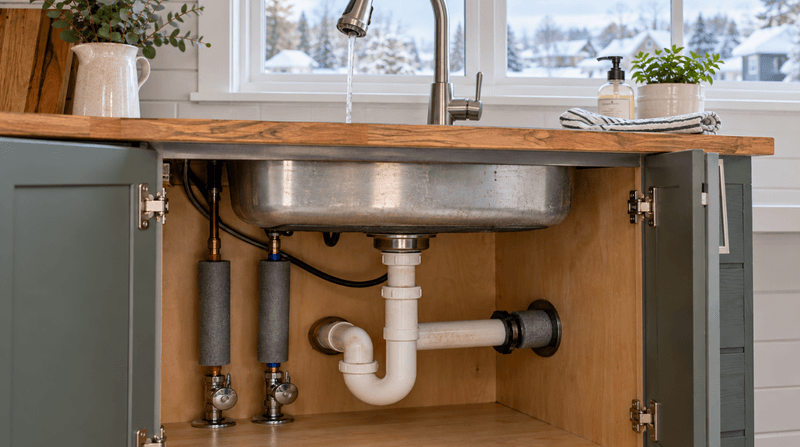
Open the cabinet doors under sinks on exterior walls.
Let cold water drip from faucets fed by exposed pipes.
For a night-by-night plan, see Filterbuy's guide on what to do during a freeze warning.
How Cold Is Too Cold to Leave a House Unheated?
Never leave a house without heat in freezing weather. Even when you're away, the American Red Cross recommends keeping the thermostat at 55°F or higher.
How Cold Is Too Cold to Run a Heat Pump?
A standard air-source heat pump loses capacity once temperatures fall below freezing, and it leans more on backup heat strips in the 20s°F. Cold-climate models do better: the Northeast Energy Efficiency Partnerships (NEEP) specification tests them at 5°F, and many listed models keep heating below 0°F.
In Filterbuy's experience, most "is my heat pump broken?" questions come down to a clogged filter or a normal defrost cycle that looks like a malfunction. Filterbuy's checklist on how to get your heat pump ready for winter covers both before the first freeze.
How Cold Is Too Cold for an AC Unit?
Central air conditioners shouldn't run in cooling mode when it's below 60°F outside. Many manufacturer manuals set 60°F as the minimum, since colder air can send liquid refrigerant to the compressor and freeze the indoor coil.
How Cold Is Too Cold to Sleep?
Most adults find a bedroom below 60°F too cold for good sleep. The Sleep Foundation puts the ideal close to 65°F, within the 65–68°F range most doctors recommend.
How Cold Is Too Cold for a Baby's Room?
Babies do best in a room a degree or two warmer than an adult's, up to about 69°F, according to the Sleep Foundation. Dress them in a sleep sack instead of loose blankets, and avoid overheating, a sleep-safety risk per the American Academy of Pediatrics.
How Cold Is Too Cold for a Dog?
Cold becomes potentially life-threatening for most small dogs at about 25°F and for medium and large dogs at about 15°F, according to the Tufts Animal Care and Condition (TACC) weather safety scale from Tufts University. Wet weather makes it worse, shifting each threshold by roughly 10°F. Indoors, see Filterbuy's tips for keeping indoor air clean when you have pets in winter.
Signs Your Home Is Too Cold
Watch for these early signs:
The thermostat can't reach its setpoint on cold nights, or the furnace never seems to stop. Check the air filter first.
Condensation or frost forms on the inside of windows. Cold surfaces are where mold gets its start.
Only a trickle comes from a faucet on an exterior wall. The Red Cross says to suspect a frozen pipe.
"AUX" or "EM HEAT" shows up often on a heat pump thermostat. The system is relying on costly backup heat.
An older relative seems unusually sleepy or confused, or has cold, pale skin. These can signal hypothermia; the National Institute on Aging says to call 911 if body temperature reaches 96°F or lower.
If Your Heat Goes Out in Freezing Weather
Gather everyone in one interior room.
Open sink cabinets on exterior walls and let faucets drip.
Never heat with a gas oven or grill, and never run a generator indoors. The CDC warns both can cause carbon monoxide poisoning.
If a pipe bursts, shut off the main water valve and call a plumber.
When power returns, check the air filter before the furnace's long recovery run.
Keep Your Heating System Ready for a Cold Snap
Your heating system works hardest during a cold snap, which is exactly when a clogged filter does the most damage. Restricted airflow can make a furnace overheat and short-cycle, and a heat pump works harder for less heat. Filterbuy's advice is easy to follow: check your filter monthly from November through March, and replace it when it looks gray.
"The systems that quit on the coldest night of the year are rarely the oldest ones. In our experience, they're the ones that went into winter with a dirty filter," says the Filterbuy Team.
Put carbon monoxide alarms on every level of your home, and learn the carbon monoxide warning signs before you ever need them.
Never miss a winter filter change. Find your exact size and set up Filterbuy air filter auto-delivery so a fresh filter arrives before the next cold snap.
Why Filterbuy Wrote This Guide
At Filterbuy, we've made air filters in our own U.S. plants since 2013. Every winter, urgent orders spike during cold snaps, often from homeowners whose furnace has already shut itself off. So this guide looks at the question from both sides: how much cold your family and pipes can take, and how much your heating system can.
Supporting Statistics
About 1 in 60 insured homes files a water damage or freezing claim each year, and those claims averaged $15,400 from 2019–2023.
Source: Insurance Information Institute
More than 400 Americans die each year from unintentional carbon monoxide poisoning not linked to fires, and more than 100,000 visit an emergency department.
Source: Centers for Disease Control and Prevention
Nearly half of the energy used in a home goes to heating and cooling.
Source: ENERGY STAR
Frequently Asked Questions
Is 60 degrees too cold for a house?
For most people, yes. It sits below the WHO's 64°F minimum and can trigger hypothermia in older adults, though it's fine as a setback when no one is home.
What is the lowest temperature you should set your thermostat in winter?
55°F, and only when the house is empty. With people at home, stay at 64°F or higher, or 68–70°F for older adults.
At what outside temperature do pipes freeze?
Uninsulated pipes in unheated spaces start to freeze at about 20°F outside, according to University of Illinois research. Wind and drafty walls can freeze them at warmer temperatures.
Is it bad to turn the heat down at night in winter?
No. A modest setback is fine, and about 65°F suits most sleepers. During extreme cold, though, the Red Cross advises holding one steady temperature day and night to protect your pipes.
Can a dirty air filter make my house colder?
Yes. A clogged filter chokes airflow, so warm air reaches your rooms more slowly, and a furnace can overheat and shut off early. Filterbuy recommends checking the filter monthly from November through March.
About the Author and Reviewer
Michelle Wan is Brand Manager and Air Quality Writer at Filterbuy. This article was technically reviewed by David Clark, a Licensed HVAC Technician with Filterbuy HVAC Solutions, who checks Filterbuy's maintenance and system guidance for accuracy. Filterbuy is a family-owned American manufacturer that has made air filters in its own U.S. plants since 2013, in 600+ standard sizes plus custom sizes.
"I don't want anyone to feel like they need an HVAC license just to pick the right filter. My job is to give you the straight answer, explain why it matters, and let you get back to your day," says Michelle Wan, Brand Manager and Air Quality Writer at Filterbuy.
Glossary
Auxiliary (backup) heat: Electric resistance heat a heat pump uses when it can't keep up.
Balance point: The outdoor temperature below which a heat pump alone can't heat a home.
Cold-climate heat pump: An air-source heat pump listed to heat well at 5°F or lower.
Hypothermia: A dangerous drop in core body temperature; the NIA advises calling 911 at 96°F or lower.
Short cycling: A heating system turning on and off too often, often from restricted airflow.
Sources
WHO Housing and Health Guidelines, Ch. 4: Low indoor temperatures and insulation (2018)
National Institute on Aging: Hypothermia, a cold weather risk for older people
University of Illinois Building Research Council threshold (via AdvantaClean)
Heat pump operating temperatures and NEEP specification (PickHVAC)
Insurance Information Institute: Facts + Statistics, Homeowners and renters insurance