
Furnace Tripping the Breaker? Causes & Safe Checks
October 20, 2026
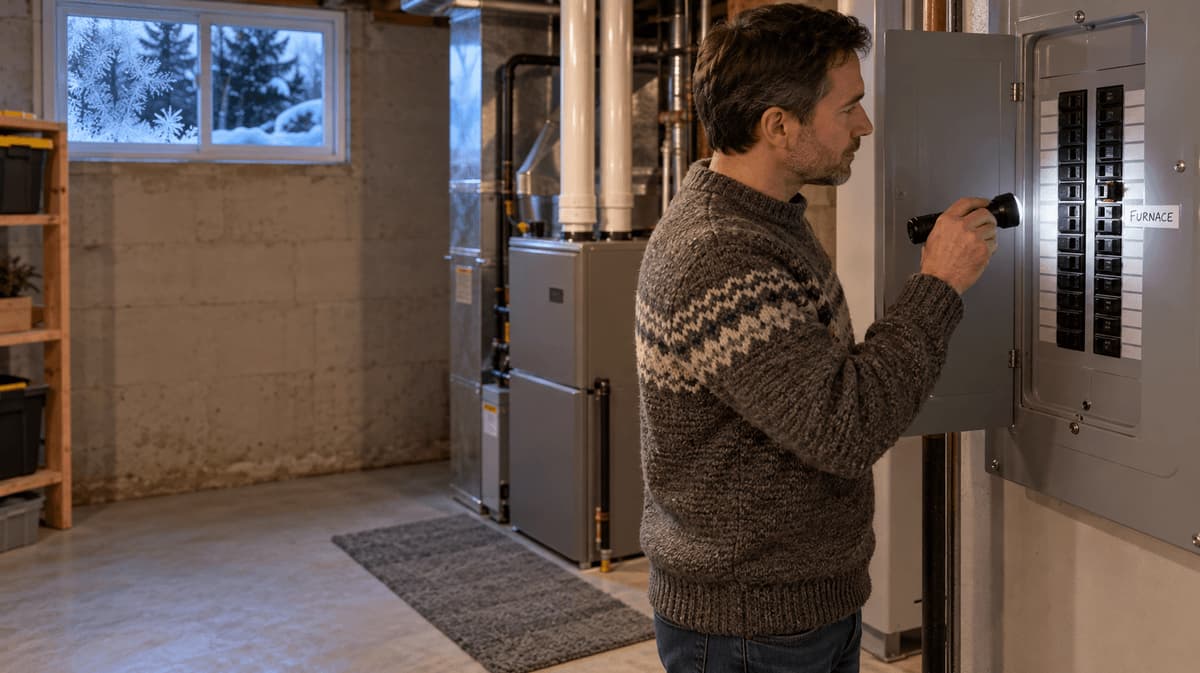
A furnace trips its breaker when it draws more current than the circuit can carry or when electricity escapes its normal path. The usual causes are a strained blower motor, a failing capacitor, a wiring fault, or a shared circuit. Reset the breaker once and check the air filter. If it trips again, leave it off and call a licensed pro.
A furnace trips its breaker when it draws more current than the circuit can carry, or when electricity escapes its normal path. The usual causes are a strained blower motor, a failing capacitor, a wiring fault, or a circuit shared with something like a space heater.
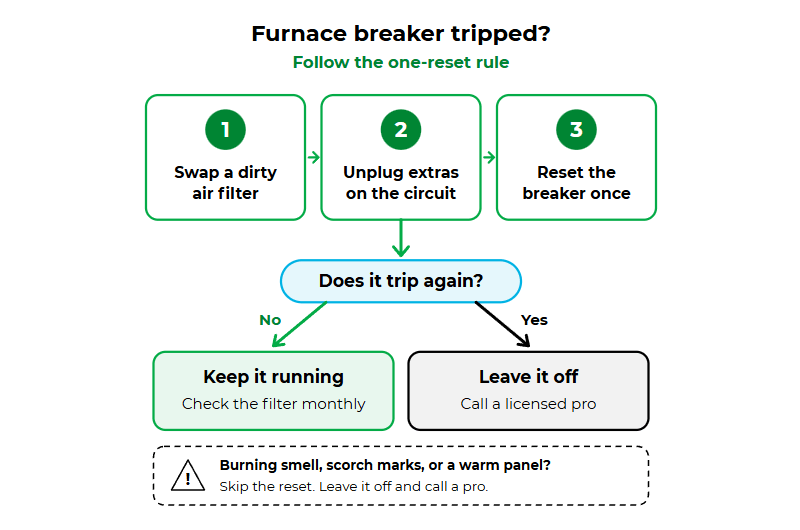
With no burning smell or heat at the panel, swap a dirty filter, unplug anything on the same circuit, and reset once — if it trips again, leave it off and call a licensed pro. A clean filter is the easiest place to start, so use the quick filter match quiz below.
Find the right filter for your furnace
Answer a few quick questions and we'll match you to a filter that fits your system.
Already know your size? Shop filters at Filterbuy
TL;DR
One reset is safe if there is no burning smell or heat at the panel. Replace a dirty filter and unplug anything on the same circuit first. A second trip means a real fault, so the furnace stays off until an HVAC technician or electrician finds it.
Key Takeaways
A delayed trip usually means an overload. An instant trip usually means a short circuit or ground fault.
A clean filter reduces blower strain but cannot fix a shorted capacitor or damaged wiring.
Winter adds its own triggers, including space heaters on shared circuits and frozen condensate lines.
Breakers with a Test button (GFCI or AFCI) can nuisance-trip on heat pump equipment.
"I wanted this guide to be honest about where a filter helps and where it stops, even when the answer is a call to a licensed pro instead of a new filter."
Michelle Wan, Brand Manager and Air Quality Writer, Filterbuy
Why Does A Furnace Trip The Breaker? Common Causes
A Blower Motor Working Too Hard
A strained blower is a common cause because the blower is the largest electrical load in a gas furnace. Worn bearings or a dirty blower wheel make it work harder. A clogged filter does too, since variable-speed (ECM) blowers draw more power to pull air through it. As a filter maker, Filterbuy starts here because it is the cause you can fix.
A Failing Capacitor
A failing run capacitor can trip the breaker the moment the blower starts. Older single-speed (PSC) blowers rely on this part, and as it weakens, the motor hums and starts slowly while drawing extra current. Capacitors hold a dangerous charge even with the power off, so leave testing to a technician.
A Wiring Fault Or Short Circuit
Damaged wiring trips a breaker by creating a short circuit or ground fault, usually instantly. Years of heating cycles loosen terminals and crack insulation until a bare wire touches the metal cabinet.
A Shared Or Overloaded Circuit
A furnace that shares its circuit can overload it once other loads switch on. The National Electrical Code generally calls for central heating equipment to have its own branch circuit, but some older homes share it with outlets. A 1,500-watt space heater alone draws about 12.5 amps, most of a 15-amp circuit.
Heat-Mode Parts: Igniters, Inducers, And Heat Strips
If the breaker trips only when the furnace calls for heat, a heating component is the likely cause. In a gas furnace, look to a cracked hot surface igniter or a failing draft inducer motor. In an electric furnace or heat pump, a shorted heating element or a stuck sequencer (the switch that stages heat strips) can trip a 240-volt breaker.
A Test-Button Breaker On Heat Pump Equipment
A breaker with a Test button is a GFCI or AFCI type, and it can trip on heat pump equipment that has no fault. The Air Conditioning Contractors of America (ACCA) has documented nuisance trips when GFCI protection serves outdoor HVAC units, including variable-speed heat pumps and ECM fan motors. An electrician can confirm whether the breaker suits your equipment.
A Worn-Out Breaker
A breaker that feels warm, buzzes, looks discolored, or trips under loads it used to handle may be failing. A licensed electrician should replace it with the correct rating, never a larger one.
Trip Timing Map: What Your Breaker Is Telling You
When the breaker trips is the fastest clue to why, so Filterbuy built this map around timing.
| When It Trips | What It Means |
|---|---|
| Instantly on reset, even with the thermostat off |
Cause: Short circuit or ground fault Do: Leave the breaker off Call: HVAC technician, or electrician if the panel looks damaged |
| As soon as the blower starts |
Cause: Shorted capacitor or seized blower motor Do: Leave the breaker off Call: HVAC technician |
| Only in heat mode, while fan-only runs fine |
Cause: Igniter, inducer, heat strip, or sequencer fault Do: Leave it off, note the mode Call: HVAC technician |
| After the furnace runs for a while |
Cause: Strained blower or blocked airflow Do: Replace a dirty filter, reset once Call: HVAC technician if it repeats |
| When a space heater or appliance runs |
Cause: Shared or overloaded circuit Do: Unplug the extra load, reset once Call: Electrician for a dedicated circuit |
| On the coldest days or after a thaw |
Cause: Heat strips at peak load, or moisture on wiring Do: Leave it off if wet Call: HVAC technician |
Pro Tip: Log each trip's time and what was running. Technicians always ask.
Winter Triggers That Can Trip A Furnace Breaker
Winter raises the odds of a trip because furnaces run longest. Filterbuy sees it as the season when a dirty filter turns from an efficiency issue into a strain issue. The National Fire Protection Association (NFPA) reports that home heating fires peak in December, January, and February.
The first cold snap. The season's first long runs expose weak capacitors and worn motors.
Space heaters. The Electrical Safety Foundation International (ESFI) advises plugging space heaters directly into a wall outlet, ideally one off the furnace circuit.
Frozen condensate lines. A high-efficiency furnace's drain line can freeze outdoors and back water toward the wiring.
Storm outages. One trip when power returns may be a passing surge. Keep generators outdoors, since the U.S. Consumer Product Safety Commission (CPSC) links more than 100 accidental carbon monoxide deaths each year to portable generators.
Safe Checks To Try Before Calling A Pro
These checks need no tools and never involve removing the panel cover or opening the furnace. Stop if you notice a burning smell, scorch marks, water near wiring, or a warm breaker.
Set the thermostat to Off. This keeps the furnace from restarting.
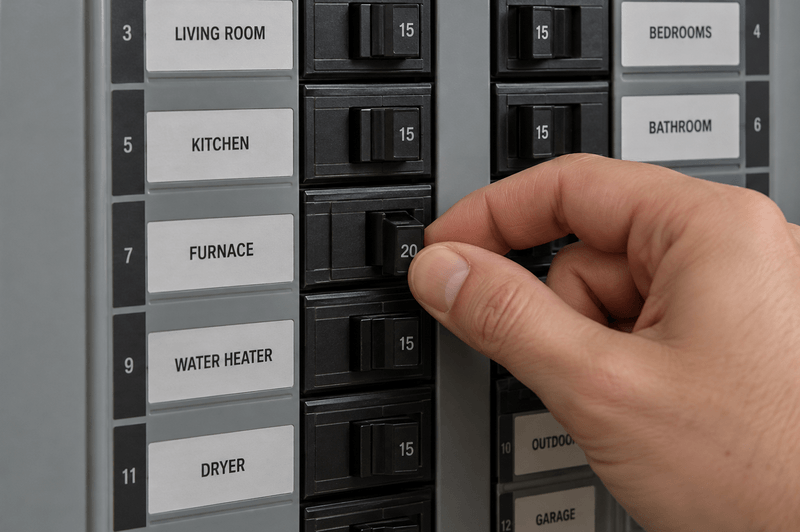
Confirm the breaker tripped. A tripped handle sits in the middle or Off position. In an older fuse box, look for a darkened or broken fuse. If nothing tripped, a furnace switch may be the cause, which the Filterbuy guide to troubleshooting a furnace blowing cold air covers.
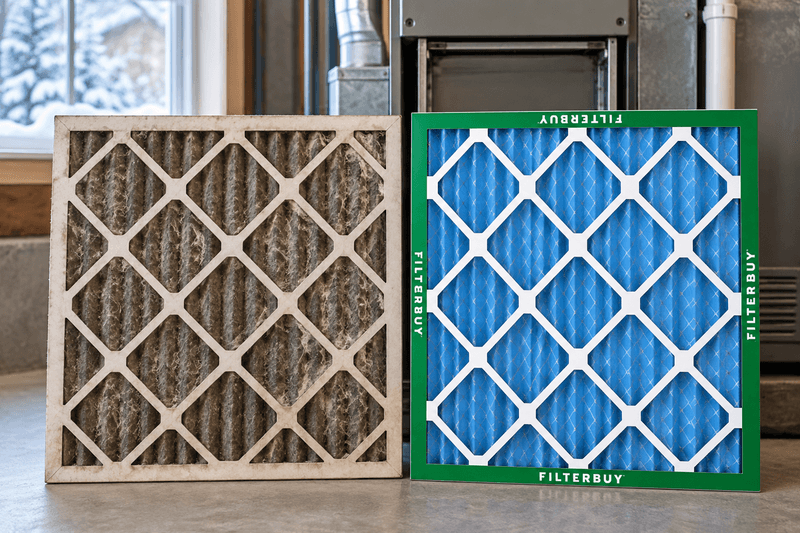
Check the air filter. If light barely passes through, replace it with the arrow pointing toward the blower. Filterbuy's winter furnace filter guide covers installation and how to measure your air filter cover's size.
Clear the airflow path. Open supply registers and clear return vents.
Unplug anything sharing the circuit, such as a space heater.
Reset the breaker once. Push the handle firmly to Off, then On. If it trips again, stop here.
Test the fan, then the heat. A trip in one mode only tells your technician where to start.
When To Call A Pro, And Which Pro To Call
Call a licensed professional after a second trip or any sign of heat. Ask about two items from the ENERGY STAR HVAC maintenance checklist: tightening electrical connections and measuring motor current.
| Warning Sign | What To Do |
|---|---|
| Carbon monoxide alarm | Leave the home first, then call 911 from outside |
| Rotten-egg gas smell | Leave the home, then call 911 or your gas utility from outside |
| Burning, melting, or acrid electrical smell | Leave the breaker off; call an HVAC technician |
| Warm breaker, buzzing panel, or scorch marks | Leave the breaker off; call a licensed electrician |
| Water or ice near electrical parts | Leave it off; call an HVAC technician |
How A Clean Filter Helps Prevent Furnace Strain
A clean filter keeps air moving so the blower does not strain and the heat exchanger stays within its limits. It cannot fix electrical faults.
Check the filter monthly in heating season and replace it once it looks gray. The Filterbuy guide to how often to change your furnace filter covers intervals by depth. The U.S. Environmental Protection Agency (EPA) explains what a MERV rating measures, and your furnace manual confirms which rating fits.
"On January no-heat calls, I pull the filter and ask what else is plugged in nearby before I ever open the cabinet, because a homeowner can fix both of those. If it trips again with a clean filter and nothing else running, a part has failed."
David Clark, Licensed HVAC Technician
Supporting Statistics
1. About 34,200 residential heating fires happen each year in the U.S. One in five happens in January, the month a tripping furnace is most likely to tempt repeat resets.
Source: U.S. Fire Administration, Heating Fires in Residential Buildings (2017-2019)
2. In 2024, 42% of U.S. households heated mainly with electricity, compared with 47% for natural gas. More homes now run electric heat on large 240-volt circuits, where heat-mode trips show up.
3. More than 400 Americans die each year from unintentional carbon monoxide poisoning not linked to fires. The CDC recommends yearly heating service by a qualified technician, and a breaker that keeps tripping is reason to book that visit now.
Source: Centers for Disease Control and Prevention, Carbon Monoxide Poisoning Basics
Frequently Asked Questions
Is It Safe To Reset A Furnace Breaker?
Yes, once, if there is no burning smell, scorch mark, or heat at the panel. A second trip means the fault remains, so leave it off.
Can A Dirty Air Filter Cause A Furnace To Trip The Breaker?
A dirty filter can contribute by straining the blower. If a fresh filter does not stop the trips, call a technician.
Can I Keep Using My Furnace If The Breaker Keeps Tripping?
No. Repeated trips warn that a fault could overheat the wiring, so keep it off until a pro repairs it.
How Do I Keep My Home Safe While Waiting For A Furnace Repair?
Follow the National Weather Service steps for when your heat goes out in a winter storm, like closing off unused rooms. The American Red Cross explains how to keep pipes from freezing, such as letting cold water drip.
Keep Your Furnace Running Safely This Winter
A furnace tripping the breaker needs attention, and a clean filter is the easiest place to start. Find your size, choose the right MERV rating for winter, and set up filter auto-delivery so a fresh Filterbuy filter is ready before the next cold snap.
Glossary
Short Circuit
An unintended current path that causes a sudden surge.
Ground Fault
Current escaping to the furnace cabinet or another grounded surface.
Run Capacitor
A part that helps a PSC motor start and run.
GFCI Or AFCI Breaker
A breaker that also trips on current leaks (GFCI) or arcing (AFCI).
Heat Strips
Electric heating elements in electric furnaces and heat pumps.
MERV
Minimum Efficiency Reporting Value, a 1 to 16 scale rating an air filter's particle capture.