
Furnace Repair Cost: Average Prices By Part And When To Replace Instead
October 11, 2026
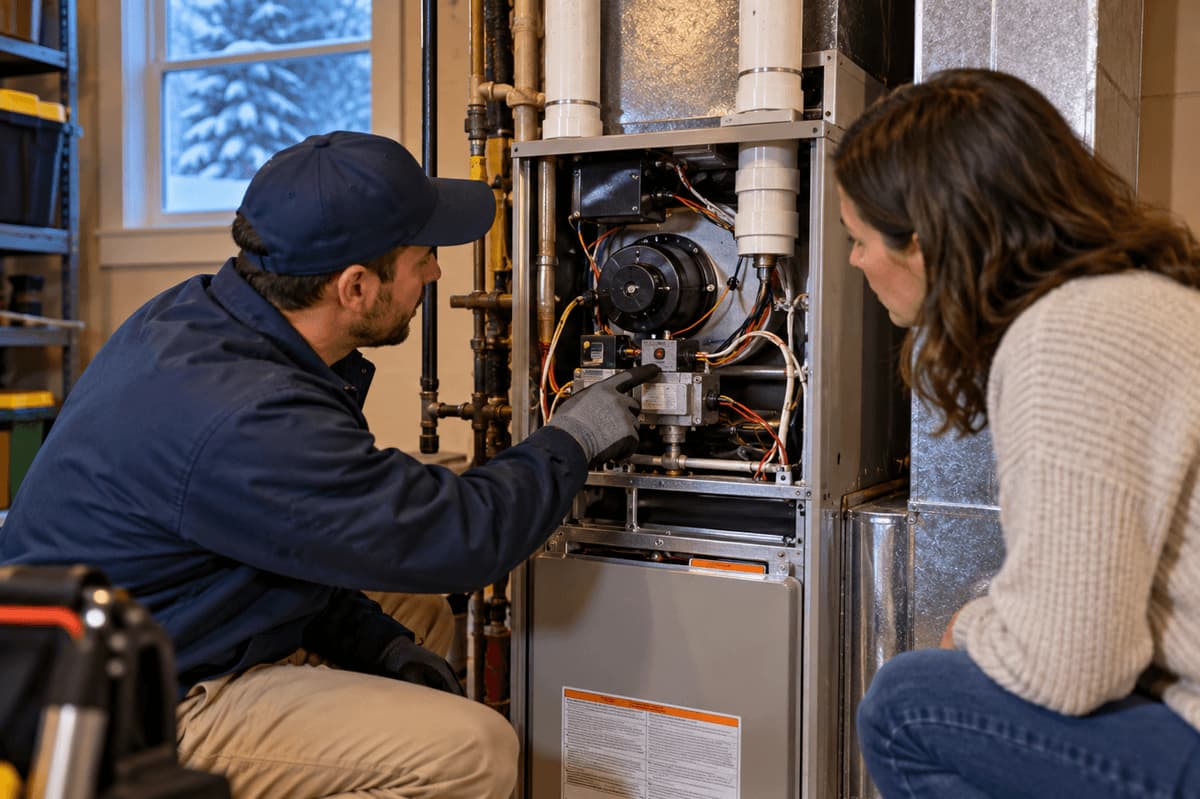
Most furnace repairs cost $125 to $500 in 2026, and national cost guides put the average near $300 for parts and labor. Filterbuy makes furnace filters, so we read this price list from the airflow side.
Most furnace repairs cost $125 to $500, and the national average is about $300 for parts and labor. The failed part sets most of the bill, from about $75 for a flame sensor to $3,000 for a heat exchanger.
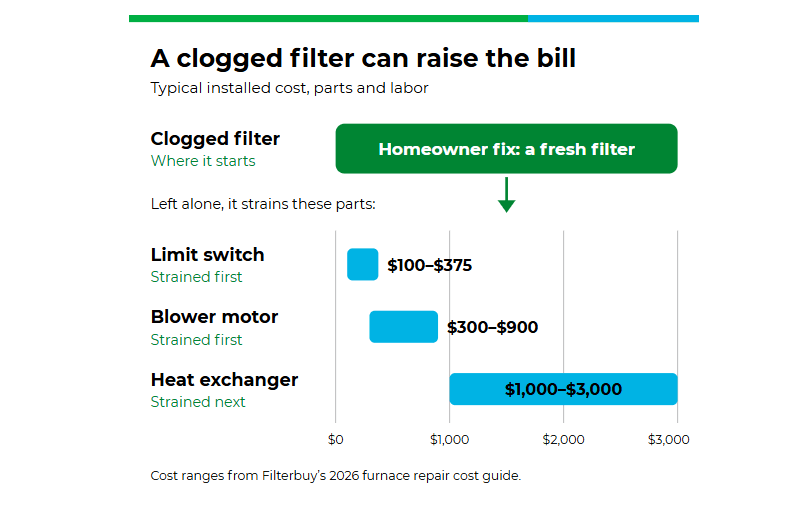
A clogged filter strains the limit switch and blower motor first, then the heat exchanger. A fresh filter is the one fix on that list you can do yourself. Take the quick quiz below to find the right one for your furnace.
Answer a few quick questions and we'll match you to the right filter.
Already know your size? Shop filters at Filterbuy
Fast, free 2-day delivery to most US states.
TL;DR
A typical furnace repair costs $125 to $500, and after-hours calls cost more. Replace instead of repairing when the furnace is past 15 years old, or the heat exchanger is cracked. A repair whose cost times the furnace's age tops $5,000 also points to replacement.
Key Takeaways
Most furnace repairs cost $125 to $500, and the national average is about $300.
Flame sensor and ignitor repairs are low-cost fixes at $75 to $350, while a heat exchanger runs $1,000 to $3,000.
Emergency furnace service bills $140 to $215 per hour, about $65 more per hour than standard labor.
Under the $5,000 rule, a draft inducer motor tips a furnace toward replacement at about 7 years, but an ignitor does not until about 20.
How Much Does Furnace Repair Cost In 2026?
A single furnace repair averages about $300 in 2026, but the failed part sets most of the bill. Service fees and labor come on top of the part.
Furnace Repair Cost By Part
Installed furnace part prices run from about $75 for a flame sensor to $3,000 for a heat exchanger. Match your winter symptom to the middle column to estimate the bill before a technician arrives.
| Furnace Part | What You Notice in Winter | Typical Cost (Parts and Labor) |
|---|---|---|
| Flame sensor | Burners light, then shut off within seconds | $75–$250 |
| Hot surface ignitor | Inducer runs, but burners never light | $150–$350 |
| Thermocouple (standing pilot) | Pilot light will not stay lit | $100–$300 |
| Limit switch | Furnace runs briefly, then shuts down | $100–$375 |
| Pressure switch | Inducer starts, then the furnace locks out | $150–$400 |
| Blower capacitor | Humming, slow, or stalled blower | $100–$250 |
| Control board | Error codes or erratic cycling | $200–$650 |
| Gas valve | Ignitor glows, but burners never fire | $200–$800 |
| Blower motor | Burners fire but little air reaches the vents | $300–$900 (ECM motors up to about $2,000) |
| Draft inducer motor | Loud whine or rattle at startup | $400–$1,100 |
| Heat exchanger | Crack found during inspection | $1,000–$3,000 |
Filterbuy's airflow read: a clogged filter strains the limit switch and blower motor first, then the heat exchanger. Those rows span $100 to $3,000, yet the filter behind them is a homeowner fix.
A dirty flame sensor can often be cleaned rather than replaced, as Filterbuy's guide to cleaning or replacing a flame sensor explains, and our walkthrough on replacing a furnace ignitor covers the other common no-heat part. If the furnace keeps starting and shutting off, review the control board and limit switch failure signs.
A cracked heat exchanger can leak carbon monoxide into your home's air. Check your warranty before paying, because heat exchangers often carry long coverage.
What Does Emergency Furnace Repair Cost In Winter?
Emergency furnace repair bills range from $140 to $215 per hour, so an after-hours or holiday no-heat call can reach $300 to $1,200 with parts. Pay the premium if someone in the home is vulnerable to cold or the house could drop below 55°F, the minimum the American Red Cross advises to prevent frozen pipes.
If you run a space heater while you wait, follow the home heating safety guidance from the National Fire Protection Association, which names December through February as peak season for home heating fires. If you smell gas or a carbon monoxide alarm sounds, leave the house and call your gas utility or 911 from outside.
Why Do Furnaces Break Down More In Winter?
Furnaces break down more in winter because they run longer and harder, and parts that limped through fall give out in the first hard freeze.
Clogged filters. Long heating cycles load a filter faster until the furnace overheats and the limit switch shuts the burners off. Learn how a clogged filter overheats a furnace.
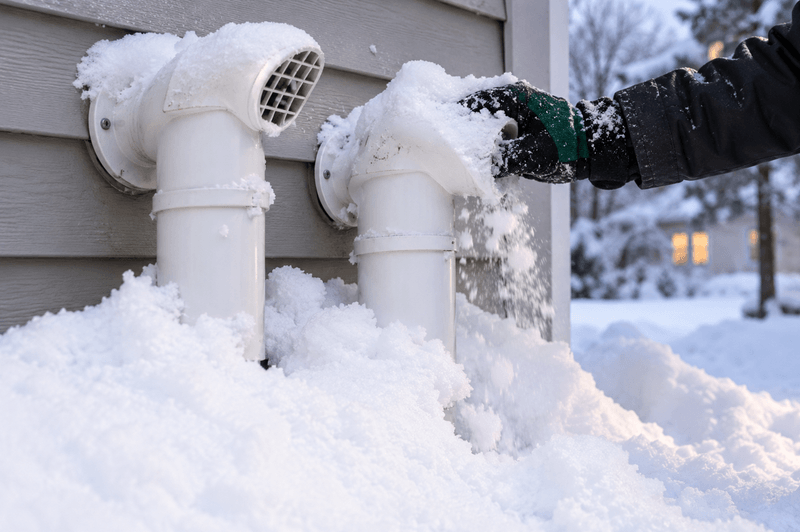
Snow and ice on vent pipes. When snow or ice blocks a high-efficiency furnace's PVC vent pipes, the pressure switch keeps the burners from firing.
Frozen condensate lines. A condensing furnace's drain line can freeze in an unheated garage or crawl space and trip a safety switch.
Dust on ignition parts. Off-season dust can coat the flame sensor, a common reason a furnace lights and then quits on the first cold morning. See how to clean a furnace safely.
Five Checks To Make Before You Book A Winter Furnace Repair
Five free checks can restore heat before you pay a $75 to $200 service call fee. None of them involve the gas valve or burners.
Set the thermostat to Heat above room temperature, then swap in fresh batteries.
Check the power switch near the furnace, then the breaker panel.
Hold the air filter up to a light and replace it if you can barely see through it. The Filterbuy winter furnace filter guide explains how often to check.
Clear any snow or ice from the outdoor intake and exhaust pipes.
Seat the front access panel firmly, since a loose panel trips the door safety switch.
Should You Repair Or Replace Your Furnace?
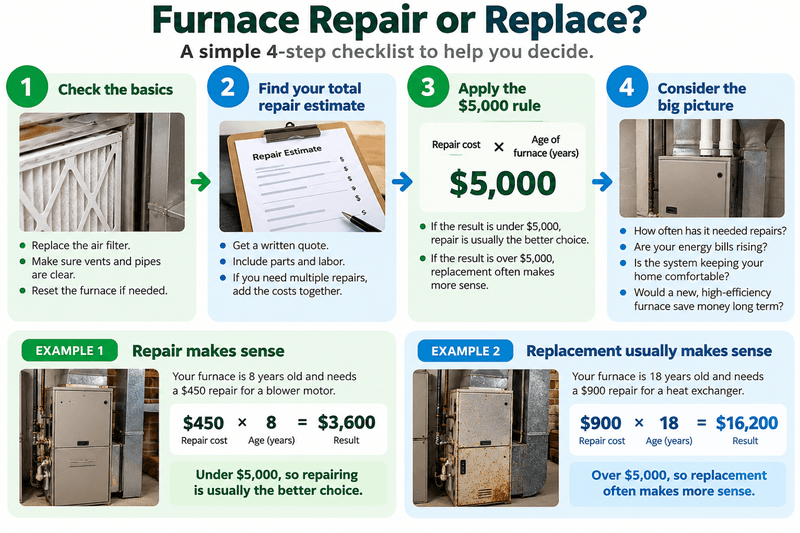
Repair a furnace under 15 years old when the fix costs less than half the price of a new system and the repair cost times the furnace's age stays under $5,000. Once the furnace passes 15 years or the heat exchanger cracks, replacement usually makes more sense. That age test is the $5,000 rule.
Safety. A cracked heat exchanger that is out of warranty points to replacement.
Age. ENERGY STAR, the U.S. Environmental Protection Agency efficiency program, says it is time to consider replacing a furnace once it passes 15 years. Most gas furnaces last 15 to 20 years, as our guide on how long a gas furnace lasts explains.
The $5,000 rule. Multiply the furnace's age by the repair quote. Anything above $5,000 favors replacement.
The 50 percent rule. If one repair costs half or more of a new furnace, put the money toward replacement. Against a $4,000 to $8,000 replacement, that line falls at $2,000 to $4,000, which usually only a heat exchanger or premium ECM motor reaches.
Filterbuy ran every part in its price table through the $5,000 rule at midpoint cost to see where each one crosses the line.
| Repair | Midpoint Cost | Tips Toward Replacing At |
|---|---|---|
| Hot surface ignitor | $250 | About 20 years |
| Pressure switch | $275 | About 18 years |
| Control board | $425 | About 12 years |
| Gas valve | $500 | About 10 years |
| Blower motor | $600 | About 8 years |
| Draft inducer motor | $750 | About 7 years |
| Heat exchanger | $2,000 | About 3 years |
Small parts like an ignitor or pressure switch do not tip the rule until 18 to 20 years, past ENERGY STAR's 15-year mark, so age makes those calls. Mid-priced repairs, from the inducer motor to the control board, cross the line between 7 and 12 years, when a second quote pays off most.
A standard furnace replacement typically costs $4,000 to $8,000, and our breakdown of furnace replacement costs and installation covers the price drivers. Budget without the federal Section 25C credit, which expired on December 31, 2025, and gather quotes before a winter breakdown forces the decision.
How To Lower Your Furnace Repair Bill This Winter
The cheapest furnace repair is the one a tune-up catches early. The EPA recommends a yearly professional inspection and tune-up of central heating systems, and the Filterbuy HVAC Solutions furnace tune-up checklist shows what a good visit covers.
Check the filter monthly in winter, or set up a filter subscription so a fresh one arrives on schedule. Get every repair quote in writing, as the Federal Trade Commission recommends in its tips for avoiding home improvement scams.
The U.S. Consumer Product Safety Commission recommends carbon monoxide alarms on every level of the home and outside sleeping areas, and our winter carbon monoxide safety guide explains how airflow fits in.
"During the first cold week of winter, most no-heat calls I run come down to a dirty flame sensor or a worn ignitor, often with a clogged filter behind it. On any furnace past 15 years old, I inspect the heat exchanger before I quote a repair."
David Clark, Licensed HVAC Technician
Supporting Statistics
46% of U.S. homes heat mainly with natural gas. Those households are forecast to spend about $642 on gas this winter, so an average $300 furnace repair equals nearly half the season's bill.
Source: Winter Fuels Outlook 2025–26
More than 400 Americans die each year from unintentional, non-fire carbon monoxide poisoning, and more than 100,000 others visit an emergency department. The CDC advises having heating systems serviced every year by a qualified technician.
Source: Carbon Monoxide Poisoning Basics
HVAC technicians earned a median of $29.33 per hour in May 2025. Billed rates of $75 to $150 also cover overhead such as vehicles and insurance, and some states require HVAC licenses, so ask to see one.
Source: Heating, Air Conditioning, and Refrigeration Mechanics and Installers
Frequently Asked Questions
How Much Does It Cost To Fix A Furnace That Will Not Turn On?
A furnace that will not turn on often needs a flame sensor or ignitor, typically a $75 to $350 repair. Run the five free checks above first.
How Much Is A Furnace Diagnostic Fee?
A furnace diagnostic fee typically runs $75 to $200, and some companies credit it toward the repair.
At What Age Is Furnace Repair No Longer Worth It?
It depends on the part. A draft inducer motor fails the $5,000 rule at about 7 years, a control board at about 12, and an ignitor not until about 20. Over the past 15 years, ENERGY STAR suggests considering replacement.
Can A Dirty Air Filter Cause A Furnace To Stop Working?
Yes. A clogged filter can overheat the furnace until the limit switch shuts it off, and a neglected one leads to short cycling in cold weather and a worn limit switch.
Does Homeowners Insurance Cover Furnace Repair?
Homeowners insurance generally excludes furnace repairs caused by age or normal wear. A home warranty or the manufacturer's parts warranty is more likely to cover a failed part.
Take The Next Step On Your Furnace Repair Cost
With these part prices and the four-check test, you can decide between repair and replacement before paying for a service call. Then shop furnace filters by size to keep a clogged filter from becoming your next repair, with Filterbuy's fast and free 2-day delivery to most US states.
Glossary
$5,000 Rule: A rule of thumb: furnace age times repair cost. A result above $5,000 points toward replacement.
Condensing Furnace: A high-efficiency gas furnace that drains water through a condensate line.
Control Board: The circuit board that runs startup and flashes error codes.
Draft Inducer Motor: A small fan that vents combustion gases before the burners light.
Flame Sensor: A metal rod that confirms a burner flame is present.
Heat Exchanger: The sealed chamber that transfers burner heat to household air.
Hot Surface Igniter: A ceramic element that glows hot to light the burners.
Limit Switch: A switch that cuts the burners when the furnace overheats.
Pressure Switch: A switch that confirms safe venting before ignition.