
Air Quality and Older Adults: Why the Thresholds Are Lower
September 22, 2026

What AQI Is Unsafe for Older Adults?
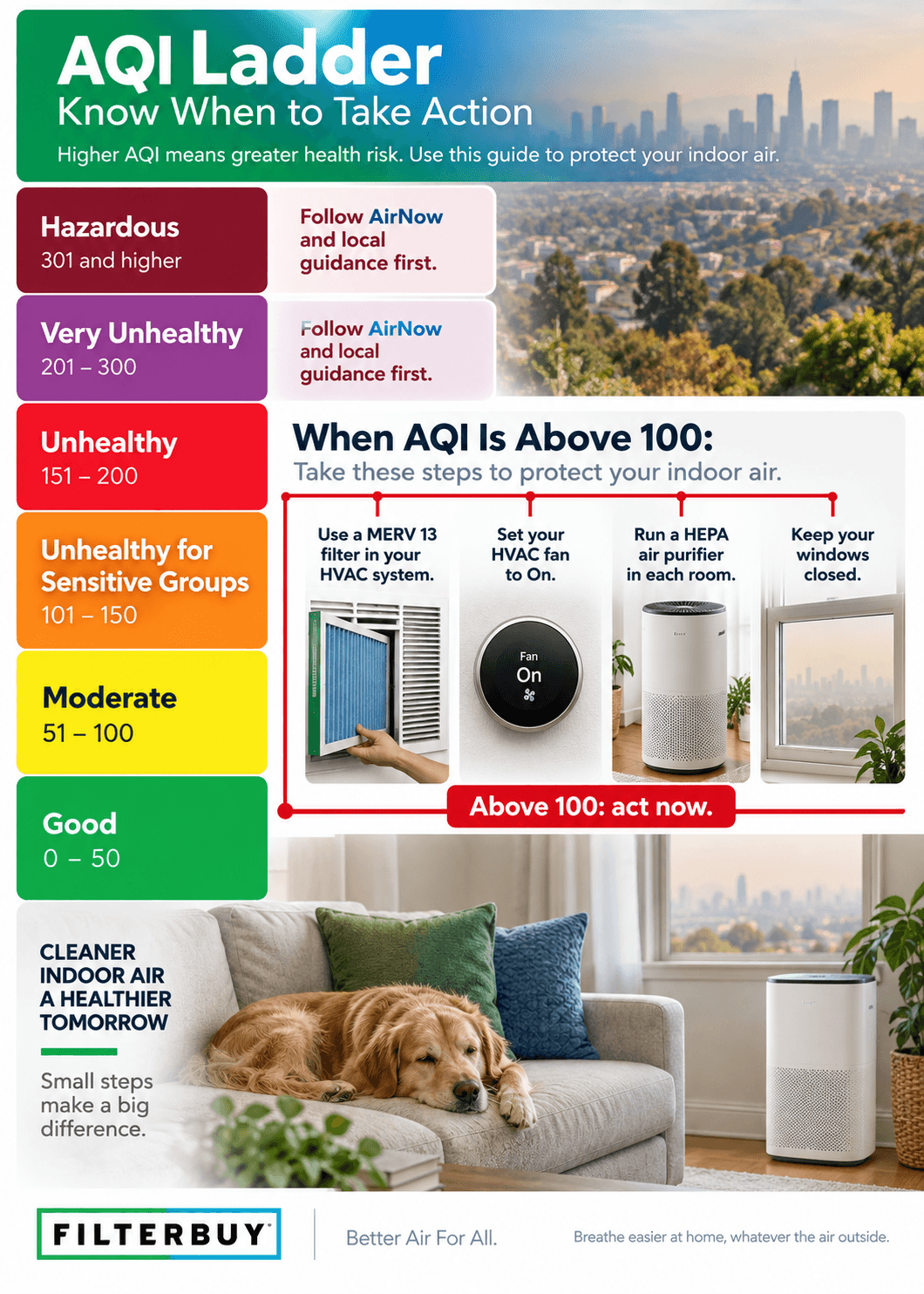
Older adults should act once the AQI passes 100. That is where the EPA’s orange category, Unhealthy for Sensitive Groups, begins, and the EPA names older adults a sensitive group. Above AQI 100, Filterbuy recommends two layers.
MERV 13 in central HVAC — captures microscopic particles, whole house. It is the rating the EPA recommends during smoke events.
A HEPA air purifier in each room — start with bedrooms. In an apartment or a home without ductwork, this is the main layer, not a supplement.
Seniors with heart or lung disease should ask their doctor whether their threshold starts lower. Not sure what your system takes? Take the quick match quiz below.
Answer a few quick questions and we’ll match you to the right filter size and rating.
Know your size already? Shop air filters made in Filterbuy’s own U.S. plants, in over 600 sizes.
Educational only, not medical advice. Contact your doctor with any concerns.
By Michelle Wan · Technically reviewed by David Clark, Licensed HVAC Technician · Published September 22, 2026 · Updated September 22, 2026
TL;DR
Aging lungs have less room to absorb polluted air, and most people over 65 manage a chronic condition that pollution worsens. Smoke days are often hot days, too. Check the AQI daily, and once it passes 100, filter the air and keep it cool.
Key Takeaways
Older adults are an EPA-named sensitive group. From AQI 101, they're advised to limit prolonged or heavy outdoor exertion.
Above AQI 100, switch to MERV 13 if you have central HVAC, and run a HEPA air purifier in each room.
During smoke, keep spare filters on hand.
Why Is Air Pollution Harder on Aging Lungs?
Air pollution is harder on aging lungs because older adults have less lung reserve, and most live with a condition that pollution aggravates. AirNow, the EPA's air quality program, puts it plainly: aging bodies are less able to compensate for environmental hazards.
Lung function begins a gradual decline around age 35, according to the American Lung Association. By 65, about 93% of adults have at least one chronic condition and nearly 80% have two or more, according to the National Council on Aging.
Home is where most exposure happens. In the MESA Air study, which tracked older adults in six U.S. cities, participants spent about 72% of their week inside their own homes. For kids, see how to protect children from outdoor air pollution.
What AQI Threshold Is Unsafe for Older Adults?
For older adults, the official threshold is AQI 101, where the orange category, Unhealthy for Sensitive Groups, begins. That's where Filterbuy recommends acting: switch to a MERV 13 filter if you have central HVAC, and run a HEPA air purifier in each room.
| AQI | EPA Category | What the EPA Says | Filterbuy's At-Home Steps |
|---|---|---|---|
| 0–50 | Good | Little or no risk | Normal filter schedule |
| 51–100 | Moderate | Some health concern for unusually sensitive people | Prepare: get MERV 13 and spares before smoke arrives |
| 101–150 | Unhealthy for Sensitive Groups | Sensitive groups, including older adults, should reduce prolonged or heavy exertion | MERV 13 if you have HVAC, plus a HEPA air purifier in each room |
| 151–200 | Unhealthy | Sensitive groups likely to feel more serious effects | Same steps; inspect the filter more often |
| 201–300 | Very Unhealthy | Widespread effects in the general population | Follow AirNow and local guidance first; keep a clean room |
| 301 and above | Hazardous | Health warnings of emergency conditions | Follow local authorities first; filtration is one layer |
Why ask a doctor? The EPA already notes some health concern for unusually sensitive people in the Moderate range.
My first real smoke season in the Bay Area taught me to stop checking the window and start checking the map. Your eyes are the least reliable instrument you own.
The EPA lowered the cutoff for Good for PM2.5 (fine particles small enough to reach deep into the lungs) to 9.0 µg/m³ in 2024, and a federal appeals court upheld it on June 26, 2026. See our AQI scale and unsafe AQI levels guides, or Filterbuy's live AQI map.
What Should an Older Adult's Home Do When the AQI Tops 100?
Start with AirNow and your local air agency, and follow their guidance first. Then the Filterbuy team recommends four steps, in this order:
If you have central HVAC, switch to MERV 13. It's the rating the EPA recommends during smoke events, and most furnaces and HVAC systems handle it without problems when the filter is replaced often.
Set the thermostat fan to On. Auto only filters while the system heats or cools.
Run a HEPA air purifier in each room, starting with bedrooms. The EPA suggests a smoke CADR of at least two-thirds of the room's square footage, so a 10-by-12 bedroom needs 80 or more. Skip any purifier that produces ozone.
Close the house up. Shut windows and doors, set the system to recirculate, and skip candles, frying, vacuuming, and smoking.
The two layers do different jobs. MERV 13 treats the whole house, while a HEPA air purifier treats each room harder, so use both. In an apartment or a home without ductwork, HEPA air purifiers in each room are the primary defense, not a supplement. Our MERV 13 vs. HEPA guide explains why HEPA belongs in the room.
During smoke, check the filter often and replace it when it looks dark brown or black, which can be well before the normal interval. Keep spares on hand. Every fire season, filters returned to Filterbuy come back darkened by soot compared with clean-air months.
We're upfront about limits. A pleated filter captures particles, not smoke gases or odors, and it doesn't treat heart or lung disease; it reduces what's in the air. Filterbuy has made filters in its own U.S. plants for over a decade and shipped them to more than two million households, in over 600 sizes plus custom air filters for older homes. Shop MERV 13 air filters in your size.
How Do Health and Living Situation Change the Plan?
Health and living situation decide who carries out the plan. An 85-year-old with memory loss might open a window on a smoky afternoon, and researchers note impaired cognition can reduce steps like closing windows or running air filters.
| Situation | What Changes the Risk | Where to Focus |
|---|---|---|
| Active and healthy, 65+ | Outdoor exercise drives most exposure. | Walks timed to the AQI |
| Heart or lung disease | Symptoms can escalate quickly. | A threshold and plan set by their doctor; a clean room |
| Living with memory loss or dementia | Symptoms may go unreported; windows may get opened. | Caregiver check-ins; a closed-window cooling plan |
| Living alone or with limited mobility | Nobody notices a decline; filter changes get skipped. | The smoke-day check-in call; filter auto-delivery |
| Assisted living or nursing home | Air depends on the building and staff. | The facility's smoke plan (questions below) |
Sharing a home across generations? See our multigenerational air quality guide.
What Symptoms Should Seniors Watch For on Bad Air Days?
Watch for coughing, wheezing, shortness of breath, chest pain or tightness, palpitations, and unusual fatigue. Take heart symptoms seriously: the EPA warns that in people with heart disease, particle pollution can cause serious problems, even heart attacks, with no warning signs. If symptoms don't ease in filtered air, call the doctor.
Smoke can also make it harder for lungs to clear viruses and bacteria, Cleveland Clinic pulmonologist Dr. Maeve MacMurdo told AARP, so ask the doctor early about rescue medication.
Call 911 for chest pain, severe trouble breathing, confusion, or fainting.
Educational only, not medical advice. Contact your doctor with any concerns.
Should Older Adults Wear an N95 Mask in Smoke?
A well-fitted N95 respirator filters smoke particles, but it also makes breathing harder, and that trade-off matters more after 65. The American Lung Association advises people with lung disease to talk with a doctor before using one, and Colorado's health department gives the same advice for heart conditions. Cloth and surgical masks don't filter smoke.
How Do Heat and Smoke Exposure Combine for the Elderly?
Smoke season overlaps heat season, and closed windows trap heat. The CDC says people 65 and older can't adjust to sudden temperature changes as quickly as younger people, often because of medications or chronic illness. A sealed home only helps if it stays cool; otherwise, call 2-1-1 for a cooling center.
In a study in Circulation, the American Heart Association journal, reported by AARP, heart attack death risk nearly doubled when extreme heat and fine particles hit together.
The EPA also discourages swamp coolers and single-hose portable ACs on smoky days, because they pull smoke inside.
Who Should Change the Air Filter in an Older Adult's Home?
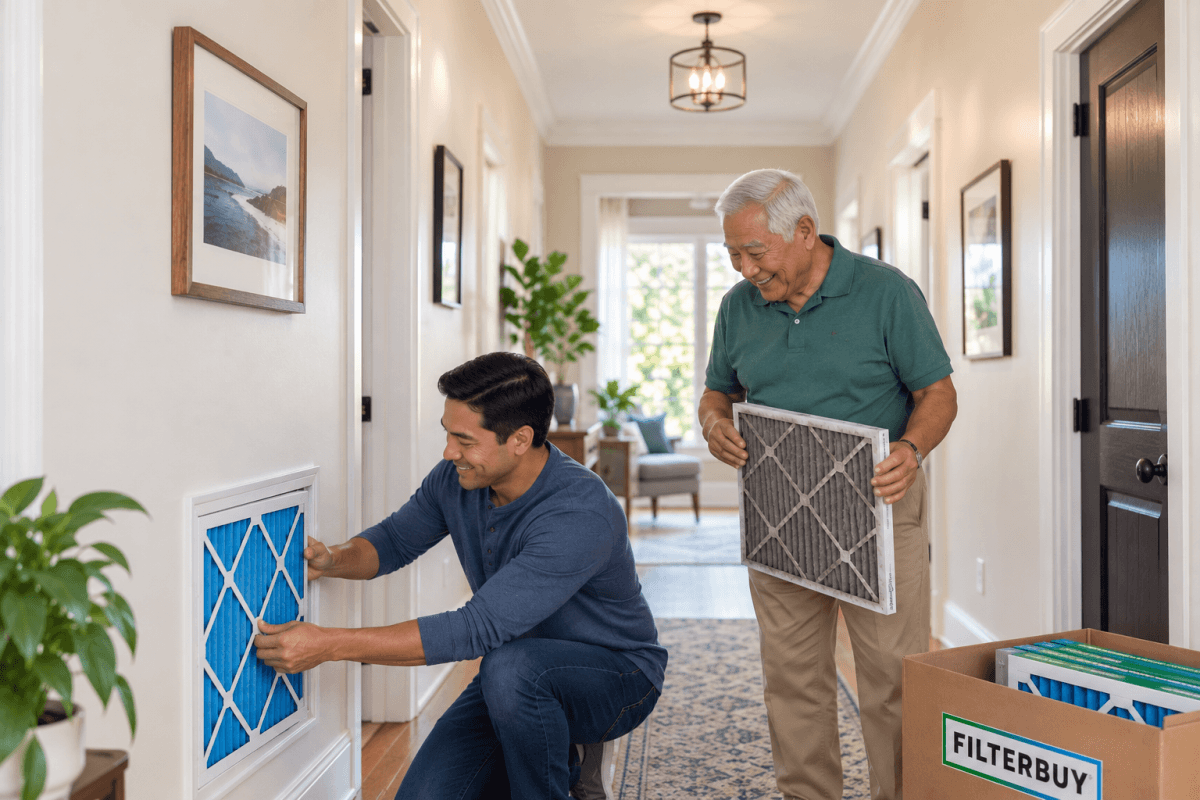
Changing a filter should never mean climbing a ladder. Falls are the leading cause of fatal and nonfatal injuries among older adults, according to the National Council on Aging, so a caregiver should take this job over during visits. Filterbuy auto-delivery keeps spares arriving.
What Should You Ask an Older Parent on a Smoke Day?
For a parent who lives alone, a two-minute smoke-day call catches what a text misses:
“What does the AQI say right now?”
“Are the windows shut, the fan on, and the purifiers running?”
“How warm is it inside?” If it's getting hot, plan a cooler place.
“Any cough, chest tightness, or unusual tiredness?” If yes, call the doctor.
“Do you have a spare filter and several days of medications?”
What Should Families Ask a Nursing Home About Air Quality?
We would ask these for our own parents, because no federal indoor air standard covers nursing homes. Luke Montrose, a Colorado State University toxicologist who monitored Idaho care facilities, found one building let in half the outdoor particle pollution and another let in all of it. At times, he said, "it was no better to be inside than to be outside."
What MERV rating are your filters, and how often are they changed?
Do you measure indoor PM2.5, or only check the outdoor AQI?
Does each resident room have a HEPA air purifier?
How do you keep residents cool with the windows closed?
At what AQI do activities move inside?
Supporting Statistics
1. 24.9 million older adults live in counties with failing air.
5.2 million live where all three measures fail.
Source: American Lung Association, “State of the Air” 2026
2. 76.5% more ER visits for asthma among New Yorkers 70 and older.
June 7, 2023, the worst smoke day, versus the June 1–5 average.
Source: CDC, MMWR, 2023 (New York State Department of Health)
3. 4x more likely to change outdoor plans when a clinician advises it.
Only 5% of adults 65+ had received that advice.
Source: U.S. EPA, Patient Exposure and the Air Quality Index
Frequently Asked Questions
What AQI Is Safe For Seniors To Walk Outside?
Most healthy older adults can walk normally up to AQI 100. Above that, sensitive groups should cut back on long or strenuous exertion. With heart or lung disease, ask your doctor.
What MERV Rating Is Best For Older Adults?
MERV 13. The EPA recommends MERV 13 or higher during smoke events and notes most furnaces and HVAC systems can use it without problems when the filter is replaced often. Confirm your size as with any filter.
Glossary
Air Quality Index (AQI): The EPA's 0 to 500 daily outdoor air quality scale.
PM2.5: Fine particles 2.5 micrometers or smaller that reach deep into the lungs.
MERV 13: The EPA-recommended rating for HVAC during smoke events and Filterbuy's finest residential filtration; not HEPA.
CADR: Clean Air Delivery Rate, how much filtered air an air purifier delivers.
N95: A fitted respirator that filters fine particles.
HEPA: High Efficiency Particulate Air, a filter standard for room air purifiers, never HVAC systems.
Sensitive Groups: People the EPA says feel pollution first, including older adults.
Clean Room: A sealed, filtered refuge room for smoke days.