
Prescribed Burns Near You: Finding The Schedule And Riding Out The Smoke
September 22, 2026
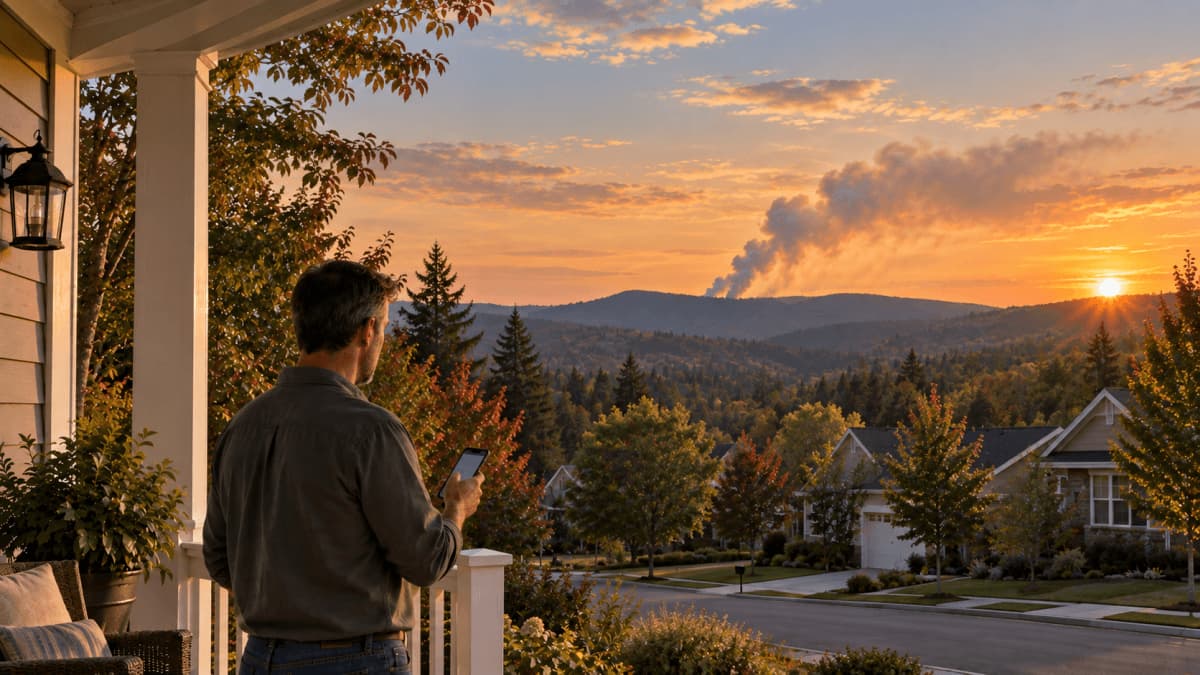
To find a prescribed burn near you, check with whoever manages the nearby land: the Forest Service, a park or refuge office, or your state forestry agency. Notices often go up about a week ahead, and the smoke usually lasts a few hours to a few days, heaviest overnight and early in the morning.
Private burns often go unannounced, so confirm with a live smoke map on burn day. When the AQI is over 100 and you have an HVAC system, switch to an EPA-recommended MERV 13 filter, which captures microscopic particles.
Not sure which filter fits your home? Take the quick match quiz below.
Find Your Filter Match
Answer 3 quick questions and we'll match you to your perfect filter before the next burn window.
Already know your size? Head to Filterbuy and get set before the next burn.
By Michelle Wan, Brand Manager and Air Quality Writer | Reviewed by David Clark, Licensed HVAC Technician | Published September 22, 2026 | Updated September 22, 2026
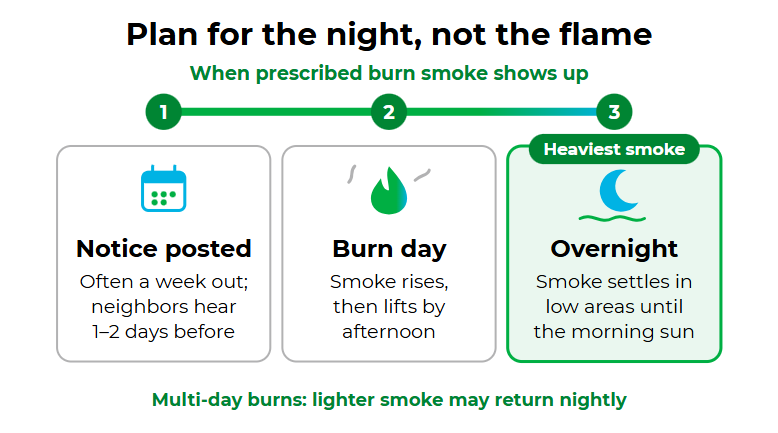
Most prescribed burns are announced before crews start the fire. The notice comes from whoever manages the land, so the Filterbuy rule is simple: find the land manager first, then plan for the night, not the flame. Expect a few hours to a few days of smoke, heaviest overnight and early in the morning.
TL;DR
To find a controlled burn near you, start with who manages the land: the Forest Service for national forests, park or refuge offices for federal preserves, and your state forestry agency for state land. On burn day, confirm with a live smoke map. When the AQI is over 100, Filterbuy's rule kicks in. If you have an HVAC system, switch to an EPA-recommended MERV 13 filter, set the thermostat fan to On, run HEPA air purifiers in each room, and close up the house.
Key Takeaways
Whoever manages the land posts the burn notice, so start there for any prescribed fire schedule.
Forest Service burn notifications often go up a week ahead, with neighbors notified one to two days before ignition.
Burns on private land often go unannounced, which makes a live smoke map your backstop.
Prescribed burn smoke usually lasts hours to a few days and settles into low areas overnight and early in the morning.
How Do I Find The Prescribed Fire Schedule Near Me?
The quickest way to find the prescribed fire schedule near you is to identify the agency that manages the nearby land, then check that agency's news page or sign up for its alerts. No single national calendar covers U.S. burns.
For background on how burns are planned and approved, see our explainer on how California runs its prescribed burn program.
Agency names and tools vary by state and region. When the land manager is unclear, start with your county emergency management office.
Filterbuy sorts this guide by land rather than state because that works in any ZIP code and points you to state agencies, where most U.S. prescribed fire happens.
The National Park Service counts notifying local residents and visitors before ignition among its smoke management steps for prescribed fires.
One state natural resources agency runs a radius-based burn notification tool that texts or emails you about burns within a distance you choose. Another state's wildlife agency sends prescribed fire alerts for burns planned on state game lands near your property.
How Can I Find Out If There Is A Controlled Burn Near Me Today?
To check for a controlled burn near you today, look for a same-day update from the land manager, then open a live smoke map. Burn dates move with the weather, so check again that morning.
The land manager's page. The Superior National Forest's published prescribed fire notification schedule is typical, with advisories about a week out and word to local residents and businesses one to two days before ignition.
InciWeb, the interagency incident site, which lists many prescribed fire programs along with maps and status updates.
The AirNow Fire and Smoke Map, where flame icons mark reported fire incidents, including prescribed fires and colored dots show live readings of PM2.5, the fine particles in smoke. To see smoke plumes, switch on the NOAA Smoke Plumes layer. Our guide on how to read a wildfire smoke map walks through the colors.
County emergency alerts and local news, which often repeat the day's burn notices.
Treat a scheduled date as tentative. U.S. Fish and Wildlife Service refuge managers set a flexible burn window and make the final call a few days out, and some state crews don't decide until the morning of the burn.
How To Read A Burn Notice
Burn notices tend to use agency shorthand, so the Filterbuy team translated the phrases that matter most at home.
Wording varies by agency. Most notices list a contact, so call with questions about timing or smoke.
Prescribed Burn Timeline: What To Expect And What To Do
Filterbuy pieced this timeline together from Forest Service, park, refuge, and state notice practices. Match your routine to each stage.
Timelines vary by agency and burn size. Burns can be canceled or moved when weather falls outside the burn plan.
How Long Does Smoke From A Prescribed Burn Last?
Smoke from a prescribed burn usually lasts a few hours to a few days. On multi-day burns, controlled burn smoke can drift back each night, a little lighter each time, until the last smoldering logs burn out.
A Pacific Northwest interagency fire team reports that prescribed fire smoke typically lasts a few hours, often at night or in the early morning, at much lower levels than wildfire smoke.
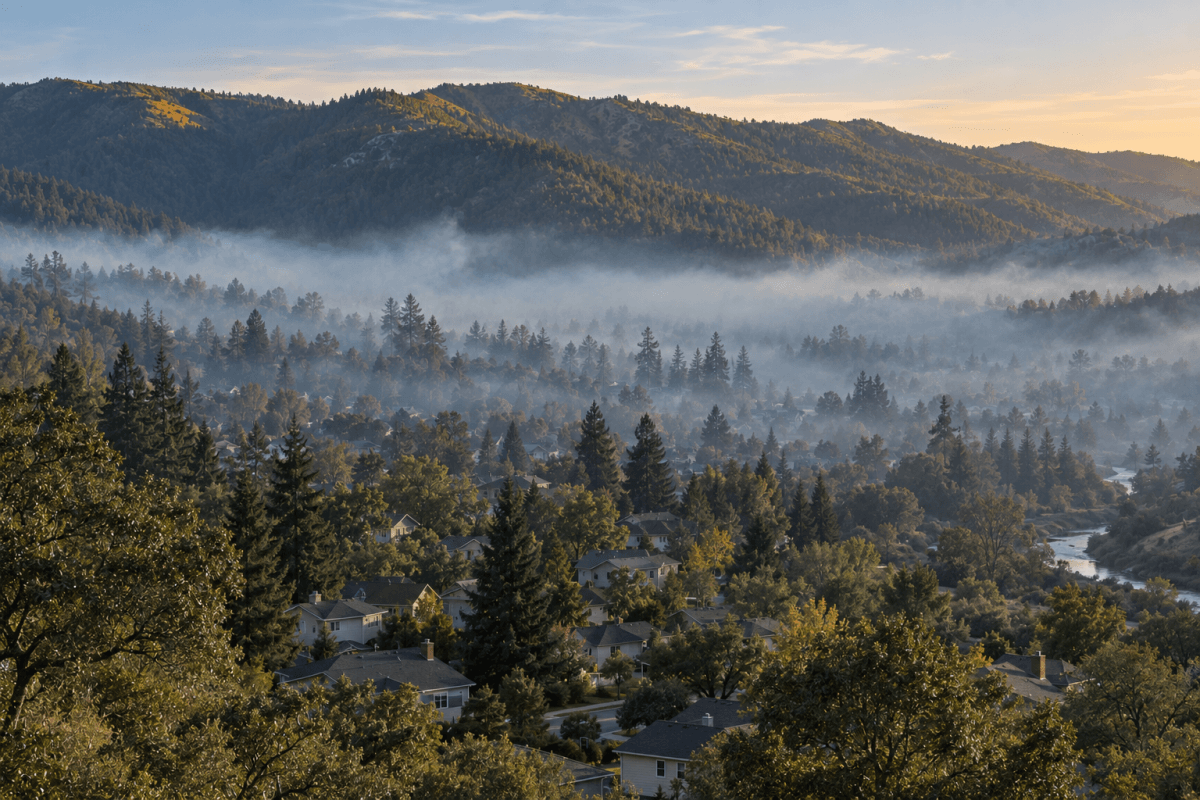
The overnight pattern comes from a temperature inversion. After dark, warmer air settles over cooler air like a lid, and smoke drains into valleys and low neighborhoods until the morning sun breaks it up. That's why we say plan for the night, not the flame.
Is Prescribed Burn Smoke Bad For Your Health?
Prescribed burn smoke carries the same pollutants as wildfire smoke, including the fine particles called PM2.5, though usually at lower levels and for less time. Even a short exposure can sting the eyes and scratch the throat, and the prescribed burn health risk rises the longer you breathe it.
The Centers for Disease Control and Prevention (CDC) notes who is most at risk from smoke, including people with asthma, COPD, diabetes, chronic kidney disease, or heart disease, plus children and people who are pregnant. Call a provider about trouble breathing or a cough that won't quit, and call 911 in a medical emergency.
What Should I Do On Burn Days When The AQI Is Over 100?
Start with any instructions from your local air agency or health department, and check current readings on AirNow. Once the AQI is over 100, Filterbuy's rule applies. If you have an HVAC system, take four steps in order: switch to an EPA-recommended MERV 13 filter, set the thermostat fan to On, run HEPA air purifiers in each room, and close up the house. Planned burn air quality shifts hour to hour, so keep checking. For a band-by-band breakdown, see what each AQI level means during smoke.
AQI categories, ranges, and colors are EPA's. Filterbuy's rule applies once the AQI is over 100, where Unhealthy for Sensitive Groups begins. Confirm your filter size before you switch.
The U.S. Environmental Protection Agency (EPA) recommends an HVAC filter rated MERV 13 or higher during smoke events and notes that most furnaces and HVAC systems can use one without equipment problems when the filter is replaced often. For a cleaner air room, EPA suggests a portable air cleaner sized to the room and certified by the California Air Resources Board (CARB), since those produce little or no ozone. See its guidance on creating a cleaner air room.
The Filterbuy Four-Step Burn Day Rule
Here's how we put that guidance to work at home. Our action line is any AQI over 100, and the steps run in this order.
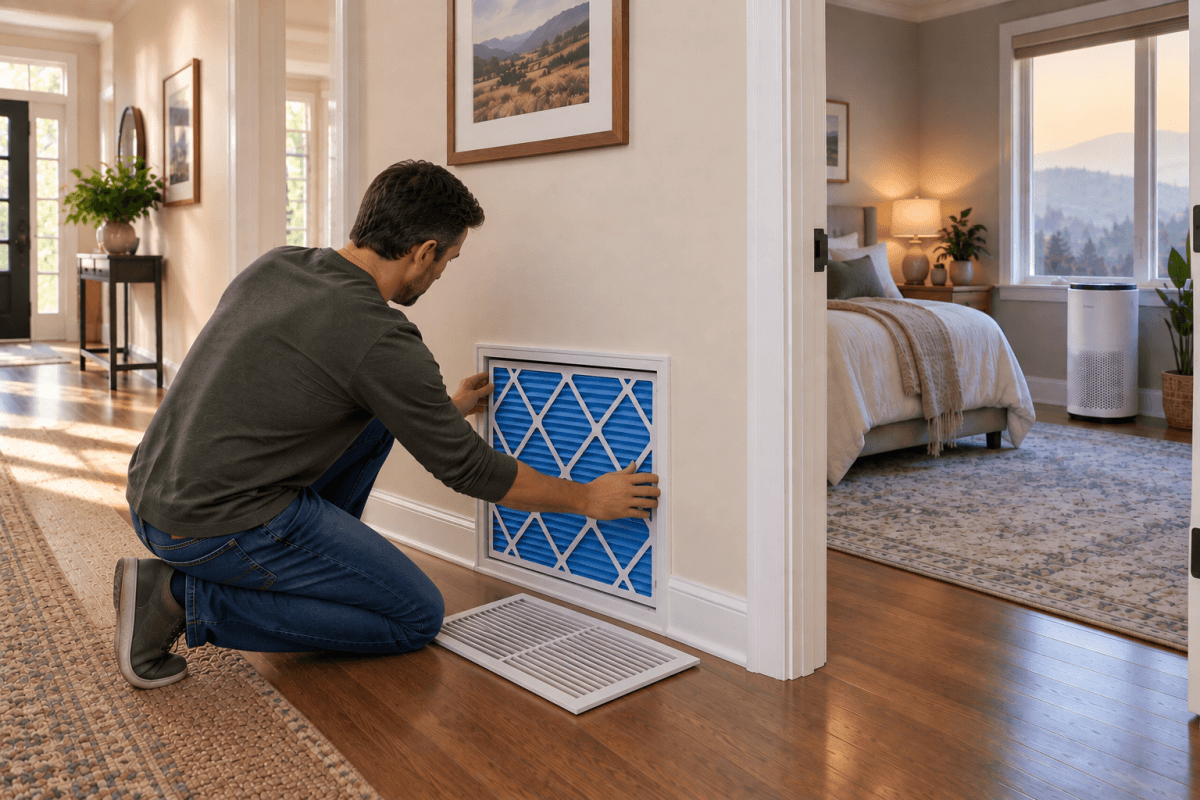
If you have an HVAC system, switch to EPA-recommended MERV 13 air filters. This is the whole-home layer. Confirm your size and check your HVAC manual, the same quick fit check you'd do for any filter. During smoke, look at it often and replace it when it turns dark brown or black, which can be well before the usual interval.
Set the thermostat fan to On and close any fresh-air intake. Auto only filters while the system heats or cools.
Run HEPA air purifiers in each room, starting with bedrooms, since burn smoke peaks overnight. MERV 13 and HEPA do different jobs, and our guide on how MERV 13 and HEPA filtration work together explains both.
Close the house up, especially overnight and before sunrise. Keep windows and doors shut, and skip candles, frying, smoking, and vacuuming without a sealed unit while smoke is in.
How To Size An Air Purifier: A Worked Example
For smoke, EPA's rule of thumb is a tobacco smoke clean air delivery rate (CADR) of at least two-thirds of the room's floor area. A 300-square-foot bedroom needs a smoke CADR of about 200. Size up if your ceilings run taller than 8 feet.
Skip Ionizers And Ozone Generators
Ionizers, ozone generators, and some plasma or electrostatic cleaners can give off ozone, a lung irritant, so choose a mechanical HEPA unit with CARB certification.
No Central Air? Here Is Your Path
If your home has no ductwork, HEPA air purifiers are your primary defense. Run one in each room, close the outside vent on any window air conditioner, and make the room with the fewest windows your cleaner air room. A box fan air cleaner built with MERV 13 filters works as a short-term stopgap until you can get a certified unit. Use a certified fan made in 2012 or later, and never leave it running unattended.
What Our Team And Fire Crews Know
Michelle Wan, the Filterbuy air quality writer behind this guide, checks "live air quality and smoke maps across Filterbuy's coverage areas most mornings during fire season." She carries the same habit into burn season: "smell first, verify second."
“The households that struggle most once smoke rolls in are almost always the ones running a filter that was already overdue before the smoke ever showed up.”
Phil Graeve, a Forest Service burn boss on the Payette National Forest, has said in an agency feature that because prescribed burns must meet EPA air quality standards, crews "must plan for smoke." At Filterbuy, we borrow that habit at home by checking the notice and the wind before bed.
Supporting Statistics
84% of U.S. prescribed fire acres burn on state and private land.
2020 total: nearly 8 million state and private acres, 1.5 million federal.
Your move: check your state forestry agency first.
Source: National Association of State Foresters, Wildfire
The Forest Service runs about 4,500 prescribed fires a year.
Next 10 years: up to 20 million more National Forest System acres.
Your move: expect steady burn notices near national forests.
Source: U.S. Government Accountability Office, Fighting Fire with Fire
Prescribed burns supplied about 10% of outdoor PM2.5 in ten southeastern states.
Study period: 2013 to 2020.
Burn season (January–April): up to 22% in the hardest-hit states.
Your move: check your HVAC filter more often in burn season.
Source: FRAMES, prescribed burn PM2.5 exposure study
Frequently Asked Questions
Why Is There Prescribed Burn Smoke Near Me Without A Notice?
Smoke travels, so the source may be a burn in the next county over, and private burns often skip public notice. Try the two-check habit, map first and wind second, to trace it.
When Is Prescribed Burn Season?
Most burns happen in late winter, spring, and fall, when cooler, damper conditions help crews keep fire in check. Timing varies by region, so watch notices year-round.
When Is It Safe To Open Windows After A Prescribed Burn?
Open them once the AQI is back in the green and stays there. If the smell hangs on in fabrics, our steps for clearing lingering smoke from your house can help.
Get Your Home Ready Before The Next Burn Window
Filterbuy makes MERV 13 filters in hundreds of standard and custom sizes, and we'd much rather you get ready before the notice goes up. Find your filter size, keep a spare MERV 13 on the shelf, and sign up for burn alerts from your local land manager. Orders ship with fast and free 2-day delivery to most US states.
Glossary
Prescribed burn: A planned, permitted fire that land managers set on purpose to reduce wildfire fuel, also called a controlled burn or prescribed fire.
Temperature inversion: Warm air above cooler ground-level air that traps smoke near the surface, mostly at night.
PM2.5: Fine particles 2.5 microns or smaller that make up much of the smoke from prescribed burns and wildfires.
AQI (Air Quality Index): The U.S. EPA's 0 to 500 outdoor air pollution scale.
MERV 13: The HVAC filter rating EPA sets as the floor for smoke events, meaning MERV 13 or higher.
HEPA: A high-efficiency particulate air filter standard used in portable air purifiers.
CADR (Clean Air Delivery Rate): How much filtered air a portable purifier delivers, used to match it to room size.