
St Johns, NL Live Wildfire Smoke Map
Get Alerts For Wildfires In Your Area
The moment a wildfire starts near you, you'll get an instant alert and simple tips to reduce your smoke exposure.
What's In The Smoke
30xSmaller than a human hair
Fine enough to reach deep into the lungs. A MERV 13 is built to capture it.
How Far It Travels


It Doesn't Stay Local
Smoke rides the wind far downwind — you can get smoky air with no fire nearby.
What To Do During A Smoke Event
Simple steps to reduce indoor exposure.
- Stay In, Close UpShut windows and doors to keep smoke out.
- Set Fan To "On"Keeps air cycling through your filter, not just when heating or cooling.
- Recirculate AirSwitch off fresh-air intake so you're not pulling smoke in.
- Run A MERV 13Built to capture the fine PM2.5 in smoke.
- Add A PurifierExtra filtration for the room you use most.
- Wear an N95 if OutsideFits snug to block fine particles — a cloth mask won't.


The Best Air Filter For Wildfire Smoke
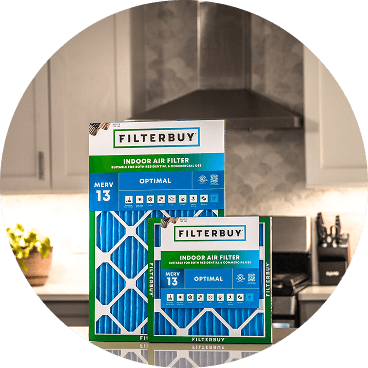
During smoke events, the EPA recommends upgrading to a MERV 13 filter — or the highest-rated filter your system can handle — to help reduce the fine particles smoke brings indoors. MERV 13 is the level most home HVAC systems can run while still capturing PM2.5, the fine particulate that makes up the bulk of wildfire smoke.
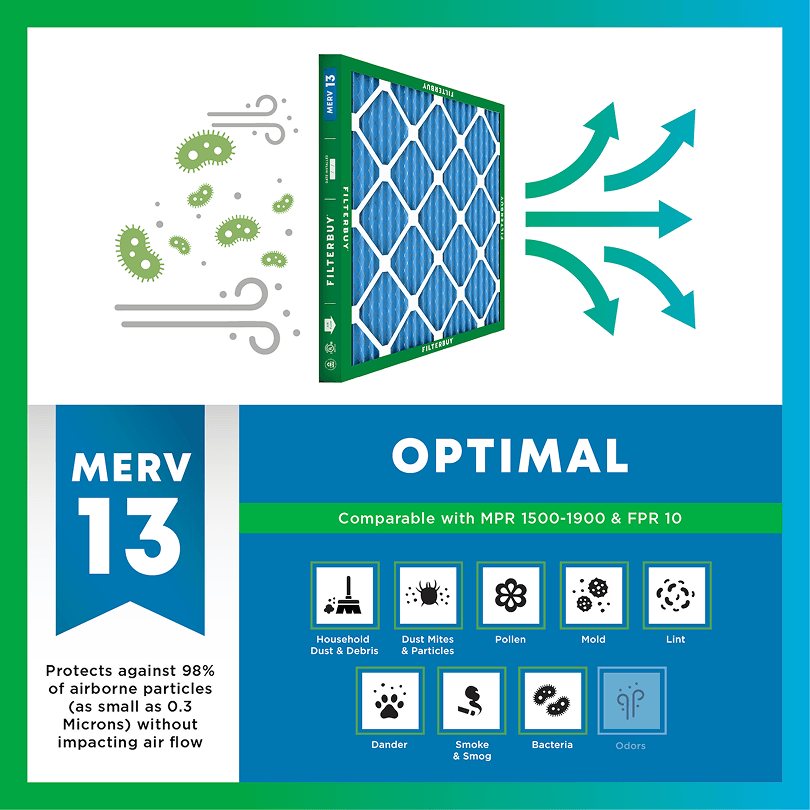
- Captures PM2.5 particles
- Blocks ash, soot, and smoke odor
- Keeps your indoor air safe—even when the outdoor air is dangerous
- Meets the EPA's recommended rating for filtering fine wildfire smoke particles.

Wildfire Smoke FAQs
Facts About Wildfires
Over 70,000 wildfires burn in the U.S. every year.
Wildfire smoke can travel 1,000+ miles, affecting states that aren't even near the blaze.
Exposure to wildfire smoke can worsen asthma, trigger heart issues, and lead to ER visits.
Indoor air can hold more fine particles during wildfire events unless it's properly filtered.
The EPA advises using MERV 13 filters or portable HEPA air cleaners during wildfire smoke events.
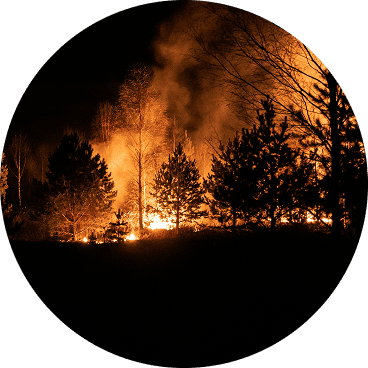
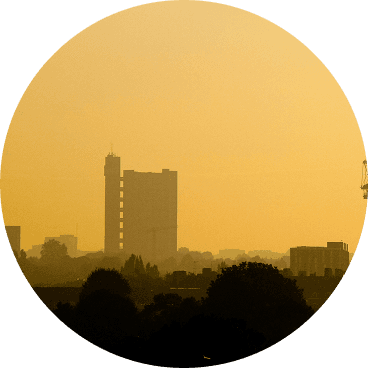
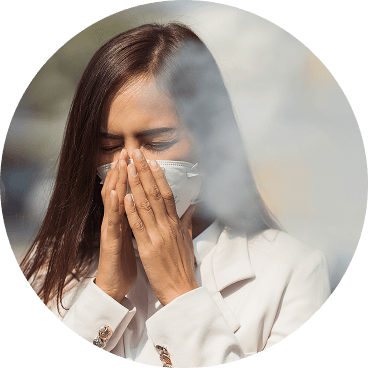
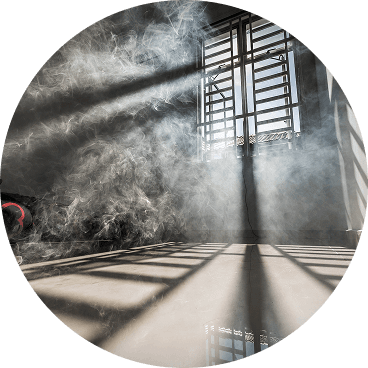
Don't Wait Until The Smoke's Inside.
Use the live wildfire smoke tracker and upgrade your air filters today to protect your lungs and your home.
Shop Filters For Smoke Protection
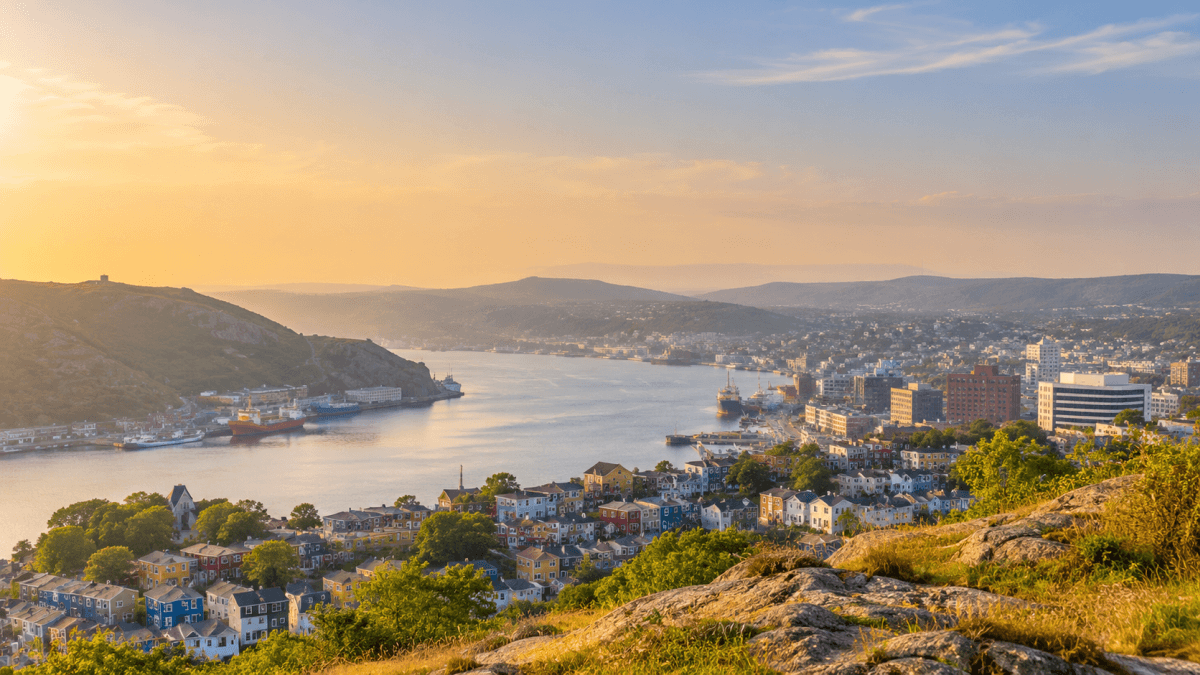
Live St. John's, NL Forest Wildfire & Smoke Map Today: Local Air Quality Tracking & Indoor Protection Solutions
TL;DR
For fires and smoke around St. John's, start with the live map at the top of this page, then confirm with the province's NL Active Wildfires dashboard, the ECCC FireWork smoke forecast and the St. John's Air Quality Health Index (AQHI). Smoke here can arrive within hours: in August 2025, a wildfire burned inside St. John's jurisdiction. When smoke pushes the U.S. AQI above 100, close the house up and turn off the air exchanger. If you have an HVAC system, switch to an EPA-recommended MERV 13 filter (Filterbuy Canada's Optimal tier) with the fan set to ON, and run HEPA air purifiers in each room.
Key Takeaways
Environment and Climate Change Canada (ECCC) publishes an AQHI forecast for St. John's and vicinity.
The metro area has two fine particle (PM2.5) stations, on Water Street downtown and in Mount Pearl. Filterbuy Canada's analysis of provincial coordinates puts them 8.8 km and 128 metres of elevation apart.
In August 2025, the Paddy's Pond and Kingston wildfires led to a regional state of emergency and air quality warnings for St. John's.
On the island of Newfoundland, the 2026 forest fire season ran from 1 May to 30 September. To report a wildfire, call 1-866-709-FIRE (3473).
Not every smoke warning comes from a wildfire: a June 2026 fire at the Robin Hood Bay landfill triggered one too.
Live St. John's Wildfire and Smoke Map: Which Source Answers Which Question?
When Filterbuy Canada compared the official tools for this page, we found that no single one answers every question. A fire map shows where flames are, a smoke forecast shows where the plume is heading, and the AQHI tells you what you're breathing right now. Start with the live map above, then pick the source that fits your question.
Each source is linked in the text on this page.
Forecast maps are guidance, not measurements, so treat the AQHI as the final check. For fires beyond Newfoundland and Labrador, use the CWFIS map, and for smoke across Canada, see the Filterbuy.ca Canada wildfire and smoke map.
Is There a Forest Fire in St. John's Today?
On the island of Newfoundland, the 2026 forest fire season ran from 1 May to 30 September. During the season, the province's Daily Wildfire Risk map sets burning rules by colour: at high risk, permits to burn are suspended and fireworks are banned, and at very high or extreme risk, every outdoor fire, campfires included, is banned.
A fire can still start after the season ends, so check the City of St. John's fire bans and open air fires page before you burn anything outdoors. To report a wildfire, call 1-866-709-FIRE (3473), or 911 if people or property are in danger.
What August 2025 Taught St. John's Residents About Local Smoke
In most cities in the Filterbuy Canada wildfire map series, smoke comes from fires hundreds of kilometres away. Our review of the 2025 advisories showed that St. John's is different: here, the source can be just outside town.
Sources: Government of Newfoundland and Labrador (13 August 2025), City of St. John's (11 August 2025), The Canadian Press via CTV News (14 June 2026).
Which Monitoring Station Covers Your Part of St. John's?
ECCC publishes the AQHI for St. John's and vicinity, using data from the province's air monitoring network. Two National Air Pollution Surveillance (NAPS) stations serve the metro area, and both measure fine particles (PM2.5), the main pollutant in wildfire smoke.
To see how far apart they are, Filterbuy Canada calculated the straight-line (haversine) distance from the province's published coordinates and compared each station's listed elevation.
Source: Government of Newfoundland and Labrador air monitoring station pages.
The Water Street station sits on the downtown harbourfront. The Mount Pearl station is 8.8 km inland to the southwest and about 128 metres higher, on the side of the metro area closest to Paddy's Pond and the Trans-Canada Highway, where the August 2025 fire burned. Our takeaway: if you live in the west end, Mount Pearl or Paradise, watch the inland station; downtown, watch Water Street. When a plume is nearby, plan around whichever reading is higher.
How to Read St. John's Air Quality During a Smoke Event
The AQHI is Canada's 1 to 10+ scale for the health risk of outdoor air, and the higher the number, the greater the risk. Health Canada groups readings as moderate (4 to 6), high (7 to 10) and very high (above 10). When readings are high, shorten or ease off outdoor activity; when they are very high, consider cancelling or rescheduling outdoor events.
Smoke affects some people more than others, including adults 65 and older, pregnant people, infants and young children, people with chronic health conditions and people who work outdoors. If you notice symptoms such as a severe cough, shortness of breath, heart palpitations or wheezing, the City of St. John's advises calling 811 or seeing a health care provider. In an emergency, call 911.
How to Keep Wildfire Smoke Out of Your St. John's Home
These steps draw on advice from Health Canada, the City of St. John's and the U.S. EPA:
Keep windows and doors closed as much as you can. If extreme heat arrives with the smoke, staying cool comes first.
Adjust your heating and ventilation using the table below. If officials ask you to turn off HVAC units, as the City did in August 2025, follow their instructions.
Use exhaust fans, such as bathroom fans, as little as possible.
Check filters often while smoke lingers and replace them once they look dark brown or black, which can be well before the normal interval. Keep spares on hand, and once the air clears, air out the house and replace the filters again.
Sources: U.S. EPA; Health Canada. Skip ionizers and ozone generators, since the EPA advises against air cleaners that produce ozone. Where local officials give different instructions, follow them.
Choosing a Furnace Filter for St. John's Smoke and Heating Seasons
MERV 13 is the filter tier Filterbuy Canada recommends for wildfire smoke. The U.S. EPA recommends a filter rated MERV 13 or higher in a central system during smoke events, and notes that most furnaces and HVAC systems can accommodate MERV 13 without equipment problems, provided the filter is replaced often.
Our action line is a U.S. AQI reading above 100 in your weather app, a threshold we chose ourselves rather than an official standard. When the reading climbs above 100, take these four steps:
If you have an HVAC system, switch to an EPA-recommended MERV 13 filter. It treats the whole home.
Set the thermostat fan to ON so the system filters continuously, not only while heating or cooling.
Run HEPA air purifiers in each room as well, starting with bedrooms. Each one treats its room harder than the central system can.
Close the house up, and skip candles, frying, smoking and vacuuming while smoke is in.
No HVAC system? HEPA air purifiers are your main defence rather than an add-on, so size them using the table above. For St. John's homes, Filterbuy Canada carries three colour-coded pleated options:
MERV 13 Optimal is the tier we recommend for smoke.
Odour Eliminator filters add a carbon layer. Pleated filters capture particles, while smoke smell comes from gases, so this is the tier we point to when odour is the concern.
MERV 11 Superior is the everyday tier for homes with pets or seasonal allergies. It is not a substitute for MERV 13 during smoke events.
Before you switch, check the size printed on your current filter and make sure the new one fits snugly, the same as any filter change.
Most systems I test are not struggling because the filter is too efficient. They are struggling because it has been in there since spring.
Timing matters in St. John's, too. A filter that worked hard all summer is ready for a change just as the heating season begins, and a spare on the shelf saves a scramble when smoke returns. Filterbuy Canada carries over 600 standard sizes plus custom sizes, with free shipping to Canada on every order, so you can find your MERV 13 size in a few clicks. The subscribe and save plan lets you edit, skip or cancel anytime.
I don't want anyone to feel like they need an HVAC license just to pick the right filter. My job is to give you the straight answer, explain why it matters, and let you get back to your day.
Frequently Asked Questions
Is There A Wildfire Near St. John's Right Now?
Start with the Filterbuy.ca live map at the top of this page, which shows fires from CWFIS and smoke plumes from NOAA satellite data. Then confirm on the province's NL Active Wildfires dashboard. To report a wildfire, call 1-866-709-FIRE (3473), or 911 if people or property are in danger.
What Is The Best Live Smoke Map For St. John's Today?
The ECCC FireWork map is the official Canadian smoke forecast, covering the next 72 hours and updated twice a day. Pair it with the St. John's AQHI to see whether the forecast smoke has reached ground level.
Why Do Apps Show Different Air Quality For St. John's?
Apps may read a single station, rely on low-cost sensors or show the U.S. AQI, a 0 to 500 scale that does not line up with the AQHI. For decisions in St. John's, use the AQHI.
How Often Should I Change My Furnace Filter During Smoke Season?
Check it often while smoke lingers and replace it once it looks dark brown or black, even if that is well before the normal interval. Keep a spare on hand; a Filterbuy Canada subscription can be set to arrive more often during smoke season, then adjusted later.
Glossary
Filterbuy Canada: The Canadian storefront (filterbuy.ca) of Filterbuy, an American air filter company, carrying pleated furnace filters in MERV 8, 11, 13 and Odour Eliminator with free shipping to Canada.
AQHI (Air Quality Health Index): Canada's 1 to 10+ scale for the health risk of outdoor air, published for St. John's by ECCC.
ECCC: Environment and Climate Change Canada, the federal department that issues the AQHI, air quality alerts and smoke forecasts.
NAPS: National Air Pollution Surveillance, the federal-provincial network of air monitoring stations.
Fire Weather Index (FWI): A rating of how easily a wildfire could start and spread, used for the province's daily risk map.
CWFIS: Natural Resources Canada's Canadian Wildland Fire Information System, which maps active fires and hotspots nationwide.
FireWork: ECCC's forecast system predicting how wildfire smoke will move over the next 72 hours.
PM2.5: Fine particulate matter 2.5 microns or smaller, the main pollutant of concern in wildfire smoke.
U.S. AQI (Air Quality Index): The United States' 0 to 500 air quality scale, often shown in weather apps.
Air exchanger (HRV): A heat recovery ventilator that swaps stale indoor air for fresh outdoor air.
MERV: Minimum Efficiency Reporting Value, a rating of how well an HVAC filter captures particles between 0.3 and 10 microns.
HEPA: A high efficiency particulate air filter, used in portable air cleaners, capturing at least 99.97% of 0.3-micron particles.