
Nova Scotia Live Wildfire Smoke Map
Get Alerts For Wildfires In Your Area
The moment a wildfire starts near you, you'll get an instant alert and simple tips to reduce your smoke exposure.
What's In The Smoke
30xSmaller than a human hair
Fine enough to reach deep into the lungs. A MERV 13 is built to capture it.
How Far It Travels


It Doesn't Stay Local
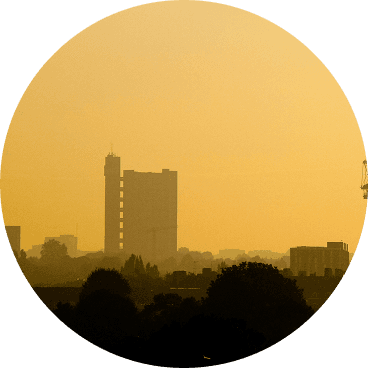
Smoke rides the wind far downwind — you can get smoky air with no fire nearby.
What To Do During A Smoke Event
Simple steps to reduce indoor exposure.
- Stay In, Close UpShut windows and doors to keep smoke out.
- Set Fan To "On"Keeps air cycling through your filter, not just when heating or cooling.
- Recirculate AirSwitch off fresh-air intake so you're not pulling smoke in.
- Run A MERV 13Built to capture the fine PM2.5 in smoke.
- Add A PurifierExtra filtration for the room you use most.
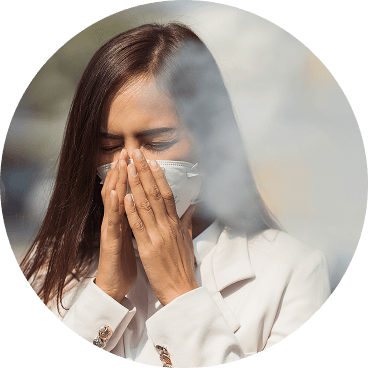
- Wear an N95 if OutsideFits snug to block fine particles — a cloth mask won't.


The Best Air Filter For Wildfire Smoke
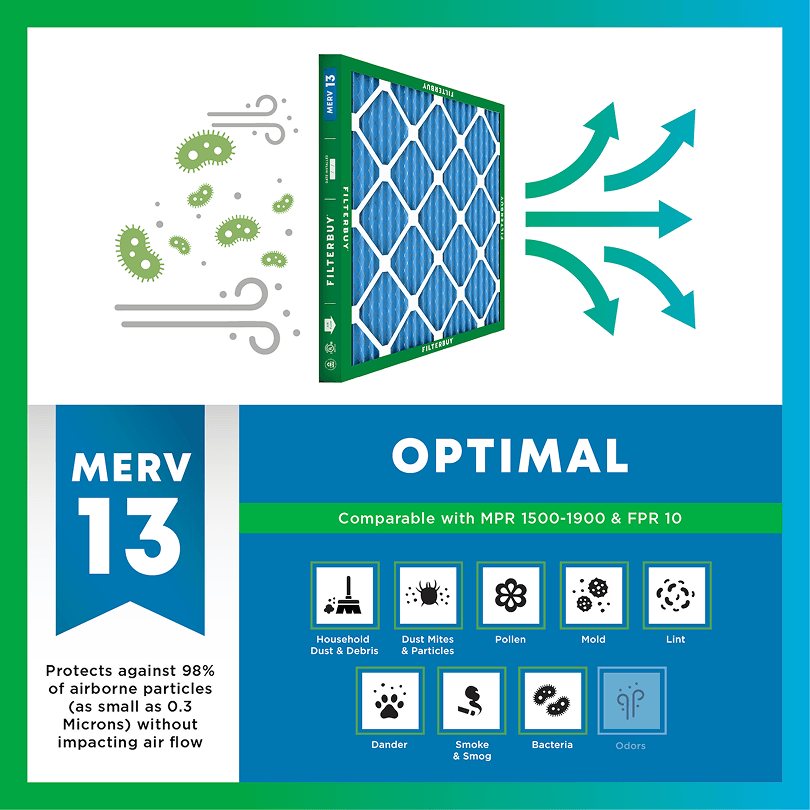
During smoke events, the EPA recommends upgrading to a MERV 13 filter — or the highest-rated filter your system can handle — to help reduce the fine particles smoke brings indoors. MERV 13 is the level most home HVAC systems can run while still capturing PM2.5, the fine particulate that makes up the bulk of wildfire smoke.
- Captures PM2.5 particles
- Blocks ash, soot, and smoke odor
- Keeps your indoor air safe—even when the outdoor air is dangerous
- Meets the EPA's recommended rating for filtering fine wildfire smoke particles.

Wildfire Smoke FAQs
Facts About Wildfires
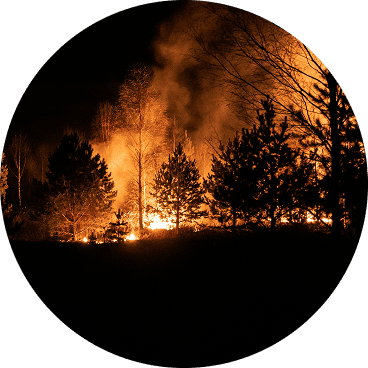
Over 70,000 wildfires burn in the U.S. every year.
Wildfire smoke can travel 1,000+ miles, affecting states that aren't even near the blaze.
Exposure to wildfire smoke can worsen asthma, trigger heart issues, and lead to ER visits.
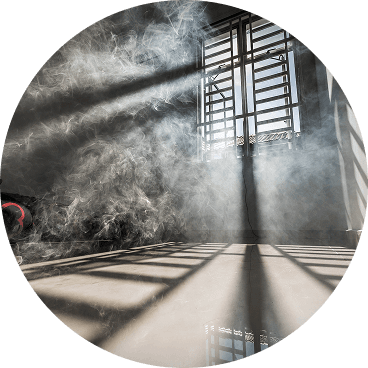
Indoor air can hold more fine particles during wildfire events unless it's properly filtered.
The EPA advises using MERV 13 filters or portable HEPA air cleaners during wildfire smoke events.
Don't Wait Until The Smoke's Inside.
Use the live wildfire smoke tracker and upgrade your air filters today to protect your lungs and your home.
Shop Filters For Smoke Protection
Live Nova Scotia Forest Wildfire & Smoke Map Today: Provincial Air Quality Tracking & Indoor Protection Solutions
TL;DR
This page shows live wildfire and smoke conditions across Nova Scotia, drawn from official Government of Canada and provincial feeds. Smoke here often arrives from fires thousands of kilometres away, so hazy air does not mean a fire burns nearby. When the Air Quality Health Index climbs, close up, and if your home is ducted, switch the fan to recirculate behind a MERV 13 filter. One thing Filterbuy has learned from making the media in-house: smoke retires a filter far sooner than dust, without ever looking dirty.
Key Takeaways
The wildfire risk season runs 15 March to 15 October, with no open fires from 8:00 am to 2:00 pm.
Smoke travels thousands of kilometres, so the sky can haze over while the nearest fire burns in Quebec or Western Canada.
Health Canada recommends MERV 13 or higher with recirculation, though only about one Nova Scotia home in four is ducted.
Smoke retires an electrostatic filter faster than dust, and without looking dirty, so Filterbuy recommends checking monthly through smoke season.
How Do I Check Where Wildfires Are Burning in Nova Scotia Right Now?
Use the map above, then confirm against the official record. It draws fire locations from the Canadian Wildland Fire Information System, which collects provincial reports and satellite detection. The Nova Scotia Department of Natural Resources publishes the authoritative view on its wildfire pages.
Two things are worth knowing about any fire map. A marker is a point rather than a boundary, so a large fire's active edge can sit kilometres from the dot. And agencies update on their own schedules, so any map can lag. When a fire is close, municipal alerts will be quicker.
Why Is There Smoke in Nova Scotia When No Fire Is Burning Nearby?
Because smoke travels. Health Canada notes it may be carried thousands of kilometres from the fire zone, so air in Halifax, Sydney, or Yarmouth can decline while every marker on the fire map sits quiet.
Nova Scotians get two quite different smoke situations, and each calls for a different response.
Local smoke comes from a fire inside the province. It arrives quickly, can be dense, and often carries ash, but it tends to be sharp and short. In August 2025, smoke from the Long Lake fire in Annapolis County drifted more than 100 kilometres, reducing air quality in Halifax and Lunenburg counties.
Transported smoke arrives from Quebec, Ontario, or Western Canada on upper-level winds. It reads as flat haze and can sit over the Maritimes for days, loading media steadily rather than in one burst.
The difference matters in practice: local smoke calls for sealing up quickly, while transported smoke calls for sustained filtration and a closer eye on your filter.
What Does the AQHI Mean, and What Should I Do at Each Level?
The Air Quality Health Index is Environment and Climate Change Canada's scale for the health risk the current air carries, running from 1 to 10+ across four bands. During smoke events, ECCC recalculates it hourly from fine particulate matter alone.
Each band below is paired with a specific indoor action. The bands come from ECCC's Nova Scotia AQHI summary, while the filtration guidance is ours.
AQHI 1–3, Low Risk. Ideal air for outdoor activity. Use it as preparation time: check your filter, note your size, keep a spare.
AQHI 4–6, Moderate Risk. Close windows and doors, set the fan to "On" rather than "Auto" so air keeps cycling, and switch to recirculation. If you run a MERV 11 Superior filter, this is the point to move up.
AQHI 7–10, High Risk. Keep the house closed and the fan running continuously on recirculate behind a MERV 13 filter. Set up one room as a cleaner-air space, ideally where you sleep. Health Canada advises against candles, wood stoves, and vacuuming without HEPA.
Above 10, Very High Risk. All of the above, sustained. Follow your public health authority and check on neighbours with heart or lung conditions..
One caution is worth stating plainly. A filter improves the air inside your home, but it is not medical advice. If you have asthma, COPD, or a heart condition, your doctor comes first.
Which MERV Rating Actually Captures Wildfire Smoke?
MERV 13, and Health Canada says so directly. Its cleaner air spaces guidance recommends a Minimum Efficiency Reporting Value of 13 or higher to remove fine particulate matter.
The reason comes down to particle size. Health Canada identifies PM2.5 as the main threat from smoke, roughly 90% of particulate mass, and particles that small pass straight through the fibreglass panel many furnaces ship with. Filterbuy labels tiers by job: MERV 8 Standard handles dust, lint, and pollen, while MERV 11 Superior adds pet dander and mould. Neither suits the fine fraction hazing Nova Scotia skies.
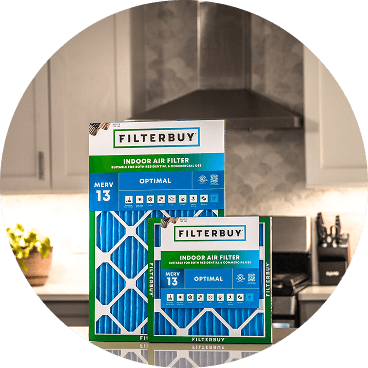
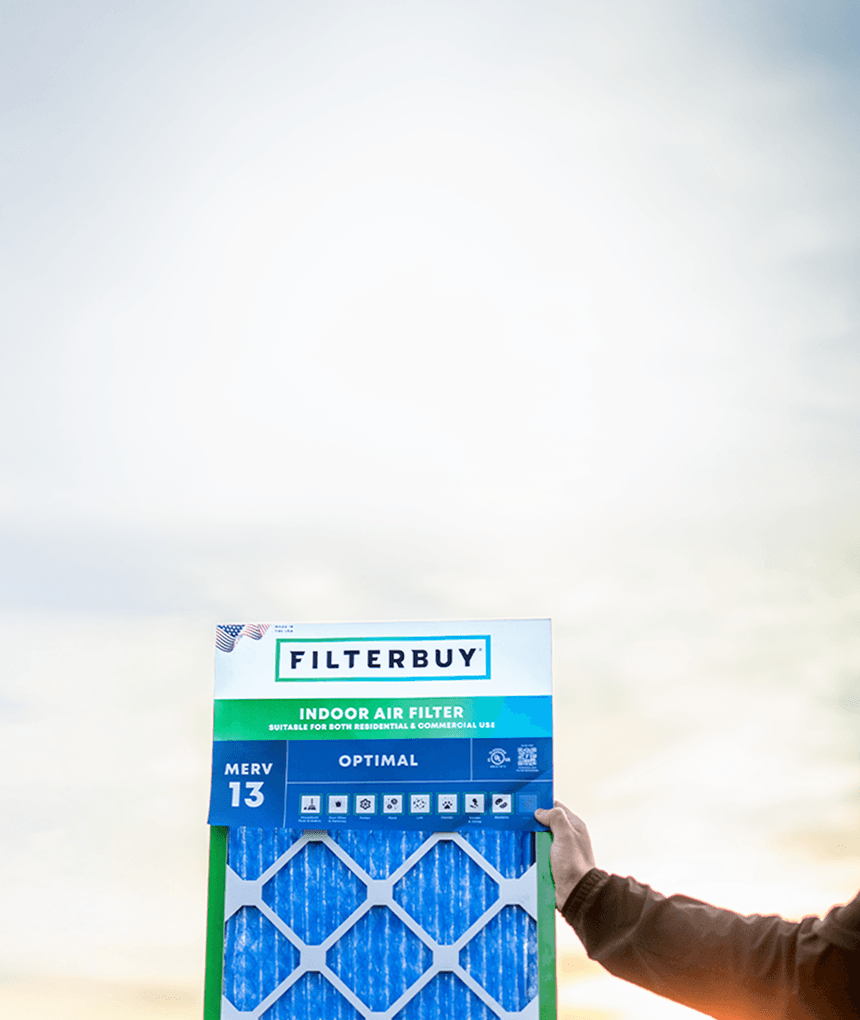
The Filterbuy MERV 13 Optimal is built for this. Where smoke odour lingers, the carbon-infused Filterbuy Odour Eliminator tackles what pleated media alone leaves behind.
Two caveats are worth keeping in mind. The first is resistance, since Health Canada notes an HVAC system must be able to handle a MERV 13 filter's pressure drop. Most modern systems manage it, though older equipment deserves a check against your manual.
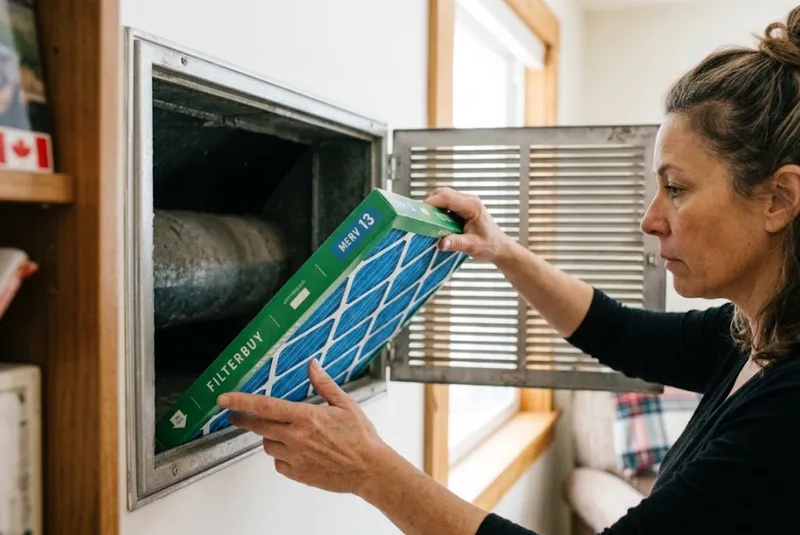
The second is fit, which matters as much as rating. Air takes the path of least resistance, so a filter that does not seal lets smoke bypass the media altogether. Filterbuy cuts every filter slightly under its nominal size for this reason, so it seats properly instead of binding. Order by the size printed on your current filter, then find your size or create a custom filter.
Will Any of This Work If I Don't Have a Furnace?
For most Nova Scotians, no, and that is worth saying plainly, since nearly every smoke guide online assumes ducted heat.
Statistics Canada found Nova Scotia split almost three ways: forced-air furnaces 23%, electric baseboards 21%, heat pumps 21%. Only one home in four is ducted. If you heat with baseboards, a boiler, or a ductless mini-split, there is no filter slot in your home, and no filter Filterbuy makes will change your air.
Here is what helps, depending on how you heat.
Ducted furnace or heat pump. Everything above applies: MERV 13, fan on continuous, recirculate.
Ductless mini-split. Each indoor head has a washable screen. Rinse it, since a blocked screen hurts efficiency, but it is not a smoke filter. Add a portable HEPA unit in the room you use most.
Baseboard, hot water, or wood heat. No ductwork means no central filtration. A portable HEPA unit in one room is the practical answer, and sealing that room matters most.
Closing windows and doors works no matter how you heat, and costs nothing. For three-quarters of Nova Scotia homes it is the step that counts most.
How Often Should I Change My Filter During a Smoke Event?
More often than you would think. Filterbuy manufactures its own electrostatically charged media, so we pay attention to how it fails. Dust clogs a filter gradually, but smoke does something different: it builds charge on the media and switches the electrostatic effect off. The EPA testing below measured exactly this, and a filter can stop working while it still looks nearly new.
That makes the usual test unreliable. Holding a filter up to a lamp is the most repeated tip online, but in smoke season it misleads, because a spent filter still passes light between the pleats. Compare it against a fresh one on white paper.
"Smoke doesn't clog a filter the way dust does. It kills the charge in the media, and a dead filter still looks nearly new. And if the real choice is a MERV 13 you'll forget about or a MERV 11 you'll actually change, change the MERV 11."
Michelle Wan, Brand Manager and Air Quality Writer, Filterbuy
Maritime humidity means the media handles moisture as well as particulate, and the long heating season keeps furnaces running six to eight months a year. A Filterbuy subscription covers the step people miss: a spare on hand when the day arrives.
Supporting Statistics
Three findings from U.S. government research back the guidance above.
1. A better filter roughly doubles what running your fan achieves.
High-efficiency HVAC filter, fan running continuously: about 50% less indoor PM2.5.
Typical low-efficiency filter, same fan setting: about 24%.
Why it matters: running the fan helps, but the filter in the slot decides how much.
Source: U.S. EPA, Strategies to Reduce Exposure Indoors
2. Against smoke, MERV 11 delivers 43% less clean air than MERV 13.
EPA chamber testing swapped MERV 13 for MERV 11, and clean-air delivery fell 43%.
The gap is written into the rating: MERV 11 need only capture 20% of particles under one micrometre.
Why it matters: wildfire smoke averages about 0.3 micrometres, right where MERV 11 is weakest.
Source: Holder et al., Indoor Air (2022), U.S. EPA Office of Research and Development
3. A filter quits long before it looks full.
A smoke-loaded MERV 13 filter saw clean-air delivery fall from 111.2 to 4.3 cubic feet per minute.
Only 10 milligrams had deposited, almost nothing to look at.
The cause was charge build-up on the media, not clogging.
Why it matters: Filterbuy makes electrostatic media, so we can say what that means at home. Judge a filter by colour against paper, not by how full it looks.
Source: Holder et al., Indoor Air (2022), U.S. EPA Office of Research and Development
Frequently Asked Questions
Glossary
AQHI (Air Quality Health Index): Canada's 1-to-10+ scale for the health risk of current air quality, reported by ECCC across four bands: Low (1–3), Moderate (4–6), High (7–10), Very High (above 10).
PM2.5: Fine particulate matter under 2.5 micrometres across, the main threat from wildfire smoke.
This page is for awareness, not emergencies. Evacuation orders in Nova Scotia come from your municipality and provincial emergency officials. For the official provincial record, see the Nova Scotia wildfire page and the BurnSafe fire restrictions map. To report a wildfire, call 1-800-565-2224. In an emergency, call 911.
About the author: Michelle Wan is Brand Manager and Air Quality Writer at Filterbuy. She works with the company's manufacturing team and writes from how filters are built and used in real homes rather than from spec sheets. Technically reviewed by David Clark, Licensed HVAC Technician with Filterbuy HVAC Solutions.
Filterbuy is a family-owned manufacturer, not a reseller. Every Filterbuy filter is cut, pleated, and framed in our own plants, in 600+ sizes plus custom, and shipped direct across Canada.
Sources: NS Wildfire · BurnSafe · CWFIS · ECCC · FireWork · Health Canada · StatCan · EPA