
Calgary, AB Live Wildfire Smoke Map
Get Alerts For Wildfires In Your Area
The moment a wildfire starts near you, you'll get an instant alert and simple tips to reduce your smoke exposure.
What's In The Smoke
30xSmaller than a human hair
Fine enough to reach deep into the lungs. A MERV 13 is built to capture it.
How Far It Travels


It Doesn't Stay Local
Smoke rides the wind far downwind — you can get smoky air with no fire nearby.
What To Do During A Smoke Event
Simple steps to reduce indoor exposure.
- Stay In, Close UpShut windows and doors to keep smoke out.
- Set Fan To "On"Keeps air cycling through your filter, not just when heating or cooling.
- Recirculate AirSwitch off fresh-air intake so you're not pulling smoke in.
- Run A MERV 13Built to capture the fine PM2.5 in smoke.
- Add A PurifierExtra filtration for the room you use most.
- Wear an N95 if OutsideFits snug to block fine particles — a cloth mask won't.


The Best Air Filter For Wildfire Smoke
During smoke events, the EPA recommends upgrading to a MERV 13 filter — or the highest-rated filter your system can handle — to help reduce the fine particles smoke brings indoors. MERV 13 is the level most home HVAC systems can run while still capturing PM2.5, the fine particulate that makes up the bulk of wildfire smoke.
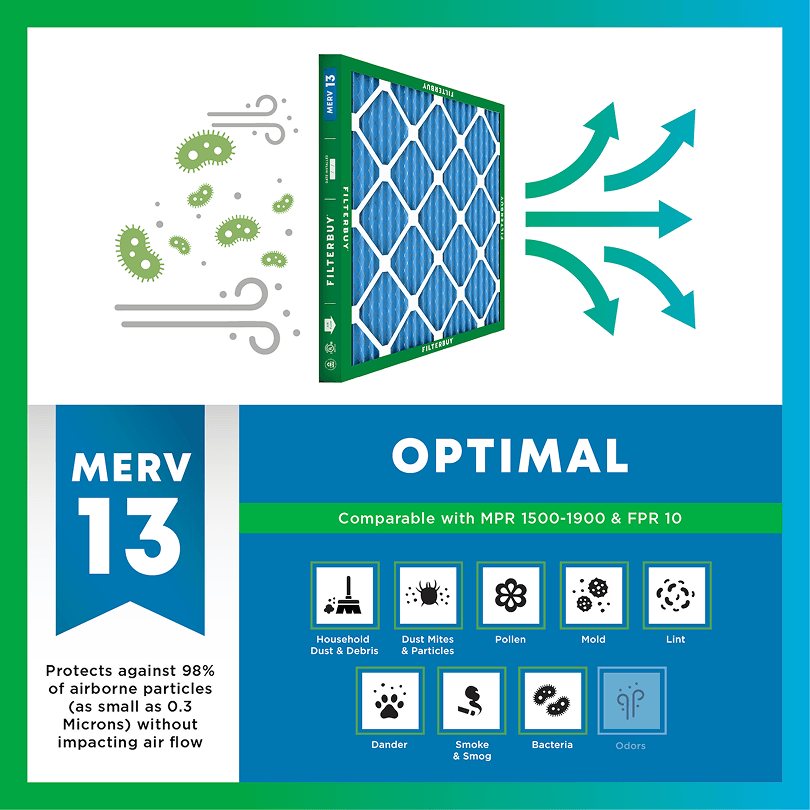
- Captures PM2.5 particles
- Blocks ash, soot, and smoke odor
- Keeps your indoor air safe—even when the outdoor air is dangerous
- Meets the EPA's recommended rating for filtering fine wildfire smoke particles.

Wildfire Smoke FAQs
Facts About Wildfires
Over 70,000 wildfires burn in the U.S. every year.
Wildfire smoke can travel 1,000+ miles, affecting states that aren't even near the blaze.
Exposure to wildfire smoke can worsen asthma, trigger heart issues, and lead to ER visits.
Indoor air can hold more fine particles during wildfire events unless it's properly filtered.
The EPA advises using MERV 13 filters or portable HEPA air cleaners during wildfire smoke events.
Don't Wait Until The Smoke's Inside.
Use the live wildfire smoke tracker and upgrade your air filters today to protect your lungs and your home.
Shop Filters For Smoke Protection
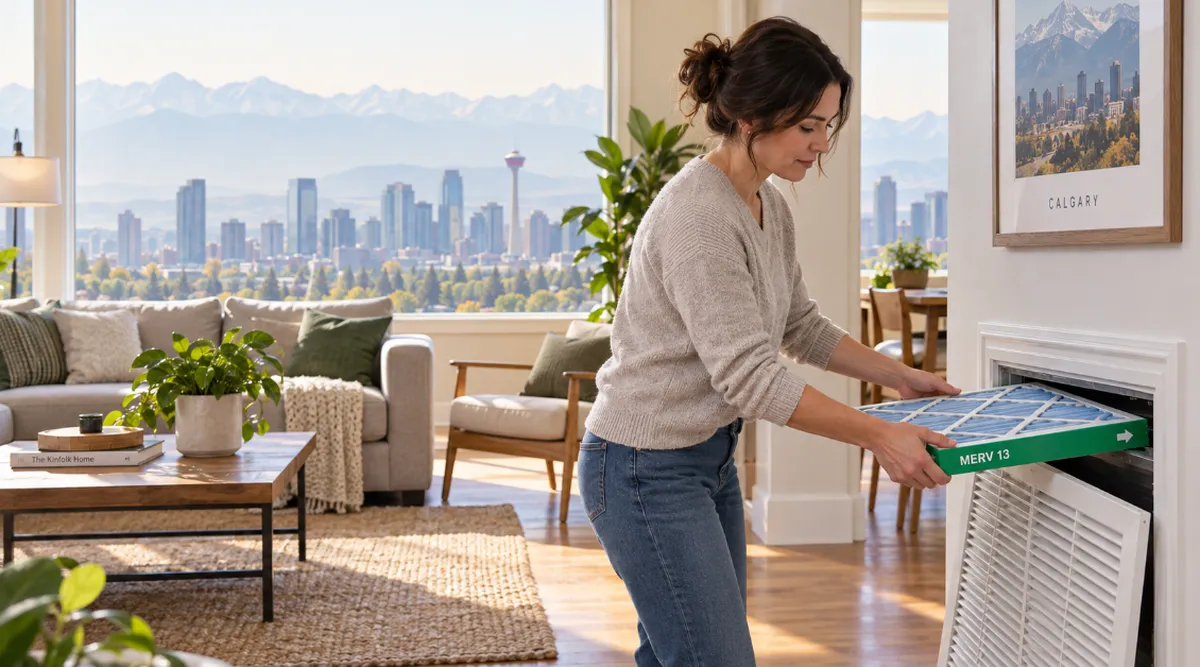
Live Calgary, AB Forest Wildfire & Smoke Map Today: Local Air Quality Tracking & Indoor Protection Solutions
TL;DR
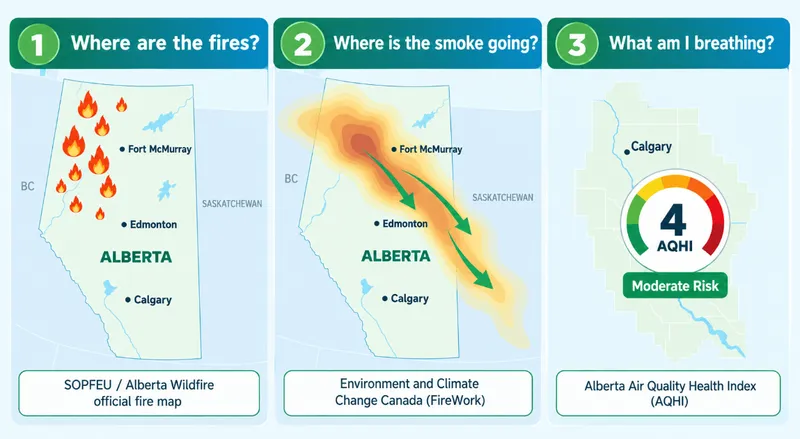
Calgary rarely burns, but it regularly breathes smoke from somewhere else. Three official sources cover it between them: Alberta's wildfire dashboard for active fires, Environment and Climate Change Canada’s FireWork forecast for where smoke is heading, and the Alberta AQHI map for what you are breathing right now. When the AQHI climbs, close the windows, run the furnace fan continuously and put a clean MERV 13 filter in the return, which is the part Filterbuy can help with.
Key Takeaways
Calgary's smoke almost never comes from a Calgary fire. In late August 2026, Alberta had three active wildfires while British Columbia had nearly 200.
Calgary recorded 512 smoke hours in 2023 against a 1981–2010 seasonal average of 12.
Health Canada recommends MERV 13 or higher to remove PM2.5, the fine particles you cannot see, and EPA notes most systems take MERV 13 without trouble when the filter is replaced often.
A filter only works when air moves through it. Set the furnace fan to on or circulate during smoke events, even in August.
Which Calgary Map Should You Actually Open?
We went through every map a Calgary resident is likely to reach for, and none of them answers all five questions people actually ask. Match your question to the source that answers it.
How Much Wildfire Smoke Does Calgary Actually Get?
Smoke used to be a rare event in Calgary. We pulled the historical record to see how much that has changed.
Source: Environment and Climate Change Canada records, as compiled by CBC News. 2023 is the smokiest year on record for Calgary.
Why the Wildfire Map Near Calgary Often Looks Empty
Calgary sits outside Alberta's Forest Protection Area. Alberta Wildfire is responsible for wildfires inside that area; outside it, responsibility falls to the municipality under the Forest and Prairie Protection Act. That is why a provincial dashboard can show nothing near the city on a day when Calgary Fire Department crews are working several grass fires along the Bow and Elbow escarpments.
Municipalities can now report their own fires to the dashboard, though that reporting is manual, so coverage is improving without being complete. The volume behind it is real: the City of Calgary reports an average of about 23 wildland, grass and brush fires a month since 2016, with May averaging roughly 42. Those numbers move with the weather, and Calgary wildland fires fell 17 per cent in the first half of 2026 after a cold, snowy start. The Calgary Forest Area, confusingly, is a provincial region in the foothills southwest of the city, not the city itself.
I went looking for a Calgary fire map the way any resident would, and the provincial dashboard came back almost empty on a day the city was hazy. It turns out the dashboard stops at a jurisdiction line. Once you know where that falls, the maps start making sense.
Michelle Wan, Filterbuy
What to Do Indoors as the AQHI Rises
Alberta's Air Quality Health Index runs from 1 to 10, with 10+ reserved for very high risk, and during a smoke event it can climb through those bands within hours. Treat it as the cue for what to change indoors.
AQHI 4 is where Filterbuy tells customers to act. It is not an official Canadian filtration threshold: Alberta advises at-risk groups at 4 to 6 to consider easing off outdoor activity. At-risk groups may need to act sooner. General guidance, not medical advice.
Sizing the portable unit is the part most guides skip. US EPA clean-room guidance is a cleaner whose smoke CADR is at least two thirds of the room's floor area, so a 300 square foot bedroom wants a smoke CADR of about 200. EPA also advises against cleaners that produce ozone, which rules out ionizers and ozone generators.
The Step Most Calgary Homes Miss
A furnace filter does nothing while the blower is off, which is the point Filterbuy's HVAC team raises most often with Alberta customers. Calgary's smoke peaks in August, when the furnace has been idle for months and much of the city's housing has no air conditioning to run the fan in its place.
The fix is to set the thermostat fan to on or circulate rather than auto for the length of the event, so indoor air keeps moving through the filter instead of waiting for the system to call for heat. Filterbuy has costed that setting out in full, and on a modern blower it adds only a few dollars over two weeks of smoke. The filter will load faster than the calendar suggests, so check it rather than scheduling it.
The mistake I see most often in smoke season is a new MERV 13 sitting in a system switched to Auto. In a Calgary house with no air conditioning, that filter might see an hour of airflow on a hot August day. Change the setting before you blame the filter.
David Clark, Licensed HVAC Technician, Filterbuy
One correction, because most advice gets this wrong. A home HVAC system already recirculates indoor air, so there is no recirculate button to press; what matters is the fresh-air intake. If your home has a heat-recovery or energy-recovery ventilator, it is drawing outdoor air in by design. Close that intake while the smoke is heavy, then restore normal ventilation once the air clears, which is what Health Canada advises so that pollutants do not stay trapped indoors.
If You Rent, or Cannot Reach the Furnace
Everything above assumes a furnace you can walk up to and open. Plenty of Calgary households do not have one, and for those homes a portable HEPA cleaner is the main defence rather than a supplement. Start with the bedroom.
Find the air handler. In many suites it sits in a closet cabinet and takes a standard filter you can change yourself. If it looks dark, replace it.
Switch off bathroom and kitchen exhaust fans in heavy smoke. They push air out, and smoky air is pulled in to replace it. Health Canada advises limiting them, and this one costs nothing.
Ask the building to lock out the fresh-air intake or HRV, since those systems exist to bring outdoor air in.
If you cannot hold clean air indoors, leave for a while. Canada advises seeking a local cleaner air space, especially if you have no air conditioning and it is too warm to stay shut in.
Even though Filterbuy sells filters, this part needs saying plainly. When smoke and extreme heat arrive together, Health Canada says to prioritise keeping cool. If sealing the house up is making it dangerously hot, open the windows and run a portable cleaner in one room instead.
Which Filter for Wildfire Smoke?
MERV 13 is the tier Filterbuy recommends for wildfire smoke. Smoke is mostly PM2.5, the fine particles you cannot see, and they drift straight through a basic filter. Health Canada’s guidance for cleaner air spaces recommends MERV 13 or higher to catch them, and the best MERV filter for wildfire smoke and MERV 11 against MERV 13 go further into the tiers.
Check the size printed on your current filter, the same as any replacement. EPA notes most furnaces and HVAC systems accommodate MERV 13 without equipment problems when the filter is replaced often.
Filterbuy sells MERV 13, so here is the honest limit of our own recommendation. A pleated filter reduces the particles in your indoor air. It does not make that air clean, it does not touch the gases in smoke, and it is not medical advice. Anyone with a heart or lung condition should follow their health provider and official guidance through a smoke event.
Prices are in CAD and shipping to Calgary is free. Find your MERV 13 size, build a custom size, or subscribe and save, editing or skipping whenever you like.
Supporting Statistics
We reached for US agencies here because no Canadian body publishes these particular measurements, though two of the three are measuring Canadian smoke.
Frequently Asked Questions
Glossary
AQHI (Air Quality Health Index) - Canada's 1-to-10 scale for the health risk of current air quality, reported by community.
PM2.5 - Fine particulate matter under 2.5 micrometres, the dominant pollutant in wildfire smoke and small enough to reach deep into the lungs.
MERV - Minimum Efficiency Reporting Value, the North American scale for how well a filter captures particles. Higher numbers capture finer particles.
Filterbuy - A direct-to-consumer air filter manufacturer serving Canada through filterbuy.ca, with over 600 pleated sizes.
Forest Protection Area (FPA) - The area of Alberta where the province handles wildfire suppression. Calgary lies outside it, which is why provincial maps can look empty here.
Sources: Alberta Wildfire; ECCC FireWork; Health Canada, Guidance for Cleaner Air Spaces during Wildfire Smoke Events; Alberta wildfire smoke information; City of Calgary; CBC News.
This page is informational and is not medical advice. For emergencies call 911. For evacuation information, follow Alberta Emergency Alert and the City of Calgary.