
Quebec City Real-Time AQI Tracker
What's Actually In Quebec City Air Today?
What High AQI Means for Your Lungs in Quebec City
How to Read AQI
The Air Quality Index (AQI) measures how polluted the air is and how it may affect your health.
0–50 (Good): Air quality is satisfactory.
51–100 (Moderate): Acceptable, but some pollutants may pose minor concerns.
101–150 (Unhealthy for Sensitive Groups)
151–200 (Unhealthy)
201–300 (Very Unhealthy)
301+ (Hazardous)
Moderate
Still okay for most, but if you have asthma or allergies, take it easy and avoid long outdoor workouts.
Shop MERV 11 filters→What's the Right Filter for Your AQI Level?




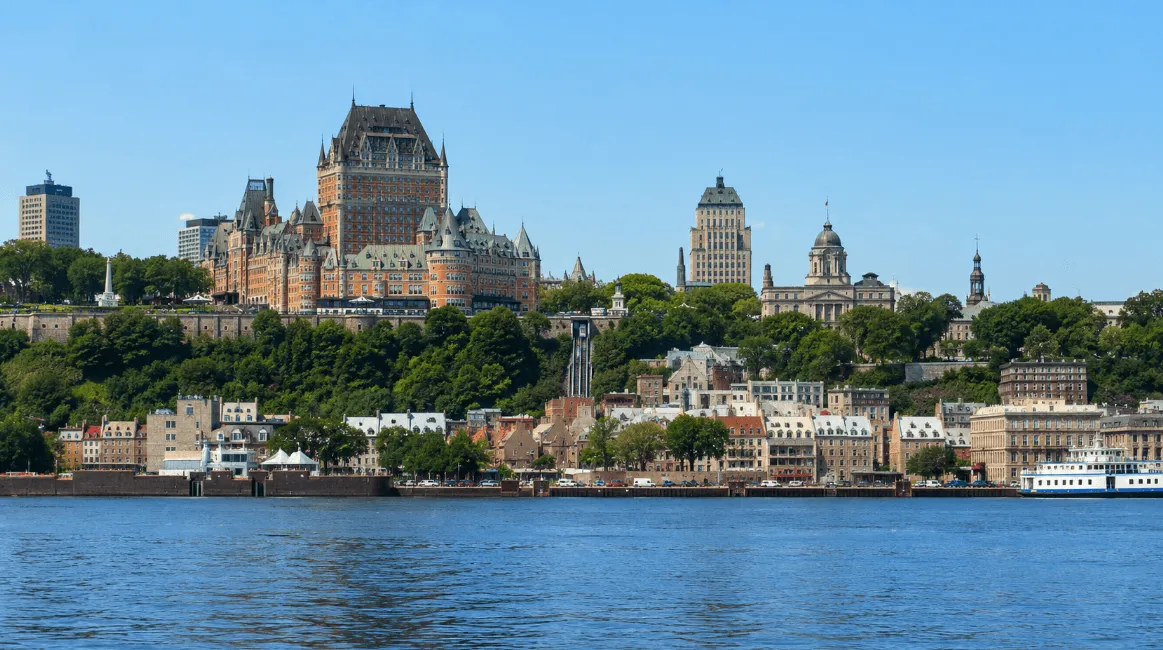
Check Today's Live Real Time Air Quality Index AQI Map in Quebec City, QC Now
Author: Michelle Wan | Reviewer: David Clark, Licensed HVAC Technician | Publish Date: July 15, 2026 | Updated Date: July 15, 2026
TL;DR
Quebec City's air quality is tracked by two official systems: Environment Canada's Air Quality Health Index (AQHI) and Québec's own Indice de la qualité de l'air (IQA). Check the live map above for today's reading, then see this page for what "Low," "Moderate," or "Poor" means for your day. Local factors, like Port of Québec dust and wildfire smoke, can push air quality up or down faster than the province-wide average suggests.
Key Takeaways
Quebec City is covered by two separate air quality scales: Environment Canada's AQHI (1 to 10+, a health-risk scale) and Québec's IQA (0–25 Good, 26–50 Acceptable, 51+ Poor, a contaminant-concentration scale). The two are not interchangeable.
The live reading changes hourly; check the embedded map above for the current value rather than relying on a fixed number.
Quebec City's air quality is shaped by three recurring, well-documented factors: long furnace/wood-heating winters, occasional wildfire smoke drifting in from western Canada in summer, and localized industrial dust in the Vieux-Limoilou/Port of Québec area.
Vieux-Limoilou has recorded nickel concentrations well above national averages and above the World Health Organization's health-based threshold, making it a neighbourhood worth checking independently rather than relying on a single city-wide reading.
The City of Québec's combined data tool, built with MELCCFP, the Port, and Glencore Canada Corporation, shows nickel levels across the network now complying with Québec's daily standard in the most recent published data, even as a dedicated traffic-monitoring station in the city still logs regular dust exceedances from road traffic.
On days when the AQHI or IQA reads Moderate or Poor, Environment Canada recommends keeping windows closed and running a good indoor air filter; a MERV 11 or MERV 13 filter captures more of the fine particulate (PM2.5) driving most Quebec City air quality events than a basic MERV 8.
Filterbuy Canada's Take
Most of the Canadian cities we build air quality guides for are tracked by a single, clear number: Environment Canada's AQHI. Quebec City is the first market in our research where that is not the case. Two different agencies publish two different scales for the same air, and neither page tells you the other one exists. That gap is why this page leads with a two-system explainer instead of jumping straight to a number, and why the neighbourhood-level story further down matters as much as the city-wide reading.
From the Author
"I went into this expecting the usual: one AQHI reading, one seasonal story. Quebec City handed me two official scales and a decades-long dust dispute in Limoilou that most air quality trackers do not mention at all. That combination is what makes this market worth explaining properly instead of just slotting in a live widget and calling it done." - Michelle Wan, Filterbuy Content Team
What Quebec City's Air Quality Looks Like Right Now
Check the live map above for today's exact reading. As a point of reference, Environment Canada's forecast issued at 6:00 a.m. EDT on Monday, July 13, 2026 rated Quebec City's AQHI at 2 (Low Risk) through Tuesday. That figure moves throughout the day and season, so always confirm the current number in the map rather than this reference point.
Understanding the Two Air Quality Scales That Cover Quebec City
Most Canadian cities are covered by one system: Environment Canada's AQHI. Quebec City is a little different, and it is worth knowing why before you interpret any single number.
The AQHI (Air Quality Health Index)
The AQHI is the national scale developed jointly by Environment and Climate Change Canada and Health Canada. It runs from 1 upward (values of 10+ are reported as "10+") and is built specifically to communicate health risk, not raw pollution concentration. Environment Canada calculates Quebec City's AQHI using data shared, in part, by Québec's provincial monitoring network.
Québec's IQA (Indice de la qualité de l'air)
Separately, the Ministère de l'Environnement, de la Lutte contre les changements climatiques, de la Faune et des Parcs (MELCCFP) runs its own hourly Air Quality Index for Québec, called the IQA. It measures the same core pollutants (fine particulate matter/PM2.5, ozone, sulfur dioxide, nitrogen dioxide, and carbon monoxide) but converts them into a different 0-and-up numeric scale grouped into three plain-language bands.
Source: Ministere de l'Environnement, de la Lutte contre les changements climatiques, de la Faune et des Parcs (MELCCFP), Quebec Air Quality Index (IQA).
Source: Environment and Climate Change Canada and Health Canada, Air Quality Health Index (AQHI).
In practice: the AQHI is the number most weather apps show and the one Environment Canada uses for health messaging, while the IQA is the number Québec's environment ministry uses for its province-wide monitoring map. Both draw on the same underlying Réseau de surveillance de la qualité de l'air du Québec network, but a "Good" IQA reading and a "Low Risk" AQHI reading are not calculated the same way. Our take: check the AQHI first for a fast health-risk read, then glance at the IQA map if you want the same-day detail a neighbourhood-level station is picking up. Treating either one as the only number worth knowing is where most Quebec City air quality searches go wrong.
What Actually Affects Air Quality in Quebec City
Quebec City's air quality isn't driven by one single source. Three recurring factors matter most, and each has a different seasonal pattern.
Winter: Long Furnace and Wood-Heating Season
Quebec City runs one of Canada's longer heating seasons, and wood stoves and fireplaces remain common in and around the older parts of the city. Québec's environmental ministry specifically calls out limiting fireplace and wood stove use in winter as one of the province's core air quality recommendations, since wood smoke is a significant contributor to fine particulate levels on cold, still winter days.
Summer: Wildfire Smoke Drifting In From Western Canada
Quebec City doesn't need a local wildfire to see poor air quality in the summer. In June 2025 and again in late July 2025, smoke from large wildfires burning in the Canadian Prairies travelled hundreds of kilometres and triggered special air quality statements across southern Quebec, with Environment Canada warning residents to limit time outdoors and keep windows closed. Smoke plumes like these can persist for days depending on wind patterns, even when Quebec's wildfire season is quiet. Health Canada's wildfire smoke guidance recommends checking the AQHI and local air quality alerts throughout any smoke event, since conditions can shift within hours.
Year-Round: Localized Industrial Dust Near the Port of Québec
The Vieux-Limoilou and Saint-Sacrement neighbourhoods, close to the Port of Québec's bulk cargo terminals, have a well-documented history of elevated airborne dust and metal particles, including nickel, from ore transshipment activity. This is the factor a province-wide or even city-wide average is least equipped to catch. See the neighbourhood section below for why that matters if you live near the port.
Air Quality by Neighbourhood: Why Vieux-Limoilou Reads Differently
A single city-wide AQHI or IQA reading is a useful starting point, but it can hide meaningful differences between neighbourhoods, and Quebec City is the clearest example of why that gap matters.
Since a 2012 incident in which residents woke to find red iron-oxide dust coating cars, balconies, and sidewalks in Vieux-Limoilou, the neighbourhood has been the subject of ongoing provincial testing, class-action litigation against a Port of Québec stevedoring operator, and citizen-led air monitoring. Independent sampling has found nickel concentrations in Vieux-Limoilou averaging roughly 52 nanograms per cubic metre, with daily peaks reported as high as 1,670 ng/m³, far above the World Health Organization's health-based guideline of 3 ng/m³, and reported as the highest atmospheric nickel concentration recorded anywhere in Canada. No city-wide AQHI reading, on its own, would tell a Limoilou resident any of that.
The Port of Québec now publishes its own daily PM2.5 readings for the surrounding community, and the City, the Port, and MELCCFP have introduced joint measures (including regulating wood stove use and reducing dust from industrial vehicle traffic) aimed specifically at this area. If you live, work, or are considering a home purchase in Vieux-Limoilou, Saint-Sacrement, or another neighbourhood close to the port, it's worth checking that neighbourhood-level monitoring in addition to the city-wide figure. It is the one piece of homework a generic AQI widget will not do for you.
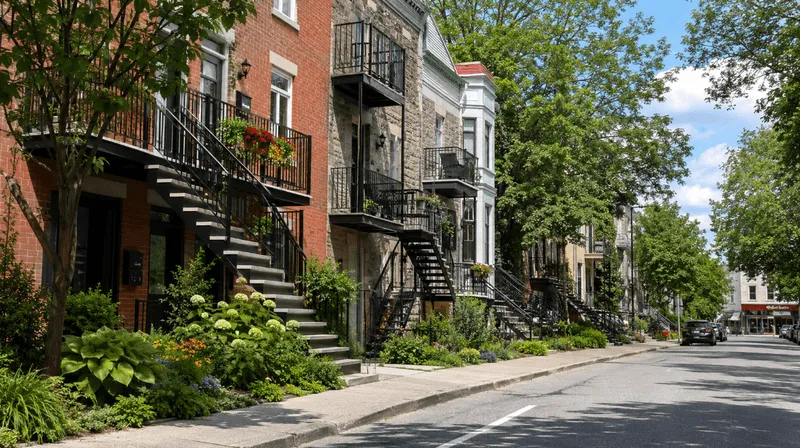
Check Station-Level Data: The City of Québec's Combined Air Quality Tool
For a more precise picture than either the AQHI or the province-wide IQA map can offer, the City of Québec runs its own air quality data tool built jointly with MELCCFP, the Port of Québec, and Glencore Canada Corporation, the company that handles nickel transshipment at the port. Updated periodically since October 2022, it tracks four contaminants against Québec's air quality regulations: fine particulate matter (PM2.5), nitrogen dioxide (NO2), total suspended particles (PST), and nickel in respirable particles (Nickel-PM10).
Two specifics from the most recent published data are worth knowing if you live in Quebec City and want more than a single citywide number:
The Québec – Henri-IV monitoring station exists specifically to measure how much of the city's air quality issue comes from road traffic, separate from the port. In 2025, it recorded 12 daily exceedances of the total-suspended-particle standard, attributed to dust resuspension from vehicle traffic, plus PM2.5 exceedances on several cold-weather days in January, March, and December.
Across the network, PM2.5 exceedances in 2025 also tracked directly to specific wildfire smoke dates: June 6 and 7, July 15, 16, 25 through 28, and 30, and August 3, 8, and 9. Outside of those wildfire-smoke and traffic-dust days, measured concentrations stayed within Québec's regulatory limits.
Nickel-PM10 concentrations across the combined MELCCFP, Port, and Glencore monitoring network complied with Québec's daily regulatory standard in the most recent published data, a meaningful update against the Vieux-Limoilou history described above, even though the three data sources use different detection limits (0.003 µg/m³ for MELCCFP, 0.004 µg/m³ for the Port, and 0.0012 µg/m³ for Glencore).
None of this replaces the live AQHI or IQA reading at the top of this page. It is the layer underneath it: the specific station, the specific date, and the specific source, for anyone who wants to know why a given day read the way it did. Filterbuy Canada dug through it so a Quebec City reader would not have to open four different government and industry pages to get the same answer.
Supporting Statistics
Quebec City's AQHI forecast was rated 2 (Low Risk) as of Environment Canada's 6:00 a.m. EDT bulletin on July 13, 2026, a snapshot, not a fixed value.
Québec's provincial IQA groups results into three bands, Good (1–25), Acceptable (26–50), and Poor (51+), calculated from the highest sub-index among ozone, PM2.5, sulfur dioxide, nitrogen dioxide, and carbon monoxide readings at each monitoring station.
In June and July 2025, Environment Canada issued special air quality statements covering most of southern Quebec, including the Quebec City region, due to wildfire smoke that had travelled from the Prairies, with Montreal briefly ranked among the worst air quality of any major city in the world during one such episode.
Independent and provincial testing has recorded nickel concentrations in Vieux-Limoilou averaging approximately 52 ng/m³, with documented daily peaks up to 1,670 ng/m³, against a World Health Organization health-based guideline of 3 ng/m³.
The Port of Québec now publishes daily community PM2.5 readings and has introduced measures such as regulating wood stove use and reducing vehicle dust to help address neighbourhood-level air quality near its terminals.
According to the City of Québec's combined air quality tool, nickel-PM10 concentrations across the MELCCFP, Port of Québec, and Glencore Canada Corporation monitoring network complied with Québec's daily regulatory standard in the most recently published 2025 data, while the Québec – Henri-IV station recorded 12 daily exceedances of the total-suspended-particle standard attributed to road traffic dust that same year.
How to Protect Your Indoor Air on Poor Air Quality Days
Whether today's Quebec City reading is driven by winter wood smoke, a summer wildfire smoke event, or a localized dust day near the port, the guidance from Environment Canada is consistent: on Moderate-or-higher AQHI days, keep windows and doors closed and use a good-quality indoor air filter or portable air cleaner to reduce the fine particulate reaching your indoor air. Québec's public health guidance goes a step further during wildfire smoke events, specifically noting that homes with a central ventilation system equipped with a MERV 13 or higher filter can reduce the need for a separate portable air purifier.
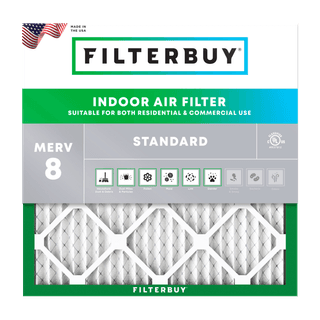
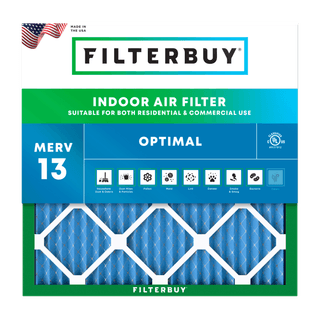
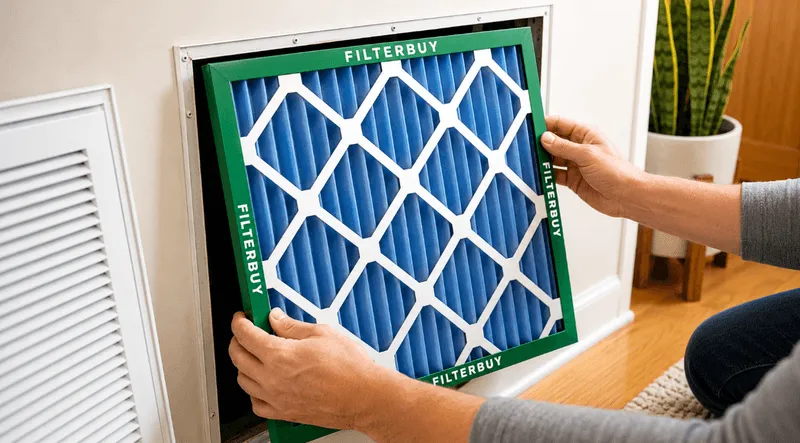
A Standard MERV 8 filter is built for everyday dust and lint. On days when wildfire smoke or fine particulate is elevated, a higher-rated filter does more work: Superior MERV 11 filters capture more of the fine dust and mould spores common during Quebec City's furnace season, while Optimal MERV 13 filters are built for exactly this kind of fine-particle event, including wildfire smoke. If lingering wood smoke or cooking odour is also a concern in your home, an Odour Eliminator carbon filter adds odour-reducing filtration on top of particulate capture. See our full guide to MERV ratings for help matching a filter to your HVAC system, or set up an air filter subscription so a fresh filter arrives on your schedule through both furnace season and wildfire smoke season.
“Quebec City is one of the more layered markets I look at, because a homeowner here is really juggling two different air quality stories at once: a province-wide seasonal pattern from the AQHI or the IQA, and a very local one if you're anywhere near Limoilou. My advice does not change based on which number moved: once either scale reads moderate or worse, close up the house and step up to a MERV 11 or MERV 13 filter. That single habit covers a wood-smoke night in January and a wildfire-smoke week in July equally well." - David Clark, Licensed HVAC Technician
Frequently Asked Questions
Glossary
AQHI (Air Quality Health Index): Canada's national air quality scale (1 to 10+), developed by Environment and Climate Change Canada and Health Canada, designed to communicate health risk rather than raw pollutant concentration.
IQA (Indice de la qualité de l'air): Québec's provincial air quality index, run by the Ministère de l'Environnement, de la Lutte contre les changements climatiques, de la Faune et des Parcs (MELCCFP), scored from 1 upward and grouped into Good (1–25), Acceptable (26–50), and Poor (51+) bands.
PM2.5: Fine particulate matter measuring 2.5 microns or smaller in diameter, small enough to be inhaled deeply into the lungs and one of the core pollutants used in both the AQHI and the IQA.
Ozone (O3): A gas that forms near ground level from a reaction between sunlight and other pollutants, and one of the five contaminants used to calculate Québec's IQA.
Réseau de surveillance de la qualité de l'air du Québec: Québec's provincial network of air quality monitoring stations, which supplies data to both the IQA and, in part, the national AQHI forecast for Québec.
Special air quality statement: An advisory issued by Environment Canada when air quality, often due to wildfire smoke, is expected to reach levels that pose an increased health risk.
Wildfire smoke: Airborne particulate and gases released by burning forest or grassland that can travel hundreds of kilometres and affect air quality in regions with no local fire activity.
Port of Québec: The deep-water cargo port on Quebec City's waterfront, adjacent to the Vieux-Limoilou and Beauport areas, where bulk ore transshipment has been linked to elevated local dust and metal particulate.
PST (particules en suspension totales / total suspended particles): A broader category of airborne particulate than PM2.5, tracked by the City of Québec's air quality tool and used to measure dust from sources like road traffic.
Glencore Canada Corporation: The company that handles nickel transshipment at the Port of Québec and co-publishes air quality data with the City of Québec, MELCCFP, and the Port.
8 Official Air Quality Sources for Quebec City
Every fact on this page traces back to one of the official sources below. Filterbuy Canada compiled them here so you can check any of it directly, at the source, in under a minute.
Find the Right Filter Rating for Your Home
Filterbuy Canada: Guide to MERV Ratings breaks down what MERV 8 through MERV 13 actually capture in plain language, so you can match a filter to wood smoke, wildfire smoke, or everyday dust.
Shop the Filter Built for Wildfire Smoke Days
Filterbuy Canada: MERV 13 Optimal Air Filters are built to capture the fine particulate that spikes during wildfire smoke events, and ship free across Canada with no minimum order.
See Station-by-Station Data for Your Exact Neighbourhood
City of Québec: Combined Air Quality Data Tool combines data from MELCCFP, the Port of Québec, and Glencore Canada Corporation, and names the specific monitoring station behind every reading, including the traffic-focused Québec – Henri-IV station.
Get the Official National Health-Risk Reading
Environment Canada: Quebec City Air Quality Health Index (AQHI) is the authoritative source behind the AQHI figure referenced throughout this page. It updates hourly and is the number most weather apps pull from.
Cross-Check Québec's Own Province-Wide Air Quality Map
Québec MELCCFP: Provincial Air Quality Index (IQA) Map is the province's own hourly index, run separately from the federal AQHI. Use it if you want Québec's own measurement rather than the national one.
Understand How Wildfire Smoke Affects Your Health
Health Canada: Wildfire Smoke, Air Quality and Your Health covers who faces the highest risk during a smoke event and what precautions to take, useful well beyond Quebec City specifically.
Get Québec-Specific Steps to Cut Smoke Exposure at Home
Gouvernement du Québec: Preventing the Health Effects of Wildfire Smoke Exposure goes further than the federal guidance, specifically noting that a MERV 13 or higher central filter can reduce the need for a separate portable air purifier.
Track Daily Dust Readings Straight From the Port
Port of Québec: Community Air Quality (PM2.5) Data publishes daily PM2.5 readings for the communities surrounding its terminals, the most direct source for anyone near Vieux-Limoilou or Beauport.
About This Page
Written by Michelle Wan, Filterbuy Content Team. Reviewed by David Clark, Licensed HVAC Technician. This page was built by comparing Quebec City's official monitoring sources directly against each other rather than pulling a single number from one aggregator, which is how the two-scale explainer and the Limoilou neighbourhood detail ended up front and centre instead of buried in a footnote. It is updated to reflect current air quality guidance and is not a substitute for the live readings provided by Environment Canada and the Government of Québec.