
Laval Real-Time AQI Tracker
What's Actually In Laval Air Today?
What High AQI Means for Your Lungs in Laval
How to Read AQI
The Air Quality Index (AQI) measures how polluted the air is and how it may affect your health.
0–50 (Good): Air quality is satisfactory.
51–100 (Moderate): Acceptable, but some pollutants may pose minor concerns.
101–150 (Unhealthy for Sensitive Groups)
151–200 (Unhealthy)
201–300 (Very Unhealthy)
301+ (Hazardous)
Moderate
Still okay for most, but if you have asthma or allergies, take it easy and avoid long outdoor workouts.
Shop MERV 11 filters→What's the Right Filter for Your AQI Level?



Check Today's Live Real Time Air Quality Index AQI Map in Laval, QC Now
By Michelle Wan · Reviewed by David Clark, Licensed HVAC Technician · Published July 16, 2026 · Updated July 16, 2026
TL;DR
Laval, QC doesn't have its own dedicated government air quality station, so “live Laval AQI” readings actually come from one of two official Canadian systems plus independent monitors: Environment Canada's Air Quality Health Index (AQHI) for the Montréal region, Quebec's own Indice de la qualité de l'air (IQA) from the nearest Réseau de surveillance de la qualité de l'air du Québec (RSQAQ) station, and crowd-sourced trackers like IQAir or PurpleAir that use the U.S. EPA scale.
Use the live map below for the current number, then use this page to understand what that number actually means and what to do about it, especially during wildfire smoke season (June through September) and the long Quebec heating season, when indoor filtration matters most. That's the part Filterbuy Canada can actually help with: matching the right MERV-rated filter to whatever the outdoor air is doing that week.
Key Takeaways
Laval is covered by Environment Canada's Montréal AQHI forecast zone, since there is no separate AQHI zone for Laval specifically.
Quebec also runs its own Indice de la qualité de l'air (IQA) through roughly 60 RSQAQ monitoring stations province-wide, separate from the national AQHI.
The AQHI scale runs 1 to 10+ and is grouped into Low (1–3), Moderate (4–6), High (7–10), and Very High (above 10) health risk categories.
Third-party apps such as IQAir and AQICN report Laval-specific numbers using the U.S. EPA AQI scale, which is not the same scale as Canada's AQHI, so the numbers aren't directly comparable.
Wildfire smoke (June–September) and long furnace-heating months (October–April) are the two periods most likely to push Laval's air quality into Moderate or higher territory.
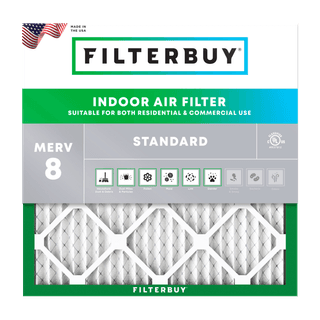
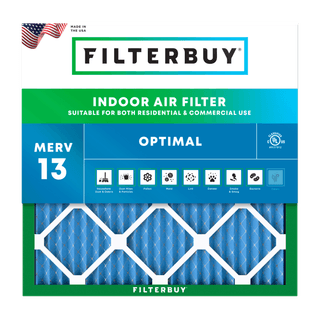
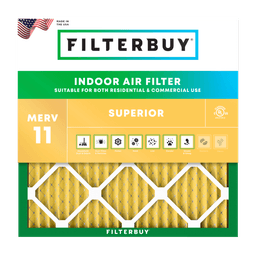
When the AQHI or IQA rises, the most effective response indoors is a higher-MERV-rated HVAC filter: MERV 13 for smoke and fine particulates, MERV 11 for pollen and dust. Filterbuy Canada carries both ratings, plus a Standard MERV 8 option for everyday use.
Laval's Live Air Quality Index Right Now
Refer to the live map at the top of this page.
Quebec's ministry also runs its own official, publicly embeddable live map: the Carte de l'indice de la qualité de l'air (French-language interactive AQI map), which is a strong candidate source for this embed if a licensed third-party widget isn't preferred.
Once the live widget above is loaded, here's how to make sense of what it's telling you:
If the widget shows an AQHI value (1–10+), it's Environment Canada's official reading for the Montréal region, which includes Laval. Compare it to the health risk table below.
If the widget shows a US AQI value (0–500), it's from an independent monitor (IQAir, AQICN, PurpleAir) using the American EPA scale. That's useful for hyperlocal trend-watching, but it will read differently than the Canadian AQHI at the same moment because the two scales measure and weight pollutants differently.
For the province's own IQA (good/acceptable/poor) reading, check the nearest RSQAQ station on Quebec's Indice de la qualité de l'air site.
Why Laval Air Quality Shows Different Numbers Depending on the Source
This is the question almost every searcher runs into: an app says one number, a government site says another, and they don't obviously match. That's because “laval air quality” is actually reported by three distinct systems, each built for a different purpose, and understanding that difference is most of what makes this a useful page rather than just a widget with words around it.
1. Environment Canada's Air Quality Health Index (AQHI)
The AQHI is a joint initiative of Environment and Climate Change Canada and Health Canada, designed specifically to communicate health risk rather than raw pollution concentration. Laval sits within the Montréal forecast region, so the AQHI number published for Montréal is the official reading that applies to Laval. Quebec's AQHI forecasts also draw on data from the province's own monitoring network and the City of Montréal.
2. Quebec's Indice de la qualité de l'air (IQA)
Separately, the ministère de l'Environnement operates the Réseau de surveillance de la qualité de l'air du Québec (RSQAQ), roughly 60 stations across the province. Each station's IQA is calculated hourly from up to five contaminants (fine particulate matter, ozone, sulphur dioxide, nitrogen dioxide, and carbon monoxide) and classified as good, acceptable, or poor. This index has tracked Quebec air quality since 2015 and is a longer-running, more granular provincial data set than the AQHI.
3. Independent and Crowd-Sourced Trackers
Sites and apps such as IQAir and AQICN report Laval-specific numbers on the U.S. EPA's 0-to-500 AQI scale, but they aren't built the same way. IQAir currently lists five neighbourhood-level stations for Laval: Eco-Nature, Fabreville, Rue Gaston-Miron, Chemin St Antoine, and Chomedey, which makes it meaningfully hyperlocal rather than a single citywide average. AQICN's Laval figure, by contrast, is sourced directly from the Quebec government's own air quality network (the same data behind the IQA), just recalculated onto the U.S. scale. Either way, treat these as a helpful supplement to, not a replacement for, the two official Canadian sources above. The numbers won't match the AQHI or IQA at the same moment, because the scales weight pollutants differently, and that's exactly the kind of mismatch that started this page.
Air Quality Health Index (AQHI) Risk Categories
This is the official Environment Canada / Health Canada scale that governs the Montréal-region reading covering Laval.
Source: Environment Canada and Health Canada, Air Quality Health Index health messages.

Quebec IQA (Indice de la qualité de l'air) Categories
Source: Ministere de l'Environnement, Indice de la qualite de l'air (IQA).
Is the Air Quality Bad in Laval Today?
There's no fixed answer to this; it depends entirely on the live reading above at the moment you're checking. What's actually useful is knowing when Laval's air quality is statistically more likely to dip into Moderate or High territory, so you can plan ahead instead of just reacting:
Summer wildfire smoke season (roughly June–September): smoke drifting in from northern Quebec, Ontario, or Western Canada is the most common cause of a High or Very High AQHI reading in the Montréal/Laval region.
Winter temperature inversions (December–February): cold, still air can trap wood-smoke and vehicle emissions closer to ground level on windless days.
Spring and early fall pollen (April–June, September): this doesn't move the AQHI or IQA much, since pollen isn't one of their tracked contaminants, but it's the leading driver of complaints about “bad air” on otherwise clean-AQHI days.
High-traffic rush hours along Autoroutes 15, 13, and 440: nitrogen dioxide and fine particulates from traffic can push a hyperlocal reading (like those from IQAir/AQICN sensors) higher than the broader Montréal-region AQHI for a given hour.
Typical Seasonal Air Quality Patterns in Laval, QC
Reflects general Quebec and Greater Montreal seasonal patterns from Environment Canada and Quebec's ministere de l'Environnement, applied to Laval's climate and geography.
What to Do When Laval's AQHI or IQA Rises
Check the live reading (map above) before planning strenuous outdoor activity. Health Canada's guide to who's most at risk flags children, older adults, pregnant people, and anyone with asthma, COPD, or heart conditions as needing extra caution.
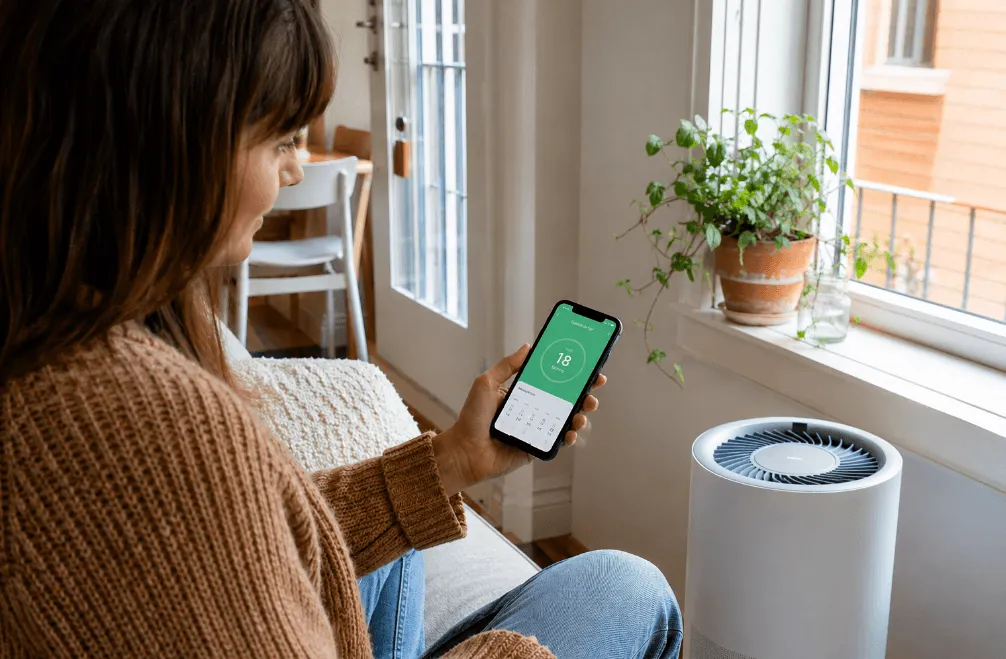
Keep windows closed during smoke advisories or Moderate-or-higher AQHI days, and run central air or an HVAC fan with a clean, appropriately rated filter to keep indoor air cleaner than outdoor air.
Reschedule strenuous outdoor exercise to early morning, when traffic-related pollutants and ground-level ozone are typically at their lowest.
During a wildfire smoke event specifically, Health Canada's wildfire smoke guidance recommends tracking the AQHI, InfoSmog bulletins, and local air quality alerts rather than judging conditions by sight alone: smoke can look worse than it measures, and vice versa.
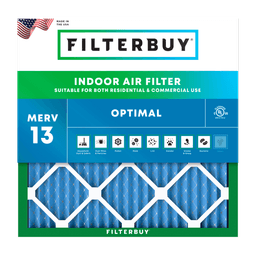
Upgrade your home's HVAC filter ahead of wildfire season or the winter heating season rather than waiting for a bad-air day. A MERV 13 Optimal filter captures fine smoke particulates and bacteria-sized particles, a MERV 11 Superior filter is a strong everyday choice for pollen, dust, and pet dander, and an Odor Eliminator carbon filter helps with lingering smoke smell once the air itself has cleared.
Healthy households without pets or allergy concerns can typically stick with a MERV 8 Standard filter for routine dust and pollen control. Not sure which rating fits your system? Filterbuy Canada's guide to MERV ratings walks through it in plain language, and a subscribe-and-save delivery schedule means a fresh filter is already on hand when the next smoke advisory hits.
“The AQHI tells you how risky the air is outside. It doesn't tell you what's happening inside your own house. I've pulled MERV 8 filters that were technically still within their service life and found them grey with wildfire soot underneath. If a household only upgrades its filter once a year, wildfire season is the year to do it.” - David Clark, Licensed HVAC Technician
David's point is the same reason Filterbuy Canada rates its Optimal line at MERV 13 specifically: it's the threshold where a residential filter can meaningfully capture wildfire-grade smoke particulate without choking airflow.
Why Air Quality Can Feel Different Across Laval's Sectors
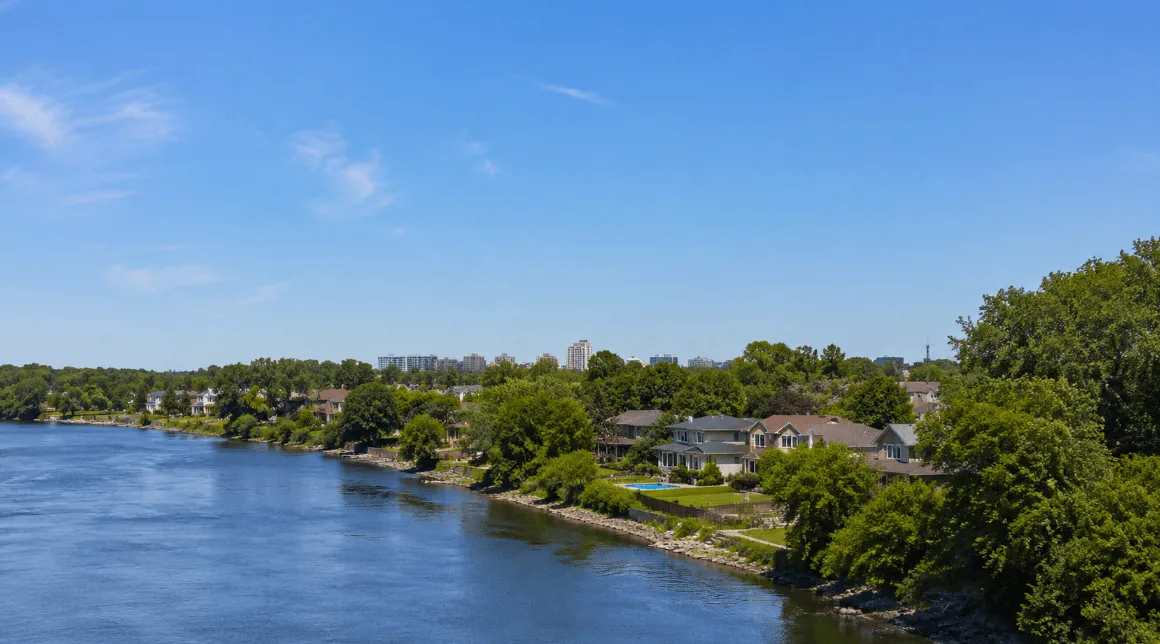
The AQHI and IQA both report at the regional or city level, but Laval isn't one uniform patch of ground. It's divided into six administrative sectors, and their geography genuinely differs in ways that affect local air, even on a day when the official reading is Low. This is worth knowing before you assume a single number tells the whole story.
Chomedey sits along the Rivière des Prairies directly across from Montreal, boxed in by Autoroutes 13, 15, and 440. It's Laval's most populous and most built-up sector, which also makes it the sector most likely to see traffic-related nitrogen dioxide and fine particulate spikes during rush hour, independent of the citywide AQHI.
Fabreville and Sainte-Rose run along the Rivière des Mille Îles in the north and west, home to the Parc de la Rivière-des-Mille-Îles and the Centre de la Nature. More greenspace and river frontage doesn't guarantee a better AQHI reading (the index is regional), but it does mean less concentrated vehicle traffic day to day.
Duvernay, Saint-François, and Saint-Vincent-de-Paul in the east, and Vimont and Auteuil further north, are lower-density residential sectors where hyperlocal readings tend to track closer to background levels between traffic-heavy periods.
This is exactly why IQAir's Laval network runs separate stations rather than one citywide sensor: a reading from a Chomedey station and a reading from a Fabreville station can differ at the same hour, even though both are “Laval.” If you want the closest approximation to your own block, check which named station on that page is nearest to you rather than relying on the Laval-wide average.
Whichever sector you're in, the indoor response is the same: match your filter to the pollutant you're actually dealing with. Filterbuy Canada's MERV ratings guide walks through that match in plain language.
Common Myths About Laval's Air Quality
Myth: If I can't see haze or smell smoke, the air must be fine. Reality: ozone and nitrogen dioxide, the two pollutants most likely to spike near Laval's autoroutes, don't produce visible haze at Moderate levels. The AQHI can sit at 4 to 6 on a visually clear day.
Myth: The AQI number on my weather app is Canada's official AQHI. Reality: most weather and phone apps default to the U.S. EPA's 0 to 500 scale from independent trackers, not the 1-to-10+ AQHI. The two aren't interchangeable, which is the whole reason this page exists.
Myth: Poor air quality only matters if you have asthma or a heart condition. Reality: Health Canada notes that even healthy people can develop eye irritation, coughing, or shortness of breath at High or Very High AQHI levels; at-risk groups just tend to feel it sooner and more severely.
Myth: Once the smoke haze visibly clears, the air is clean again. Reality: fine PM2.5 can linger in the air well after visible haze lifts, particularly on calm days. Check the AQHI or IQA rather than judging by sight.
Myth: Laval's air quality is basically identical to Montreal's. Reality: the official AQHI region-wide reading is shared with Montreal, since Laval has no zone of its own, but sector-level factors (see above) mean the air right outside your door can still differ from a reading taken across the river.
Supporting Statistics
Environment Canada's AQHI health-risk categories (Low 1–3, Moderate 4–6, High 7–10, Very High above 10) are standardized nationwide. Source: weather.gc.ca AQHI Health Message.
Quebec's RSQAQ operates roughly 60 air quality monitoring stations across the province, feeding the hourly IQA. Source: Réseau de surveillance de la qualité de l'air du Québec.
Quebec's IQA statistics dashboard has published good/acceptable/poor data by station, month, and contaminant since 2015. Source: Indice de la qualité de l'air.
Laval falls within Environment Canada's Montréal AQHI forecast region; there is no AQHI zone specific to Laval. Source: Quebec: AQHI Provincial Summary.
Fine particulate matter (PM2.5), ozone, sulphur dioxide, nitrogen dioxide, and carbon monoxide are the main outdoor pollutants tracked in Quebec, sourced from vehicles, factories, heating systems, and forest fires. Source: Gouvernement du Québec: The Health Effects of Air Pollution.
Air quality readings measured at stations on the island of Montréal are managed separately by the City of Montréal and excluded from the province's IQA map. Laval's readings, by contrast, come from the provincial RSQAQ network and Laval-area IQAir/AQICN stations. Source: Ville de Montréal: Air Quality and Quebec's IQA site.
Frequently Asked Questions
Glossary
AQHI (Air Quality Health Index): A 1-to-10+ scale created by Environment Canada and Health Canada to communicate health risk from air pollution, grouped into Low, Moderate, High, and Very High categories.
IQA (Indice de la qualité de l'air): Quebec's own hourly air quality index, calculated by the province's RSQAQ monitoring network and classified as good, acceptable, or poor.
AQI (Air Quality Index): A general term for air quality scales; in Canadian search results it most often refers to the U.S. EPA's 0–500 index used by third-party trackers, which differs from Canada's AQHI.
PM2.5: Fine particulate matter measuring 2.5 micrometres or smaller in diameter, small enough to be inhaled deep into the lungs, and a key input to both the AQHI and the IQA.
RSQAQ (Réseau de surveillance de la qualité de l'air du Québec): Quebec's provincial network of roughly 60 air quality monitoring stations, operated by the ministère de l'Environnement.
MERV (Minimum Efficiency Reporting Value): A 1-to-20 rating scale for HVAC air filters; higher numbers capture smaller particles. Filterbuy Canada uses MERV 8 (Standard), MERV 11 (Superior), and MERV 13 (Optimal).
Wildfire smoke advisory: A public health notice issued when wildfire smoke is expected to significantly reduce air quality in a region, common in Quebec between June and September.
Essential Resources
Government and Official Sources
Health Canada: Health Risks of Air Pollution (Am I at Risk?)
Ministère de l'Environnement: Indice de la qualité de l'air (IQA)
Independent Trackers
About the Author
Michelle Wan writes about indoor and outdoor air quality for Filterbuy Canada, translating government air-monitoring data and HVAC filtration science into practical guidance for Canadian homeowners. View full author bio.
About the Reviewer
David Clark is a Licensed HVAC Technician who reviewed this article for technical accuracy on filtration guidance and MERV recommendations.
About Filterbuy Canada
Filterbuy is a direct-to-consumer air filter manufacturer offering over 600 pleated filter sizes, including custom sizes, with free shipping to every Canadian province and territory. Every single filter size is guaranteed, filters are 100% manufactured in the USA, and the brand is backed by over 85,000 five-star reviews. Subscribe-and-save delivery schedules can be timed to Quebec's heating season and wildfire season alike, so a fresh filter is already on hand when conditions change. Learn more at filterbuy.ca.