
Dollard Des Ormeaux Real-Time AQI Tracker
What's Actually In Dollard Des Ormeaux Air Today?
What High AQI Means for Your Lungs in Dollard Des Ormeaux
How to Read AQI
The Air Quality Index (AQI) measures how polluted the air is and how it may affect your health.
0–50 (Good): Air quality is satisfactory.
51–100 (Moderate): Acceptable, but some pollutants may pose minor concerns.
101–150 (Unhealthy for Sensitive Groups)
151–200 (Unhealthy)
201–300 (Very Unhealthy)
301+ (Hazardous)
Moderate
Still okay for most, but if you have asthma or allergies, take it easy and avoid long outdoor workouts.
Shop MERV 11 filters→What's the Right Filter for Your AQI Level?
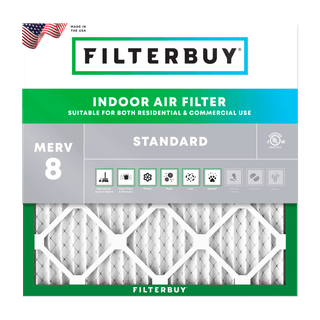

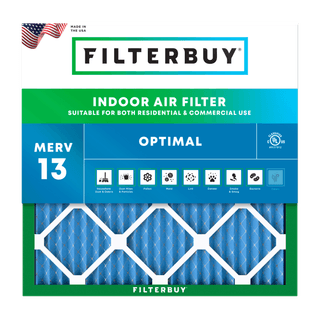

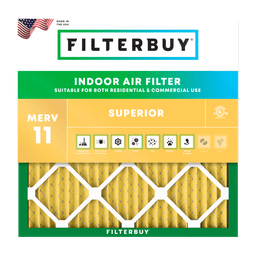

Live Air Quality Index AQI Map Dollard-des-Ormeaux, QC Today
Start with the live map at the top of this page. We put the wildfire map first because smoke is the fastest-changing factor in West Island air. Check it, then use this guide to read today's numbers and protect your indoor air.
TL;DR
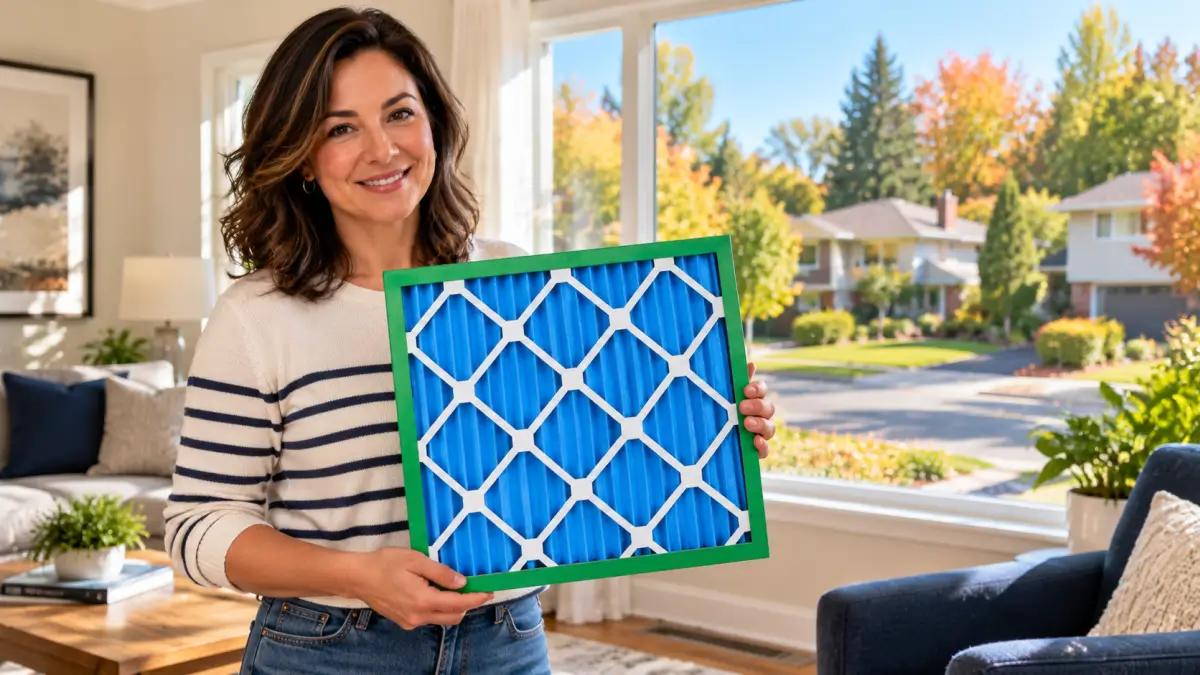
Air quality in Dollard-des-Ormeaux is usually good, but wildfire or wood smoke can change it within hours. Check the live wildfire map above and ECCC's Air Quality Health Index (AQHI) for Montreal. When the AQHI hits 7, our smoke plan starts: a MERV 13 filter in the furnace, the fan set to On, a portable HEPA air cleaner in each room you use, and the house closed up.
Key Takeaways
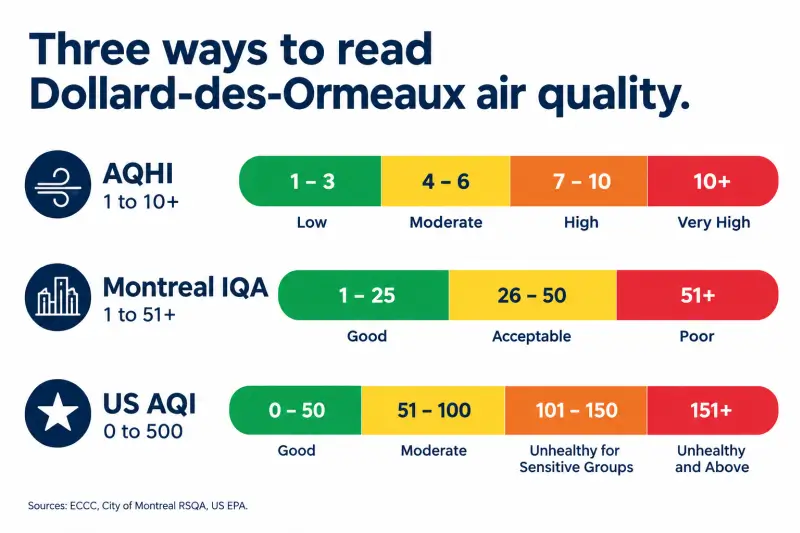
• Three scales report Dollard-des-Ormeaux air quality: Canada's AQHI (1 to 10+), Montreal's IQA (Good 1–25, Acceptable 26–50, Poor 51+), and the US-style AQI (0 to 500) used by many map apps.
• An AQHI of 7 or higher means high health risk. At that level, ECCC advises reducing or rescheduling strenuous outdoor activity.
• For wildfire smoke, we recommend MERV 13 in the furnace plus a portable HEPA air cleaner in each room people use. They do different jobs, so use both.
What Is the Air Quality in Dollard-des-Ormeaux Today?
Today's air quality in Dollard-des-Ormeaux is measured hourly by Montreal's air quality monitoring network (RSQA) and forecast daily by Environment and Climate Change Canada (ECCC).
Dollard-des-Ormeaux, a West Island city of about 48,400 residents, borders Dorval and Pointe-Claire. Check these three sources, in this order:
1. The live wildfire map above. It shows fires and smoke that may reach the West Island.
2. Montreal's interactive air quality map (carte-qualite-air.montreal.ca, in French). It shows the hourly air quality index (IQA) for each RSQA station, colour-coded green (good), yellow (acceptable) or red (poor). West Island stations, including Montréal–Dorval, give the nearest readings.
3. ECCC's AQHI forecast for Montréal and Info-Smog forecasts for Quebec. The free WeatherCAN app can send an alert when the AQHI changes.
Checking another city? See our live air quality map for Canada.
How Do You Read the AQI Numbers for Dollard-des-Ormeaux?
Building this guide, we found one common confusion: three scales describe the same air with three different numbers, so we lined them up side by side. An app showing "51" and an RSQA station showing "20" can both be correct.
Sources: Environment and Climate Change Canada, City of Montreal RSQA, US EPA.
The AQHI combines ground-level ozone, fine particles and nitrogen dioxide into one health-risk number. Montreal's IQA reports the worst of five pollutants each hour, with 50 marking the acceptable limit (Données Québec).
What Is the PM2.5 Level in Dollard-des-Ormeaux Today?
PM2.5 is fine particulate matter 2.5 micrometres or smaller, small enough to travel deep into the lungs. The World Health Organization's 2021 air quality guidelines recommend a 24-hour average no higher than 15 µg/m³ and an annual average no higher than 5 µg/m³.
PM2.5 is usually the pollutant that tips a Dollard-des-Ormeaux day from acceptable to poor. For a quick check today, look at the West Island station colours on the City of Montreal map; PM2.5 is one of the five pollutants behind each reading.
Is the Air Quality Bad in Dollard-des-Ormeaux Today? A Quick Decision Guide
Air quality in Dollard-des-Ormeaux is bad when the AQHI reaches 7 or higher, the RSQA map turns red (IQA 51+), or you can see or smell smoke. Each level shows what ECCC's health messages say, then our step.
• AQHI 1–3 (low risk): ECCC: ideal for usual outdoor activities. Our step: keep your regular filter schedule.
• AQHI 4–6 (moderate risk): ECCC: most people don't need to change plans; people at higher risk should ease off if they have symptoms. Our step: get MERV 13 in before smoke arrives and keep a spare.
• AQHI 7–10 (high risk): ECCC: reduce or reschedule strenuous outdoor activity. Our step: this is our action line. Start the four-step smoke plan below.
• AQHI 10+ (very high risk): ECCC: avoid strenuous outdoor activity. Follow ECCC alerts and local public health advice first, including any advice to stay in or leave. Our step: keep the smoke plan running as one layer, not the whole answer.
If you or a family member has asthma, COPD or heart disease, ask your doctor what to do during smoke events. Read more on why the air quality is bad today.
What Affects Air Quality in Dollard-des-Ormeaux, Season by Season?
Most poor-air days here come from regional sources; Highway 40 traffic adds a smaller local share. Here is when each peaks, with one step for each.
• Winter (Dec–Mar): wood smoke. Cold, calm nights trap fine particles from wood heating. Your step: your furnace runs almost nonstop, so check the filter monthly.
• Spring (Apr–Jun): pollen. Your step: move to MERV 11 if anyone at home has seasonal allergies.
• Summer (Jun–Sep): wildfire smoke and smog. Canada's wildfire season runs from early April to October (Health Canada). In June 2025, Prairie smoke pushed Montreal's AQHI to 8, a high health risk. Your step: fit MERV 13 before smoke season. Health Canada also advises keeping spare filters on hand.
• Autumn (Sep–Nov): furnace start-up. Your step: swap the filter before the first cold snap. Thanksgiving weekend in October is an easy reminder.
Supporting Statistics: What Canadian Research Shows
Canadian government data backs up the steps on this page.
1. 17,400 premature deaths in 2018
◦ Health Canada links them to air pollution across Canada.
◦ Source: Health Canada
2. 15 million hectares burned in 2023
◦ A normal year burns about 2.5 million hectares.
◦ From 1 to 25 June, southern Quebec burned more land than in the previous 20 years combined.
◦ Source: Natural Resources Canada
3. 5 Montreal smog days in 2024, 4 of them in winter
◦ Down from 12 smog days in 2023.
◦ In Montreal, wood heating is the second-largest source of fine particles.
◦ Source: City of Montreal 2024 air quality report, in French
What Should You Do When Smoke Reaches Dollard-des-Ormeaux?
Use a MERV 13 furnace filter for wildfire smoke. Our action line is an AQHI of 7, or 100 on a US-style AQI app. The US EPA's "unhealthy for sensitive groups" category starts at 101, so our line sits one point below it. First, check ECCC's AQHI forecast and follow local public health advice. Then take these four steps, in order:
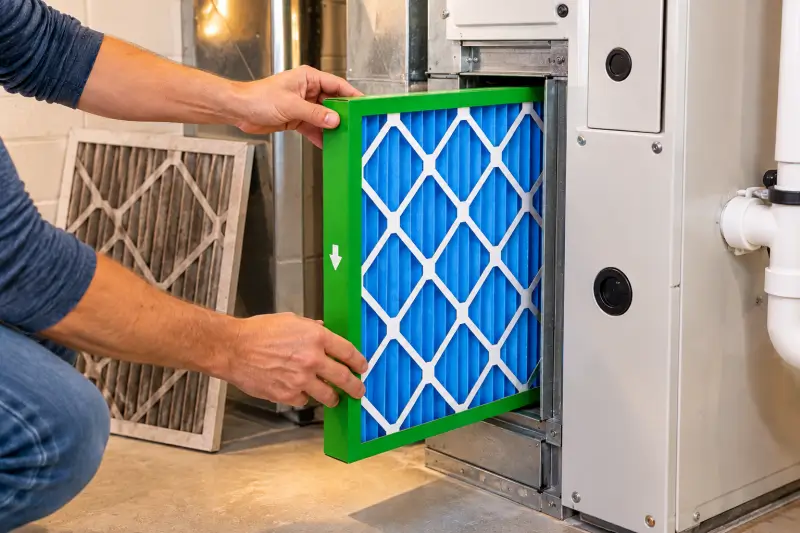
1. Put MERV 13 in your furnace. It filters the whole home, because your central system moves far more air than any room unit. Treat it like a size check: match your filter slot and furnace manual.
2. Set the thermostat fan to On. Auto only filters while the system heats or cools; On filters all the time. The US EPA gives the same advice.
3. Run a portable HEPA air cleaner in each room people use, bedrooms first. That's our recommendation; EPA's guidance describes one clean room. EPA says to pick a unit whose smoke CADR is at least two-thirds of the room's floor area in square feet, so a 300 sq ft (28 m²) bedroom needs a smoke CADR of about 200. Skip ionizers and any cleaner that makes ozone, which EPA advises against.
4. Close the house up. Keep windows and doors shut. While smoke is in, skip candles, frying, smoking and vacuuming without a HEPA vacuum.
No ducted furnace? In homes heated by electric baseboards, or apartments without ducts, portable HEPA air cleaners are your main defence.
During smoke, check the filter often. Replace it when it looks dirty, which EPA notes can be sooner than the maker's schedule. Filters from smoke season come back to us visibly darker and heavier, so keep a spare on hand.
After smoke clears, our wildfire smoke recovery checklist covers filter swaps and surface cleaning.
"The number on your phone tells you what's happening outside. What happens inside your home once that air comes through the door is still up to you, and that's the part people forget to plan for." David Heacock, Founder and CEO, Filterbuy
Which Air Filter Is Best for a Dollard-des-Ormeaux Home?
For wildfire smoke, choose MERV 13. For the rest of the year, pick by household using the chart below, and change the filter every 60 to 90 days. That works out to 4 to 6 filters a year, plus a spare for smoke season. Canadian furnaces often run six to eight months a year, so filters load faster here. After more than a decade of making filters, the pattern we see most is a home running a filter a step or two lower than it could. Our MERV rating guide explains each level.
Fit check: match the size printed on your current filter's frame.
Frequently Asked Questions
Is the Air Quality Bad in Dollard-des-Ormeaux Today?
The air is bad if the AQHI is 7 or higher, the RSQA map shows red (IQA 51+), or you can see or smell smoke.
Where Can I Find a Live Air Quality Map for Dollard-des-Ormeaux?
The live wildfire map on this page shows fires and smoke. For hourly station readings, use the City of Montreal's interactive air quality map.
What MERV Rating Do I Need for Wildfire Smoke?
MERV 13. Pair it with a portable HEPA air cleaner in the rooms you use most.
How Often Should I Change My Furnace Filter in Dollard-des-Ormeaux?
Change a 2.5 cm (1 in.) filter every 60 to 90 days in normal conditions. During smoke, check it often and replace it when it looks dirty, even if that's sooner.
Glossary
• AQHI (Air Quality Health Index): Canada's 1-to-10+ scale from ECCC and Health Canada that links current air pollution to health risk.
• IQA (Indice de la qualité de l'air): The City of Montreal's hourly air quality index, rated good (1–25), acceptable (26–50) or poor (51+).
• RSQA (Réseau de surveillance de la qualité de l'air): Montreal's air quality monitoring network of 11 permanent stations across the island.
• PM2.5: Fine airborne particles 2.5 micrometres or smaller, the main pollutant in wildfire smoke.
• Ground-level ozone (O3): A gas formed when sunlight reacts with vehicle and industrial emissions; the main ingredient of summer smog.
• MERV (Minimum Efficiency Reporting Value): A 1-to-16 rating of how well an HVAC filter captures airborne particles.
• CADR (clean air delivery rate): How much filtered air a portable cleaner delivers. Look for the smoke rating.
• Portable air cleaner: A plug-in room unit, often with a HEPA filter, that cleans one room.