
Thunder Bay Real-Time AQI Tracker
What's Actually In Thunder Bay Air Today?
What High AQI Means for Your Lungs in Thunder Bay
How to Read AQI
The Air Quality Index (AQI) measures how polluted the air is and how it may affect your health.
0–50 (Good): Air quality is satisfactory.
51–100 (Moderate): Acceptable, but some pollutants may pose minor concerns.
101–150 (Unhealthy for Sensitive Groups)
151–200 (Unhealthy)
201–300 (Very Unhealthy)
301+ (Hazardous)
Moderate
Still okay for most, but if you have asthma or allergies, take it easy and avoid long outdoor workouts.
Shop MERV 11 filters→What's the Right Filter for Your AQI Level?
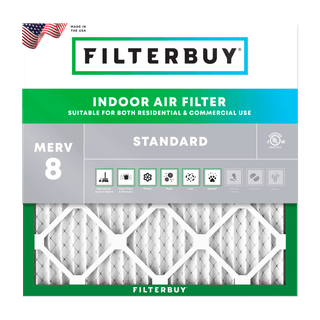

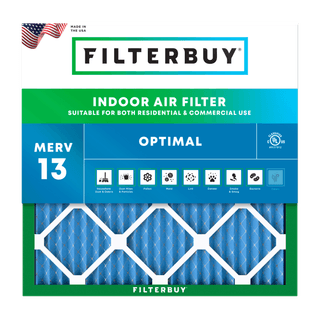




Check Today's Live Real Time Air Quality Index AQI Map In Thunder Bay, ON Now
Thunder Bay has a reputation for clean air and the record mostly backs it up, with few large industrial sources and no freeway corridor through the city. Then a fire season builds in the districts north and west of town, the wind turns, and for a week air quality becomes the only thing anyone talks about. Filterbuy manufactures pleated air filters, which shapes what we can usefully tell you here. We know what happens to a filter when smoke arrives, and we will not pretend the air outside is fine when it is not. On the worst days a filter reduces the problem without solving it, and that is worth saying first.
Quick Answers On Thunder Bay Air Quality Right Now
Is The Air Quality Bad In Thunder Bay Today?
Thunder Bay's air quality can change within hours, so check the live map on this page before a run, an outdoor shift, or an afternoon at Boulevard Lake. What most people call the air quality index for Thunder Bay is published in real time by both Environment and Climate Change Canada and Ontario's environment ministry, under its Canadian name, the Air Quality Health Index. You will not find a fixed number here, because one typed today would be wrong by dinner.
Top Takeaways
Thunder Bay's official measure is the Air Quality Health Index (AQHI), a 1 to 10+ health risk scale from Environment and Climate Change Canada and Health Canada, not the 0 to 500 AQI scale most apps display.
One provincial station serves the whole city, at 615 James Street South, measuring ozone, fine particulate matter, and nitrogen dioxide.
Ontario uses a hybrid AQHI adopted in 2015 that reports a value of 7 whenever a one hour trigger is exceeded, including fine particulate matter above 60 micrograms per cubic metre.
Wildfire smoke from northwestern Ontario is the largest driver of poor air quality here, and fine particulate matter can be up to 90 percent of the particle mass in smoke.
How To Read The Live Thunder Bay Air Quality Map
Tap the station nearest you and read the band it reports, then check the forecast maximum for the rest of the day. That is the whole operation. What takes more explaining is how much weight the number deserves. A live air quality map for Thunder Bay is blunter than a big city's version, because the provincial network runs a single station here, and on a calm day that works well enough. When smoke arrives in bands, or wood smoke settles into a low-lying neighbourhood on a cold night, your street can differ from the official reading by a wide margin.
There is also a caveat the agencies publish themselves. Environment and Climate Change Canada notes on its own AQHI pages that real-time data arrives too fast for detailed quality control, and discourages republishing current conditions for that reason. The reading works well as a decision tool and poorly as a precision instrument, so treat it as a band and check it against what you can see.
AQHI Versus AQI, And Why Your App May Disagree With The Map
Canada reports air quality as health risk on a 1 to 10+ scale, while the United States reports pollutant concentration on a 0 to 500 scale. Both get applied to Thunder Bay, which is where the disagreement between two screens comes from. When an app labels the number a Thunder Bay AQI, the American scale is usually what you are looking at.
Source: Environment and Climate Change Canada and Health Canada define the AQHI. Ontario's Ministry of Health documents the hybrid triggers.
An oddity sits inside that Ontario twist. The province sets one hour criteria for ozone at 80 parts per billion and nitrogen dioxide at 200, and crossing either forces the index to 7. For fine particulate matter, the pollutant behind nearly every bad air day this city has, Ontario set no ambient criterion at all, and the 60 microgram trigger arrived later as a reporting rule. The measure that matters most in Thunder Bay is the one the province never wrote a standard for.
A note from author Michelle Wan: building this page meant going to Ontario's reference document and the station record, where most coverage of this topic settles for summarizing other air quality sites. That is how the hybrid trigger surfaced, and it explains something no app will tell you. A reading of 7 here can mean the index hit a ceiling while the smoke kept thickening.
Source: standardized AQHI health messages published by Ontario's Ministry of Health.
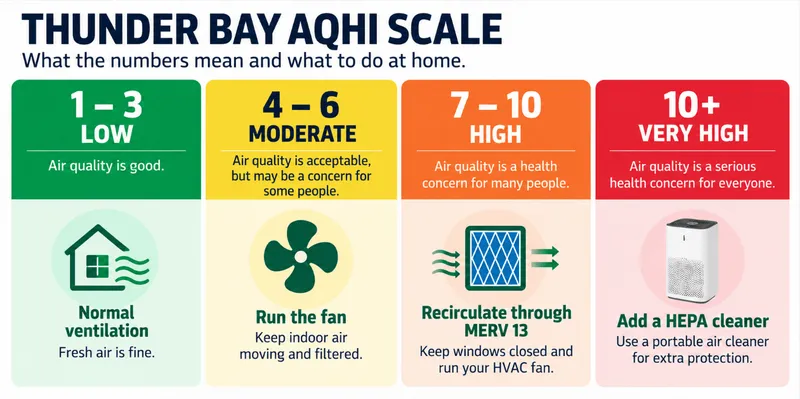
At-risk groups, including seniors, young children, pregnant people, outdoor workers, and anyone with a heart or lung condition, should act one band earlier than everyone else. Whatever the index says, symptoms are the better signal.
Why The Thunder Bay Number Can Lag What You See Outside
Three things explain most of the gap between the reading and the sky. The Ontario trigger pins the value, so a reading can sit at 7 while visibility keeps dropping. One station draws air three metres off the ground at a single address, and smoke does not spread evenly across a city. Alerts are forecasts, so high risk air can arrive before any statement is issued.
All three came out of the ministry's reference document and the station record itself, which is how this page can give you an address and an intake height where other pages say readings vary by neighbourhood.
Your own eyes make a reasonable third instrument. During the July 2026 episode, visibility at Thunder Bay Airport fell to 1.6 kilometres on July 19. When the Sleeping Giant disappears, the air is bad whatever your screen says.
What Drives Thunder Bay Air Quality Through The Year
Spring: generally clean, though pollen bothers allergy sufferers even at a low AQHI.
Summer: the high risk window. Fires in the Nipigon, Sioux Lookout, Fort Frances, and Dryden districts can put the city inside the plume instead of downwind of it. Hot, stagnant days also raise ground level ozone.
Winter: usually clean, but cold, calm nights let a shallow trapped layer hold wood smoke near the ground. The City's EarthCare plan names household wood combustion, garbage burning, and idling as local sources.
Wildfire Smoke From Northwestern Ontario Is The Main Event
Most of the air pollution Thunder Bay experiences arrives from outside the city, and it arrives differently than it does in southern Ontario. Toronto receives aged smoke that has travelled hundreds of kilometres. Thunder Bay often sits close to the fires themselves, which means thicker smoke and a faster onset.
July 2026 showed what that looks like. More than 130 active fires were burning in the northwest by July 15, with evacuation orders for Armstrong, Collins First Nation, Lac La Croix First Nation, Lac des Mille Lacs First Nation, and Whitesand First Nation, and fires threatening areas around Lake Nipigon north of the city. Thunder Bay suspended non-critical services including pools, beaches, and marinas, and did not return to routine monitoring until July 22. Ontario's 2023 season, for scale, brought 741 fires and 441,474 hectares burned, close to three times the ten year average.
Lead time is available if you go looking. The province runs free alert emails by forecast region, the WeatherCAN app pushes notifications at an AQHI value you choose, and the federal FireWork system projects smoke movement 72 hours out.
How To Protect Indoor Air When Smoke Reaches The City
Once the AQHI reaches 7, four steps do most of the work.
Close windows and doors. If the house gets too warm, run air conditioning instead of opening up.
Set the HVAC system to recirculate and leave the fan running continuously, so indoor air keeps passing the filter.
Fit the highest efficiency filter your system accepts per its manufacturer, which for most modern residential systems means MERV 13.
Run a portable HEPA air cleaner in the room where your household spends the most time.
Size that cleaner to the room it will sit in. Health Canada's guideline is a tobacco smoke CADR of at least two thirds of the floor area, so a 300 square foot living room calls for about 200. For wildfire smoke, AHAM suggests matching the full floor area, which makes 300 the better target. Skip ozone generators and ionizers altogether, which Health Canada advises against in homes because the ozone they produce can harm health.
It helps to know what that first step buys you. US EPA guidance puts indoor fine particle levels at roughly 55 to 60 percent of outdoor levels during a smoke event with windows shut and no cleaner running, ranging from 30 percent to no reduction at all depending on the house. Newer homes and homes with air conditioning hold smoke out better. A sealed house is a start and nothing more, which is why the filter and the cleaner follow it.
When a house cannot get there, leaving it is a legitimate answer. Libraries, community centres, and malls run filtration and cooling most houses do not, and a few hours somewhere cleaner buys a real cut in exposure. Outdoors in heavy smoke, a well fitted N95 helps with particles but does nothing for the gases, and respirators are not made for children under two.
What Your HVAC System Can And Cannot Do
Your equipment sets the ceiling here, so be honest about what you have. MERV 13 is the right target where airflow allows, though a high efficiency filter in an aging or undersized system can restrict that airflow, and one that does not seal in its slot lets smoke bypass the media entirely. Plenty of homes here run MERV 11 filters day to day and step up only when smoke arrives. If your home runs on a boiler, baseboards, or ductless heat pumps, there is no filter slot at all, so portable HEPA cleaners become the primary tool and spare air purifier replacement filters are worth keeping on hand. Smoke odour is a separate problem from smoke particles, and a carbon-treated Odor Eliminator filter is what targets odours and gases.
What Filterbuy can tell you as the manufacturer comes down to how the media behaves. Our pleated MERV 13 filters are built on a 90 day cycle under normal household dust, and smoke particles are far finer and more numerous, so they load that media faster than the cycle assumes. Through an episode, judge the filter by its colour and your airflow rather than by the calendar, and replace it once it goes dark. It is easier to fit MERV 13 air filters before fire season than to source one mid-episode, and an air filter subscription keeps spares on hand. Older homes with odd returns can take custom air filters that actually seal.
"The homes that stay comfortable are the ones that seal up, recirculate, and run a high efficiency filter before the smoke arrives, not after."
David Heacock, Founder and CEO, Filterbuy
Our Take On Watching Thunder Bay Air Quality
Our view is that the AQHI deserves the same morning glance as the marine forecast through fire season. The city's clean air reputation is real, which is also why a bad smoke week lands like an emergency here. Nobody is acclimatized to it. Bookmark the map above, subscribe to the provincial alerts, check your MERV rating options against your system, and set up one cleaner air room while the sky is still clear. If you live elsewhere in the country, our other Canadian city air quality guides cover the same ground.
Supporting Statistics On Smoke And Filtration
1. Smoke particles do more damage than ordinary ones. A 10 microgram per cubic metre rise in wildfire specific PM2.5 tracked a 1.3 to 10 percent increase in respiratory hospital admissions, against 0.67 to 1.3 percent for the same rise from other sources.
Source: Aguilera et al., Nature Communications
2. A high efficiency HVAC filter can cut indoor PM2.5 by roughly 50 percent with the fan running continuously. A low efficiency filter run the same way manages about 24 percent, so leaving the thermostat on Auto wastes a good filter.
Source: US EPA, Strategies to Reduce Exposure Indoors
3. Across 29 homes, portable HEPA cleaners cut mean PM2.5 by 78.8 percent in the room holding the unit and 57.9 percent in a second room. Put it where your household actually sits.
Source: Real-World Effectiveness of Portable Air Cleaners, CDC Stacks
Frequently Asked Questions
Breathe Easier Indoors With Filterbuy
You cannot change what the fires north of Thunder Bay are doing to the sky, but you can change the air inside your house. Filterbuy manufactures pleated filters sized to fit your system and built to catch the fine particles smoke leaves behind. Shop Filterbuy air filters before the next smoky week.
About This Page
Michelle Wan is Brand Manager and Air Quality Writer at Filterbuy, working directly with the manufacturing team that builds the filters described here. David Clark is a Licensed HVAC Technician with Filterbuy HVAC Solutions, and his review covers the HVAC, filtration, and airflow guidance. Health guidance follows Health Canada, Environment and Climate Change Canada, and Ontario Ministry of Health messaging, and is not a substitute for medical advice.
Disclosure: Filterbuy manufactures air filters and sells them direct at Filterbuy.ca. This page recommends a product category we sell, and it also states plainly where filtration is not the answer.
Glossary
Air Quality Health Index (AQHI): Canada's official 1 to 10+ scale for short term health risk from air pollution, developed by Health Canada and Environment and Climate Change Canada.
Hybrid AQHI: Ontario's version of the index, adopted in 2015, reporting a value of 7 when a one hour trigger is exceeded.
PM2.5: fine particulate matter 2.5 microns and smaller, the pollutant of greatest concern in smoke.
MERV: the Minimum Efficiency Reporting Value, rating how well an HVAC filter captures particles. MERV 13 is commonly recommended during smoke where the system allows.
HEPA: a filter standard used in portable air cleaners. Different from MERV, and not interchangeable with a furnace filter.