
Brantford Real-Time AQI Tracker
What's Actually In Brantford Air Today?
What High AQI Means for Your Lungs in Brantford
How to Read AQI
The Air Quality Index (AQI) measures how polluted the air is and how it may affect your health.
0–50 (Good): Air quality is satisfactory.
51–100 (Moderate): Acceptable, but some pollutants may pose minor concerns.
101–150 (Unhealthy for Sensitive Groups)
151–200 (Unhealthy)
201–300 (Very Unhealthy)
301+ (Hazardous)
Moderate
Still okay for most, but if you have asthma or allergies, take it easy and avoid long outdoor workouts.
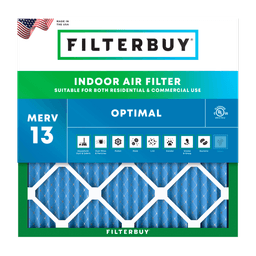
Shop MERV 11 filters→What's the Right Filter for Your AQI Level?



Live Air Quality Index AQI Map Brantford, ON Today
By Michelle Wan, Brand Manager and Air Quality Writer, Filterbuy · Technically reviewed by David Clark, Licensed HVAC Technician · Published: 16 September 2026 · Updated: 16 September 2026
Live Brantford Air Quality Map and AQHI
Brantford's live air quality is the hourly AQHI reading from the provincial monitoring station at 324 Grand River Ave. Check today's reading here:
• Brantford AQHI now, with today's forecast, from Air Quality Ontario
• Ontario air quality map, showing Brantford beside nearby stations such as Hamilton and Kitchener
• Brantford forecast maximums, from Environment Canada
• By phone: 1-800-387-7768 (toll-free)
TL;DR
Brantford's official air quality number is the Air Quality Health Index (AQHI), a 1-to-10+ scale from Environment Canada and Ontario. A reading of 1 to 3 is low risk, 4 to 6 is moderate, 7 to 10 is high, and above 10 is very high. Filterbuy's advice after comparing Brantford readings across sources: make decisions on the AQHI, treat other maps as early smoke spotters, and follow the smoke-day plan below at 7 or higher.
Key Takeaways
• Wildfire smoke is the biggest swing factor. Smoke from distant fires, including Quebec and the Prairies, has pushed the region into high-risk levels in recent summers.
• Ontario warnings are colour-coded. Yellow Warnings come when the AQHI is forecast to reach 7+, Orange Warnings at 10+.
• Filterbuy's action line is AQHI 7. At that point, we recommend MERV 13 in the furnace, the fan set to On, a portable HEPA air cleaner in each occupied room, and a closed-up house.
Author's Note
While researching this page, I checked Brantford's air quality on several sites, and the numbers rarely lined up. In July 2026, a global air quality map labelled Brantford "Unhealthy" on the US scale. In September, another site showed clean air, but its number came from atmospheric models, not a local monitor. Neither was Ontario's health index, so this guide starts with the local station.
Michelle Wan, Brand Manager and Air Quality Writer, Filterbuy
What Is the Air Quality in Brantford Today?
Brantford's air quality today is whatever the latest hourly AQHI shows: 1 to 3 means carry on as usual, 4 to 6 means people with symptoms should ease off, and 7 or higher means reduce strenuous outdoor activity. We link to the official readings rather than printing a number here, because any figure on this page would be out of date within the hour.
Looking for Brantford PM2.5 today? The Brantford station page lists recent hourly readings for ozone, nitrogen dioxide, and PM2.5 (fine particles 2.5 micrometres or smaller, the main pollutant in smoke).
How to Read the Brantford AQHI Scale
The Air Quality Health Index is a health-risk scale, not a raw pollution measurement. It blends the health risks of those three pollutants into one number. Lower is better, and the wording below follows Ontario's AQHI health messages.
Table 1: Brantford AQHI risk bands compared
Source: Air Quality Ontario AQHI health messages. People with heart or breathing problems are at greater risk.
The Ontario rule most people miss. Per the Air Quality Ontario FAQ, the index jumps to high risk when PM2.5 tops 60 µg/m³, ozone tops 80 ppb, or nitrogen dioxide tops 200 ppb, even if the calculated AQHI is 6 or less.
Our rule of thumb: check the forecast maximum first. On a smoky day, a moderate morning can become a high-risk afternoon within one hourly update.
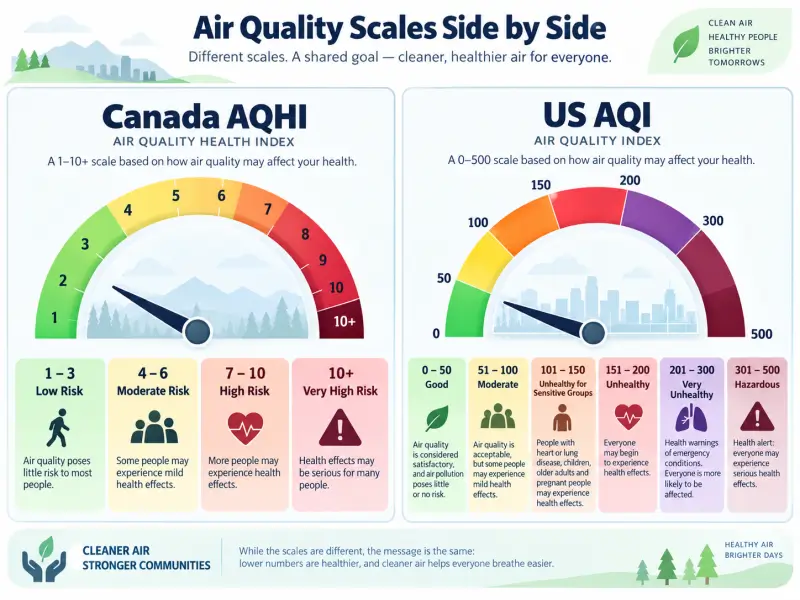
AQHI vs. AQI: Why Brantford Readings Differ Between Apps
Weather apps and global maps often show the US Air Quality Index, which runs from 0 to 500. Canadian government sources report the 1 to 10+ AQHI.
Table 2: Canadian AQHI vs. US AQI
The two scales are not interchangeable. Use the official AQHI for health guidance.
How we use both at Filterbuy: the AQHI for decisions, and a sensor map to spot smoke heading toward the city. See AirNow AQI Basics.
What Causes Poor Air Quality in Brantford?
Poor air quality days in Brantford usually trace back to wildfire smoke or summer ozone, with traffic adding a steady baseline (more in Filterbuy's guide to why the air quality is bad today).
Wildfire smoke is the most dramatic cause. In June 2023, the Brant County Health Unit issued a special air quality statement as Ontario and Quebec forest fire smoke pushed local AQHI levels into the high-risk range. In July 2025, Environment Canada issued a statement for parts of southern Ontario as Prairie smoke drifted in.
Ground-level ozone builds on hot, still days. Air Quality Ontario says more than half of Ontario's smog blows in from the United States.
Nitrogen dioxide comes mostly from vehicle exhaust. Near Highway 403, distance helps: concentrations can drop 60–80% within 100 metres, per Air Quality Ontario.
Is the Air Quality Bad in Brantford Today? What to Do When the AQHI Rises
At AQHI 7 or higher, Filterbuy recommends four steps: a MERV 13 filter in your furnace, the thermostat fan set to On, a portable HEPA air cleaner in each occupied room, and a closed-up house. On a US-scale app, our action line is AQI 100. Official warnings always come first.
What to do at each AQHI level:
• 1 to 3: No changes needed.
• 4 to 6: Get ready. Put a MERV 13 filter in before smoke arrives, and keep a spare.
• 7 to 10: Follow the plan below, and check your filter more often.
• Above 10: Follow official instructions first, including any advice to relocate. Keep one clean room going; filtration is only one layer.
Who should act first: people 65 and older, pregnant people, young children, people with chronic conditions, and outdoor workers, per Air Quality Ontario. With a heart or lung condition, follow your doctor's advice. In an emergency, call 911.
Our Brantford smoke-day plan:
1. Check official guidance. Watch Ontario air quality warnings. High-risk readings can happen without an alert.
2. Put MERV 13 in the furnace. The U.S. EPA recommends MERV 13 or higher during smoke events and notes most furnaces can accommodate it when the filter is replaced often.
3. Set the fan to On. Auto only filters while heating or cooling. On filters continuously.
4. Run a portable HEPA air cleaner in each occupied room, bedrooms first. EPA's sizing rule is a smoke CADR of at least two-thirds of the room's square footage, so a 300 sq ft bedroom needs about 200. Skip ozone-producing cleaners. Buying just one? Start with the bedroom.
5. Close up the house. Shut windows. Skip candles, smoking, frying, and non-HEPA vacuuming.
6. Check the filter. Replace it when it looks dark brown or black, which can be well before the usual interval. Keep spares on hand.
No ductwork? In apartments or homes with baseboard heat or window units, portable HEPA air cleaners are your main defence, not an add-on. In a heat wave, Air Quality Ontario says to keep cool first. See MERV 13 vs. HEPA for how the two work together.
How Your Furnace Filter Helps on Poor Air Quality Days
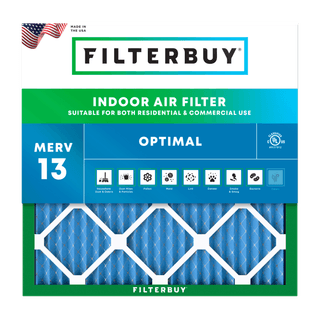
MERV 13 is the Filterbuy tier we recommend for wildfire smoke. It sits in your furnace and treats the whole house, while a portable HEPA unit treats one room harder. Health Canada's wildfire smoke guidance also recommends MERV 13 or higher for HVAC systems.
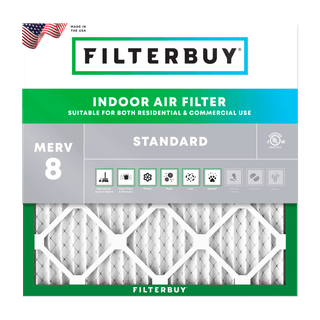
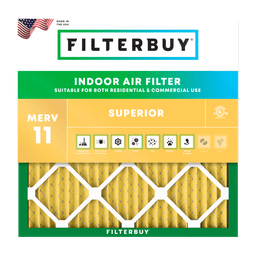
Filterbuy colour-codes every rating and makes all four options in our own U.S. facilities. We stock over 600 sizes plus custom builds, so odd Ontario furnace slots are covered.
Table 3: Filterbuy MERV options compared
Confirm your filter size and slot before you switch, the same quick fit check as any order.
What we've learned at Filterbuy making filters for smoke season:
1. People check too late. Filter orders and support calls rise in the days after major smoke events, often before homeowners have looked at their filter.
2. Ontario's seasons stack up. Smoke season runs straight into furnace season. Swap out the filter that caught summer smoke before your furnace's first cold-weather start.
"The mistake I see most often is the fan setting getting flipped to On with the same filter that has been in the slot since spring. All that does is move smoke around the house faster. Change the filter first, then change the setting."
David Clark, Licensed HVAC Technician, in Filterbuy's HVAC fan guide
Pleated filters capture particles, not smoke gases or odours. For odours, see our Odour Eliminator line.
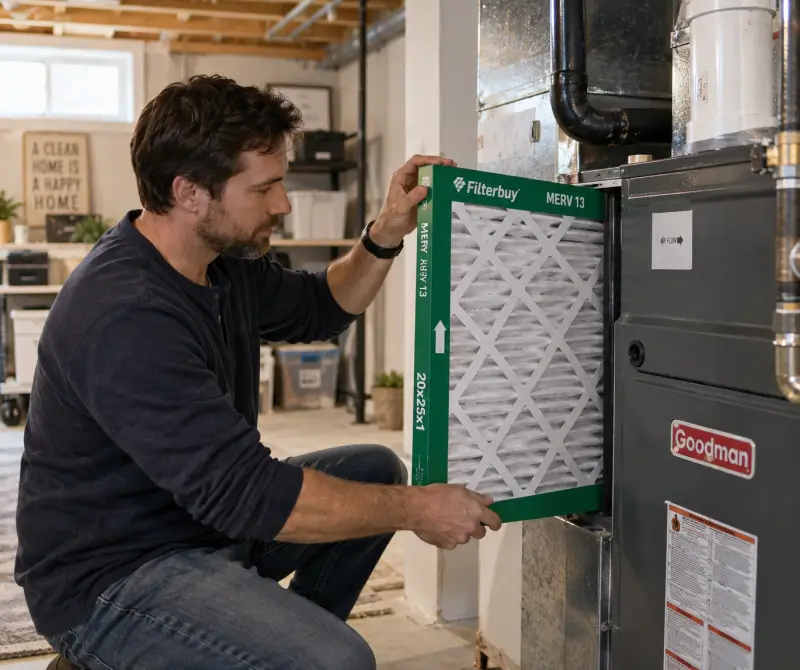
Ready for furnace season? Find your Filterbuy filter size or shop MERV 13 air filters, backed by over 85,000 five-star reviews. Keep spares coming with a Filterbuy air filter subscription, with 5% off and cancellation anytime.
Supporting Statistics
Research and federal data behind this page:
1. Asthma ER visits rose during 2023 smoke
– During Canada's 2023 wildfire smoke, U.S. asthma ER visits ran 17% above expected over 19 smoke days.
– Source: CDC, Morbidity and Mortality Weekly Report (2023)
2. Smoke particles affect breathing more
– Each 10 µg/m³ rise in wildfire PM2.5 raised respiratory hospitalizations 1.3% to 10%, versus 0.67% to 1.3% for other PM2.5.
– Source: Aguilera et al., Nature Communications (2021), via eScholarship.org
3. MERV 13 fits most home systems
– EPA recommends MERV 13 or higher in central systems during smoke events.
– Most furnaces can accommodate it when the filter is replaced often.
– Source: U.S. EPA, Preparing for Smoke and Heat
Frequently Asked Questions
More air quality guides: Filterbuy Resource Center
Glossary
AQHI (Air Quality Health Index): Canada's 1 to 10+ health-risk scale based on ozone, PM2.5, and nitrogen dioxide.
MERV (Minimum Efficiency Reporting Value): A 1 to 16 rating for how well an HVAC filter captures airborne particles.
PM2.5: Airborne particles 2.5 micrometres or smaller, the main pollutant in wildfire smoke.