
Brampton Real-Time AQI Tracker
What's Actually In Brampton Air Today?
What High AQI Means for Your Lungs in Brampton
How to Read AQI
The Air Quality Index (AQI) measures how polluted the air is and how it may affect your health.
0–50 (Good): Air quality is satisfactory.
51–100 (Moderate): Acceptable, but some pollutants may pose minor concerns.
101–150 (Unhealthy for Sensitive Groups)
151–200 (Unhealthy)
201–300 (Very Unhealthy)
301+ (Hazardous)
Moderate
Still okay for most, but if you have asthma or allergies, take it easy and avoid long outdoor workouts.
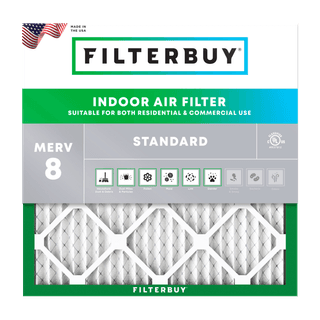
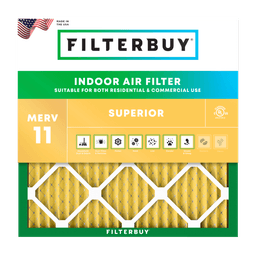
Shop MERV 11 filters→What's the Right Filter for Your AQI Level?




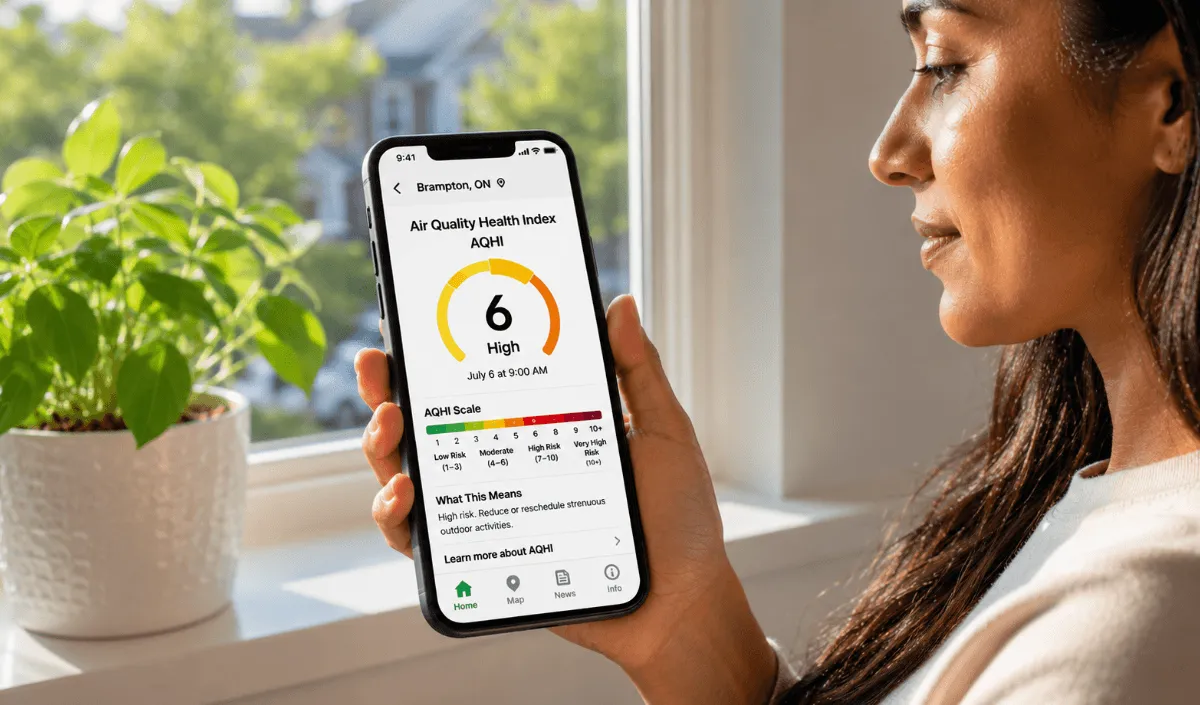
Check Today's Live Real Time Air Quality Index AQI Map in Brampton, ON Now
TL;DR
Brampton's live air quality is reported on Canada's official Air Quality Health Index (AQHI), a health-based scale from 1 to 10+. You'll find today's real-time reading in the map and panel below, updated hourly from the local monitoring station. When the AQHI climbs into the moderate or high range, the same fine particles measured outdoors can drift inside your home, and upgrading your furnace filter is one of the most direct ways to protect the air you breathe indoors.
Key Takeaways
Canada reports Brampton's air quality on the AQHI (scale 1 to 10+), not the U.S. AQI (0 to 500) that many international apps display.
The AQHI is a health-risk index built from three pollutants measured together: ground-level ozone, nitrogen dioxide, and fine particulate matter (PM2.5).
During wildfire smoke events, Environment and Climate Change Canada switches the AQHI formula to hourly PM2.5, because smoke drives PM2.5 up fast.
An AQHI of 1 to 3 is low risk, 4 to 6 is moderate, 7 to 10 is high, and above 10 is very high risk.
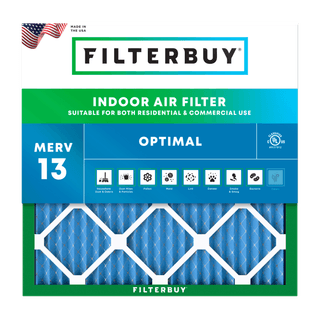
Health Canada recommends a MERV 13 or higher furnace filter and recirculation mode to reduce indoor PM2.5 during smoke events.
Indoor air can stay far cleaner than outdoor air when your home is well sealed and well filtered.
Today's Live Brampton Air Quality Reading
Brampton's current air quality appears in the live panel above, drawn from the local Air Quality Health Index station and refreshed every hour. The AQHI translates several pollutants into a single health-risk number from 1 to 10+, so a glance tells you whether it's a good day for a run or a day to keep the windows shut. Because readings shift through the day, we show the live source rather than a fixed number, and we date every update.
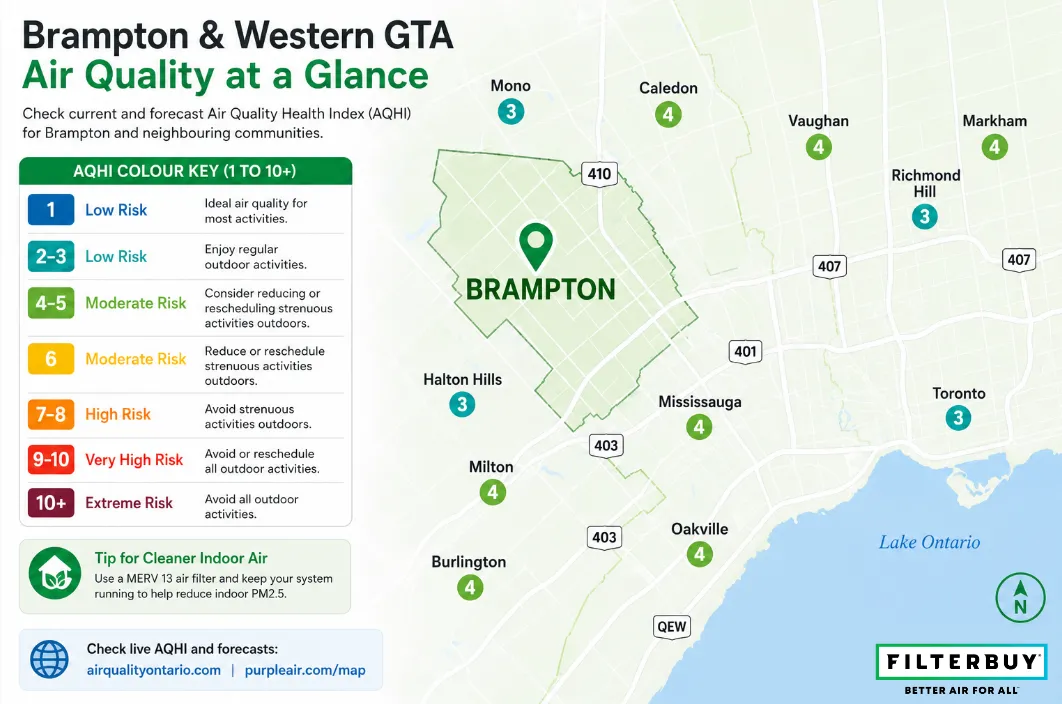
We pull the reading from the same monitoring network Ontario and Environment Canada use, so what you see here matches the official record. At Filterbuy, we built this page to go past the number, because the air that matters most is the air you keep breathing after smoke and traffic pollution drift indoors.
What Today's Brampton Air Quality Number Means for You
The AQHI sorts air quality into four health-risk categories, and each one comes with a plain action. Low risk (1 to 3) is ideal for outdoor activity. Moderate risk (4 to 6) is fine for most people, though anyone with heart or lung conditions may want to ease up. High risk (7 to 10) is a signal to reduce or reschedule strenuous outdoor effort. Above 10 is very high risk, when even healthy adults benefit from staying indoors.
AQI vs. AQHI: Why Brampton's Number Looks Different Everywhere
If one app shows Brampton at “25 AQI (Good)” and the official reading is a “3,” both can be right, because they're different scales. Many global apps report the U.S. Air Quality Index, a 0-to-500 scale based on whichever single pollutant is worst. Canada retired that approach for public reporting in 2007 and adopted the AQHI, which blends ozone, nitrogen dioxide, and PM2.5 into one health-risk number from 1 to 10+.
For everyday decisions in Brampton, the AQHI is the number to trust, because it was built around the health effects of the air you're actually breathing.
What the Brampton AQHI Is Actually Built From
The AQHI reflects three pollutants that harm the heart and lungs even at low levels: ground-level ozone (O3), nitrogen dioxide (NO2), and fine particulate matter (PM2.5). Environment and Climate Change Canada calculates it from a three-hour rolling average of these pollutants at the local station, then reports a single number. It's an outdoor measurement, so the air inside your home can read very differently.
During a wildfire smoke event, the math changes. Because smoke pushes PM2.5 up quickly, Environment and Climate Change Canada switches to an hourly PM2.5-only calculation so the index keeps pace with fast-moving conditions. That's why a smoky afternoon can send the AQHI up sharply even when ozone and nitrogen dioxide are ordinary.
What Shapes Brampton's Air Quality
Brampton's air quality comes down to a mix of local traffic, summer heat, and wildfire smoke, and it can vary from one street to the next. Traffic feeds the nitrogen dioxide and ozone the AQHI tracks, hot stagnant days cook those emissions into smog, and smoke from distant fires can override everything within hours. Knowing which one is driving today's reading helps you decide whether to close the windows or simply ease off outdoor plans.
Traffic and freight drive everyday pollution. Brampton sits among the 400-series highways and busy arterial roads that move people and goods across the Greater Toronto Area. Vehicle exhaust is a leading local source of nitrogen dioxide and the ingredients that form ground-level ozone.
Summer heat turns emissions into smog. On hot, sunny, stagnant days, ground-level ozone climbs. Slow-moving high-pressure systems can also carry pollution into southern Ontario from U.S. industrial states on southwesterly winds, so some of Brampton's worst air arrives from hundreds of kilometres away.
Wildfire smoke is the wild card. From spring through fall, smoke from distant fires can push PM2.5 into the high range within hours, the sharpest swing Brampton's air sees.
Your street can differ from the citywide number. The AQHI is a community average from a local monitoring station, so homes near a highway or busy road often read higher than the number alone suggests.
Wildfire Smoke and PM2.5 in Brampton
Wildfire smoke is the biggest reason Brampton's air quality swings from clean to hazardous within hours. The smoke's main hazard is PM2.5, particles 2.5 microns or smaller, roughly thirty times finer than a human hair, small enough to travel deep into the lungs and into the bloodstream. Smoke from fires hundreds of kilometres away can settle over the Greater Toronto Area and push local readings into the high range.
We pay close attention to smoke season, because it changes what a filter has to do. A filter that easily handles everyday dust and pollen meets a surge of fine PM2.5 when smoke reaches the Greater Toronto Area, and it loads up far faster, a pattern Health Canada describes as well. In our experience, a climbing AQHI is a signal to check your filter, not only your outdoor plans.
That is also why the usual replacement schedule stops applying during a long smoke stretch. We tell Brampton homeowners to judge the filter by how it looks rather than the date on the calendar, and to have a replacement ready before smoke season starts so a quick swap is all it takes to keep your indoor air clean.
Who's Most at Risk on High-AQHI Days
Air pollution reaches some people harder than others, and the AQHI is designed to help those groups most. Children, seniors, pregnant people, and anyone with asthma, COPD, or heart conditions feel the effects of PM2.5 and ozone sooner and at lower levels. On moderate-to-high AQHI days, these groups benefit from watching the reading closely and moving activity indoors early.
Everyone else can usually keep a normal routine at low and moderate readings, then scale back outdoor exertion as the number climbs into the high range. Listening to your own body matters too, because tolerance varies from person to person.
Supporting Statistics
Government and public-health research from U.S. agencies and health groups backs the case for watching Brampton's air and filtering what reaches your home.
Wildfire PM2.5 sends more people to hospital. Respiratory hospitalizations rose 1.3% to 10% for every 10 micrograms per cubic metre of wildfire-specific PM2.5. That is a steeper effect than the same rise from other PM2.5 sources.
Smoke days spike asthma emergencies. During the 2023 wildfire-smoke episodes, U.S. asthma-related emergency visits ran 17% higher than expected on smoke days. People aged 5 to 64 saw the largest increases.
Unhealthy air reaches nearly half the country. About 44% of people in the United States, roughly 152.3 million, live in counties with failing grades for ozone or particle pollution. That figure comes from the 2026 State of the Air report.
Source: State of the Air 2026 key findings (American Lung Association)
How to Protect the Air Inside Your Home Today
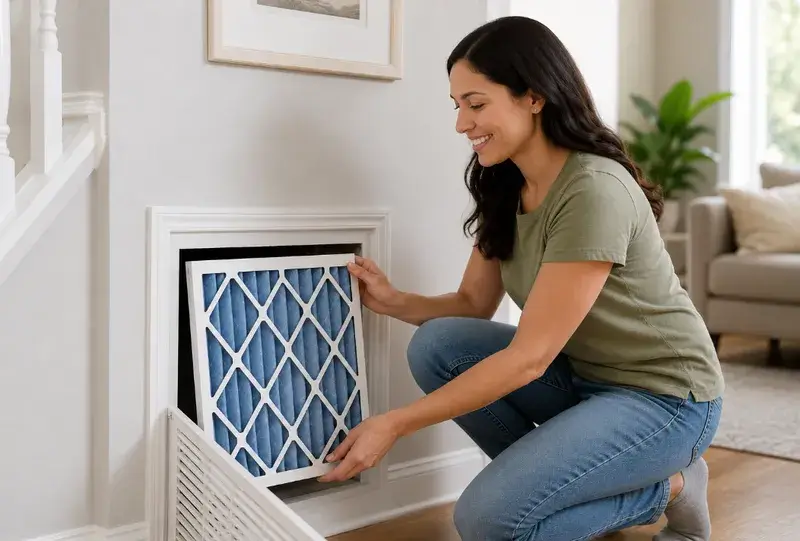
When Brampton's outdoor AQHI rises, the fine particles outside seep indoors through gaps, vents, and your ventilation system, so filtration is your most reliable defence. Health Canada recommends fitting a MERV 13 or higher furnace filter, setting your system to recirculate rather than draw in outdoor air, and changing that filter more often during smoke, because it clogs far faster than usual.
Filterbuy builds filters for exactly this moment. A furnace filter is the household air filter that sits in your return duct and cleans the air your system circulates. Our MERV 13 air filters capture more of the PM2.5 that carries wildfire smoke and traffic pollution, which is why we point Brampton homeowners toward the right rating for their system before smoke season arrives. Households focused on allergies or pet dander often run MERV 11 air filters and step up when smoke moves in. Getting that filter right is the fastest part of your home's air you can control today.
The mistake we see most often is reaching for the highest number on the shelf. A filter that's too dense for your blower can choke airflow, so the rating that truly protects you is the highest one your system can still pull air through. Our guide to how MERV ratings work walks through that trade-off.
After manufacturing filters for over a decade and serving more than two million households, we've seen how quickly indoor air follows the outdoor reading. When the AQHI climbs, the right filter in your furnace is the difference between smoke passing through your home and smoke being captured before you breathe it.
— David Heacock, Founder and CEO, Filterbuy
When wildfire smoke settles over Brampton, the filter is the first thing I check. Fine smoke particles load a filter far faster than everyday dust, so one that looked fine last week can be working against you within days. I tell homeowners to match the filter to what their system can actually pull air through, then change it more often while the AQHI stays high.
— David Clark, Licensed HVAC Technician, Filterbuy
Frequently Asked Questions
Glossary
AQHI (Air Quality Health Index): Canada's official air quality scale, from 1 to 10+, that reports short-term health risk from a mix of ozone, nitrogen dioxide, and PM2.5.
AQI (Air Quality Index): A 0-to-500 scale used in the United States and many global apps, based on the single worst pollutant rather than combined health risk.
PM2.5 (Fine Particulate Matter): Airborne particles 2.5 microns or smaller, the main hazard in wildfire smoke, small enough to reach deep into the lungs.
Ground-Level Ozone (O3): A pollutant formed by sunlight reacting with other emissions, highest on hot, sunny days.
Nitrogen Dioxide (NO2): A pollutant from vehicle exhaust and fuel combustion, often higher near busy roads.
MERV (Minimum Efficiency Reporting Value): A rating scale for how well a furnace filter captures particles, where higher numbers capture finer particles.
ECCC (Environment and Climate Change Canada): The federal agency that calculates and publishes the AQHI.
MECP: Ontario's Ministry of the Environment, Conservation and Parks, which operates the province's air monitoring stations.
Essential Resources
These are the authoritative sources behind this page, gathered in one place if you want to go deeper on Brampton's air quality.
Brampton current Air Quality Health Index (Environment and Climate Change Canada). The live, official AQHI reading and forecast for Brampton, updated hourly.
Brampton AQHI monitoring station (Air Quality Ontario). Ontario's air-monitoring network, including the local station that feeds Brampton's reading.
How Canada moved from the AQI to the AQHI (Government of British Columbia). A plain explanation of why Canada reports health risk on the AQHI rather than the older AQI.
Transboundary influences on Ontario's smog (Government of Ontario). How summer smog and pollution carried from the U.S. shape southern Ontario's air.
Guidance for Cleaner Air Spaces during Wildfire Smoke Events (Health Canada). Health Canada's advice on MERV 13 filtration and recirculation during smoke.
Wildfires and Indoor Air Quality (U.S. Environmental Protection Agency). Practical steps for keeping wildfire smoke out of your home.
Indoor air filtration during wildfires evidence review (National Collaborating Centre for Environmental Health). A research review of how well filtration reduces indoor smoke particles.